




Daily Budget Tiers: What You’ll Actually Spend
How much you spend per day in France depends heavily on where you are and how you travel, not just your overall style. Here’s a realistic breakdown based on actual 2026 prices.
- Backpacker: $60 to $85 per day. Hostel dorm bed, self-catered or bakery meals, regional trains or Ouigo, free museum days, walking or metro instead of taxis.
- Mid-range: $130 to $190 per day. Budget hotel or private Airbnb room, a mix of casual bistros and prix fixe lunches, occasional TGV tickets, one paid museum or attraction daily.
- Comfortable: $250 to $400+ per day. Three-star or boutique hotel, restaurant dinners with wine, first-class or flexible train fares, guided tours and skip-the-line tickets.
Paris runs 25 to 40 percent higher than regional cities like Lyon, Toulouse, or Marseille across every tier. If you’re planning a longer trip and want to keep costs down, spending a few nights in Nice or another coastal city, or exploring destinations beyond Paris, stretches your budget noticeably further than staying in the capital the whole time.
Skip Roaming Fees Across France
Get instant data in Paris and beyond without surprise carrier charges
Accommodation Costs: Hostels, Budget Hotels, and Airbnb
Accommodation is usually the single biggest line item on any France on a budget trip, and it varies enormously by city and neighborhood.
Paris pricing
- Hostel dorm bed: $30 to $50/night
- Budget hotel (2-star, central arrondissements): $90 to $140/night
- Airbnb private room: $60 to $100/night
- Airbnb entire apartment: $110 to $200/night
Regional city pricing (Lyon, Bordeaux, Toulouse, Marseille)
- Hostel dorm bed: $20 to $35/night
- Budget hotel: $60 to $95/night
- Airbnb private room: $40 to $65/night
- Airbnb entire apartment: $70 to $130/night
Booking three to four weeks ahead usually saves 15 to 20 percent on hotels, especially in July and August when demand spikes. If your itinerary includes the south, pet-friendly stays in Marseille tend to run cheaper than comparable Paris options, and coastal towns often have better value for longer stays than short city breaks.
Eating Well Without Overspending
Food is where France on a budget travelers can actually save the most, because the country’s everyday eating culture is built around affordability if you know where to look.
- Boulangeries: A fresh baguette sandwich, pastry, and coffee runs $6 to $9. This is breakfast or lunch for most locals, not just tourists on a budget.
- Prix fixe menus: Nearly every bistro offers a fixed-price lunch menu (entrée, plat, or plat, dessert) for $16 to $25, roughly half of what the same dishes cost à la carte at dinner.
- Markets: Weekly outdoor markets (marché) sell produce, cheese, and charcuterie for a picnic lunch that costs $8 to $12 total per person and often tastes better than a sit-down meal.
- Dinner out: Expect $20 to $35 per person at a casual bistro, or $50 and up at anywhere with a wine list and white tablecloths.
A simple rule that works across the country: eat your main meal at lunch when prix fixe menus are cheapest, and keep dinner light with market food or a boulangerie sandwich. This one habit alone can cut daily food costs by 30 to 40 percent.
Check out our plans
-

France 3 Days Unlimited Data
USD 6.00 -
France 7 Days Unlimited Data
USD 13.00 -
France 10 Days Unlimited Data
USD 17.00 -
France 15 Days Unlimited Data
USD 23.00
Train Costs: TGV vs Regional vs Ouigo Budget Trains
Trains are how most people get around France, and understanding the pricing tiers matters more than almost anything else in your budget.
| Train Type | Typical Route Example | Price Range | Notes |
|---|---|---|---|
| Ouigo (budget TGV) | Paris to Lyon | $12 to $35 | Book weeks ahead, limited luggage, no refunds |
| TER (regional) | Lyon to Annecy | $15 to $30 | Flexible tickets, slower, scenic routes |
| TGV (standard) | Paris to Marseille | $45 to $110 | Faster booking flexibility, buy early for best prices |
| TGV (last-minute) | Paris to Bordeaux | $90 to $150 | Prices climb sharply within a week of travel |
Ouigo trains, France’s low-cost TGV service, can cut long-distance fares by 60 to 70 percent compared to standard TGV, but you’ll need to book at least three to four weeks out and pack light since luggage space is limited. Regional TER trains are a good middle ground for shorter hops and tend to have more flexible ticket rules if your plans change.
If you’re stitching together a longer trip through multiple countries, it’s worth reading how a three-month Europe backpacking budget breaks down train costs alongside everything else, since the patterns are similar across borders.
Stay Online From Landing to Lyon
Activate connectivity before your trip so navigation and booking apps just work
Museum Passes and Free Entry Days
Museum and attraction costs add up fast in Paris, but there are real ways to cut them.
- Paris Museum Pass: $65 to $95 for 2, 4, or 6 consecutive days, covering the Louvre, Musée d’Orsay, Arc de Triomphe, and over 50 other sites. Worth it if you’re visiting three or more paid attractions.
- First Sunday of the month: Many national museums, including the Louvre (October to March), offer free entry on the first Sunday of each month.
- Under 26 EU residents: Free entry to most national museums, though this doesn’t apply to most international visitors.
- Evening discounts: Some museums, like the Louvre on Wednesday and Friday evenings, offer reduced-price late entry.
Outside Paris, many regional museums and cathedrals are free year-round, which is another reason a trip that mixes Paris with cities like Lyon or Toulouse tends to cost less per day overall.
Money-Saving Tips Locals Actually Use
These are habits French residents rely on daily, not tourist hacks.
- Carry a reusable water bottle. Tap water is safe and free everywhere, and bottled water at cafés can cost $3 to $5.
- Skip the café terrace markup. Standing at the bar (comptoir) for coffee costs half of what sitting at a table costs, sometimes $1.20 versus $3.50.
- Buy a Navigo Easy card in Paris. It’s cheaper than single metro tickets if you’re taking more than four rides a day.
- Avoid currency exchange counters at airports and train stations. Rates are consistently worse than using a no-foreign-transaction-fee card or withdrawing from a bank ATM.
- Travel shoulder season. May, June, and September offer better weather-to-price ratios than peak July and August, with hotel rates often 20 to 30 percent lower.
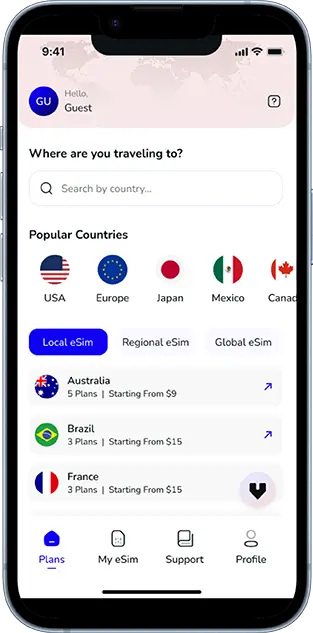
One cost that catches a lot of travelers off guard is mobile data. Roaming charges from your home carrier can run $10 or more per day in France, which adds up fast over a week or two. Setting up a France eSIM before you land gives you data the moment you arrive, no SIM card swap or airport kiosk needed, and it’s one of the easiest ways to avoid a surprise charge on your phone bill. You can compare plans built specifically for staying connected in France or check out broader options on the eSIM plans page before your trip.
If your trip includes shoulder-season timing, visiting France in October is worth a look for both weather and pricing, and travelers watching every dollar should also see how budget eSIM plans compare for longer stays.
Travel France Without Data Anxiety
Keep more of your budget for food and trains, not roaming bills
Final Thoughts
France on a budget is genuinely achievable once you separate Paris pricing from regional pricing and lean into how locals actually eat, travel, and sightsee. Backpackers can realistically get by on $60 to $85 a day, while mid-range travelers should budget $130 to $190. Book Ouigo trains early, eat your big meal at lunch, and mix Paris with cheaper regional stops to stretch your money the furthest.
Whatever your budget tier, sort out connectivity before you land so you’re not paying roaming fees on top of everything else. A France eSIM keeps you online for navigation, translation, and booking apps from the moment you touch down, without adding a daily surcharge to an already carefully planned trip.
Frequently Asked Questions
A week in France costs roughly $420 to $600 on a backpacker budget, $900 to $1,330 mid-range, or $1,750 and up for comfortable travel. This covers accommodation, food, local transport, and a few paid attractions, though Paris runs higher than regional cities.
France can be expensive, especially in Paris during peak summer months, but it’s not uniformly costly. Regional cities, prix fixe lunch menus, and off-peak travel make France on a budget realistic, with daily costs as low as $60 to $85 for careful travelers.
Book Ouigo trains weeks ahead, eat your main meal at lunch using prix fixe menus, stay in hostels or Airbnb rooms, and split time between Paris and cheaper regional cities like Lyon or Toulouse. Free museum Sundays also help cut costs.
A good daily budget for France on a budget travelers is $60 to $85 for backpackers, $130 to $190 for mid-range comfort, and $250 or more for a comfortable trip with restaurant dinners and flexible train tickets.
Paris is generally slightly cheaper than London for accommodation and dining, though both cities run high compared to the rest of their countries. Transit and museum costs are fairly comparable, with Paris often winning on food value at lunch.
Seven to ten days lets you see Paris plus one or two regional stops like Nice or Lyon without rushing. Shorter trips of four to five days work well if you’re focusing on Paris alone.
January and February are typically the cheapest months for flights and hotels, followed by early spring. Shoulder season months like May and September offer the best balance of lower prices and pleasant weather for a France on a budget trip.
Yes, France on a budget is very doable if you mix regional cities with Paris, eat at boulangeries and market stalls, book Ouigo trains early, and use free museum days. Backpackers can realistically spend $60 to $85 per day.

Seamless Mobile Data Everywhere











 English