




Why Look Beyond Paris for Places to Go in France?
Paris is home to roughly 2.1 million people, but France’s population is over 68 million, spread across regions with their own food, dialects, and landscapes. Sticking to Paris means missing the Alps, the Mediterranean coast, and the vineyards of Bordeaux entirely.
France also has an excellent high-speed rail network, the TGV, which connects most major cities in two to four hours. That makes multi-city trips genuinely easy, even on a tight schedule. If you’re weighing where to go first, our guide to France’s top destinations is a solid starting point for building a route.
How Much Time Should You Budget?
Most travelers spend three to five days in Paris, then use the remaining time on two or three regions. A ten- to fourteen-day trip is enough to comfortably pair Paris with Provence and Lyon, or the Riviera and Strasbourg, without feeling rushed.
Cross Regions Without Losing Signal
Get instant data coverage across every French city on your route today
Lyon: France’s Food Capital
Lyon sits about two hours south of Paris by TGV and is widely considered the culinary heart of France. The city’s bouchons, small traditional restaurants, serve hearty dishes like quenelles and coq au vin at prices well below what you’d pay in Paris.
Beyond food, Lyon’s old town, Vieux Lyon, is a UNESCO-listed district of Renaissance buildings and hidden passageways called traboules. A meal here typically runs $20 to $35 per person, noticeably cheaper than similar dining in the capital.
- Getting there: TGV from Paris Gare de Lyon, about 2 hours
- Best time to visit: April through June or September through October
- Don’t miss: the Fresque des Lyonnais mural and the Basilica of Notre-Dame de Fourvière
Bordeaux: Wine Country Charm
Bordeaux is one of the more underrated vacation places in France for anyone who enjoys wine, architecture, or slow travel. The city center is a UNESCO World Heritage Site, and the surrounding Médoc and Saint Émilion regions produce some of the world’s most recognized wines.
A half-day tour to a nearby château, including tastings, generally costs $60 to $120 per person. The city itself is walkable, with tram access to most attractions, and direct TGV trains from Paris now take just over two hours.
Is Bordeaux Worth a Day Trip From Paris?
It’s possible with the fast TGV link, but Bordeaux rewards at least an overnight stay. The vineyards, riverside promenade, and evening light on the Place de la Bourse are easy to miss if you’re rushing back to catch a train.
Provence: Lavender Fields and Hilltop Villages
Provence is arguably the most photographed region outside Paris, and for good reason. Towns like Gordes, Roussillon, and Aix-en-Provence sit among rolling hills, and the Valensole plateau bursts into purple lavender fields from mid-June through late July.
Renting a car is the easiest way to explore, since many villages have limited train access. Expect to pay $40 to $70 per day for a rental, plus fuel. If you’re mapping out a broader regional route, our piece on the best regions to visit in France this September covers Provence alongside other autumn-friendly options.
What Is the Prettiest Small Town in Provence?
Gordes is frequently named the most beautiful, with its stone houses stacked against a hillside overlooking the valley. Roussillon, known for its ochre colored cliffs, is a close second and less crowded in peak summer.
Skip the Roaming Bill Surprise
Activate connectivity before you land and avoid costly carrier roaming charges
The French Riviera: Nice, Cannes, and Antibes
The Mediterranean coast offers a completely different side of France, one of beaches, yachts, and pastel colored old towns. Nice makes the best base, with direct flights from most major European cities and a walkable promenade along the Baie des Anges.
Cannes and Antibes are both reachable by a short, inexpensive train ride from Nice, usually under $10 each way. Hotel prices along the Riviera spike in July and August, so late spring or early autumn offers better value without sacrificing warm weather.
- Nice: old town, beaches, and the Promenade des Anglais
- Antibes: Picasso Museum and the old fortified port
- Cannes: film festival history and upscale shopping
Check out our plans
-

France 3 Days Unlimited Data
USD 6.00 -
France 7 Days Unlimited Data
USD 13.00 -
France 10 Days Unlimited Data
USD 17.00 -
France 15 Days Unlimited Data
USD 23.00
Strasbourg: A Taste of Alsace
Strasbourg sits near the German border and feels distinctly different from the rest of France, with half-timbered houses, canals, and a strong Alsatian food tradition. The Petite France district is the most photographed part of the city, especially in December when its Christmas market, one of Europe’s oldest, takes over the squares.
Food here leans hearty: tarte flambée, choucroute, and Alsatian white wines. A sit-down dinner typically costs $25 to $40 per person. Strasbourg is roughly 1 hour 50 minutes from Paris by TGV, making it an easy add-on to a longer itinerary.
Mont Saint Michel: A Medieval Island Abbey
Few other cities in France offer a sight quite like Mont Saint Michel, a fortified abbey rising out of tidal flats on the Normandy coast. It’s a UNESCO World Heritage Site and one of the most visited landmarks in the country outside Paris.
Most visitors day trip from Rennes or Saint Malo, both under 90 minutes away by car or shuttle bus. Entry to the abbey costs around $12, though the walk up through the medieval village is free and worth doing slowly.
Can You Do Mont Saint Michel as a Day Trip?
Yes, and most travelers do. Arrive early to beat tour buses, and check the tide schedule in advance since the causeway view changes dramatically between high and low tide.
Annecy: The Venice of the Alps
Annecy sits at the edge of a glacial lake in the French Alps, with canals running through the old town that have earned it the nickname “Venice of the Alps”. It’s less than an hour from Geneva and about 3 hours 45 minutes from Paris by train.
Summer brings swimming and paddleboarding on the lake, while winter puts you close to major ski resorts like Chamonix. It’s a quieter alternative to the busier Alpine towns and a great stop if you’re combining France with a Swiss leg of your trip.
Explore France Without WiFi Hunting
Stay online in villages and train stations with reliable instant activation
Staying Connected as You Travel Across France
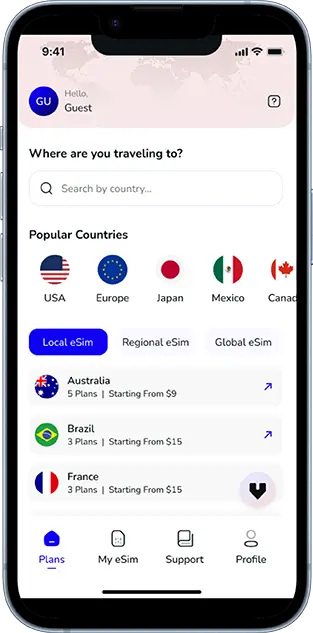
Moving between regions means switching networks often, and relying on hotel WiFi alone gets frustrating fast, especially when you’re navigating train stations or booking last-minute château tours. An eSIM, a digital SIM you activate without swapping a physical card, lets you land in Lyon, Bordeaux, or Strasbourg already connected.
Voye Global offers eSIM plans for France that activate instantly and work across the whole country, including 5G coverage in major cities where available, so you’re not hunting for WiFi passwords between destinations. If your route also includes a nearby country like Switzerland or Spain, it’s worth checking the regional eSIM plans to cover the whole trip on one plan.
For a broader sense of how connectivity fits into a France itinerary that skips the obvious tourist path, see our roundup of lesser-known cities to visit in France.
Final Thoughts
Paris is a great starting point, but the best vacation places in France often sit a few hours outside it. Lyon’s food scene, Bordeaux’s vineyards, Provence’s villages, and Annecy’s alpine lake each offer a distinct experience that rounds out any France trip. Pick two or three regions, book your TGV tickets early, and make sure you’re connected before you land so you can navigate, book, and share the trip without interruption.
Frequently Asked Questions
Paris remains the top destination for most first-time visitors, thanks to landmarks like the Eiffel Tower and the Louvre. But among the many other places to go in France, Provence and the French Riviera are consistently rated the most memorable regions to add to an itinerary.
First-time visitors typically start in Paris, then branch out to Lyon or Provence for a different pace and food culture. Pairing the capital with one nearby region gives a fuller sense of France destinations without overloading a short trip.
Provence, with its lavender fields and hilltop villages like Gordes and Roussillon, is often named the most beautiful region in France. Annecy and Mont Saint-Michel are close contenders thanks to their dramatic lake and coastal settings.
Ten to fourteen days let you comfortably pair Paris with two or three other regions, such as Provence and Lyon. A month allows a slower pace across the Riviera, Alsace, and the Alps without constant packing and repacking.
May, June, and September offer mild weather, thinner crowds, and lower hotel prices compared to peak July and August. Lavender season in Provence peaks around late June, while the Riviera stays warm well into October.
Yes, Paris has far more to offer beyond its famous landmark, including neighborhoods like Le Marais, the Musée d’Orsay, and the Seine riverbanks. Still, many travelers find the most memorable vacation places in France lie outside the capital entirely.
Gordes in Provence is widely considered the prettiest small town, with stone houses cascading down a hillside above the valley. Annecy’s old town, with its canals and alpine backdrop, is another strong contender for the title.
Seven days is enough to see Paris plus one nearby region, such as the Loire Valley or Normandy, using France’s fast TGV rail network. Trying to cover more than two areas in a week usually means less time enjoying each stop.

Seamless Mobile Data Everywhere











 English