




Brazil’s music is as diverse as its landscapes, with every region offering its own rhythms, traditions, and cultural influences. From the world-famous samba schools of Rio de Janeiro to Salvador’s Afro-Brazilian percussion and Recife’s energetic frevo performances, a journey through Brazil is also a journey through its musical heritage. If you’re planning to experience the country’s sounds firsthand, organizing your route around these iconic cities makes it easy to discover the best live performances, festivals, and local traditions in one unforgettable trip.
Planning a Brazilian Music Itinerary Across Rio, Salvador, and Recife
Brazil is enormous, so a music-focused trip works best when you follow the coastline rather than jumping around. Rio de Janeiro sits in the southeast, Salvador is roughly two hours north by air in the state of Bahia, and Recife sits further north still, in Pernambuco. Traveling in that order keeps flights short and lets each city’s sound build on the last, from Rio’s polished samba scene to Salvador’s Afro-Brazilian roots and Recife’s Carnival heritage.
Give yourself three to four weeks if you can. That is enough time to see a samba school rehearsal in Rio, sit in on a drum circle in Salvador’s Pelourinho district, and catch a frevo performance in Recife without rushing between airports. Many musicians and digital nomads treat this as a working trip, splitting mornings between a laptop and afternoons or evenings exploring live venues. If you are planning the wider trip beyond music, the ultimate travel guide to Brazil is a useful starting point for visas, weather, and general logistics before you build your itinerary around sound.
Keep Every City’s Rhythm Online
Get instant data in Rio, Salvador, and Recife without roaming surprises.
Rio de Janeiro: Samba Schools and Live Show Etiquette
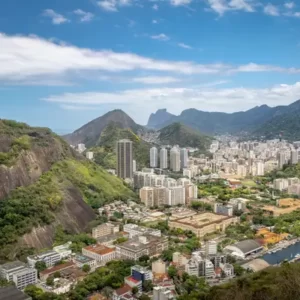
Rio is where most travelers first encounter Brazilian music, and it rewards more than a single night out. The Lapa neighborhood, with its cobblestone streets and arched aqueduct, is the city’s live music hub. For a broader sense of the city before you land, the Rio de Janeiro travel guide covers neighborhoods, weather, and safety basics worth reading first.
Where to Hear Live Samba in Rio?
Rio Scenarium, a multi-floor venue packed with antiques, hosts nightly samba and choro sets and is popular with both locals and visitors. Carioca da Gema, a smaller room nearby, tends to feel more intimate. For something free, head to Pedra do Sal near Praça Mauá on Monday or Friday evenings, where a roda de samba (samba circle) forms in the street and anyone can join in.
Samba School Rehearsal Etiquette
Samba schools like Mangueira, Salgueiro, and Portela open their quadras (rehearsal halls) most Saturday nights year-round, not only during Carnival season. Expect a cover charge of around 10 to 25 US dollars, a crowd that arrives after 10 pm, and a dress code that is casual but not sloppy. Musicians occasionally pass a hat during breaks, and a small tip is appreciated. Book a rideshare through Uber or the local app 99 for the trip home, since these neighborhoods are best navigated by car late at night.
Salvador: The Birthplace of Axé and Afro-Brazilian Rhythm
Salvador is where Brazilian music’s African roots are most visible and most audible. The Pelourinho, a UNESCO-listed colonial center of pastel colored buildings, is the stage for most of it. For deeper background on the city’s heritage, Salvador’s Afro-Brazilian culture walks through its history and traditions in more detail.
Pelourinho’s Drum Circles and Street Music
Olodum, the percussion group that helped shape axé music in the late 1970s, still holds open rehearsals in Pelourinho on Tuesday evenings, and Ilê Aiyê, the city’s oldest Afro-Brazilian bloco (Carnival group), performs seasonally in its home neighborhood of Curuzu. Capoeira circles, accompanied by the single-stringed berimbau, form spontaneously in the squares throughout the day. Some drumming here is tied to Candomblé, an Afro-Brazilian religion, so ask before photographing a ceremony and follow the lead of locals around you. Axé itself, the upbeat genre that dominates Bahia’s Carnival, emerged from this same mix of religious percussion, reggae, and Caribbean rhythm in the early 1990s through artists like Daniela Mercury.
Check out our plans
-
Brazil 7 days 3GB
USD 15.00 -
Brazil 7 Days Unlimited
USD 22.00 -
Brazil 15 days 5GB
USD 22.00 -
Brazil 15 Days Unlimited
USD 39.00 -
Brazil 30 days 8GB
USD 35.00 -
Brazil 30 days 15GB
USD 49.00
Recife and Olinda: Frevo and Maracatu Traditions
Recife and its neighbor Olinda, about 20 minutes away by taxi or rideshare, close out the route with two of the country’s most physical music traditions. Frevo is fast, brass-heavy, and danced by performers called passistas who spin small umbrellas as they move. Maracatu nação is slower and more ceremonial, built around deep alfaia drums and a royal procession led by a king and queen, a tradition recognized as intangible cultural heritage.
Carnival in February or March is the biggest showcase for both, but you do not need to time your trip around it. Pátio de São Pedro in Recife hosts live sets most Thursday evenings, and Alto da Sé in Olinda fills with street food stalls, forró bands, and impromptu performances most nights of the week. Olinda’s steep, colorful colonial streets are worth the walk on their own, even before the music starts.
Stay Online Between Music Stops
Switch states and keep streaming setlists, maps, and translations without interruption.
Getting Between Cities: Flights, Buses, and Staying Online
Domestic flights are the practical choice for this route. Rio to Salvador takes roughly two hours and ten minutes and typically runs 70 to 150 US dollars one way on Gol, Azul, or LATAM. Salvador to Recife is shorter, around one hour and twenty minutes, usually 60 to 120 US dollars. Long-distance buses exist between all three cities, but a Rio to Salvador route can take 18 to 24 hours, which eats into time better spent at a rehearsal or drum circle. Booking flights two to three weeks ahead generally gets better fares than last-minute purchases.
Whatever you fly, you will need data the moment you land, whether that is for confirming a rideshare, translating a venue address, or checking a samba school’s rehearsal schedule for the night. If your Portuguese is limited, the Brazilian Portuguese travel guide covers useful phrases for taxis, tickets, and ordering food between shows.
One eSIM, Every City: Keeping Data Active Across Brazil

Brazil’s mobile networks are split between carriers like Vivo, Claro, TIM, and Oi, and coverage quality shifts depending on which state you are in. Hunting for a new physical SIM card every time you land, especially with an overnight bag and possibly an instrument or camera gear in tow, wastes time you could spend at a venue instead. This is exactly the kind of trip where why an eSIM beats a physical SIM becomes obvious rather than theoretical.
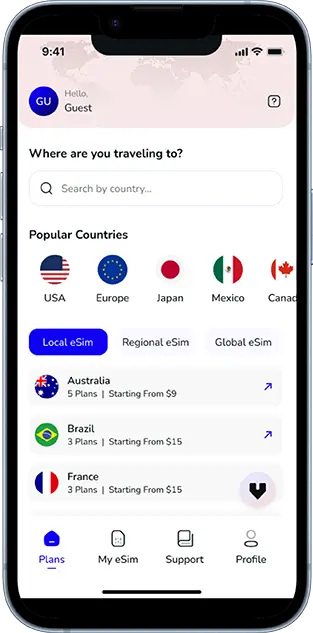
A Voye Global eSIM for Brazil can be installed before you leave home and activated the moment you land at Rio’s Galeão airport, so you are online before you even reach the taxi line. The same profile carries through to Salvador and Recife, meaning no swapping SIM cards, no searching for a kiosk, and no gap in coverage between flights. If your music-driven trip runs longer than planned, which happens often once a rehearsal schedule or a new venue pulls you in, topping up data takes a few taps rather than a trip to a phone shop. That flexibility matters most for digital nomads who are working remotely between shows and cannot afford a connectivity gap mid-call.
Before you land, it is worth reading the ultimate travel guide to Brazil alongside Brazil’s music and dance traditions for a fuller picture of what shapes the sound in each state you will visit. For general trip planning, browse more destination guides on Voye Global before you set your final route.
Frequently Asked Questions
Brazilian music does not have one single name. It is an umbrella term covering samba, bossa nova, axé, frevo, maracatu, and forró, among other regional styles. Locals usually refer to it by genre rather than one collective term, since each style reflects the culture of its home state.
Major genres include samba from Rio, axé and Afro-Brazilian percussion from Bahia, frevo and maracatu from Pernambuco, bossa nova from Rio’s mid-century jazz scene, and forró and sertanejo from the countryside. Each blends African, Indigenous, and Portuguese influences differently.
Sertanejo, a country-style genre, is currently the most streamed music genre nationally in Brazil. Samba and axé remain the most internationally recognized styles, largely thanks to their central role in Carnival celebrations each year.
No, samba is one genre within Brazilian music, not the whole of it. Samba originated in Rio’s Afro-Brazilian communities, while the wider Brazilian music landscape also includes bossa nova, axé, frevo, and forró, each tied to a different region.
Common instruments include the cavaquinho (a small four-string guitar), pandeiro, surdo and tamborim drums, the cuíca, agogô bells, and the berimbau used in capoeira. Bossa nova adds acoustic guitar and piano for a softer, jazz-influenced sound.
Its blend of African percussion, Indigenous rhythm, and Portuguese melody creates a sound found nowhere else, and that mix changes noticeably by state. Rio, Bahia, and Pernambuco each layer percussion and instrumentation differently, giving Brazilian music strong regional identity.
Tom Jobim, co-creator of bossa nova and writer of The Girl from Ipanema, is often named the most famous Brazilian musician internationally. Caetano Veloso and Gilberto Gil are similarly celebrated for shaping Brazilian music beyond the country’s borders.
Samba is upbeat and percussion-heavy, born in Rio’s hillside communities for dancing and Carnival parades. Bossa nova is a mellower 1950s offshoot that blends samba’s rhythm with jazz harmony, written for quiet listening rather than dancing.

Seamless Mobile Data Everywhere














 English