




Mexico is one of the most geographically diverse countries in the world, stretching from desert borderlands in the north to jungle-covered peninsulas in the south. That variety means there is no single answer to the question of how to get around. A trip built around Mexico City’s museums and neighborhoods calls for a very different transportation plan than a Yucatan Peninsula itinerary that hops between Cancun, Tulum, and Chichen Itza. This guide breaks down every major option tourists use in Mexico today, along with real prices, practical booking tips, and honest advice on when each method makes sense.
Getting to Mexico: Major Entry Points
Most international travelers arrive through one of a handful of major airports. Mexico City International Airport (MEX) and the newer Felipe Angeles International Airport (AIFA) serve the capital, while Cancun International Airport handles the bulk of Caribbean coast arrivals for Cancun, Playa del Carmen, and Tulum. Guadalajara, Los Cabos, Puerto Vallarta, and Oaxaca also have well-connected international airports. Once you land, the transportation choices below take over.
Getting Around Mexico City: Metro, Metrobus, and Ride Apps
Mexico City is enormous, home to more than 21 million people across its metropolitan area, but its public transit network is one of the most extensive and affordable in the Americas.
The Metro (Sistema de Transporte Colectivo) runs 12 lines across roughly 195 stations and charges a flat fare of just 5 pesos per ride, no matter how far you travel or how many times you transfer between intersecting lines. The Metrobus, a rapid bus system that runs in dedicated lanes along major avenues, costs 6 pesos per ride and is especially useful for reaching the airport via Line 4, which connects both terminals to the Historic Center and Paseo de la Reforma for 30 pesos.
Both systems use a rechargeable card called the Tarjeta de Movilidad Integrada, sold at station windows and vending machines for 15 pesos. It also works on the Tren Ligero, Trolebus, RTP buses, and Cablebus. Keep in mind that transferring from Metro to Metrobus is not free, since each network charges separately.
For door-to-door convenience, ride-hailing apps are the go-to choice among both locals and visitors. Uber, DiDi, and Cabify are all widely used and generally cheaper and easier to track than street taxis. A typical 20-minute ride across central neighborhoods runs somewhere between 100 and 150 pesos, though prices climb during rain or high-demand periods. If you do take a street taxi, use only official pink and white sitio taxis or ones called by phone or app rather than hailing an unmarked car.
A practical note on safety: the Metro runs a women and children only section in the first two cars during weekday rush hours, and pickpocketing is a real concern in crowded stations, so keep bags zipped and phones out of back pockets.
Intercity Bus Travel: ADO, ETN, and Primera Plus
For travel between cities, Mexico’s long-distance bus network is extensive, comfortable, and far more affordable than renting a car or flying on shorter routes. ADO dominates central and southeastern Mexico, connecting Mexico City, Oaxaca, Puebla, Veracruz, and the entire Yucatan Peninsula. ETN and Primera Plus are strong alternatives in central and western states.
Bus service in Mexico is organized into tiers. Second class or economy buses are basic but air conditioned, with assigned seats and no onboard bathroom. First class buses, which make up most of the ADO fleet, include a bathroom, reclining seats, and onboard entertainment. Luxury tiers such as ADO Platino and ETN add wider seats, more legroom, and individual screens, usually for 20 to 25 percent more than first class fares.
Pricing depends heavily on route, timing, and how far in advance you book. As a general guide, a short hop like Cancun to Playa del Carmen runs around 80 to 110 pesos, while Cancun to Tulum is closer to 250 to 300 pesos. Longer routes such as Mexico City to Oaxaca can range from roughly 580 pesos for standard first class to over 1,000 pesos for the luxury Platino service, though overnight departures are often discounted. Booking through the ADO app or website at least a few days ahead usually unlocks the compra anticipada discount, which can cut fares by as much as half. If a foreign card is rejected online, tickets can also be purchased at OXXO convenience stores or directly at the terminal.
Check out our plans
-

Mexico 7 Days Unlimited
USD 22.00 -
Mexico 10 Days Unlimited
USD 29.00 -
Mexico 3 Days Unlimited
USD 12.00 -
Mexico 15 days 6GB
USD 17.00 -
Mexico 30 days 10GB
USD 19.00 -
Mexico 30 days 20GB
USD 36.00
The Tren Maya: A New Way to Cross the Yucatan Peninsula
One of the newest additions to Mexico’s transportation landscape is the Tren Maya, a rail line that loops through Chiapas, Tabasco, Campeche, Yucatan, and Quintana Roo. For tourists, it is most useful for stitching together a southeastern itinerary that includes Cancun, Valladolid, Chichen Itza, Merida, Campeche, Tulum, Bacalar, and Palenque without needing a rental car for the entire trip.
The train offers Tourist and Premier classes, with Premier providing wider seats and, on longer routes, a meal or snack service. Fares are priced per station and vary by distance and class, generally ranging from around 10 to 300 US dollars depending on how far you are traveling and which class you choose. Booking earlier tends to unlock better pricing, since the system uses a dynamic model that rewards advance purchases made 45 days or more before travel.
It is worth planning around one limitation: the Tren Maya solves the long-distance segment of a trip, but you will often still need a taxi, colectivo, or short rental car stint to reach a specific ruin site, cenote, or beach hotel from the station itself.
Domestic Flights for Longer Distances
Mexico’s size means that some routes are simply impractical by land. Flying makes sense for trips such as Tijuana to Cancun, or when time is limited and the alternative is an 18 hour-plus bus ride. Airlines like Volaris, Viva Aerobus, and Aeromexico operate dense domestic networks connecting most major cities, often at prices that rival or beat long bus journeys when booked in advance.
Renting a Car: Freedom With a Few Caveats
A rental car makes the most sense for road trip style itineraries, such as exploring colonial towns in the Bajio region, driving the Baja California peninsula, or reaching more remote cenotes and beaches around Tulum that public transit does not reach directly.
Mexico’s highway system includes both cuota (toll) roads and libre (free) roads. Toll roads are well maintained, faster, and generally considered safer for long-distance driving, while free roads can be slower and pass through more small towns and speed bumps known as topes. Always confirm that your rental includes adequate liability insurance, since a standard foreign auto policy or credit card coverage may not meet Mexican legal requirements. Driving at night on rural highways is generally discouraged, and it is worth sticking to daylight hours between cities.
Stay Connected Throughout Your Mexico Trip
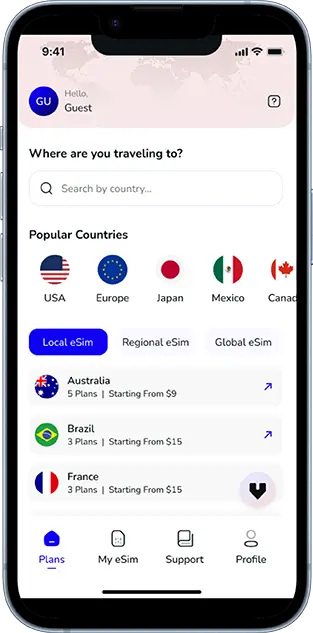
Get instant data the moment you land, no physical SIM needed.
Colectivos and Combis: The Local Way to Get Around
In smaller towns and along the Riviera Maya, shared vans known as colectivos or combis are the transportation method locals rely on most. They run set routes, cost a fraction of a taxi or ADO ticket, and leave once full rather than on a fixed schedule. A colectivo between Playa del Carmen and Tulum, for example, typically costs around 50 pesos, compared to roughly 120 pesos on ADO. The tradeoff is less comfort and limited space for luggage, which makes colectivos better suited to short hops than long journeys with heavy bags.
Ferries for Island and Coastal Destinations
Several of Mexico’s most popular coastal destinations sit just offshore, and ferries are the standard way to reach them. Passenger ferries connect Cancun and Playa del Carmen to Isla Mujeres and Cozumel respectively, with frequent daytime departures and trip times under an hour in most cases. Getting to Holbox requires a short ferry ride from Chiquila, which is itself reached by ADO bus or car from Cancun.
Walking and Biking: The Best Way to Experience Walkable Cities
Not every part of Mexico needs a vehicle at all. Historic centers in cities like Merida, Oaxaca, San Miguel de Allende, and Guanajuato are compact and pedestrian-friendly, with major sights, markets, and restaurants within easy walking distance of each other. Mexico City’s Roma, Condesa, and Centro Historico neighborhoods reward walking as well, and the city’s Ecobici public bike share system, usable with the same transit card in some cases, offers an easy way to cover slightly longer distances without a car or rideshare.
Staying Safe and Connected on the Move
Wherever you choose to travel, a few habits go a long way. Keep valuables close on buses and in crowded metro stations, use official taxi stands or ride-hailing apps rather than hailing unmarked cars, and carry small bills in pesos for colectivos, tolls, and terminal fees, since card acceptance is not universal outside major cities.
Reliable internet access also matters more than most travelers expect, since ride-hailing apps, offline maps, bus booking sites, and translation tools all depend on a stable connection the moment you land. Many visitors now set up a travel eSIM before departure so they can pull up a map, book a colectivo transfer, or check a bus schedule from the airport onward without hunting for WiFi or dealing with roaming charges.
Final Thoughts
Getting around Mexico rarely means choosing just one method of transportation. A typical two week trip might combine a flight into Cancun, a few Tren Maya segments through the Yucatan, colectivos for short coastal hops, a rental car for a few days near cenotes, and plenty of walking through historic centers along the way. Understanding how each option works, and where it fits best, makes it far easier to build an itinerary that matches your budget, timeline, and travel style.

Seamless Mobile Data Everywhere














 English