




Traveling to Switzerland is an unforgettable experience. From snow-capped Alpine peaks and crystal-clear lakes to efficient public transport and charming cities, everything works seamlessly. But the moment you land, one practical question can quickly disrupt that smooth experience: how do you get mobile internet?
For most travelers, the choice comes down to two options. Buying a physical SIM card at the airport or using an eSIM. Both promise connectivity, but the experience, cost, and convenience differ far more than many people expect.
This detailed guide breaks down every angle of Switzerland SIM card at airport vs eSIM, helping you make the smartest choice based on real travel needs. If you want stress-free connectivity, predictable costs, and instant access the moment you land, you will quickly see why eSIMs are becoming the preferred solution for travelers visiting Switzerland.
Why mobile connectivity matters so much in Switzerland
Switzerland is one of the most digitally advanced countries in Europe. Mobile internet is essential for almost everything travelers do.
You need data to navigate Swiss rail schedules, use maps in mountain regions, translate menus, book tickets, access hotel details, and share moments in real time. Many services rely heavily on mobile apps, and free Wi-Fi is not always available, especially on trains, buses, or in rural areas.
This makes choosing the right mobile data solution just as important as booking flights or accommodation.
Understanding your two main options
Before comparing which is better, it helps to clearly understand what each option actually involves.
Buying a SIM card at a Switzerland airport
When you arrive at major Swiss airports such as Zurich or Geneva, you will find kiosks and carrier stores selling prepaid SIM cards. These are physical SIMs that you insert into your phone to access local networks.
They are usually marketed as tourist SIM cards and may include a fixed amount of data, calls, or text messages.
Using an eSIM for Switzerland
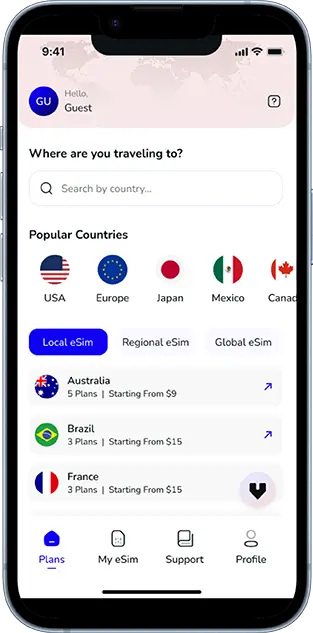
An eSIM is a digital SIM profile that is installed directly onto your phone without inserting a physical card. You purchase it online, scan a QR code, and activate it through your phone settings.
Once installed, the eSIM connects you to Swiss mobile networks just like a traditional SIM, but without any physical handling.
The arrival experience: first impressions matter
Airport SIM card experience
After a long flight, most travelers want to get to their hotel as quickly as possible. Buying a SIM card at the airport often means standing in line, comparing plans on the spot, and handling setup while tired and jet-lagged.
Airport shops may be busy during peak arrival hours. If your flight arrives late at night or early morning, stores may be closed entirely. Even when open, pricing at airports is usually higher due to convenience markup.
eSIM experience
With an eSIM, everything is done before you leave home or while connected to Wi-Fi. The moment your plane lands, your phone already has data.
No queues. No searching for shops. No awkward SIM tray removal at the airport. This seamless experience is one of the biggest reasons travelers prefer eSIMs for Switzerland.
Cost comparison: airport SIM vs eSIM in Switzerland
Airport SIM card pricing
Airport SIM cards in Switzerland tend to be more expensive than many travelers expect. Tourist packages often come with limited data and higher upfront costs.
Top-ups and additional data can also be pricey. Since Switzerland is not part of the EU roaming zone, prices are generally higher than neighboring countries.
You may also find that the advertised price does not include all taxes or activation fees.
eSIM pricing advantages
eSIM plans are usually more transparent. You see exactly how much data you get, how long it lasts, and what it costs before you buy.
Many eSIM providers offer flexible plans, including small data packages for short stays and larger plans for longer trips. Some even offer unlimited data options.
Because eSIMs are sold online, providers compete globally, which helps keep prices competitive. For most short-term visitors, eSIMs are often cheaper or at least better value than airport SIM cards.
Get Connected Instantly
Activate Switzerland eSIM before arrival for seamless, stress-free connectivity
Convenience and flexibility
Physical SIM limitations
Using a physical SIM means removing your home SIM card. This introduces several small but annoying risks.
You might lose your original SIM. You might miss important calls or SMS messages, especially bank or authentication messages. Swapping SIMs also means your phone number changes, which can complicate ride-hailing apps, messaging apps, and account verifications.
eSIM flexibility
With an eSIM, your home SIM stays exactly where it is. Most modern phones allow dual SIM functionality, meaning your home number remains active while the eSIM handles data.
This is ideal for receiving verification codes, staying reachable, and maintaining access to essential accounts while traveling.
Switching between networks is also easy. Everything is done through your phone settings, with no physical handling required.Coverage and performance in Switzerland
Switzerland is known for excellent mobile network quality. Coverage is strong in cities, towns, transport routes, and many mountain areas.
Airport SIM coverage
Airport SIM cards typically connect you to major Swiss networks. Coverage and speed are generally excellent, especially in urban areas.
However, not all tourist SIM plans offer full speed or access to the best network tiers. Some plans prioritize affordability over performance.
eSIM coverage
Most reputable eSIM providers partner with top Swiss networks. Performance is usually comparable to local SIM cards, with strong 4G and growing 5G coverage.
For navigation, video calls, streaming, and social media, eSIM speeds are more than sufficient for typical travel needs.
Setup and activation process
Setting up an airport SIM
Buying a SIM card at the airport usually requires identification. The staff may help with installation, but the process still takes time.
If you encounter issues later, support may be limited once you leave the airport.
Setting up an eSIM
Setting up an eSIM is simple and fast:
- Purchase the plan online
- Scan the QR code
- Activate the profile in your phone settings
The entire process takes just a few minutes. Once installed, the eSIM is ready whenever you need it.
Environmental impact
This is a factor many travelers overlook.
Physical SIM cards come with plastic packaging, shipping, and disposal. Millions of short-term tourist SIMs are used for just a few days and then discarded.
eSIMs eliminate plastic waste entirely. Choosing an eSIM is a small but meaningful step toward more sustainable travel.
Security and privacy considerations
Keeping your home SIM active while using an eSIM reduces security risks. You stay connected to your trusted number for banking alerts and account recovery.
Physical SIM swapping increases the chance of missed security messages or temporary loss of access to important accounts.
Ideal scenarios for each option
When an airport SIM might make sense
- Your phone does not support eSIM
- You need a Swiss phone number immediately for local calls
- You prefer in-person assistance for setup
When an eSIM is the better choice
- You want instant connectivity upon arrival
- You want to avoid airport queues and setup hassle
- You want to keep your home SIM active
- You value cost transparency and flexibility
- You plan to visit multiple countries
- You want an environmentally friendly solution
For most modern travelers, these eSIM advantages outweigh the limited benefits of airport SIM cards.
Common mistakes to avoid
- Waiting until arrival to think about mobile data
- Assuming airport SIMs are always cheaper
- Forgetting to check phone compatibility
- Removing your home SIM without storing it safely
- Ignoring data limits and plan validity
Planning ahead with an eSIM helps avoid all of these issues.
Check out our plans
-

Switzerland 10 Days Unlimited
USD 17.00 -
Switzerland 15 Days 8GB
USD 13.00 -
Switzerland 3 Days Unlimited
USD 6.00 -
Switzerland 7 Days 5GB
USD 9.00 -
Switzerland 7 Days Unlimited
USD 13.00 -
Switzerland 20 Days Unlimited
USD 29.00 -
Switzerland 15 Days Unlimited
USD 23.00 -
Switzerland 30 Days Unlimited
USD 39.00 -
Switzerland 30 Days 15GB
USD 16.00 -
Switzerland 30 Days 25GB
USD 25.00
Final verdict: Switzerland SIM card at airport vs eSIM
When comparing Switzerland SIM card at airport vs eSIM, the difference is clear.
Airport SIM cards work, but they come with higher costs, limited flexibility, and unnecessary hassle. They solve a problem, but not in the most efficient way.
eSIMs, on the other hand, fit perfectly into modern travel. They are faster to set up, easier to manage, often cheaper, and far more convenient. You arrive connected, stay connected, and never have to worry about losing your home SIM or standing in line after a long flight.
For travelers who value time, simplicity, and control, eSIM is the better option for Switzerland.
Final travel tip
Before you pack your bags, check if your phone supports eSIM. If it does, set up your eSIM while you still have reliable Wi-Fi. When you land in Switzerland, your phone will be ready to guide you through trains, mountains, cities, and unforgettable experiences without missing a moment.

Seamless Mobile Data Everywhere














 English