




The First 10 Minutes After a Missed Connecting Flight
The moment the gate agent tells you the flight is gone, a countdown starts. Every airline app now lets you self-rebook, and in most cases it registers your missed connection before the gate agent even finishes updating the system. Passengers who open the app immediately often lock in a seat on the next flight while everyone else is still walking toward the service desk.
Think about a summer thunderstorm ground stop at Chicago O’Hare. A single delayed inbound aircraft can strand 150 people who all needed the same connection. Only a handful of desk agents are working that gate area, but the app has no line at all. The same goes for eSIM convenience at airports and airlines, where more carriers are building self-service rebooking directly into their apps so you never have to touch a counter.
The catch is obvious once you think about it: none of this works without data. If your phone has no signal the second you need it, you are stuck in the same line as everyone else, no matter how fast the app could have solved the problem.
Why Does Airport WiFi Fail You at the Worst Moment?
Airport WiFi is built for normal traffic, not for the moment a storm cancels a bank of flights and a few hundred people all try to rebook at once. The network slows to a crawl exactly when you need it to move fast.
A few common failure points travelers run into:
- The free tier times out after 30 to 60 minutes, and extending it can cost $5 to $10 depending on the airport, though pricing varies by location.
- Login portals sometimes require an SMS verification code sent to a local phone number, which is useless if you are roaming on a foreign SIM or your phone has no signal at all.
- If you get moved to a different terminal for your new flight, you may need to log in again from scratch on a weaker signal.
- International hub airports like Doha or Istanbul can have congested WiFi zones near the transfer desks specifically because that is where every delayed passenger gathers.
This is the real gap that general rebooking advice tends to skip. It is not enough to know the steps for rebooking. You need a connection that actually works when the terminal WiFi does not.
Rebooking by Phone or App: What Data You Need on Hand
Once you are online, rebooking goes faster if you already have a few things ready to reference:
- Your booking reference (PNR) and confirmation email, ideally saved offline as well as in your inbox
- Your passport number, since some international rerouting options ask for it during rebooking
- A screenshot of alternate flight times so you can suggest options if the app is slow to load them
- Your travel insurance policy number, in case the new routing triggers a delay claim
If your new connection routes you through a country you were not originally scheduled to transit, it is worth checking whether you need any paperwork for that stop. Rules differ by nationality and airport, so read up on visa rules for connecting flights before you assume a reroute is simple.
All of this takes real data, not just a flicker of signal. Loading a rebooking form, refreshing flight status, or getting a translator on a video call all use more bandwidth than a quick text message.
eSIM as a Backup When Your Home Carrier’s Roaming Fails
Home carrier roaming has a habit of failing at the worst possible time. Some networks need a manual activation text that never arrives if you already have no signal. Others simply do not have a local partner network at the airport you got rerouted through. It is a frustrating catch-22: you need data to fix the problem, but the problem is that you have no data.
An eSIM solves this differently. It is a digital SIM profile you install on your phone before you travel, sitting ready in your settings so you can switch to it the moment your main line struggles. There is no physical card to swap and no store to find. You install it once at home, and it waits there as your backup line.
Here is a rough comparison of what happens right after a missed connection:
| Option | Typical cost | Reliability right after a missed connection | Setup time |
|---|---|---|---|
| Airport WiFi | Free for 30 to 60 minutes, then often $5 to $10 for extended access | Low, congested and sometimes requires an SMS code you cannot receive | None, but slow to connect |
| Home carrier roaming | Often $10 a day flat, or charged per MB, prices vary by carrier | Inconsistent, some networks need manual activation | Should already be on, but can lag |
| Backup eSIM | Often $4 to $8 a day depending on destination and data amount, prices vary by plan | High, active as soon as you land since it was installed before departure | About 5 minutes if installed before the trip |
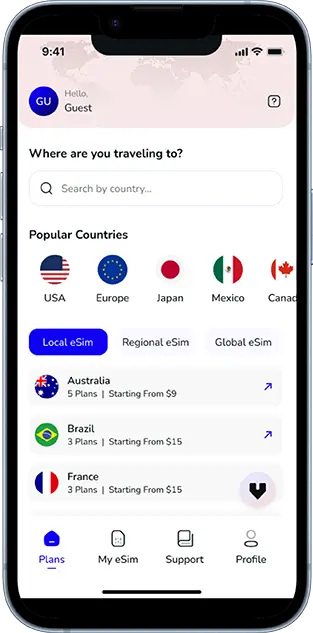
A traveler connecting through Reykjavik unexpectedly, with a home plan that did not cover Iceland, could switch over to a Voye Global eSIM plans data line already sitting installed on their phone and be back online in a couple of minutes instead of hunting for a kiosk. That is the real advantage over why an eSIM beats a physical SIM in a disruption scenario: no store, no queue, no waiting for a new card to register on the network.
Back Up Roaming Before You Fly
Add a backup data line so one blocked carrier never strands you.
Messaging Your Ride or Host When Your Arrival Time Changes
Rebooking the flight solves half the problem. The other half is telling the people on the other end. A driver circling arrivals on a toll clock, a family waiting at the curb, or a host who planned dinner around your original landing time all need an updated ETA, and they need it as soon as you have one.
Apps like WhatsApp or iMessage need data to send anything beyond a basic text, and using your home number to send a standard SMS abroad without a plan can cost $0.50 to $1 per message on some carriers, again varying by provider. Without a working connection, that update simply does not go out, and the person waiting has no idea whether to keep waiting or leave.
This is especially relevant for long layovers where your new routing adds hours to the trip. If you know ahead of time you have a long stopover, it helps to plan around it with eSIM for long layovers so you are never guessing whether you will have signal to send that one message that matters most.
A Pre-Flight Checklist to Avoid a Missed Connecting Flight
The best fix for a missed connecting flight is avoiding the scramble in the first place. A few habits go a long way:
- Book connections with buffer time, at least 90 minutes for domestic transfers and 2 to 3 hours for international ones, especially at large hub airports
- Install and test your backup eSIM at home on your own WiFi before you fly, so it is already sitting ready in your phone’s settings
- Save your airline app login and a screenshot of your booking reference somewhere you can access offline
- Save your driver’s or host’s contact details offline too, not just in a chat thread that needs data to reload
- Check ahead of time whether your route touches a country with transit visa rules that could complicate a reroute
For more ways to prep before you fly, our more travel connectivity tips page rounds up practical advice for exactly this kind of situation.
Keep Your Ride Updated From Anywhere
Message your driver or host the moment plans change, no WiFi needed.
The Bottom Line
A missed connection is stressful enough without adding a dead phone to the mix. The airline desk line will always be slower than the app in your pocket, but the app only helps if you have data to run it. Keep a backup data line ready before you fly, and the ten minutes after a missed connection become a quick fix instead of a scramble.
Frequently Asked Questions
Open your airline’s app immediately and try to self-rebook before heading to the service desk. Apps often register a missed connecting flight and offer new options faster than an agent can, but you need working data to use them.
Airport WiFi gets overloaded when a delay strands hundreds of passengers who all try to rebook at once. Free tiers time out quickly, and some login portals require an SMS code you may not be able to receive.
Not always. Some carriers need a manual activation text that will not arrive without signal, and others lack a local partner network at the airport you were rerouted through. Coverage varies by carrier and destination.
An eSIM is a digital SIM profile installed before you travel, so it sits ready as a backup data line. If your main connection fails after a missed connecting flight, you switch over in minutes without a store or a new card.
A backup eSIM plan often runs $4 to $8 a day depending on destination and data amount, though pricing varies by plan and region. That is usually less than emergency roaming fees or extended airport WiFi access.
Yes, and it is the smartest way to use one. Install and test the eSIM on your home WiFi before departure so it is already active and ready if your main connection fails during a missed connecting flight.
Yes, both for rebooking logistics and for checking transit visa requirements for your nationality. It is worth confirming the rules for your specific new routing before assuming a layover is visa-free.

Seamless Mobile Data Everywhere














 English