




What Counts as a Layover, a Stopover, or a Transit?
These three words get used interchangeably, but airlines and immigration officials treat them differently.
- Transit and layover both describe a short connection at an intermediate airport, typically under 24 hours. You land, wait, and board your next flight without any real plans to leave the area.
- Stopover usually means a longer break, generally more than 24 hours, and it often requires the entry documentation appropriate for that country, since you are essentially visiting rather than just passing through.
The distinction matters because transit visa requirements can differ depending on whether your connection legally qualifies as a transit or a stopover. A ten hour gap in Istanbul is a layover. A two day break in Istanbul to see the Hagia Sophia is a stopover, and it changes what paperwork you need before you fly. If you are unsure which one applies to your itinerary, check visa requirements for connecting flights before you book anything.
Stay Online Through Every Layover
Get working mobile data instantly at your transit airport, no local SIM needed
Do You Need a Visa If You Never Leave the Airport?
This is one of the most searched questions about international connections, and the honest answer is: it depends. For many countries, staying within the airside international zone, meaning the secured area past security and before immigration, means you do not need a visa at all. You simply walk from one gate to another.
But there are important exceptions:
- The United States requires a visa or valid ESTA for most transiting travelers regardless of whether they leave the airport, because U.S. immigration rules treat all arrivals as entries.
- The United Kingdom and Schengen countries require certain nationalities to hold an Airport Transit Visa (ATV) even for a purely airside connection, based on the passport you hold.
- Some countries only allow airside transit if you are continuing on the same airline alliance or within a specific time window.
Never assume that staying inside the terminal automatically exempts you from visa rules. Always check your specific nationality against the transit country’s requirements before you book, not after. A quick search of the embassy or airline’s official transit visa page for your passport type takes a few minutes and can prevent a very bad day at the airport.
Airside Transit Versus Landside Transit: What Is the Difference?
Airside transit means you remain entirely within the secure international zone of the airport and never pass through immigration. You land, walk through the terminal, maybe grab a coffee, and board your next flight without anyone stamping your passport.
Landside transit is different. It means you exit the secure zone, pass through immigration, collect any checked bags if required, and then re-enter the airport for your onward flight. This typically happens when:
- You need to switch airports within the same city
- Your connecting flight is on a separate booking with a different airline
- The airport does not have an airside connection between terminals
Landside transit usually requires a full visa or a transit visa with permission to leave the airport, since you are legally entering the country even if only for a few hours. This is a key detail many travelers miss when comparing layover vs connecting flight options during the booking process, because the difference between airside and landside can completely change your documentation needs.
Does Switching Terminals Change Your Visa Requirements?
Yes, and this catches out a surprising number of travelers. Switching between terminals at the same airport can sometimes require you to exit the airside zone and pass through immigration, which triggers the full visa requirements of that country. This is common at airports where terminals are not physically connected airside, meaning you have to walk, bus, or shuttle between them through a public area.

Before you book a connection, confirm whether your transfer is a same-terminal or connected-airside transfer, or whether it requires leaving the secure zone. Airline booking sites do not always flag this clearly, so it is worth checking the airport’s own transfer guide or contacting the airline directly if your layover involves a terminal change at an airport you have not flown through before.
What About Self-Transfer Flights and Separate Bookings?
If you booked two separate tickets, one to your connecting city and another onward, rather than a single itinerary through one airline, the same transit visa rules apply. If your self-transfer requires passing through immigration to check in for the second flight, you must meet the visa requirements of the transit country just as if you were a landside passenger.
This matters a lot for budget travelers stitching together cheaper fares. Airlines on separate bookings will not cover a missed connection caused by a visa problem, and they are not obligated to rebook you if you show up without the right documents. If you are piecing together a multi-leg trip, it is worth reading up on smart booking strategies before you commit to separate tickets, since a self-transfer failure due to a visa issue is entirely on you to prevent.
Never Miss a Gate Change Again
Check flight updates and rebook fast with reliable data during long connections
How Much Layover Time Do You Actually Need?
Once you have sorted out the visa side, the next question is timing. A short layover feels efficient on paper but can turn stressful fast if you factor in immigration lines, terminal transfers, or a gate change.
A rough guide:
- Domestic to domestic connection: 45 minutes to an hour minimum
- Domestic to international connection: at least 1.5 to 2 hours
- International to international connection: 2 to 3 hours, more if you are changing terminals or airlines
- Any connection requiring immigration and re-check-in: 3 hours or more to be safe
For a deeper breakdown by airport and route type, see this guide on how much time you need for a layover. If your layover stretches well beyond these minimums into several hours or overnight, you are looking at a long layover rather than a quick connection, and it is worth planning what to do with that time instead of just waiting at the gate.
Land Ready, Not Guessing
Activate your eSIM before takeoff so you are connected the moment you land
Staying Connected During Your Layover
Whether your stop is a quick 90 minute layover or a stretched out stopover with a hotel booking, staying online matters more than most travelers plan for. You need working data to check gate changes, message family, rebook a missed connection, or simply pull up your transit visa confirmation on your phone when an immigration officer asks for it.
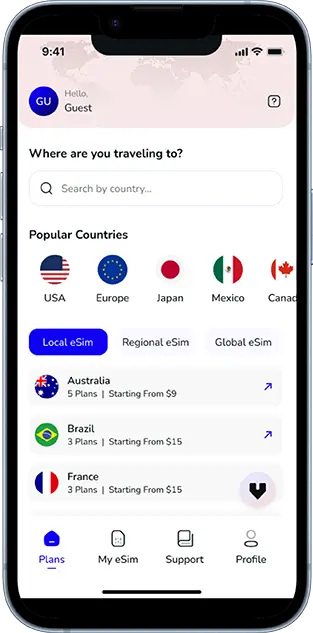
Relying on airport WiFi alone is risky since it is often slow, requires sign-in codes, or drops entirely once you leave the terminal for a landside transfer. A travel eSIM plan for long layovers from Voye Global gives you working mobile data the moment you land, without needing a local SIM card or relying on the airport network. It installs digitally before you even leave home, so it is active the second your flight touches down. For the times you are stuck in the air and need to check your connection details mid-flight, pairing this with an in-flight WiFi guide covers you gate to gate. You can browse plans by country or region on the Voye Global homepage before your next trip.

Key Takeaways
The layover vs connecting flight question ultimately comes down to time and documentation. Anything under 24 hours at an intermediate airport is generally a layover or transit, while anything longer is a stopover that usually needs proper entry paperwork. Whether you need a visa depends on your nationality, the transit country’s rules, and whether your connection stays airside or forces you landside through immigration. Confirm your terminal transfer type, check self-transfer visa rules if you booked separately, and give yourself enough buffer time so a tight connection does not turn into a missed flight. Get the documentation right first, and the rest of the connection becomes just another part of the trip.
Frequently Asked Questions
A connecting flight is simply the second leg of your journey, while a layover is the waiting period between flights at that intermediate airport. In the layover vs connecting flight comparison, the connecting flight is the trip, and the layover is the pause before it.
Under 45 minutes for domestic connections or under 90 minutes for international ones is generally too short, especially if you need to change terminals or clear immigration. Tight layovers risk missed flights if your first flight is even slightly delayed.
If the delay was the airline’s fault, they typically rebook you on the next available flight at no extra cost. If it was a self-transfer on separate tickets or a documentation issue, you may need to purchase a new ticket yourself.
It depends on the airport. If you stay within the same secure airside zone, you usually skip security. If you exit to a landside area or switch terminals without an airside connection, you will need to clear security and sometimes immigration again.
Plan for at least two to three hours for an international connection, more if you are changing terminals, airlines, or need to clear immigration for a landside transfer. Airports with known congestion or long security lines deserve extra buffer time.
Only if your visa status allows it and you have enough time to clear immigration both ways. Many countries offer visa-free transit passes for layovers over a certain length, but you must confirm this before leaving the terminal.
A long layover generally means anywhere from six hours up to just under 24 hours, long enough to leave the airport if permitted, grab a meal in the city, or rest at an airport hotel before your connecting flight.
Usually not if your bags are checked through to your final destination on the same booking. However, self-transfer itineraries on separate tickets almost always require you to collect and recheck your luggage at the connecting airport.

Seamless Mobile Data Everywhere














 English