




Why Do Foreign Transaction Fees Quietly Drain Your Travel Budget?
Most US credit cards charge a foreign transaction fee of around 3% on every purchase made outside the country, including online bookings in foreign currency. On a two week trip where you spend $3,000 on hotels, meals, and activities, that is roughly $90 gone before you even notice it on the statement.
The fee applies quietly. It shows up as a small line item next to each charge, so a $40 dinner becomes $41.20 and a $500 hotel deposit becomes $515. Multiply that across a week of daily spending and it adds up to real money that could have gone toward another night’s stay or a better seat on the flight home.
Digital nomads and frequent flyers feel this the most because they spend abroad constantly, not just on one vacation a year. A card built for international travel removes this fee entirely and often pays you back in points instead.
Global Coverage, Local Rates
Experience hassle-free connectivity wherever you go.
Comparing the Best International Travel Credit Cards: Fees, Perks, and Point Value?
Here is how some of the most commonly recommended international travel credit cards for 2026 stack up. Rates, fees, and rewards change over time, so always confirm current terms directly with the issuer before applying.
| Card | Annual Fee | Foreign Transaction Fee | Best For |
|---|---|---|---|
| Chase Sapphire Preferred | $95 | None | Balanced earning on travel and dining |
| Capital One Venture Rewards | $95 | None | Simple flat-rate miles on every purchase |
| Capital One Venture X | $395 | None | Frequent flyers who use lounges often |
| Wells Fargo Autograph Journey | $95 | None | Hotel and airline transfer partners |
| Bank of America Travel Rewards | $0 | None | Occasional travelers who want no annual fee |
| Discover it Miles | $0 | None | Beginners, but check acceptance abroad first |
A few things to weigh beyond the table:
- Point value on transfer. Cards tied to airline and hotel transfer partners often stretch further than flat cash back, but only if you actually use those partners.
- Lounge access. Premium cards like Venture X or Sapphire Reserve include lounge visits that can offset part of the annual fee for someone flying monthly.
- Acceptance abroad. Visa and Mastercard are accepted almost everywhere. Discover and American Express have gaps in parts of Europe, Asia, and Latin America, so carry a backup.
- Purchase protections. Trip delay coverage, rental car insurance, and lost luggage reimbursement matter more the longer and further you travel.
Which Card Fits Frequent Flyers vs. Occasional Travelers?
Not every card makes sense for every travel pattern. Matching the card to how often you actually fly is what determines whether the annual fee pays for itself.
What Should Frequent Flyers Look For?
If you travel monthly or spend more than 60 nights a year abroad, a premium card with lounge access, statement credits for TSA PreCheck or Global Entry, and strong transfer partners usually earns back its fee within a few trips. Capital One Venture X and Chase Sapphire Reserve fall into this category, and the points can offset flight or hotel costs that would otherwise come straight out of pocket.
What Works Better for Occasional Travelers?
If you take one or two international trips a year, a no-annual-fee card with no foreign transaction fee, like the Bank of America Travel Rewards card, is usually the smarter pick. You still avoid the 3% surcharge on every purchase without paying for lounge perks you will rarely use.
What About Digital Nomads and Long-Term Travelers?
Digital nomads benefit from a card with strong purchase protection and wide global acceptance, since they are booking coworking spaces, long-term rentals, and domestic flights in multiple countries within the same month. A mid-tier card with no foreign fee and solid travel insurance, paired with a backup debit card for ATM withdrawals, tends to cover most situations.
How Pairing a Travel Credit Card With an eSIM Covers Every Angle Abroad?
A no-fee card solves the banking side of travel, but it does not solve the roaming bill that shows up if your phone quietly connects to a foreign carrier at full price. That is where an eSIM, a digital SIM you activate without swapping a physical card, fills the gap.
Here is what a fully prepared trip looks like when both pieces are in place:
- You land, switch on your eSIM for international travel, and you are online before you clear the taxi line, with no local SIM shop and no roaming charges.
- You pay for that taxi, dinner, or hotel deposit with a card that carries zero foreign transaction fees, so the price on the receipt is the price you actually pay.
- If your data plan runs low mid-trip, you top up the eSIM instantly from your phone instead of hunting for a store, the same way you would check your card balance from an app.
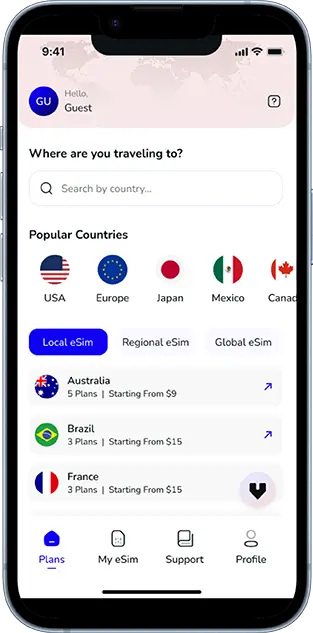
Voye Global works this way across 130+ countries, with plans sized for a long weekend or a multi-month stay, so digital nomads and frequent flyers are not paying for data they will never use. It is worth reviewing your best eSIM for 2026 options at the same time you compare cards, since both decisions are really about the same goal: no surprise charges once you are already abroad.
For travelers who split trips across multiple regions, for example a business trip through the Middle East followed by a stopover in Europe, a single eSIM for Middle East travel avoids buying a new SIM at every border, which mirrors the whole point of a no-foreign-fee card: fewer transactions, fewer surprises, one system that just works.
Your Pre-Departure Checklist: Cards, Cash, and Connectivity?
Before you pack, run through this short list so nothing gets sorted out in an airport line:
- Confirm your card has no foreign transaction fee and call the issuer to set a travel notice if it still requires one.
- Carry a backup card from a different network (Visa plus Mastercard) in case one is not accepted somewhere.
- Bring a small amount of local cash for markets, tips, or small vendors that only take cash.
- Activate your eSIM before departure so it is ready the moment you land, rather than fumbling with setup at the gate.
- Check your phone’s eSIM checklist to confirm your device is compatible and your plan matches your trip length.
- Screenshot your confirmation numbers and card contact info in case you lose signal or your wallet gets misplaced.
- Review international money exchange tips so you know when to use a card versus a local ATM.
Getting these small things right before departure is what separates a smooth trip from one spent troubleshooting at the airport.
Your Journey, Our eSIM
Stay online abroad with instant activation.
Bringing It All Together
The best international travel credit cards for 2026 all share the same core feature: no foreign transaction fee, so every purchase abroad costs exactly what it says. Beyond that, the right pick depends on how often you travel, whether lounge access matters to you, and which transfer partners fit your usual routes.
Once your card is sorted, close the other gap that costs travelers money: roaming. Setting up a Voye Global eSIM before you fly means you land connected, skip the local SIM counter, and avoid the same kind of quiet overcharges a bad credit card can cause. Card and connectivity, sorted together, before you even board.
Frequently Asked Questions
There is no single best card for everyone. Chase Sapphire Preferred, Capital One Venture Rewards, and Bank of America Travel Rewards are commonly recommended international travel credit cards with no foreign transaction fees, each suited to different spending habits and travel frequency.
Premium cards like Capital One Venture X and Chase Sapphire Reserve tend to offer the strongest travel rewards, including lounge access and transfer partners, but they carry higher annual fees that only pay off for frequent flyers.
Yes, if you travel abroad even once or twice a year, since a card with no foreign transaction fee saves roughly 3% on every purchase. For frequent flyers, the added perks and points often outweigh the annual fee too.
The best international travel credit cards do not charge foreign transaction fees at all. Always confirm this detail before applying, since some cards marketed for travel still include a small fee on purchases made outside the US.
Yes, as long as the card explicitly states no foreign transaction fee. Otherwise, most US cards add around 3% to every purchase made abroad, which adds up quickly on longer trips.
Get a card with no foreign transaction fee and wide acceptance, such as one on the Visa or Mastercard network. Also set a travel notice with your issuer and carry a backup card in case one is declined.
Match the card to your travel frequency. Occasional travelers should prioritize no annual fee and no foreign transaction fee, while frequent flyers benefit more from premium perks like lounge access and airline transfer partners.
Credit cards generally offer better fraud protection and rewards, while debit cards are useful for local ATM withdrawals. Carrying both, alongside an active eSIM for banking app access, covers most situations abroad.

Seamless Mobile Data Everywhere














 English