




What Makes the Golden Triangle India’s Most Popular Route?
The triangle covers roughly 720 kilometers total across three cities that show three completely different faces of India. Delhi is layered history and modern sprawl. Agra is a one-monument town built around the world’s most famous mausoleum. Jaipur is pink sandstone, royal palaces, and organized bazaars that feel calmer after Delhi’s old city. Most travelers do it in 6 to 8 days by private car with a driver, which keeps the road trip flexible without requiring anyone to navigate Indian highways themselves.
What surprises first-timers is not the distance, it is the density. Delhi alone can absorb three full days. Trying to compress the whole triangle into four days means rushing the Taj Mahal, which defeats the point of coming at all.
Delhi, Where the Trip Begins
Humayun’s Tomb Before the Crowds

Start here, not at the more famous sites. Humayun’s Tomb is a genuine Mughal masterpiece, the architectural predecessor to the Taj Mahal, set inside manicured Persian gardens with red sandstone and white marble domes. Arrive by 8am and you will often have entire courtyards nearly to yourself, which is a rare thing in Delhi.
Chandni Chowk by Cycle Rickshaw
Chandni Chowk is Old Delhi’s central market, a tangle of lanes so narrow and packed that a car cannot move through them. A cycle rickshaw is genuinely the only practical way to cover any real distance here in under an hour. Book one at the entrance near the Red Fort and let the driver navigate the wedding card lane, the paratha alley, and the jewelry quarter while you take it in from just above the crowd.
Qutub Minar and the Spice Market at Khari Baoli
Qutub Minar, a 73-meter minaret dating to 1193, is worth the afternoon on its own. Then head to Khari Baoli, Asia’s largest spice market, tucked behind Chandni Chowk. Sacks of dried chilies, turmeric, and cardamom stack floor to ceiling, and the smell alone is worth the visit even if you buy nothing.
Book Trains Without Signal Stress
Reliable data means IRCTC bookings and rickshaw rides never wait on WiFi again.
Getting From Delhi to Agra
Agra sits about 230 kilometers south of Delhi, roughly a 3 to 4 hour drive on the Yamuna Expressway, or 2 hours by the fastest trains like the Gatimaan Express. If you go by rail, book through the official IRCTC app in advance, since Agra-bound trains sell out days ahead during peak season.
The Taj Mahal at Three Different Times of Day

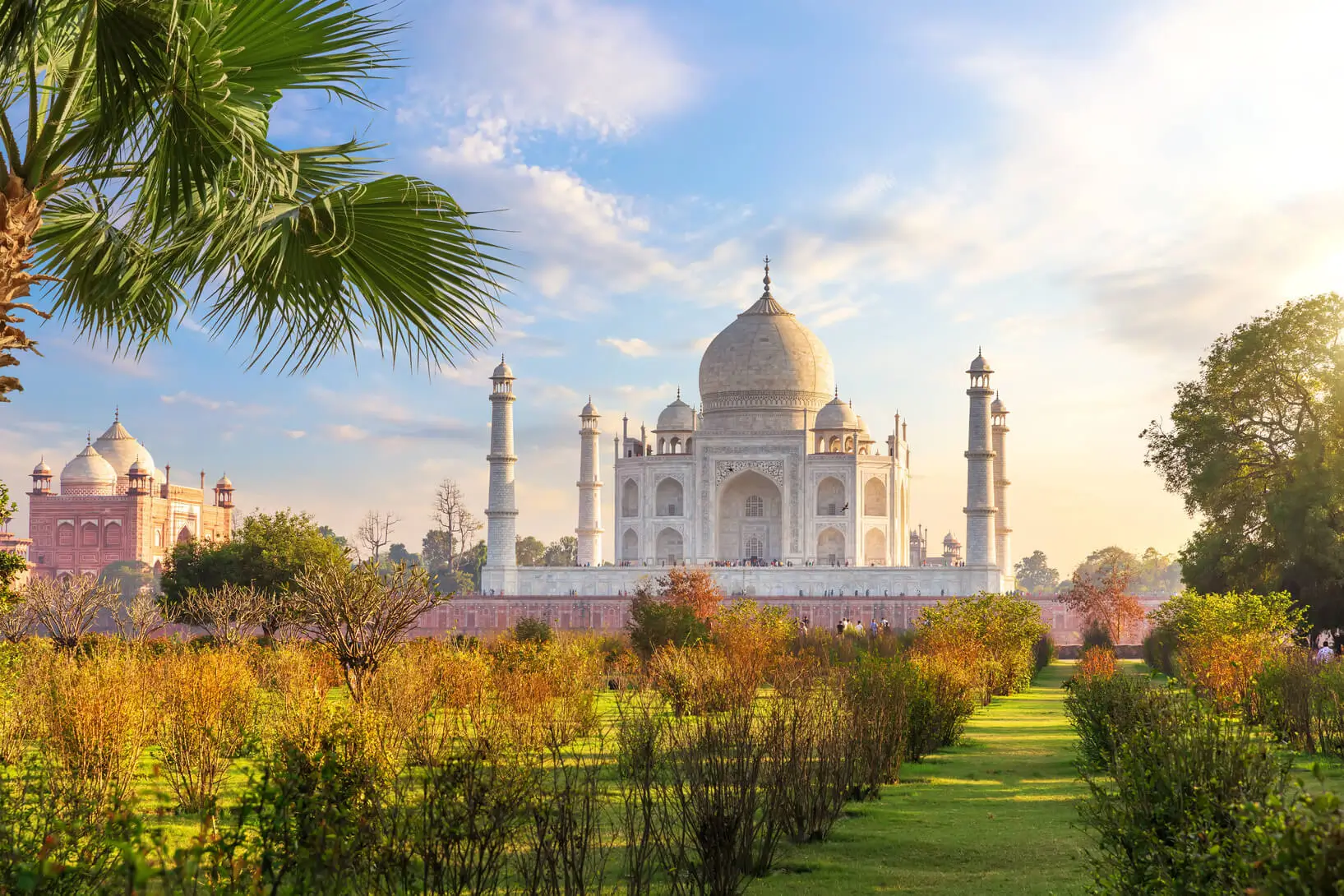
See it more than once if your schedule allows. At sunrise, the light is soft and cool, the crowds are thin, and the marble takes on a pale pink tone that photographs beautifully. By midday, direct sun makes the white marble glow almost blindingly bright, an entirely different mood. At sunset, the stone shifts to a warm gold, and this is when most of the postcard shots are taken. Each visit requires a separate ticket, so budget for it if the Taj is the whole reason you came.
Agra Fort and Fatehpur Sikri Are Worth the Extra Day
Most tourists see the Taj and leave the same afternoon, and most of them regret it. Agra Fort, a UNESCO site just 2.5 kilometers from the Taj, is where Shah Jahan was imprisoned by his own son with a view of the monument he built for his wife. Fatehpur Sikri, a 16th-century abandoned Mughal capital 40 kilometers away, is a full red sandstone city that feels frozen in time and draws a fraction of the visitors either Delhi or the Taj gets.
Check out our plans
-
India 7 Days Unlimited Data
USD 13.00 -
India 10 Days Unlimited Data
USD 17.00 -
India 20 Days Unlimited Data
USD 29.00 -
India 3 Days Unlimited
USD 6.00 -
India 7 Days 5GB
USD 9.00 -
India 15 Days 8GB
USD 15.00
Jaipur, the Pink City
Jaipur is 240 kilometers from Agra, about 5 hours by road on the Yamuna and Agra-Lucknow Expressways.

Amber Fort, Jeep or Elephant?
Amber Fort sits on a ridge above Maota Lake, and you have two ways up: jeep or elephant. Be honest with yourself about the elephant option. Animal welfare groups have raised well documented concerns about the working conditions for elephants used on this route, including heat exposure and repetitive strain. A shared jeep costs a fraction of the price, takes less time, and avoids the issue entirely. Most recent visitors, and increasingly most guides, recommend the jeep.
City Palace, Hawa Mahal, and the Bazaars
The City Palace complex is still partly home to Jaipur’s royal family and holds an impressive textile and weapons museum. Hawa Mahal, the honeycombed pink facade with 953 small windows, is really a five-minute photo stop from the street rather than a place you go inside, so plan accordingly. Afterward, the covered bazaars around Johari and Bapu Bazaar are where Jaipur is genuinely strong, especially for block-printed textiles and hand-painted blue pottery.
How Do You Stay Connected on a Rajasthan Road Trip?
Ola and Uber both operate reliably across Delhi, Agra, and Jaipur, and they are the honest alternative to negotiating a price with every auto-rickshaw driver you flag down. Both apps need a working data connection to book a ride and track your driver, so this is not something you can wing on hotel WiFi alone.
The same goes for train travel. Booking Delhi-Agra-Jaipur legs through IRCTC requires the app itself, not just a browser, and last-minute bookings from a train platform with no signal is a common and avoidable stress point.
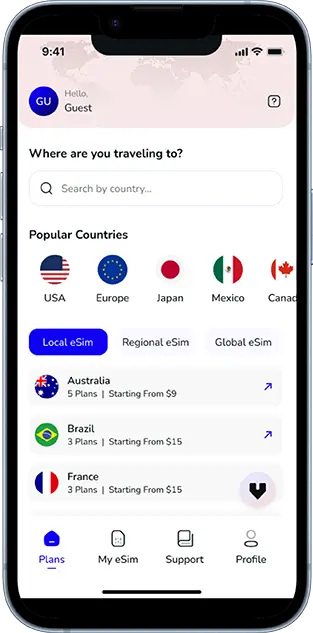
One data use case travelers consistently overlook is Google Translate’s camera mode. Point your phone at a Hindi or Devanagari menu in a local dhaba and it translates in real time, which makes independent restaurant eating in India dramatically easier than trying to guess or rely on an English menu that may not exist. If your phone shows no service abroad the moment you land, or your eSIM stops working abroad mid-trip, sort it before you are standing in Chandni Chowk trying to find a rickshaw. Voye Global covers India with local eSIM data plans that activate before you land, so Ola, IRCTC, and Google Translate all work from the moment you step off the plane. For more on using Google Maps without internet as a backup, that guide covers offline map downloads worth doing before you leave home too.
Order Food Without Guessing the Menu
Keep Google Translate camera working everywhere so ordering food never means guessing.
Planning Your Route and Timing
The classic order is Delhi to Agra to Jaipur, then back to Delhi to fly out, forming the actual triangle shape the route is named for. October through March is the best window, when daytime temperatures sit in a comfortable 20 to 28°C range instead of the 45°C summer heat that makes sightseeing genuinely dangerous by midday.
Most travelers hire a driver rather than self-drive. Indian highway driving involves lane conventions, horn signaling, and traffic density that take real local experience to navigate safely, and a private car with driver for the full triangle typically runs between $150 and $300 for the whole route depending on the vehicle and season, which is often cheaper than three separate flights once you add ground transfers.
Before you go, run through Voye Global’s broader essential travel tips and keep an emergency travel guide saved offline. If road trips are your thing beyond India, the eSIM for road trips guide covers the connectivity basics for any long drive, and Voye Global has country-specific eSIM plans ready before your next departure.
The golden triangle rewards travelers who prepare for the intensity rather than avoid it. Delhi’s noise fades into a rhythm by day two, the Taj Mahal earns every bit of its reputation, and Jaipur sends you home with more textiles than your suitcase planned for. Go in with a route, a driver, working data, and realistic expectations, and the chaos becomes part of the story instead of the obstacle to it.
Frequently Asked Questions
Most travelers need 6 to 8 days for a comfortable golden triangle road trip covering Delhi, Agra, and Jaipur. Fewer days is possible but forces you to rush the Taj Mahal and Delhi’s old city, which are the trip’s biggest highlights.
Jaipur, the golden triangle’s third stop, is in Rajasthan, though Delhi and Agra sit outside the state. Many travelers extend the golden triangle road trip further into Rajasthan afterward to visit Udaipur or Jodhpur.
October through March is best, with daytime temperatures between 20 and 28°C. Summer months push past 45°C in Delhi and Agra, which makes outdoor sightseeing at the Taj Mahal and Amber Fort genuinely uncomfortable and risky.
Jaipur is about 280 kilometers from Delhi, roughly a 5 to 6 hour direct drive. Most itineraries route through Agra first instead, making the full golden triangle road trip closer to 720 kilometers total.
Self-driving is technically possible but rarely recommended. Indian highway traffic patterns, horn-based signaling, and lane conventions require real local experience, so most visitors hire a private car with driver for the entire golden triangle road trip instead.
The standard route runs Delhi to Agra to Jaipur and back to Delhi, forming the actual triangle shape. This order lets you fly in and out of Delhi while covering the Taj Mahal and Jaipur’s forts in a logical loop.
A private car with driver for the full golden triangle road trip typically costs $150 to $300 depending on vehicle and season, plus hotels, entry fees, and meals. Budget travelers can do it for less using trains between cities.
Yes, the golden triangle route is one of India’s most-traveled tourist corridors and generally safe with a hired driver or organized transport. Standard precautions apply, like avoiding late-night solo travel and keeping data active for maps and ride apps.

Seamless Mobile Data Everywhere












 English