




Landing in a new country to start university is thrilling, but the first few hours are rarely glamorous. You are hauling suitcases through a crowded arrivals hall, trying to find the shuttle to campus, and hoping your phone still has enough signal to load a map. This is exactly why The eSIM Plan Every International Student Needs Before Move-In Day matters so much. Before you have a local bank account, a phone number, or even your student ID card, you need a reliable way to get online the moment you land, message your family, and find your dorm.
This guide covers why data on day one is non negotiable, how an eSIM compares to waiting for a local student SIM contract, and when it makes sense to switch to a long term local plan once you are fully settled.
Why International Students Should Choose an eSIM?
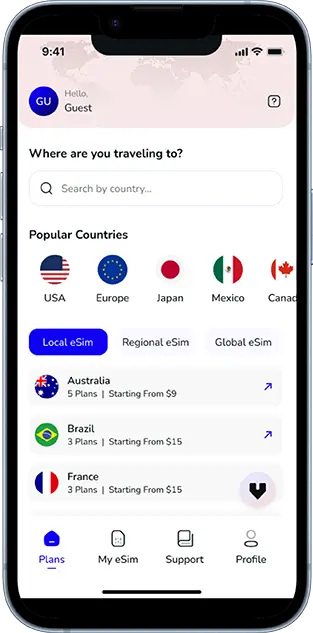
An eSIM, short for embedded SIM, is a digital SIM card already built into most phones released in the last few years. Instead of picking up a plastic card at an airport kiosk, you install a data plan as a small digital profile, usually by scanning a QR code or through an app. You can do this from your home country days before your flight, then simply switch it on the moment you land.
That matters enormously for international students. Prepaid eSIM plans typically do not require a local bank account, a credit check, or proof of address, the exact things you will not have until you are a week or two into your new life abroad. Providers like Voye Global sell country specific and regional eSIM data plans for the United States and more than 130 other countries, so you can buy and install your plan before you even pack your bags. If you want a deeper look at how this fits into a broader study abroad plan, this guide to eSIM plans for study abroad covers the basics well.
Get Connected Before You Land
Activate your eSIM before takeoff for instant data upon arrival.
Why Move-In Day Is the Worst Time to Be Without Data?
Think through what actually happens between touching down and unlocking your dorm room door. You clear immigration, collect your bags, and need to find your pre booked airport pickup or order a rideshare. Many campus welcome teams send gate numbers, shuttle times, or check-in QR codes by text or app notification, not paper.
Airport WiFi is often slow, restricted to a short free window, or requires a local phone number to receive a login code, which is a frustrating loop when you do not have one yet. Meanwhile, your family back home is waiting for a message that you landed safely, and every hour of silence adds worry on their end.
This is where an eSIM installed before departure earns its keep. You land, your data connects automatically or with one tap, and you can call a rideshare, pull up your dorm’s exact address, and send a quick voice note home, all before you have left the terminal. For more on why the first day sets the tone for the whole trip, this piece on staying connected on your first day abroad walks through the same logic for any international traveler.
eSIM vs. Waiting for a Local Student SIM Contract
Many students plan to just sign up for a local carrier once they arrive. It is a reasonable instinct since a postpaid plan is often cheaper per gigabyte over months, but it is rarely fast to set up in week one.
Here is how the two options actually compare during your first days in a new country:
| eSIM (Voye Global) | Local Student SIM Contract | |
|---|---|---|
| Setup before landing | Yes, install and activate before you fly | No, requires an in-person store visit |
| What you need | A compatible phone and a payment card | Local bank account, proof of address, sometimes a Social Security Number |
| Activation time | Minutes, often before you leave the airport | Days to weeks, depending on paperwork and credit checks |
| Commitment | Prepaid, no long term contract | Often a 12 or 24 month agreement |
| Best for | The first days to weeks after arrival | Long term use once you are fully settled |
Most US carriers ask for a Social Security Number or a substantial deposit from anyone without US credit history, and getting a Social Security Number itself can take two to four weeks after your visa paperwork clears on campus. An eSIM sidesteps all of that. You are not waiting on paperwork to get connected, you are just downloading a profile and topping up data as you need it.
Staying in Touch With Family Across Time Zones
Once you are through the airport, the next challenge is timing. If you have moved from India, Nigeria, or the Philippines to study in the US, the time difference with home can be eight to thirteen hours, which means the only overlap for a video call might be your early morning or their late evening.
Reliable, always-on data makes this easier to manage than relying on patchy campus or cafe WiFi. Apps like WhatsApp, FaceTime, and voice notes all run on mobile data, so a decent eSIM plan lets you check in the moment you have five free minutes between orientation sessions, rather than waiting to find a strong WiFi signal.
Data connectivity also matters for the practical side of settling in. Opening a US bank account or verifying a new campus app almost always involves a one-time code sent by SMS. If you are curious how that works on a digital SIM, this guide on receiving SMS with an eSIM abroad explains it clearly.
Skip The Local SIM Wait
Avoid bank accounts and contracts, get campus-ready data in minutes.
Data for Orientation, Maps, and Campus Apps in Week One
Orientation week is data hungry in ways students do not always expect. Between campus maps, digital student ID setup, meal plan apps, shuttle bus trackers, class registration portals, and the inevitable GroupMe or WhatsApp group your floor creates on day one, you will burn through data faster than a normal week of browsing.
A realistic estimate for most students is five to ten gigabytes for the first week alone, factoring in navigation, video calls home, streaming a show to unwind, and constant app notifications. If you are unsure how much to buy upfront, this breakdown of whether unlimited eSIM plans are worth it can help you decide between a fixed data bundle and an unlimited option based on how you actually use your phone.
Switching to a Long-Term Local Plan After You’re Settled
An eSIM is designed to solve the first stretch, not necessarily your entire degree. Once you have a Social Security Number, a US bank account, and a permanent dorm or apartment address, usually two to six weeks in, you will qualify for the cheaper long term plans local carriers offer students.
At that point, many students either switch to a local postpaid plan entirely or keep a flexible eSIM active for trips home, spring break travel, or semesters abroad, since it can be topped up instantly without a new contract. If you are weighing your options against a specific US carrier, this comparison of eSIM plans versus T-Mobile international data is worth a look. And before any future flight, it is worth confirming your plan is working properly using this guide to testing your Voye Global data plan before you travel.
Whichever route you choose, the smartest approach is starting connected. You can browse country and regional eSIM plans on the Voye Global website and pick the one that matches your move-in date and destination.
Frequently Asked Questions
1. Is an eSIM good for international students studying in the US?
Yes, an eSIM is one of the easiest ways for international students to get connected the moment they land in the US. It works without a local bank account, address, or credit history, so you can have data for maps, rideshares, and messaging family before you even reach campus.
2. What is the best eSIM plan for international students moving to the US?
The best eSIM plan for international students covers your first two to four weeks with enough data for maps, video calls, and app downloads, roughly 5 to 10GB weekly. Look for a plan that offers flexible top-ups so you can extend coverage without switching providers.
3. Can international students use an eSIM instead of a US phone plan?
Yes, many international students use an eSIM as their main connection for weeks or months, especially before qualifying for a local contract. It handles calls over apps like WhatsApp, texting, navigation, and data, making a full US phone plan unnecessary until you are ready to commit long term.
4. Do I need a US SIM card if I have an eSIM?
No, you do not need a physical US SIM card if your phone has an active eSIM plan. An eSIM provides the same cellular data and, depending on the plan, calling and texting, without needing to visit a store or swap a physical card after landing.
5. How does an eSIM work for students arriving in the US?
An eSIM is a digital SIM profile you install through a QR code or app before you fly, then activate once you land or connect to airport WiFi. There is no physical card to collect, so your data works within minutes of arriving on US soil.
6. Does my phone support eSIM before I move to the US?
Most smartphones released since 2018, including iPhone XS and later and many Samsung Galaxy and Google Pixel models, support eSIM. Check your phone’s settings under Mobile or Cellular for an Add eSIM option, or check your model against a device compatibility list before you fly.
7. How much data do I need as an international student in the US?
Plan for roughly 5 to 10GB in your first week to cover orientation apps, campus maps, and video calls home, then 8 to 15GB per month once you settle into a routine of classes, streaming, and social apps. Heavy streamers or gamers should budget more.
8. Can I activate an eSIM before I arrive in the US?
Yes, you can install an eSIM profile from your home country and activate it as soon as you land, or even in the air if the flight has WiFi. This is one of the biggest advantages over a physical SIM, which you can only collect once you are in the country.

Seamless Mobile Data Everywhere














 English