




If you are a T-Mobile subscriber heading abroad in 2026, you have probably already heard the pitch: free international data in over 215 countries, no setup required, no extra SIM card to buy. It sounds like the perfect travel companion, and for a weekend trip or a light data user, it might just be.
But here is where the story gets complicated.
That “free” international data comes with a catch that many travelers only discover mid-trip, usually while trying to load a map or send a video and watching the spinning wheel go nowhere. T-Mobile international data, while genuinely included with most plans, operates mostly at 2G speeds. You get a slice of high-speed data, and once that runs out, you are back to speeds that feel more like 2005 than 2026.
What Does T-Mobile Include for International Travel?
T-Mobile has long marketed its international benefits as a standout feature. Here is what most T-Mobile plans actually include when you travel abroad in 2026:
- Unlimited 2G data in 215+ countries and destinations. This is the headline feature, and it sounds generous until you realize that 2G speeds hover around 128 to 256 kbps. For context, that is fast enough to send a text message or maybe load a simple webpage in a minute or two. Streaming, video calls, navigation with live traffic, uploading photos to Instagram? Not a chance.
- High-speed data, which is typically capped at a few gigabytes depending on your specific plan. Higher-tier plans like Go5G Plus and Go5G Next include a larger monthly high-speed data allowance internationally, but even those plans throttle you back to 2G once the cap is reached.
- International texting is included free across all major plans, and that part actually works well.
- Voice calls abroad are charged at roughly $0.25 per minute unless you are using Wi-Fi calling or have added an international calling package.
The key takeaway: T-Mobile international roaming is genuinely useful as a backup connection or for very light use. But for travelers who rely on their phones for navigation, booking accommodations, video calls home, or uploading content, the 2G fallback quickly becomes a frustration in an era where 5G is now standard across most major travel destinations.
Is 5GB of High-Speed Data Enough for Modern Travel in 2026?
Let us put 5GB into perspective for the way most people actually travel today.
Google Maps uses roughly 3 to 5 MB per hour of active navigation. If you are navigating around a new city for six hours a day, that is about 18 to 30 MB per day, so maps alone are relatively efficient.
But then add everything else. Streaming a single hour of YouTube at standard definition consumes about 500 MB. A 15-minute FaceTime or WhatsApp video call at decent quality eats through 200 to 400 MB. Uploading a travel video reel to Instagram or TikTok can use another 150 to 300 MB depending on file size. Browsing travel blogs, checking restaurant reviews, booking hotels, pulling up digital tickets, and just using your phone normally through the day? That adds up fast.
In 2026, travelers are more connected than ever. AI travel assistants, real-time translation apps, augmented reality city guides, and contactless everything have made high-speed mobile data less of a luxury and more of a baseline necessity. A moderate smartphone user can burn through 1 to 2 GB per day without any intentional media consumption. Heavy users, content creators, or anyone working remotely while traveling can easily hit 3 to 5 GB in a single day.
For a trip lasting more than a few days, 5GB of high-speed T-Mobile international data is rarely enough.
What Happens After You Hit the T-Mobile 5GB Cap?
Once your high-speed allowance runs out, T-Mobile does not cut your data entirely. Instead, it throttles your connection back to 2G speeds for the remainder of your billing cycle.
In practical terms, 2G abroad means:
- Maps will load slowly and often fail to render in real time
- Video calls become pixelated or drop entirely
- Streaming is not realistically possible
- Web pages take 30 to 60 seconds to load, if they load at all
- Mobile apps that rely on real-time data (ride-hailing, restaurant booking, hotel apps) will time out or struggle to refresh
- AI-powered travel tools and translation apps, which are now integral to how most people navigate foreign countries in 2026, become nearly unusable
For travelers who hit this cap on day three of a two-week trip, the remaining eleven days become an exercise in Wi-Fi hunting. You end up planning your itinerary around coffee shop locations rather than what you actually want to do and see.
This is the moment most T-Mobile subscribers start looking for alternatives, often while already abroad and paying premium prices for airport data cards or hotel Wi-Fi packages.
Is the T-Mobile International Pass Worth It in 2026?
T-Mobile does offer a paid upgrade: the T-Mobile International Pass. This add-on gives you a day of high-speed data for around $5 per day or a week of coverage for approximately $35, depending on your plan and destination.
At first glance, that sounds reasonable. But let us do the math for a two-week international trip:
- 14 days x $5 per day = $70 in International Pass charges on top of your existing monthly bill
- Alternatively, the weekly option at $35 x 2 = $70
That is $70 for high-speed data during a two-week vacation, with speeds and performance that still depend on local network conditions and T-Mobile’s roaming partnerships. In some countries, the experience is solid. In others, especially in parts of Southeast Asia, South America, and Eastern Europe, the roaming connection is noticeably slower than using a local network directly.
There is also the issue of convenience. You need to activate the pass before or during travel, and coverage caps still apply depending on the plan tier. Missing an activation or running out mid-trip means you are back to 2G again.
For occasional travelers who take one short trip per year, the International Pass is a passable solution. For frequent travelers, long-stay visitors, or anyone spending two or more weeks abroad, it quickly starts to look like a costly and limiting option given how affordable and accessible travel eSIMs have become in 2026.
What Is a Travel eSIM and How Does It Work?
A travel eSIM (embedded SIM) is a digital SIM card that you install on your phone entirely online, without needing a physical card. Your T-Mobile SIM stays in place, and the eSIM runs as a secondary connection, meaning you can keep your T-Mobile number active for calls and texts while using the eSIM for data at full local network speeds.
By 2026, eSIM support is essentially universal across smartphones. All iPhones from iPhone XS onward support eSIM, as do the vast majority of Android flagships and mid-range devices from Samsung, Google, OnePlus, Xiaomi, and others. If you have bought a phone in the last four or five years, there is a very strong chance it is eSIM compatible.
The process is simple:
- Buy an eSIM plan online before your trip
- Scan a QR code or install the eSIM through the provider’s app
- Set the eSIM as your preferred data connection
- Your phone connects to local networks at your destination at full 4G LTE or 5G speed
No queues at airport kiosks, no hunting for a local SIM vendor, no compatibility issues, and no roaming fees charged to your main T-Mobile line.
T-Mobile International Data vs. Travel eSIM: A Side-by-Side Comparison
| Feature | T-Mobile International | Travel eSIM (Voye Global) |
|---|---|---|
| Default data speed | 2G (throttled) | 4G LTE / 5G local speeds |
| High-speed data cap | Limited (varies by plan) | Plan-based, often generous |
| Cost for 2 weeks | $70+ (International Pass) | Flexible, often lower |
| Hotspot / tethering | Restricted | Unrestricted |
| Setup required | None (automatic) | Simple QR code install |
| Local network access | Roaming partnership | Direct local network |
| Works in 100+ countries | Yes (2G) | Yes (varies by plan) |
| Keeps your phone number | Yes | Yes (eSIM runs alongside T-Mobile) |
| 5G availability | Limited via roaming | Where locally available |
The comparison makes one thing clear: T-Mobile international roaming wins on convenience for short trips and light use. Travel eSIMs win on speed, value, and reliability for anyone who needs their phone to function at full capacity while abroad in 2026.
Your Journey, Our eSIM
Stay online abroad with instant activation.
Which Travelers Benefit Most from Switching to a Travel eSIM?
Not every T-Mobile customer needs to make the switch. But for the following traveler profiles, a travel eSIM is almost always the smarter call:
- Long-stay travelers and slow travelers: If you are spending two weeks or more in a single destination or moving through multiple countries, a regional eSIM plan will almost always be more cost-effective than the T-Mobile International Pass and will deliver better speeds throughout.
- Remote workers and digital nomads: Working abroad in 2026 requires a stable, fast connection for video meetings, file uploads, cloud collaboration tools, and AI-assisted workflows. 2G cannot support any of this. A local-speed eSIM can.
- Content creators and travel influencers: Uploading reels, short-form videos, and travel stories eats through data quickly. You need fast speeds and generous data caps, not throttled 2G that makes every upload a waiting game.
- Families traveling together: Each person on a family plan hits their own data cap independently. Buying individual eSIM plans for each traveler is often more affordable and gives every family member their own reliable, high-speed connection.
- Budget-conscious travelers: If you are already watching your travel spending, paying $70 in International Pass charges on top of your regular phone bill is an expense worth questioning. A travel eSIM can cover the same period for a lower total cost while delivering a noticeably better experience.
- Business travelers: When reliability matters, a direct local network connection through an eSIM is more dependable than roaming through T-Mobile’s international partners, especially in regions where those partnerships are weaker or less consistent.
Why Voye Global Is the Smart Choice for International Travelers in 2026?
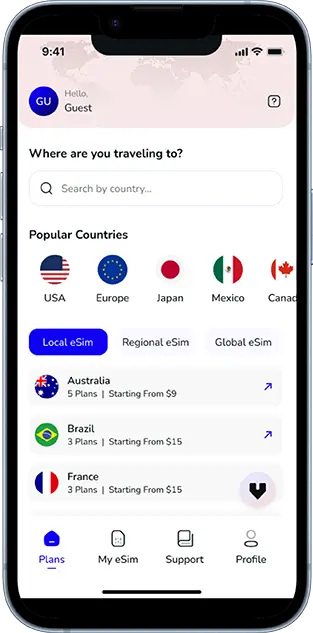
Voye Global is a travel eSIM provider built specifically for international travelers who want fast, reliable, and affordable mobile data without the complexity of traditional roaming or the hassle of hunting for a local SIM card on arrival.
Here is what sets Voye Global apart from the competition in 2026:
- True local network speeds: Voye Global connects you directly to leading local carriers at your destination, giving you 4G LTE and 5G speeds where available. No roaming middlemen, no speed penalties, no throttling surprises.
- Unrestricted hotspot: Every Voye Global plan includes unrestricted hotspot tethering. That means you can share your connection with a laptop, tablet, or travel companion without hitting a separate tethering cap or paying extra for the privilege.
- Flexible plans for every trip length: Whether you are traveling for 3 days or 30, Voye Global offers a range of plan sizes built around how you actually use data. Short trip? Grab a smaller plan. Extended travel? Choose an unlimited option where your daily data resets at midnight so you always start each day fresh.
- Coverage across 130+ countries: From Europe to Southeast Asia, the Middle East, the Americas, and beyond, Voye Global has destination-specific and regional plans that cover where travelers actually go in 2026.
- 24/7 multilingual support: Travel hiccups happen at all hours and in all time zones. Voye Global’s support team is available around the clock in multiple languages to help you troubleshoot, upgrade a plan, or get answers fast.
- Website and app in 13 languages: Voye Global’s website and app are both available in 13 languages, making it genuinely accessible for international travelers from all over the world, not just English speakers.
Global Coverage, Local Rates
Experience hassle-free connectivity wherever you go.
How to Set Up Your Voye Global eSIM Before Your Trip?
Getting started with Voye Global takes less than five minutes, and you can handle everything from your phone or laptop before you even pack your bag.
Step 1: Confirm eSIM compatibility. Visit voyeglobal.com and check that your device supports eSIM. If your phone was released in the last five years, it almost certainly does.
Step 2: Choose your destination and plan. Browse plans by country or region. Select the data size and duration that matches your trip.
Step 3: Purchase and install. After checkout, you will receive a QR code by email or directly in the Voye Global app. Scan it in your phone’s SIM settings to install the eSIM instantly.
Step 4: Set as your data line. Go to your phone’s SIM or cellular settings and set the Voye eSIM as your preferred data connection. Keep your T-Mobile SIM active for calls and texts as normal.
Step 5: Land and connect. When you arrive at your destination, your phone connects automatically to the local network through your Voye eSIM. No airport queues, no waiting, no SIM card hunting, and no roaming surprises on your next phone bill.
Final Verdict: When to Use T-Mobile International Data and When to Switch
T-Mobile international data is genuinely useful in specific situations. If you are taking a short border crossing, attending a brief conference abroad, or spending a weekend somewhere you know you will be mostly on Wi-Fi, the included 2G data alongside your high-speed allowance may be perfectly adequate.
But the moment your trip extends beyond a few days, or you are visiting a destination where you will rely on your phone for navigation, real-time translation, content creation, video calls, or remote work, the limits of T-Mobile international roaming become very real very fast.
In 2026, staying connected at full speed is no longer a luxury. It is how people travel. AI tools, contactless payments, digital boarding passes, live maps, and instant communication have all become standard parts of the travel experience, and every single one of them depends on a fast and reliable data connection.
Paying $5 per day through the T-Mobile International Pass adds up quickly and still locks you into a roaming setup that may not deliver the speeds and reliability of a direct local network connection. For a two-week trip, you are paying $70 or more for a solution that is still second-best.
A Voye Global travel eSIM gives you local network speeds, unrestricted hotspot access, a plan tailored to your exact trip length, and the freedom to keep your T-Mobile line doing what it does best: handling your calls and texts back home.
Whether you are backpacking through Southeast Asia, running client meetings in Europe, exploring Japan during festival season, or road-tripping across South America, Voye Global keeps you connected at the speeds that 2026 travel actually demands.

Seamless Mobile Data Everywhere














 English