




- Why Data Roaming Battery Drain Happens on Every Trip
- Roaming Compare to Local Data for Battery Life
- Which Apps Make Roaming Drain Your Battery Faster
- Practical Ways to Reduce Battery Drain While Traveling
- Turning Off Data Roaming Worth
- Battery, Data, and Cost
- Final Thoughts
- Frequently Asked Questions
Why Does Data Roaming Battery Drain Happen on Every Trip?
When your phone crosses a border, it doesn’t automatically know which local tower to trust. It scans repeatedly, negotiates with foreign networks, and often bounces between weaker signals before settling on a stable connection. All of that scanning burns power, and it’s the main reason data roaming battery drain feels so much worse than normal daily use at home.
The Network-Switching Battery Drain Explained
Your carrier’s roaming agreement usually routes your phone through a partner network in the country you’re visiting. That partner network isn’t always the strongest one available, so your phone keeps searching for a better signal in the background. Each search cycle uses the radio chip, which is one of the most power-hungry components in any smartphone.
Roaming Signal Strength and Power Consumption
A phone working to hold onto a weak or distant signal has to boost its transmission power to stay connected. Think of it like shouting across a room instead of speaking normally. The further your phone has to “reach” for a tower, especially in rural areas or between cities, the more battery it spends just to keep the call or data session alive.
Stop Roaming From Draining Your Battery
Switch to a stronger local connection and stop your phone hunting for signal all day
How Does Roaming Compare to Local Data for Battery Life?
A local SIM or eSIM (a digital SIM profile you can install without a physical card) connects your phone directly to a nearby network built for that region, so the radio doesn’t have to work as hard. That is one of the quieter benefits people don’t talk about enough. If you understand how data roaming works while traveling, you’ll notice that a strong, local connection almost always uses less power than a roaming one, on top of avoiding the usual overage fees.
Which Apps Make Roaming Drain Your Battery Faster?
Not every app affects your battery equally while roaming. Some apps are constantly pinging servers, refreshing content, or trying to sync in the background, which forces your phone’s radio to stay active longer.
- Maps and navigation apps that track your location in real time
- Video and social apps that autoplay content or refresh feeds constantly
- Messaging apps with read receipts and background sync turned on
- Cloud backup apps trying to upload photos the moment you take them
If you want a deeper look at which apps consume the most, our guide to apps that drain the most mobile data walks through the worst offenders and how to rein them in. If you’re also using your phone as a personal hotspot for a laptop or tablet, know that a secondary connection tends to push both data and battery drain even higher, since the phone has to power two connections at once.
Land Already Connected and Charged
Skip the tower-hunting that eats your battery within hours of arrival
Practical Ways to Reduce Battery Drain While Traveling
A few small changes before you leave the hotel can make a noticeable difference by the end of the day.
- Turn off background app refresh for apps you don’t need updating constantly
- Enable Low Data Mode, which also happens to reduce battery strain and takes just a few taps to switch on
- Switch to WiFi when you can, especially at hotels, cafes, or airports with reliable networks
- Lower your screen brightness and turn off location services for apps that don’t need them running all day
- Use offline maps for the areas you plan to explore, so your phone isn’t constantly pulling live data
- Carry a portable charger, since even with these adjustments, a full day of sightseeing and photos will use more power than a typical day at home
Is Turning Off Data Roaming Worth It?
For many travelers, yes. Turning off roaming stops your phone from repeatedly searching for a distant partner network, which is one of the biggest drivers of data roaming battery drain in the first place. Our breakdown of when to turn data roaming on or off covers the exact settings to check on both iPhone and Android, along with situations where leaving it on briefly still makes sense, like receiving an important call.
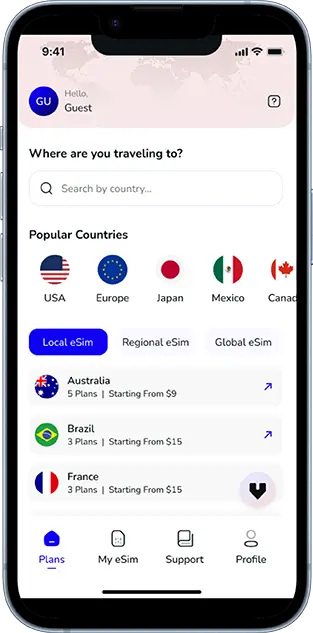
The better long-term fix is swapping roaming for a local connection altogether. An eSIM installs digitally, connects to a stronger local network the moment you land, and puts an end to the constant tower-hunting that eats through your charge. Voye Global offers eSIM data plans across more than 130 countries, so you get a steadier signal and a steadier battery without hunting for a SIM kiosk at the airport.
Battery, Data, and Cost: What to Consider Before You Fly
Battery drain is really a symptom of a bigger issue: your phone struggling to maintain a good connection abroad. Before your next trip, it helps to check a few things ahead of time, from your device’s roaming settings to how much data you’ll realistically need each day, and whether hotel WiFi, mobile data, or a mix of both makes more sense for how you’ll be using your phone that day.
Travel Smarter, Not Slower on Battery
Choose a data plan built for steady power and steady signal abroad
Final Thoughts
Data roaming battery drain isn’t in your head. It’s a predictable result of your phone constantly searching for a stable signal on an unfamiliar network. The fix is straightforward: adjust a few settings before you fly, keep an eye on which apps are running in the background, and consider switching to a local data connection instead of relying on your home carrier’s roaming service. Small changes add up to a phone that lasts through the whole day, not just the first few hours after landing.
Frequently Asked Questions
Check entry requirements, currency exchange options, and your phone’s roaming settings before departure. Roaming on a distant network can trigger data roaming battery drain and high fees, so many travelers switch to a local eSIM plan that connects to a stronger nearby network the moment they land.
It depends on your nationality and trip purpose. Many travelers from Visa Waiver Program countries can enter with an approved ESTA instead of a visa, while others need a tourist visa. Requirements vary, so always confirm current rules with the relevant embassy before booking.
A valid passport, any required visa or entry authorization, proof of onward travel, and travel insurance documents are standard essentials. It’s also smart to save digital copies of everything, since a stable data connection makes accessing them from your phone much easier abroad.
It isn’t legally required for most visitors, but medical care in the US can be expensive without coverage. Travel insurance protects against unexpected costs from illness, injury, or trip disruptions, making it a practical addition to any international trip planning checklist.
Declare items like cash over 10,000 USD, certain foods, and gifts above the duty-free allowance when entering the US. Rules can change, so check official guidance close to your travel date rather than relying on outdated information from a previous trip.
Yes, by switching to a local SIM or eSIM instead of your home carrier’s roaming service. This avoids per-day roaming fees and, as a bonus, tends to reduce data roaming battery drain since the phone connects to a stronger, closer network.
An eSIM is one of the most convenient options, since it installs digitally before you fly and activates the moment you land. It typically offers better signal strength than roaming, which also helps reduce data roaming battery drain during your trip.
Confirm your phone is unlocked and eSIM compatible, check your destination’s entry requirements, and set up a local data plan before departure. Small preparations like these prevent connectivity headaches and unnecessary battery drain once you’re actually exploring.

Seamless Mobile Data Everywhere














 English