




Imagine landing at an airport in Tokyo, Barcelona, or Nairobi. You turn off airplane mode, and within seconds, your phone is connected. You can pull up Google Maps, reply to messages, and check your hotel booking without hunting for a Wi-Fi password. That seamless moment is data roaming at work.
But what exactly is data roaming, how does it function behind the scenes, and why do so many travelers end up with unexpected charges on their phone bills? This guide answers all of those questions and explains how modern solutions like Voye Global eSIM are changing the way people stay connected abroad.
What Is Data Roaming?
Data roaming is the ability of your mobile device to access the internet using a cellular network that is different from your home carrier’s network. When you travel outside the coverage area of your primary mobile provider, your device connects to a partner network in the destination country to maintain service.
In simpler terms: your phone was designed to work on one specific carrier’s network. When you cross a border and that carrier’s towers are no longer within range, your phone looks for the next best available network to latch onto. If a roaming agreement exists between your home carrier and a local network operator in that country, your device will connect automatically. That connection is called roaming, and when it involves data (as opposed to just calls and texts), it is specifically referred to as data roaming.
It is worth understanding what “data” means in this context. Every time you open an app, send a photo, stream a video, load a webpage, or use a navigation tool on your phone, you are using mobile data. Data roaming means all of that activity happens through a foreign network rather than your home one.
How Does Data Roaming Work Technically?
Understanding the mechanics of data roaming helps you make smarter decisions about your connectivity options while traveling. Here is a step-by-step breakdown of what happens under the hood.
Step 1: Your SIM Card Sends Out a Signal
When you power on your phone in a new country, your SIM card begins broadcasting your identity to nearby cell towers. This identity is tied to your home carrier through what is called an IMSI (International Mobile Subscriber Identity), a unique number stored on your SIM that identifies you as a subscriber.
Step 2: Local Networks Detect Your Request
The foreign mobile networks in your destination country pick up your device’s signal. They check whether they have a roaming agreement with your home carrier. These agreements are called Inter-Operator Agreements (IOAs) or roaming agreements, and they are essentially commercial partnerships between carriers that allow each other’s subscribers to use their networks.
Step 3: Authentication Happens in Real Time
Once a compatible network is found, your home carrier is contacted for authentication. This happens through a protocol called the Home Location Register (HLR), a database that verifies your identity and confirms that your account is active and eligible for roaming. The process takes a fraction of a second and is invisible to you as the user.
Step 4: A Roaming Session Is Established
After authentication, your device is granted access to the visiting network. A temporary record called a Visitor Location Register (VLR) is created on the foreign network’s side. Your data traffic is then routed through this visiting network, bounced back through your home carrier’s systems (in many cases), and delivered to the websites or services you are trying to reach.
Step 5: Usage Is Tracked and Billed
Every megabyte of data you use while roaming is logged. The visiting network sends usage records to your home carrier, which then applies whatever roaming rates are included in your plan. This is often where travelers get an unpleasant surprise, since traditional roaming rates can be significantly higher than standard domestic data rates.
Types of Roaming
Not all roaming is the same. There are several categories worth knowing about.
- National Roaming occurs within the same country when your carrier does not have coverage in a specific region. Your phone switches to a partner network domestically to fill in coverage gaps. This usually happens transparently and without additional charges.
- International Roaming is what most travelers think of when they hear the word “roaming.” It involves connecting to a network in a different country. This is where rates can vary dramatically depending on your carrier and destination.
- Automatic Roaming means your phone connects to a foreign network without you doing anything. Most modern smartphones are configured to roam automatically when your home network is unavailable. You can disable this in your phone settings, which is useful if you want to avoid accidental roaming charges.
- Data-Only Roaming refers specifically to using mobile data while abroad, excluding voice calls or SMS. This is the most common type of roaming for smartphone users today, since most communication now happens through data-dependent apps like WhatsApp, iMessage, or Google Meet.
Why Is Data Roaming So Expensive?
The cost of traditional data roaming has long been a source of frustration for travelers. To understand why, you need to follow the money through the chain of operators involved.
When you roam on a foreign network, your home carrier pays a wholesale rate to the visiting carrier for the data you use. On top of that wholesale rate, your home carrier adds its own markup. The result is a per-megabyte or per-day price that can be many times higher than what you pay at home.
In regions without regulatory pricing caps, such as many destinations outside of Europe, these markups can be dramatic. Some carriers charge rates that translate to several dollars per megabyte of data. A single hour of map navigation or a few photo uploads can quickly add up to a bill of tens or even hundreds of dollars.
Europe introduced regulations years ago that significantly reduced intra-EU roaming costs for European consumers. However, travelers from other parts of the world visiting Europe, or travelers going anywhere in Asia, Africa, the Americas, or the Middle East, often face steep costs unless they have a specific international plan.
The Hidden Costs of Data Roaming You Should Know About
Beyond the obvious data charges, there are several sneaky costs that can inflate your roaming bill.
- Background App Refresh: Many apps on your phone refresh data in the background constantly, even when you are not actively using them. Email syncing, social media updates, and cloud backups can silently consume data while you sleep.
- App Updates: If automatic updates are enabled, your phone may download large app updates over cellular data the moment it connects to a roaming network.
- Streaming Quality: Apps like YouTube and Spotify often default to high-quality streaming, which uses far more data than lower-quality settings.
- Tethering and Hotspot Use: Sharing your roaming data connection with a laptop or tablet can multiply your usage very quickly.
- Daily Roaming Fees: Some carriers charge a flat daily fee when you roam internationally, even if you only use a tiny amount of data. On a two-week trip, those daily fees can add up to a substantial sum.
How to Manage Data Roaming While Traveling
Knowing how roaming works puts you in a position to manage it intelligently. Here are the most effective strategies.
- Check Your Plan Before You Leave: Contact your carrier before traveling to understand exactly what roaming rates apply to your destination. Ask about international day passes or travel add-ons that can reduce costs.
- Turn Off Automatic Roaming: On both iPhone and Android, you can toggle data roaming off in your cellular settings. This prevents your phone from connecting to foreign networks and racking up charges without your knowledge.
- Use Wi-Fi Whenever Possible: For non-urgent tasks, wait until you are connected to trusted Wi-Fi. Download maps offline before your trip using Google Maps or Maps.me so you have navigation without needing a data connection.
- Disable Background Data: Go into your phone’s settings and restrict background data for apps that do not need to refresh constantly. This alone can dramatically reduce unintentional roaming usage.
- Monitor Your Data Usage: Both iOS and Android have built-in tools to show you how much mobile data each app is using. Check this regularly when roaming to catch any unexpected data hogs early.
- Consider a Local SIM Card: Buying a prepaid SIM at your destination is a classic money-saving strategy. It gives you access to local data rates, which are almost always cheaper than international roaming. The downside is that you get a new phone number and may need to swap SIMs in and out of your phone.
The travel eSIM market has grown quickly, and this is exactly where companies like Voye Global have stepped in to solve a genuine problem for international travelers.
Global Coverage, Local Rates
Experience hassle-free connectivity wherever you go.
Voye Global eSIM: A Smarter Alternative to Traditional Roaming
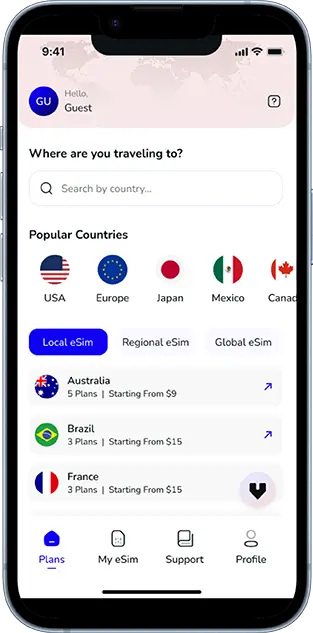
Voye Global is a telecommunications company that offers travelers reliable and affordable data connectivity across 130 or more countries. Using eSIM technology, Voye provides global coverage at competitive rates, removing the need for physical SIM cards or expensive roaming charges.
What makes Voye Global particularly compelling is its origin story. The kind of affordable, enterprise-grade global connectivity that Voye provides was previously available only to large businesses with dedicated telecom contracts. Voye has taken that same infrastructure and made it directly accessible to individual consumers, whether you are a solo backpacker, a business professional, or a family on vacation.
Here is how using Voye Global eSIM stacks up against traditional data roaming:
- Cost: Traditional roaming can cost several dollars per megabyte in some destinations. Voye Global offers transparent, predictable pricing tied to specific data bundles, so you know exactly what you are paying before you travel.
- Convenience: There is no need to find a local SIM vendor at the airport, no language barrier to navigate, and no risk of buying a SIM that does not work with your device. You activate your Voye plan digitally before or after landing.
- Speed of Setup: Activating a Voye Global eSIM plan takes minutes. You scan a QR code or follow a simple app-based process, and your data plan is live.
- Coverage Breadth: With coverage in 130 or more countries, Voye Global covers the vast majority of popular travel destinations, including regions where traditional roaming costs are notoriously high.
- No SIM Swapping: Because eSIM profiles live digitally on your device, you can hold multiple plans simultaneously. Your home carrier profile stays intact while Voye’s data plan activates alongside it.
For travelers who take more than one international trip a year, or who regularly find themselves in countries where their home carrier’s international rates are prohibitive, Voye Global eSIM is a practical, cost-effective upgrade over the status quo.
Your Journey, Our eSIM
Stay online abroad with instant activation.
Who Should Enable Data Roaming, and Who Should Avoid It?
Data roaming is not inherently bad. For short trips, in regions where your carrier has favorable rates, or in emergencies, enabling roaming is perfectly reasonable. Here is a quick breakdown to help you decide.
Enable roaming if:
- Your carrier offers a flat-rate international day pass that covers your destination at a reasonable price
- You are traveling for one or two days and the total cost is manageable
- You need emergency connectivity and no alternatives are available
- You are in a region where roaming agreements make rates comparable to domestic costs (such as within the EU for European subscribers)
Consider alternatives like Voye Global eSIM if:
- You are traveling for a week or longer
- Your destination is not covered by a favorable carrier roaming agreement
- You want cost predictability and do not want to monitor data usage anxiously
- You travel internationally multiple times per year
- You are visiting multiple countries on the same trip and want a single plan that covers all of them
Data Roaming vs. Wi-Fi Calling: Understanding the Difference
A common point of confusion is the relationship between data roaming and Wi-Fi calling. They are related but distinct.
Wi-Fi calling is a feature on most modern smartphones that allows you to make and receive calls using a Wi-Fi connection rather than a cellular signal. If you are abroad and connected to hotel Wi-Fi, you can use Wi-Fi calling to make calls that appear to come from your home number without using any cellular network or roaming.
Data roaming, on the other hand, refers specifically to using a mobile network (cellular, not Wi-Fi) in a foreign country. The two are not interchangeable. Wi-Fi calling requires an internet connection (which itself may come from a roaming data plan or a local Wi-Fi network), while data roaming is the cellular service itself.
Understanding this distinction helps you create a smarter travel connectivity strategy. Many travelers combine Wi-Fi calling (for when they have a hotel or cafe connection) with an affordable eSIM data plan like Voye Global (for when they are on the move and need a reliable cellular connection).
Future of Data Roaming
The global connectivity landscape is changing fast. eSIM adoption is accelerating as more smartphone manufacturers build eSIM support directly into their devices. Regulatory pressure continues to push carriers toward more transparent and fair roaming pricing in various regions. And the infrastructure for global data connectivity is becoming more robust as 5G networks expand internationally.
For travelers, this trajectory is encouraging. The era of opening a surprise phone bill after an international trip is gradually giving way to a world where affordable, flexible, and transparent data plans are the norm rather than the exception. Services built on eSIM technology, particularly those like Voye Global that specifically target the traveler market with competitive global pricing, are a central part of that shift.
The underlying protocols of data roaming, the SIM authentication, HLR queries, and inter-operator agreements, will likely remain part of the telecommunications infrastructure for years. But the consumer experience on top of those protocols is evolving rapidly, and travelers today have more tools than ever to take control of their connectivity and avoid the pitfalls that have historically made international data so costly.
Final Thoughts
Data roaming is a foundational feature of modern mobile connectivity. It is what allows your phone to function as a fully connected device no matter where in the world you land. Understanding how it works, what drives its costs, and what alternatives exist puts you in a much stronger position as a traveler.
Whether you choose to enable your carrier’s roaming service, pick up a local SIM at your destination, or activate a digital eSIM plan through a service like Voye Global, the most important thing is making an informed decision before you travel rather than discovering the consequences on your next bill.
Connectivity should be a tool that enhances your travels, not a source of stress or financial anxiety. With the right knowledge and the right solution in place, it absolutely can be.

Seamless Mobile Data Everywhere














 English