




- A City Still Shaped by Its Divided Past
- Prenzlauer Berg for Sunday Markets and Slow Mornings
- Kreuzberg for Turkish-German Culture and Street Art
- Neukölln: One of the Best Berlin Neighborhoods to Visit
- Charlottenburg for West Berlin Elegance
- Get Between Neighborhoods
- How Many Extra Days Should You Add
- Frequently Asked Questions
A City Still Shaped by Its Divided Past
Berlin was a divided city for 28 years, split by a wall that cut through streets, subway lines, and even cemeteries. It was only reunified in 1990, and the scars of that division are still visible if you know where to look. West Berlin was a walled-in cultural bubble that developed a thriving counterculture, full of squats, punk clubs, and artists who had little else to do but experiment. East Berlin, meanwhile, was the formal capital of the German Democratic Republic, built around state architecture, Soviet-style housing blocks, and a very different rhythm of daily life.
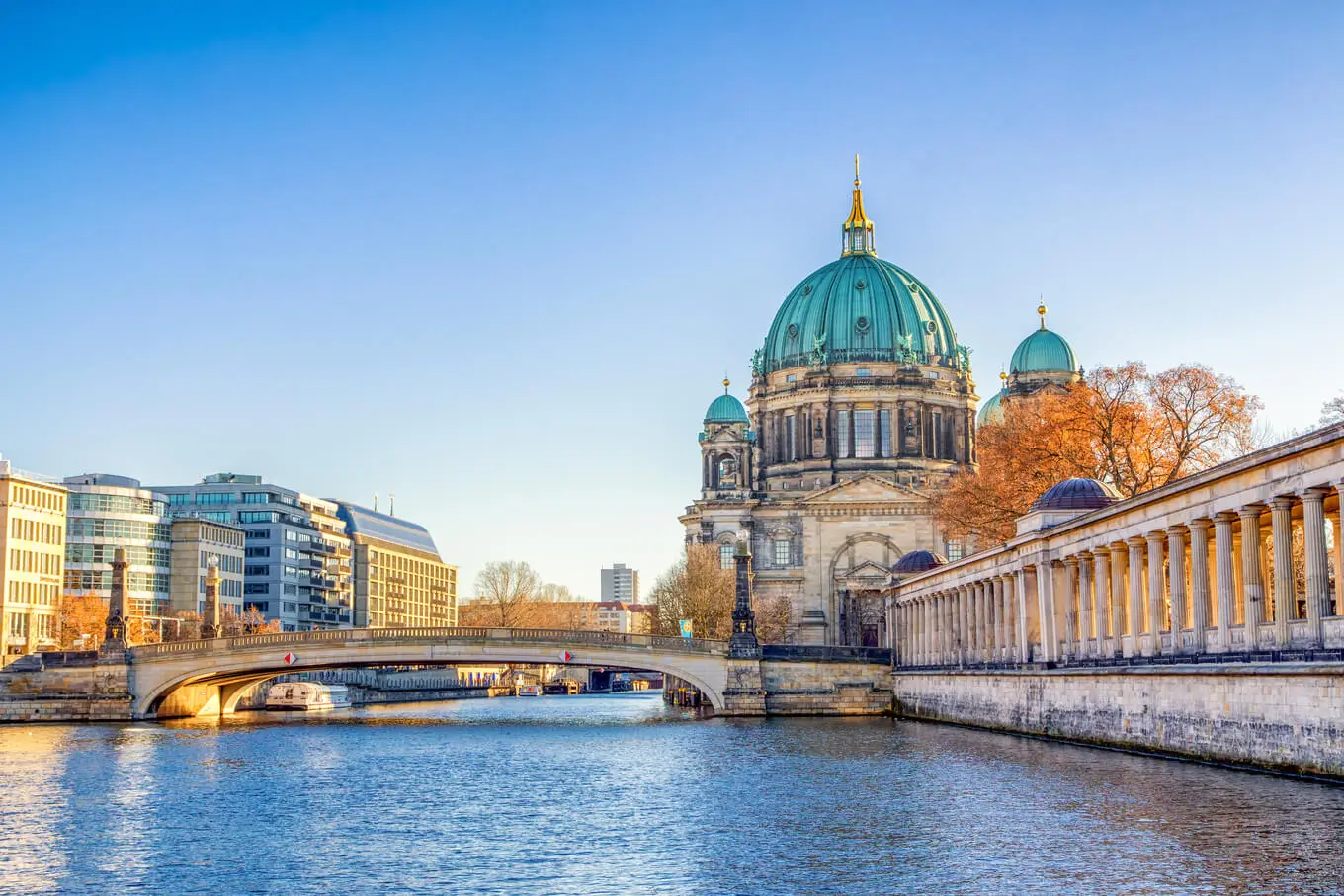
That collision, two cities forced back into one, is what makes Berlin feel less polished and more alive than Paris, London, or Vienna. Nothing here was designed to look uniform. A crumbling prewar facade sits next to a glass office tower, and a former East German transit yard becomes an open-air club. This is a city that specifically rewards the tourist who wanders without a fixed schedule, and the neighborhoods below are where that wandering pays off.
Get Data Before You Land in Berlin
Land at Brandenburg Airport with maps and transit apps already working, no WiFi hunting needed.
Prenzlauer Berg for Sunday Markets and Slow Mornings
Prenzlauer Berg is East Berlin’s bourgeois-bohemian neighborhood, all restored 19th-century apartment blocks, tree-lined streets, and prams outside third-wave coffee shops. It gentrified fast after reunification, and today it is one of the calmest, most livable parts of the city.
The essential thing to do here is the Mauerpark flea market on Sundays. The park itself is built on a former death strip of the Berlin Wall, the no man’s land that once separated East from West, and on Sunday afternoons it fills with secondhand clothing stalls, food vendors, and an open-air karaoke session that has become a local institution. Arrive by late morning before the crowds peak.
For your anchor stop, head to Prater Garten, Berlin’s oldest beer garden, tucked just off Kastanienallee. It has been serving beer under chestnut trees since 1837, and it is exactly the kind of unhurried, low-key spot that sums up why this neighborhood is worth the detour.
Kreuzberg for Turkish-German Culture and Street Art
Kreuzberg is Berlin’s Turkish-German district, shaped by decades of migration and, more recently, by artists and students drawn to its cheap rents and countercultural reputation. It sits right against the former wall line, which is part of why it stayed rough and interesting for so long.
Spend a morning at Görlitzer Park, a former railway freight yard turned green space, then head to Markthalle Neun, the covered food market that runs a dedicated street food night every Thursday. Vendors sell everything from Vietnamese banh mi to Neapolitan pizza, and it is one of the few markets in Berlin that feels genuinely local rather than built for tourists.
The street art concentration around Oranienstrasse is worth a slow walk on its own, with murals covering entire building sides. For your anchor recommendation, stop at Café Kotti, a long-running corner cafe near Kottbusser Tor that captures Kreuzberg’s mix of grit and warmth better than almost anywhere else in the district.
Check out our plans
-
Germany 3 Days Unlimited Data
USD 8.98 -
Germany 7 Days Unlimited Data
USD 21.00 -
Germany 10 Days Unlimited Data
USD 26.00 -
Germany 15 Days Unlimited Data
USD 37.00
Neukölln: One of the Best Berlin Neighborhoods to Visit for Local Life
If Kreuzberg has gentrified into something more polished, Neukölln next door is rawer and, for now, less discovered. It is one of the Berlin neighborhoods to visit if you want to see the city before it gets fully rebranded for tourists, with Arab bakeries, Vietnamese grocers, and independent bars all sharing the same blocks.
The standout secret here is Rixdorf, a small 18th-century village square hidden inside modern Neukölln. It was originally a Bohemian settlement, and it still looks like a village dropped into the middle of a big city, with a small church, cobblestones, and none of the crowds you would expect this close to central Berlin.
For your anchor stop, try Loerbeer, a cozy bar in Weserstrasse known for its craft beer selection and easy, unpretentious atmosphere. It is a good place to end an evening after wandering Rixdorf and the canal-side streets nearby.
Cover Your Whole Germany Route
One eSIM keeps you connected from Berlin’s neighborhoods to the Bavarian Alps and beyond.
Charlottenburg for West Berlin Elegance
Charlottenburg was West Berlin’s elegant commercial heart during the Cold War years, and it still carries that character today: wide boulevards, grand apartment buildings, and a slower, more formal pace than the eastern neighborhoods.

Skip the crowds at Museum Island for an afternoon and walk the gardens at Schloss Charlottenburg, Berlin’s largest palace, whose baroque grounds are genuinely peaceful even on a busy weekend. Then head to KaDeWe, continental Europe’s second-largest department store, and go straight to the sixth floor. Its food hall is legendary, with counters serving everything from fresh oysters to German sausages, and it works well as a lunch stop between sightseeing.
For your anchor recommendation, sit down at Diener Tattersall, a wood-paneled old West Berlin pub near Kurfürstendamm that has barely changed since the 1980s. It is a good contrast to the newer, glossier spots you will find in central Berlin.
How Do You Get Between Neighborhoods?
Berlin’s transit system is extensive but not always intuitive, especially since U-Bahn, S-Bahn, and tram lines overlap in different ways depending on the district. The BVG Fahrinfo app shows real-time departures for all three, plus route planning between stops, and it requires an active data connection to update. If you are moving between Prenzlauer Berg, Kreuzberg, Neukölln, and Charlottenburg in the same trip, you will be checking it constantly.
This is where having reliable mobile data matters more than most travelers expect. A Voye Global eSIM for Germany lets you land at Berlin Brandenburg Airport and get the Fahrinfo app, maps, and translation tools working before you even reach the taxi stand, without hunting for airport WiFi or paying for a physical SIM card. If you are combining Berlin with other parts of Germany, the same eSIM covers you on the road too, whether that is a side trip through the Bavarian Alps itinerary guide or a detour along the Black Forest road trip guide.
Navigate Berlin Transit Without Data Worries
Keep the BVG Fahrinfo app running smoothly so you never miss a train connection.
How Many Extra Days Should You Add?
Two extra days beyond the standard landmark tour is enough to genuinely feel these four neighborhoods, one day split between Prenzlauer Berg and Kreuzberg, and a second between Neukölln and Charlottenburg. If you only have one extra day, prioritize Prenzlauer Berg on a Sunday for the Mauerpark market, since it is the single most rewarding neighborhood experience Berlin offers on a schedule.
This kind of unhurried, neighborhood-first travel works well beyond Berlin too. If you enjoyed this approach, our New York City neighborhood guide and our guide to Rome’s off-tourist-track neighborhoods follow the same idea in very different cities, as does our Athens neighborhood guide for travelers headed to Greece next.
Berlin rewards patience more than almost any other European capital. Skip the fixed itinerary, pick one or two of these Berlin neighborhoods to visit, and let a Sunday market or a random side street decide the rest of your day. Before you land, make sure your connectivity is sorted, check your in-flight WiFi guide for the flight over, and set up your Voye Global eSIM so you can navigate, translate, and check transit times the moment you land at Brandenburg Airport.
Frequently Asked Questions
Prenzlauer Berg is the best base for most first-time visitors. It is calm, safe, well connected by U-Bahn and tram, and close enough to central sights while still feeling residential rather than touristy, especially useful if you want easy access to the Mauerpark flea market.
Kreuzberg is widely considered the coolest, thanks to its street art around Oranienstrasse, the Markthalle Neun food market, and its long history as the center of Berlin’s counterculture. It offers the most concentrated mix of nightlife, art, and food in one walkable area.
Kreuzberg is more polished and easier for first-time visitors, with established markets and nightlife. Neukölln is rawer and less gentrified, better suited to travelers who want to see local life, including the hidden Rixdorf village square, before it changes further.
Neukölln currently holds the strongest hipster reputation, with independent bars, vintage shops, and a younger crowd priced out of Kreuzberg. Prenzlauer Berg carries an older, more established bohemian identity, having gentrified a decade or two earlier.
Berlin is officially divided into 12 boroughs, or Bezirke, which are further split into 96 smaller neighborhoods called Ortsteile. Prenzlauer Berg, Kreuzberg, Neukölln, and Charlottenburg are among the most visited of these neighborhoods.
Yes, especially on a Sunday when the Mauerpark flea market is running. Beyond the market, its restored 19th-century streets, cafes, and beer gardens like Prater Garten make it one of the most pleasant Berlin neighborhoods to visit for a relaxed afternoon.
Neukölln is generally considered the most authentic today, since it has gentrified more slowly than Kreuzberg or Prenzlauer Berg. Its mix of Arab, Vietnamese, and Turkish communities alongside the hidden Rixdorf village gives it a genuinely local feel.
Kreuzberg and Neukölln together form Berlin’s main nightlife corridor, with bars, clubs, and late-night food along their shared border near Kottbusser Tor. Kreuzberg leans toward established bars, while Neukölln has more of the newer, experimental scene.

Seamless Mobile Data Everywhere










 English