




Do You Actually Need a Visa for Vietnam?
The first question is whether you need a visa at all – a growing number of nationalities do not.
45-Day Visa-Free Entry
Currently applies to citizens of: Germany, France, Italy, Spain, the United Kingdom, Russia, Japan, South Korea, Denmark, Sweden, Norway, Finland, Belarus, and approximately 12 additional European countries under Resolution 44/NQ-CP, effective through March 2028. Citizens of these countries can enter Vietnam without any visa documentation for stays of up to 45 days. Re-entry is permitted immediately after exiting.
30-Day Visa-Free Entry
Applies to citizens of additional countries under separate bilateral agreements. Check the Ministry of Foreign Affairs of Vietnam website for the current complete list for your specific nationality.
Everyone Else: Apply for an E-Visa
If your nationality is not on the visa-free list, or if you plan to stay longer than the visa-free period, you apply for a Vietnam e-visa. Since 2024, this option is available to all countries and territories worldwide – no exceptions.
The Vietnam E-Visa in 2026: Current Rules
- Validity: Up to 90 days from entry date – both single-entry and multiple-entry options available
- Eligible nationalities: All countries and territories worldwide
- Processing time: Typically 3 working days – apply at least 5 days before travel to account for delays
- Cost: USD 25 for most nationalities – pay online during the application
- Official portals only: evisa.gov.vn or thithucdientu.gov.vn (new domains operational from November 2024)
- Entry points: 83 international airports, land borders, and seaports now accept e-visa holders – 41 new gates added in 2026 including the new Long Thanh Airport
- Passport validity: Minimum 6 months from your entry date
- No extensions or renewals inside Vietnam – exit and re-apply from outside the country
The New Mandatory Digital Arrival Card at Ho Chi Minh City
From April 15, 2026, all foreign passport holders arriving at Tan Son Nhat International Airport (SGN) in Ho Chi Minh City must complete a digital arrival card before landing. This applies whether you are visa-exempt or hold an e-visa.
- The form must be submitted within 72 hours before arrival – not earlier, not at the airport
- Submit through the official Vietnamese immigration portal – the form is completely free
- On completion, you receive a QR code – present this at immigration alongside your passport
- Fields required: personal details, flight number, visa type, first night accommodation address
As of May 2026, this is a pilot running at Tan Son Nhat only. The system is designed to expand to Noi Bai (Hanoi) and Da Nang International Airport – check before you travel. If you are arriving into Ho Chi Minh City, do not forget to complete this form before your flight departs.
Common Mistakes That Cause Problems at Immigration
- Applying through a third-party website – use only evisa.gov.vn or thithucdientu.gov.vn
- Selecting the wrong entry point – you must enter through the specific border crossing you specified on your application
- Name mismatches – enter your name exactly as it appears on your passport, including all middle names
- Less than 6 months passport validity – airlines will deny boarding if this requirement is not met
- Forgetting the Ho Chi Minh City arrival card – it cannot be completed at the airport and immigration delays will result
Travelling to Vietnam?
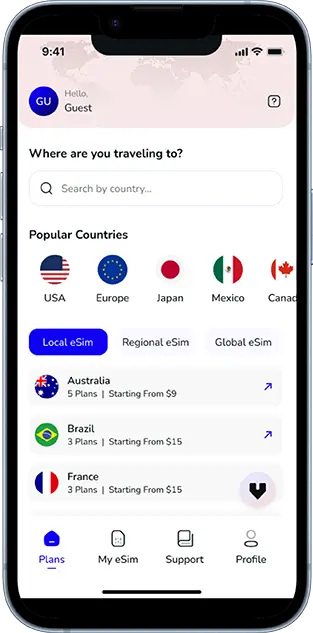
Get your Vietnam eSIM before you fly – data ready from the moment you clear immigration.
Getting a Vietnam eSIM: Why Voye Is the Smart Choice
Your Vietnam e-visa approval arrives as an email PDF. At immigration, you need to display it on your phone or present a printout. Arriving at Tan Son Nhat or Noi Bai without mobile data means navigating the airport, finding your transfer, and locating your accommodation without any of the tools that make that process straightforward.
A Voye eSIM for Vietnam activates when you land, giving you data immediately on arrival – no SIM card queue, no airport kiosk, no waiting.

Key Benefits
- Instant digital delivery – activate before you fly, data starts the moment you land
- Unrestricted hotspot – share your connection with your travel group from one plan
- Keep your home number active – calls, messages, and banking codes continue normally
- 24/7 multilingual support throughout your trip
- Website and app in 13 languages
Use Cases for Vietnam Travel
- Pulling up your e-visa PDF immediately at immigration on arrival
- Booking a Grab from the airport the moment you clear customs
- Navigating Ho Chi Minh City’s District 1 and Hoi An’s old town on Google Maps
- Booking day trips, Halong Bay boat tours, and cooking classes via WhatsApp
- Completing the Ho Chi Minh City digital arrival card from your connecting flight if you need to
- Using translation apps in markets and restaurants outside tourist areas
- Checking weather and road conditions for travel between Hanoi and Sapa
How to Get It
Visit voyeglobal.com/esim/vietnam or download the Voye app. Select your plan, complete the purchase, and scan the QR code in your phone settings before you travel.

Practical Things That Catch Travelers Off Guard
Hanoi motorbike traffic – crossing the street in the Old Quarter requires a specific technique. Move slowly and steadily; the traffic flows around you. Having Google Maps running helps you identify which direction to cross and anticipate junctions.
Vietnamese Dong (VND) – cash is still widely used in smaller restaurants, markets, and transport outside major cities. ATMs are widely available in cities; notify your bank before departure.
Grab vs local taxis – Grab is the standard ride-hailing app and is significantly more transparent on pricing than flagged taxis in tourist areas. Requires mobile data to function.
Navigate Vietnam with reliable data
From Hanoi’s Old Quarter to Hoi An’s lantern streets – stay connected throughout.
Frequently Asked Questions
Can I extend my Vietnam e-visa from inside the country?
No. Vietnam does not allow e-visa extensions or renewals from within the country. If you need to stay longer than your e-visa permits, exit Vietnam and apply for a new e-visa from outside. Re-entry is permitted immediately.
Which countries get 45-day visa-free entry to Vietnam?
As of 2026: Germany, France, Italy, Spain, UK, Russia, Japan, South Korea, Denmark, Sweden, Norway, Finland, Belarus, and approximately 12 additional European countries under a government resolution extended to March 2028. Check the Ministry of Foreign Affairs website for the complete current list.
Is the Ho Chi Minh City digital arrival card mandatory?
Yes, from April 15, 2026, all foreign passport holders arriving at Tan Son Nhat Airport must complete the card within 72 hours before arrival. The form is free and available through the official Vietnamese immigration portal. Failure to complete it will result in delays at immigration.
What are the official Vietnam e-visa websites?
evisa.gov.vn and thithucdientu.gov.vn – both operational from November 2024. Do not use third-party visa services, which charge additional fees and sometimes submit incorrect applications that result in denied entry.
The Bottom Line
Vietnam’s visa system is genuinely accessible in 2026 – the e-visa covers every nationality, the 90-day stay is generous, and the 45-day visa-free window for eligible nationals makes short visits completely frictionless. The key is using the right portals, checking entry points, and not forgetting the new Ho Chi Minh City arrival card.
Sort your connectivity before you leave. A Voye eSIM means you land with data already running – ready to pull up your e-visa, book a Grab, and get straight into the trip.
Get your Voye eSIM for Vietnam
Instant activation · Unrestricted hotspot · Use VOYE15 for 15% off your first order
Seamless Mobile Data Everywhere














 English