




Flying Safely in a Digital World
Every time you check in online, scan your boarding pass, or track your luggage, a vast digital network is at work behind the scenes. That convenience also makes aviation a prime target for cyberattacks—from ransomware on booking systems to phishing campaigns against airport staff.
As air travel becomes more connected, cybersecurity isn’t just an IT concern—it’s an operational necessity. This blog explores the U.S. airports and airlines setting the standard for digital safety, how they’re protecting critical systems, and what it means for passengers.
Why Cybersecurity Is Now the Fourth Pillar of Aviation Safety
Aviation traditionally focuses on three pillars: safety, security, and service. Today, cybersecurity forms a fourth. A single compromised system can ground fleets, leak customer data, or disrupt air traffic operations.
Recent years have seen a sharp rise in digital attacks targeting airlines and airports. Whether the goal is data theft or operational disruption, the results can cost millions—and shake public trust. To counter that, the U.S. aviation industry has ramped up its defenses with new frameworks, modern infrastructure, and continuous staff training.
Top U.S. Airlines Leading the Cybersecurity Effort
1. Delta Air Lines: Building Resilience from the Ground Up
Delta has become a standout in cybersecurity investment, focusing on digital resilience and risk mitigation. After facing previous IT challenges, Delta overhauled its infrastructure with a stronger emphasis on network redundancy, multi-factor authentication, and real-time monitoring systems.
Its dedicated cybersecurity division now works closely with operations teams, ensuring that any new technology—whether customer-facing or internal—is vetted against the latest security standards. Delta also prioritizes employee awareness training, recognizing that human error remains one of the biggest vulnerabilities.
2. United Airlines: A Structured, Risk-Based Approach
United Airlines integrates cybersecurity into every layer of its digital ecosystem. Its strategy includes regular penetration testing, data encryption, and strict access management for critical systems.
What sets United apart is its proactive risk assessment model—every new digital initiative undergoes a cybersecurity impact review before rollout. The airline also participates in industry-wide intelligence sharing, exchanging information with other carriers and federal partners to detect emerging threats early.
3. American Airlines: Investing in Predictive Cyber Analytics
American Airlines has taken an advanced approach by investing in AI-driven cybersecurity analytics. These systems analyze millions of data points in real-time, identifying anomalies before they turn into incidents.
From booking platforms to aircraft maintenance systems, American’s infrastructure uses behavior-based detection to flag suspicious activity instantly. Their multi-layered encryption standards protect both customer data and proprietary operational data across global servers.
4. Southwest Airlines: Cybersecurity for a Connected Customer Experience
Southwest’s focus lies in safeguarding digital convenience. With one of the industry’s most popular mobile apps and digital booking interfaces, the airline prioritizes end-to-end encryption, API security, and regular vulnerability testing.
In addition, the airline invests in employee cyber literacy—ensuring every staff member, from pilots to gate agents, understands secure data handling practices. Southwest’s human-centric approach blends customer experience with information security seamlessly.
Reliable Coverage from Coast to Coast
Stay online through every flight, layover, and city adventure.
U.S. Airports Strengthening Cyber Defenses
1. Hartsfield-Jackson Atlanta International Airport (ATL)
As the world’s busiest airport, ATL treats cybersecurity as a top operational priority. The airport has deployed an integrated Security Operations Center (SOC) that monitors IT and operational technology 24/7.
By segmenting its networks—separating passenger Wi-Fi, airport operations, and airfield systems—ATL minimizes the risk of attacks spreading across systems. It also partners with federal cybersecurity task forces to test resilience through simulated attack drills.
2. Los Angeles International Airport (LAX)
LAX has invested heavily in AI-based threat detection and cyber incident response automation. With one of the most complex IT ecosystems in aviation, LAX’s systems continuously analyze behavior patterns for potential intrusions.
They also run public-private collaborations, working with technology firms to improve cyber readiness. From digital signage to automated passport control kiosks, every connected system is backed by continuous monitoring and strict data governance.
3. Dallas/Fort Worth International Airport (DFW)
DFW’s cybersecurity strategy revolves around zero-trust architecture—a model assuming no internal or external user is inherently safe. Every access point is authenticated and verified.
The airport also leads in supply chain security, auditing third-party vendors and contractors for compliance. DFW’s training programs ensure that cybersecurity awareness isn’t limited to IT departments—it’s part of airport culture.
4. San Francisco International Airport (SFO)
SFO integrates cybersecurity into its sustainability and innovation initiatives. The airport’s Digital Transformation Office oversees cyber-physical systems like baggage tracking, airfield lighting, and energy management—all protected by advanced encryption and redundancy protocols.
SFO also adopts a data privacy-first approach, ensuring that traveler data—especially from biometric systems like face recognition—is handled with transparency and security by design.
Best Practices Shared by Industry Leaders
1. Zero Trust and Network Segmentation
Leading airports and airlines are moving beyond perimeter defenses. Zero trust ensures that every device, user, and application must prove legitimacy before gaining access.
2. Employee Awareness and Phishing Defense
Human error accounts for over 80% of cyber incidents. Mandatory training, simulated phishing exercises, and reward programs for identifying suspicious activity keep staff alert.
3. Continuous Monitoring and Threat Intelligence
Security isn’t a one-time task. The top players use real-time monitoring and join threat intelligence networks to identify global trends before they hit aviation.
4. Vendor Risk Management
Since many systems depend on third-party integrations, continuous audits and cybersecurity clauses in vendor contracts are now standard practice.
5. Incident Response and Recovery Planning
Every major airline and airport conducts regular cyber war games—realistic simulations that test detection, response, and communication during a crisis.
Emerging Cybersecurity Trends in Aviation
- Artificial Intelligence (AI) for Threat Detection: Machine learning models now help detect subtle patterns of malicious behavior faster than manual review.
- Operational Technology (OT) Security: Baggage handling, runway lighting, and fueling systems are increasingly connected; OT security is now a priority.
- Data Privacy and Passenger Trust: Transparency in how data is collected and used builds trust and aligns with new global privacy laws.
- Cloud Security: As airlines migrate booking and operations systems to the cloud, strong identity and encryption controls are critical.
- Public-Private Collaboration: The partnership between aviation authorities, airlines, and cybersecurity firms continues to grow, creating a united defense front.
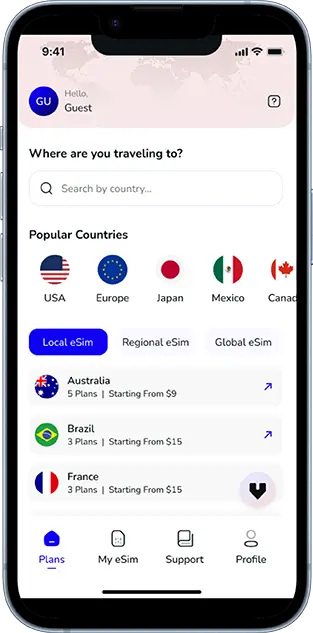
Your Data, Your Journey, No Roaming Fees
Enjoy seamless connectivity across U.S. airports and major travel destinations.
What Passengers Can Do to Stay Cyber Safe
Even with world-class security in place, travelers should take a few precautions:
- Avoid public Wi-Fi at airports for transactions or logins.
- Use official apps instead of third-party booking sites.
- Enable multi-factor authentication on airline accounts.
- Update devices before travel to ensure security patches are applied.
- Be skeptical of unexpected emails or texts claiming to be from airlines.
Conclusion: Securing the Skies, Together
The aviation industry’s future depends on how well it manages digital risk. U.S. airports and airlines are making major strides—from implementing zero trust to investing in AI-powered defenses—but cybersecurity is never “finished.” It’s a continuous process of vigilance, collaboration, and innovation.
As passengers, IT professionals, or partners, we all play a role in keeping the skies secure. When you next board a flight, remember—behind every smooth takeoff is a vast team protecting not just the aircraft, but the digital systems keeping it airborne.

Seamless Mobile Data Everywhere














 English