




Why June Is the Right Month for Tuscany?
The transition from spring to summer in Tuscany happens in the first week of June and the results are immediate. The wild poppies that carpet the hillsides through May are still visible in the first fortnight. Temperatures settle into the mid-to-high 20s — warm enough for swimming in the outdoor pools of the agriturismo properties, cool enough for walking the medieval streets without stopping every ten minutes. The vineyards are in full leaf. The sunflower fields that define the Val d’Orcia landscape begin to bloom in the last week of June.
By July 10th, everything changes. Italian school holidays combine with international summer travel to push prices, crowd levels, and restaurant reservation difficulty to their peaks. June avoids all of it while losing none of the experience.
The Hill Towns: What to Prioritise and What to Skip

Siena
Siena in June is Siena at its most manageable. The Piazza del Campo, one of the great medieval squares in Europe, has room to sit. The Duomo can be visited without the hour-long queue that defines August. The Palio horse race — Siena’s most famous event — takes place on July 2nd, so the pre-race energy and preparation are already building in late June, which creates an atmosphere without yet overwhelming the city with visitors.
San Gimignano
The medieval tower town draws significant visitor numbers regardless of month, but June mornings before 10am are genuinely peaceful. The views from the towers across the Elsa Valley in June light are worth the early start. Stay the night and the evening after the day-trippers leave is a completely different place.
Montepulciano and the Val d’Orcia
The southern part of Tuscany — the Val d’Orcia, the Crete Senesi, Pienza, Montepulciano — is less visited than the Chianti heartland and rewards slow travel. Drive the SP146 between San Quirico d’Orcia and Pienza on a clear June morning and understand immediately why this landscape is a UNESCO World Heritage Site. The Vino Nobile di Montepulciano is reason enough to stop.
Volterra and the Less-Visited West
Volterra sits on a ridge above the Cecina Valley with Etruscan walls that predate the Roman Empire. Fewer tourists come here than to San Gimignano despite offering more history and less postcard-staging. The alabaster workshops are active and genuinely worth visiting.
The Chianti Wine Road: How to Do It Properly
The SS222 between Florence and Siena — the Chiantigiana — passes through the heart of the Chianti Classico wine zone. In June, the vine leaves are dense and green, the estates are open for tastings, and the road is not yet the procession of rental cars and tour buses it becomes in September during harvest season. Stop at Panzano in Chianti for lunch. Book a tasting at one of the major estates — Antinori, Badia a Coltibuono, Castello di Ama — at least a week ahead.
Cycling the Chianti road is a legitimate option in June. The temperatures are manageable in the morning, the climbs are real, and the downhills past ancient villas are the kind of thing people plan entire trips around.
Heading to Tuscany this June?
Get your Italy eSIM before you fly — navigate wine roads, book restaurants, stay connected from landing.
Getting an Italy eSIM: Why Voye Is the Smart Choice
Tuscany’s rural connectivity is more varied than people expect. Florence and Siena have excellent 4G coverage. The roads between hill towns, the Val d’Orcia countryside, and the remote agriturismo properties that make the best bases for exploring can be patchy. A Voye eSIM for Italy gives you a solid local data connection from the moment you land at Florence or Pisa airport — no SIM queue, no airport kiosk.
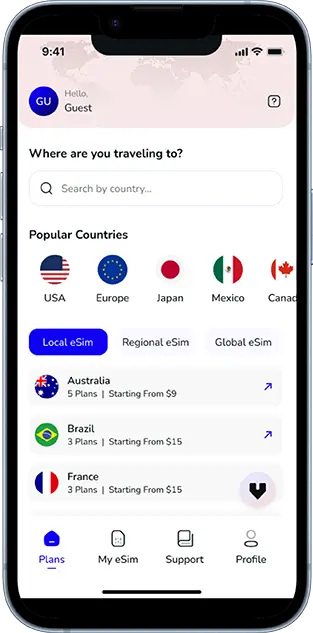
Pick up your plan through the Voye app or the Voye website before you travel. Scan the QR code in your phone settings, and it activates when you land. Your primary SIM and home number stay active alongside it.

Key Benefits
- Instant digital delivery — activate before you fly, data starts the moment you land in Italy
- Unrestricted hotspot — share your connection with your travel companions without buying separate plans
- Keep your home number active — calls, messages, and banking verification codes continue normally
- 24/7 multilingual support throughout your trip
- Website and app in 13 languages
Use Cases Specific to Tuscany
- Navigating the Chiantigiana on Google Maps between wine estates with no road signs
- Booking last-minute restaurant tables via WhatsApp — the standard reservation method at rural trattorias
- Finding and pre-booking timed entry to the Uffizi and Duomo di Siena from the road
- Using Google Translate to read menus in restaurants where English menus do not exist
- Sharing the Val d’Orcia sunrise from the SP146 in real time
- Checking winery opening hours and booking tastings from the car between stops

Practical Things That Catch Tourists Off Guard
Agriturismo booking — the best properties in Tuscany require booking 2-3 months ahead for June. Do not leave this to the week before.
Driving in Italian cities — ZTL zones (Zona a Traffico Limitato) restrict access to historic town centres. Rental cars that enter these zones are automatically fined. Check the ZTL boundaries for any town you are driving to before arrival.
Restaurant hours — Tuscany runs on Italian time. Lunch is 12:30 to 2:30pm and then nothing until 7:30pm. Arriving at a restaurant at 3pm or 6pm will result in a closed door.
Cash — many rural agriturismos and small trattorias are cash only. Carry euros.
Ready to explore Tuscany?
Reliable data across hill towns, wine roads, and rural agriturismos.
Frequently Asked Questions

Is June a good time to visit Tuscany?
June is one of the best months to visit Tuscany. Temperatures are warm and comfortable, the landscape is at its most vivid, crowds are significantly lower than July and August, and accommodation prices have not yet reached peak summer rates. It is widely considered the last window of the shoulder season.
What is the weather like in Tuscany in June?
June in Tuscany is warm and predominantly dry, with average temperatures between 22 and 28 degrees Celsius. Evenings are pleasant for outdoor dining. Occasional brief thunderstorms occur, particularly in the last week of June, but sustained rain is unusual.
Do I need a visa to visit Italy in 2026?
Citizens of EU countries, the UK, USA, Canada, Australia, and many other nations can enter Italy visa-free for stays of up to 90 days. Non-EU citizens staying longer may need additional documentation. ETIAS, the EU travel authorisation system, is expected to launch in 2026 and will apply to visa-exempt nationalities.
Is a Voye eSIM better than getting a local Italian SIM card?
A Voye eSIM activates before you travel, requires no in-country purchase or registration, and keeps your home number active alongside the data connection. Local Italian SIM cards are available but require a shop visit and sometimes a passport registration. For most tourists, especially those arriving in Tuscany’s rural areas away from major cities, a Voye eSIM is faster and more convenient.
The Bottom Line

June is the window that experienced Tuscany travelers know about and plan around. The landscape is at its most lush, the roads are clear enough to actually enjoy, and the hill towns feel like places rather than attractions. It closes fast — by mid-July the crowds arrive and the prices follow. Go in June, drive the back roads, drink the wine, and do it before everyone else catches on.
Sort your connectivity before you leave. A Voye eSIM means you land ready — navigate the country roads, book tables on the go, and stay connected from the airport to the agriturismo.
Get your Voye eSIM for Italy
Instant activation · Unrestricted hotspot · Use VOYE15 for 15% off your first order
Seamless Mobile Data Everywhere














 English