




The Two-Coast Rule: Where to Go and Where to Skip
The Gulf Coast – Go Here
Koh Samui, Koh Phangan, and Koh Tao are the beaches worth booking in June. These islands sit on Thailand’s eastern Gulf coast, sheltered from the southwest monsoon that drenches the Andaman side. Rain occurs – typically 14 to 17 days per month in short afternoon bursts – but the mornings are generally clear, the sea stays calm enough for snorkeling and kayaking, and the famous beach party culture of Koh Phangan continues regardless. Accommodation prices on these islands in June sit 30 to 40 percent below the December peak.
Ang Thong Marine National Park, accessible by day trip from Koh Samui, is at its most lush and vivid in June with the surrounding vegetation in full green from the early rains. The sea kayaking routes through limestone karsts and hidden lagoons are genuinely excellent in these conditions.
The Andaman Coast – Skip in June

Phuket receives approximately 19 rainy days in June. Krabi, Koh Lanta, and Koh Phi Phi are in similar shape. The Andaman Sea becomes rough, some boat services stop running, and a number of smaller island operators close entirely. The beaches are not enjoyable in June on the Andaman side and the practical logistics become frustrating. There is no good reason to be here this month when the Gulf coast is available.
Exception: Khao Sok National Park sits between the two coasts and is worth visiting specifically because of the June rains. The Cheow Larn reservoir with its floating bamboo raft houses and limestone karst scenery is dramatic in the wet season, and wildlife in the surrounding jungle is most active when the forest is wet.
Chiang Mai in June: The Best City Travel This Month

Chiang Mai in June does not get the credit it deserves. The northern capital receives roughly 12 to 15 rainy days per month – less intense than the south – and the combination of cooler temperatures (highs around 31°C versus Bangkok’s 33-34°C), lush surrounding highlands, and almost no international tourists makes it one of Thailand’s genuinely underrated June destinations.
The city has over 300 temples, the most famous being Wat Chedi Luang with its 14th-century ruins in the old city moat area, and Wat Phra That Doi Suthep, the mountain temple visible from the city with panoramic views when clouds cooperate. The Sunday Walking Street on Wualai Road and the Saturday Walking Street on Tha Phae Road are two of Thailand’s best night markets.
Doi Inthanon National Park – Thailand’s highest mountain at 2,565 metres – is extraordinarily lush in June. The twin royal pagodas, the Ang Ka Nature Trail through cloud forest, and the namesake peak are all accessible and significantly less crowded than in high season. The waterfalls on the access roads are at full force from the early rains.
June is also the best time in Thailand for ethical elephant experiences near Chiang Mai. Sanctuaries such as Elephant Nature Park run with fewer visitors in the rainy season, which means more intimate interactions and better observation conditions.
Bangkok in June: Work Around the Rain, Not Against It

Bangkok in June is hot (33-34°C), humid, and rainy in the afternoons. The city is also one of the most fascinating in Southeast Asia and the cultural sites, food scene, and market culture do not diminish in any season. The practical strategy: mornings for outdoor temples and markets, afternoons for the air-conditioned world.
The Grand Palace and Wat Phra Kaew complex is best visited at opening (8:30am) when the most intense heat has not yet built and the queue is manageable. The Jim Thompson House is an excellent midday cultural stop – a shaded canal-side complex of Thai houses containing one of the best silk and antiques collections in Asia. The Bangkok National Museum near the Grand Palace is vast and properly air-conditioned. The Chatuchak Weekend Market (Saturday and Sunday) opens at 9am and the outdoor sections are genuinely enjoyable in the morning before the heat peaks.
The Ghost Festival You Have Not Heard Of
The Phi Ta Khon Festival in Dan Sai, Loei Province, happens in late June or early July depending on the lunar calendar. It is one of Thailand’s most visually striking events – a Buddhist merit-making festival where participants wear large painted ghost masks and colourful costumes, and process through town to music and ceremony. The festival draws very few international visitors compared to its extraordinary visual appeal. Dan Sai is approximately 540km north of Bangkok, requiring an overnight trip, but it is the kind of experience that fundamentally changes what people think Thai culture looks like.
June Is Thailand’s Fruit Season: Eat Everything
One of the genuinely excellent things about June in Thailand that no standard travel guide mentions with enough enthusiasm: the fruit. June is peak season for durian (the divisive king of fruits, available from street vendors everywhere in the south), mangosteen (sweet, white, perfect), rambutan, longan, and the mango sticky rice that has achieved global fame. The night markets in June are stacked with fresh tropical fruit at prices that make the flight cost feel justified.
Planning Thailand for June?
Get your Voye eSIM before you fly – navigate Koh Samui transfers, book elephant sanctuaries, stay connected from landing.
Getting a Thailand eSIM: Why Voye Is the Smart Choice
Thailand has excellent 4G coverage in all tourist areas, cities, and the main islands. Moving between islands by ferry, navigating the Bangkok Skytrain and MRT networks, and using Grab for everything from airport transfers to food delivery all require a working data connection. International roaming in Thailand is expensive for most European and North American travelers. A Voye eSIM for Thailand activates the moment you land at Suvarnabhumi or Don Mueang.
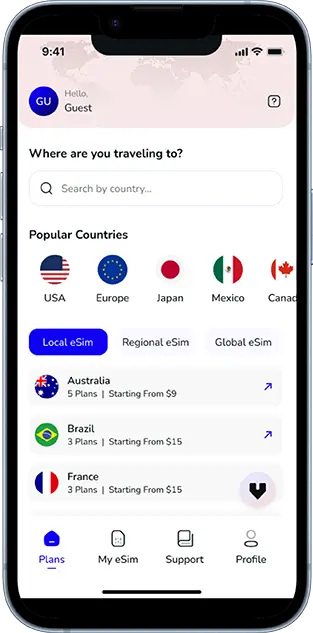
Set up through the Voye app before you leave home. Scan the QR code in your phone settings. Your primary number stays active alongside it.

Key Benefits
- Instant digital delivery – activate before you fly, data starts the moment you land
- Unrestricted hotspot – share your connection with travel companions from one plan
- Keep your home number active – calls, messages, and banking codes continue normally
- 24/7 multilingual support throughout your trip
- Website and app in 13 languages
Use Cases in Thailand
- Using Grab from Suvarnabhumi Airport on arrival – significantly more transparent than metered taxis
- Navigating Bangkok’s BTS Skytrain and MRT with the Rabbit LINE Pay app
- Booking elephant sanctuary visits in Chiang Mai via WhatsApp from the road
- Finding ferry schedules between Koh Samui and Koh Phangan and checking sea conditions
- Locating durian vendors and night market stalls in real time
- Booking last-minute island accommodation when plans change

Practical Things That Catch Travelers Off Guard
The rain is short, not sustained. June rainfall in Thailand typically arrives in the late afternoon as a heavy downpour of 1-2 hours, then clears. Mornings and evenings are generally fine. Build this rhythm into your day – outdoor activities before noon, air-conditioned or covered activities from noon to 4pm.
Temple dress code – shoulders and knees must be covered at all major temples. Lightweight linen or cotton long pants and a light top are the practical solution. Wraps are available at major temple entrances but having your own is faster.
Currency – Thailand uses the Thai Baht (THB). ATMs are widely available but charge 200-220 THB foreign transaction fees per withdrawal. Notify your home bank before travel and withdraw in larger amounts to reduce transaction frequency.
Grab vs tuk-tuks – Grab is Thailand’s dominant ride-hailing app and provides fixed, metered pricing. Tuk-tuk prices in Bangkok tourist areas are negotiated and consistently higher. Use Grab for predictability.
Navigate Thailand with reliable data all month
Gulf islands, Chiang Mai highlands, Bangkok streets – your Voye eSIM covers all of it.
Frequently Asked Questions
Is Thailand worth visiting in June?
Yes, for the right destinations. The Gulf coast islands (Koh Samui, Koh Phangan, Koh Tao) and northern Thailand (Chiang Mai, Doi Inthanon) are excellent in June. Bangkok is fully operational. Avoid the Andaman coast (Phuket, Krabi) which receives the heaviest monsoon rain. Prices are 30-40% below peak season.
Which Thailand beaches are good in June?
The east Gulf coast is the answer: Koh Samui, Koh Phangan, and Koh Tao. These islands face the opposite direction from the southwest monsoon and experience significantly less rain than Phuket and the Andaman coast. Rain occurs but in short afternoon bursts rather than sustained all-day downpours.
What is the Phi Ta Khon Festival and when is it in 2026?
Phi Ta Khon is a Buddhist ghost festival held in Dan Sai, Loei Province, in late June or early July depending on the lunar calendar. Participants wear elaborate painted ghost masks and costumes in a colorful procession. It is one of Thailand’s most visually spectacular cultural events and receives very few international visitors. The 2026 dates are determined by local monks – check visitloei.com for confirmation closer to the date.
Is a Voye eSIM better than buying a Thai SIM card on arrival?
A Voye eSIM activates before you land, so you have data from the moment you step off the plane – no queue, no airport kiosk. Thai SIM cards (DTAC, AIS, TrueMove) are widely available and affordable but require a physical shop visit or airport counter. For travelers arriving at busy times, the Voye eSIM removes this step entirely.
The Bottom Line

Thailand in June is not the gamble people assume. It is a geography decision. Be on the right coast, accept that afternoons occasionally involve finding a covered café for an hour, and enjoy the version of Thailand that exists when 40 percent fewer international tourists are present. The fruit alone is worth the trip.
Get your Voye eSIM sorted before you fly. Navigate from Suvarnabhumi with data already running. Start with Bangkok, head north to Chiang Mai, finish on Koh Samui with a long afternoon watching the rain arrive and clear. That is the June Thailand itinerary.
Get your Voye eSIM for Thailand
Instant activation · Unrestricted hotspot · Use VOYE15 for 15% off your first order
Seamless Mobile Data Everywhere














 English
  日本語
日本語