




You have probably read the basic rundown already: wear white, book early, arrive before July 7.
But the travelers who walk away from San Fermin with zero regrets are not the ones who read the basics. They are the ones who understood the texture of the festival, the unwritten rhythms, the real logistical pressure points, and the tools that kept them safe and connected when things got hectic.
This Spain travel checklist was built for that kind of traveler. It is less about the obvious and more about what actually catches people off guard once they land in Pamplona, Navarre. Whether this is your first time in Spain or your fifth, the Running of the Bulls Festival is its own animal (no pun intended), and it deserves its own preparation plan.
Let’s go through it properly.
Understanding the Festival Before You Pack a Thing
Navarre is Not Generic Spain
This is worth saying upfront because it changes how you approach the whole trip.
Pamplona is the capital of Navarre, an autonomous region in northern Spain with a distinct culture, language, and identity that is different from the Spain of Barcelona or Madrid. The people here are proud of that distinction. Navarre sits at the crossroads of Basque culture and Spanish history, and that mix shows up in everything from the food to the festivals to the way locals navigate the week-long chaos of San Fermin.
When you travel to Pamplona for the San Fermin Festival, you are not just visiting Spain. You are stepping into a community that has been hosting this event since 1591, long before it became a global spectacle. That history shapes how locals experience the festival, and understanding it will shape how you experience it too.
The Festival Has a Pulse You Need to Learn
Most first-timers think of San Fermin as a single event, the running of the bulls at 8:00 AM, and plan around that alone. In reality, the festival runs on a daily rhythm that starts before sunrise and does not stop until long after midnight.
Here is how a typical day flows:
- 6:45 AM – The “Dianas” begin: the municipal band of Pamplona, the Pamplonesa, marches through the streets of the Old Town playing traditional music. This is how the city wakes up. It is loud, joyful, and genuinely moving if you hear it for the first time.
- 7:30 AM – Runners gather along the encierro route and singing to the image of San Fermin begins.
- 8:00 AM – The encierro (bull run) starts from the corral at Calle de Santo Domingo.
- 8:10 AM to 8:45 AM – “Vaquillas” begin inside the bullring. These are smaller young cows with blunted horns released into the ring for the crowds to interact with. It is chaotic, funny, and a fixture of the festival that most travel guides underreport.
- Morning into afternoon – Processions of the Giants and Big-Heads (Gigantes y Cabezudos), traditional Navarrese figures four meters tall, parade through the city center. Street bands called Peñas begin their circuits.
- 2:00 PM to 5:00 PM – Siesta lull. Cafes and bars are still open but the pace slows. This is a good time to rest or explore quieter parts of the city.
- 6:30 PM onward – Evening bullfights at Plaza de Toros. Tickets for these are separate from any entrance to the city or the encierro.
- 11:00 PM – International Fireworks Competition lights up the sky over Pamplona. This is a serious pyrotechnics competition between European firms and draws enormous crowds to the Ciudadela area.
- After midnight – Street parties around Plaza del Castillo and the Old Town continue until dawn.
Knowing this rhythm helps you plan your sleep, your meals, your walking routes, and your data usage across the day. It also helps you set realistic expectations about how your phone battery and mobile internet will be used.
Spain Travel Checklist: Going Beyond the Basics
Section 1: Documents and Pre-Departure Admin
The document checklist for Spain has a few layers that often get missed in generic Spain festival checklists.
Before you leave home:
- Confirm passport validity (minimum six months beyond your return date)
- Check Schengen visa requirements for your nationality at least three months before departure
- Download your travel insurance documents offline, not just in email
- Set up a digital wallet with euros loaded, as some Pamplona vendors only accept contactless payment during festival week due to queue management
- Register your trip with your home country’s travel advisory service (the US has STEP, the UK has FCDO travel registration, Australia has Smartraveller)
- Check whether your bank cards have foreign transaction fees and which ATM networks work in Spain
The document you will need that most lists skip:
A physical or printed copy of your accommodation address in Pamplona. Immigration officers at Spanish airports during festival week sometimes ask for it, and it is also essential if you need to flag down a local taxi driver who does not have GPS or speaks limited English.
For your Spain travel insurance specifically:
Not all travel insurance policies cover participation in encierros or bull-related events. Read the fine print before you purchase. If you plan to run, you need a policy that explicitly covers adventure sports or participatory events. If you only plan to watch, standard travel insurance will usually suffice, but still verify before you travel.
Section 2: The Connectivity Checklist for Festival Travel in Spain
This section goes before clothing because connectivity is, genuinely, a safety tool at this festival and not just a comfort item.
Pamplona’s Old Town during San Fermin week is one of the most densely crowded environments you will experience as a tourist in Europe. Over one million visitors cycle through a city designed for 200,000. Public Wi-Fi is patchy, overloaded, and often unreachable at the moments you need it most, specifically during the encierro and in the hours immediately after.
What you need before boarding your flight:
- eSIM for Spain activated on your device – this is the single most important technology decision you make for this trip. An eSIM activates digitally, which means you can switch it on the moment you land in Spain without standing in a telecom queue at the airport.
- Offline maps of Pamplona downloaded (Google Maps offline or Maps.me both work well)
- Spanish language pack downloaded for translation app (DeepL and Google Translate both support offline Spanish packs)
- Emergency contacts saved in your phone AND on a physical note (including your accommodation’s phone number, Spain’s emergency line 112, and your travel insurance’s 24-hour helpline)
- Power bank charged to 100% before every festival day
Why an eSIM for Spain outperforms every other connectivity option at festivals:
Festival environments like San Fermin are exactly where traditional roaming plans fail. Your home carrier’s roaming rates can clock USD 10 to 15 per day. Over an eight-day festival, that becomes a significant additional trip cost with no benefit over a dedicated data plan.
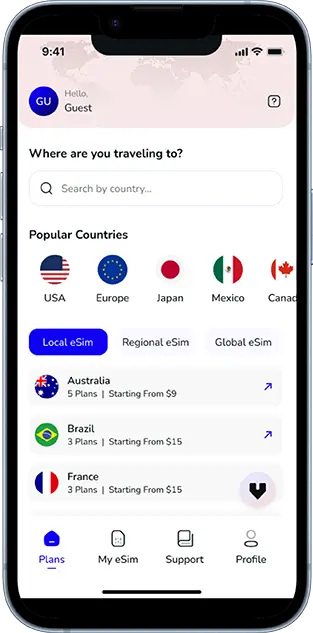
A prepaid eSIM for Spain from Voye Global gives you a fixed data allocation for a fixed price, activated before you leave home. You keep your regular SIM card in place (you are not swapping anything out), and you switch your phone to use the Voye Global Spain eSIM for data while in Spain. Your home number still receives calls and texts. You get mobile internet from the moment you land. And you avoid any bill shock when you return.
This matters particularly during festival week when you will be using your phone for:
- Real-time navigation through street closures
- Meeting point coordination with travel companions in crowds
- Accessing the festival schedule and any route changes for the encierro
- Booking a last-minute seat for the evening bullfight via the official app
- Streaming or uploading content from the run itself
Voye Global’s Spain eSIM plans cover high-speed 4G/5G data across Spain’s national network, so coverage holds in Pamplona’s Old Town even during the festival’s peak density moments. Plans are available in multiple data sizes and durations, making it easy to match your plan to the length of your trip.
Roam Free Spain
Stay online throughout the Running of the Bulls festival
Section 3: The Packing Checklist That Accounts for Festival Reality
Clothing with festival-specific reasoning:
- Two full sets of white clothing (not one) – The first outfit will almost certainly be drenched in red wine from the Chupinazo or nearby revelers within hours of July 6. Having a clean second set for July 7’s encierro keeps you prepared.
- Wide-leg white trousers or white jeans (not shorts) – Long trousers are the traditional and practical choice. They offer slight protection on cobblestones if you are near the encierro route.
- A red pañuelo (neck scarf) and red faja (waist sash) – These can be bought in Pamplona but expect higher prices close to the festival. Bringing your own is cheaper and ensures you have them before the Chupinazo on July 6.
- Closed-toe running shoes or trail sneakers with grip – Pamplona’s cobblestone streets, wet from morning cleaning and sangria, are genuinely slippery. Grip matters whether you are running or just walking.
- Flip flops or sandals as a secondary pair – For use in your accommodation or quieter afternoon hours when you are off your feet.
- One lightweight windbreaker or packable rain jacket – Northern Spain gets afternoon rain in July. A poncho works too if you want something very compact.
- Clothes that are genuinely disposable after the festival – Pack items you would not mind leaving in Pamplona at the end of the week. Many experienced festival-goers do exactly this to lighten their return luggage.
Health and personal care items specific to festival conditions:
- High-SPF sunscreen (SPF 50 or above) and reapply every two to three hours when outdoors
- Oral rehydration salts in single-serve sachets, which are more effective than water alone when you have been sweating heavily in July heat
- Small personal first aid kit with blister plasters, antiseptic wipes, and basic pain relief
- Prescription medications in their original packaging with a translated prescription or doctor’s note if you are carrying anything that might raise questions at customs
- Face mask or dust cloth for the Chupinazo opening, which can get intense with sprayed wine and sangria in tight crowds
- Hand sanitizer for festival days when you may not reach a bathroom easily between street activities
Day bag setup for festival days:
- Use a small crossbody or anti-theft waist pack rather than a backpack
- Carry only your daily cash allowance, one card, phone, charger cable, and snacks
- Leave your passport, spare cash, and backup card at your accommodation in a locked safe or hidden inside your luggage
- A rolled newspaper (the local Diario de Navarra works) is a traditional item runners carry as a pace and distance tool during the encierro
Getting to Pamplona: The Logistics That Most Spain Travel Guides Skip
From Madrid to Pamplona
The journey from Madrid to Pamplona is approximately four to four and a half hours by bus. The Alsa bus company operates regular routes from Madrid’s Avda de America bus terminal and is generally the most economical option. Book well in advance for festival week because seats sell out months ahead.
The Renfe train from Madrid also covers this route via connections through Zaragoza or Logrono, though it typically takes slightly longer than the direct bus.
Practical tip: Festival travelers arriving from Madrid on July 5 or 6 will find the bus from Madrid far less crowded than those departing on July 6 itself. If your schedule allows, arriving a day early from Madrid is both calmer and cheaper.
From Barcelona to Pamplona
The Barcelona to Pamplona journey is approximately four to five hours by bus via Alsa, or closer to three and a half hours by car via the AP-7 and AP-15 motorways.
There is no direct high-speed train between Barcelona and Pamplona. The rail journey involves a connection and takes longer than the bus.
Budget travelers also arrive from Barcelona by overnight bus, saving on accommodation costs for their first night, though this is not recommended if you plan to run on July 7 and need to be rested.
From Bilbao to Pamplona
Bilbao is one of the most popular entry points for international travelers arriving from UK and northern European destinations. Bilbao Airport is served by more budget European carriers than Pamplona’s smaller Noain Airport.
Bilbao to Pamplona is roughly one hour by bus or car. Multiple daily buses run this route even during festival week, and it is one of the most reliable and underrated transport options for getting to San Fermin.
Flying directly into Pamplona
Pamplona’s Noain Airport is a small regional airport served by a handful of direct routes, primarily to Madrid and Barcelona, and seasonally to some European cities. Check current routes at the time of booking as schedules change frequently.
The Encierro: A Section-by-Section Breakdown
If you plan to run in the encierro, understanding the route section by section is not optional. It is a basic safety requirement.
The course runs 875 meters from the corrals at Calle de Santo Domingo to the Plaza de Toros bullring. Here is each section:
Calle de Santo Domingo (the Starting Hill)
The bulls are released here and gain speed quickly on the slight downhill gradient. This is considered one of the most dangerous sections because the bulls are fresh, moving fast, and have not yet spread out. Experienced runners advise against starting your run here unless you are very fast and very experienced.
Plaza Consistorial (Town Hall Square)
The route opens into a small plaza before the course turns. This corner is where the bulls begin to separate and where runners need to anticipate the direction change. It looks manageable on video. In person, the combination of crowd pressure and moving bulls makes this a challenging area.
Calle Mercaderes and the Turn onto Calle Estafeta
This right-angle turn is called “Dead Man’s Corner” by festival veterans. The bulls cannot easily take the corner at speed and often slide into the barriers or each other. It is one of the most photographed moments of the encierro and also one of the highest-risk points for runners.
Calle Estafeta (the Long Straight)
This is the longest stretch of the run, around 350 meters of relatively straight cobblestone. It is where most recreational runners participate because the route is more predictable. The street is narrow, so the bulls and runners are in close proximity throughout.
Telefonica and the Final Stretch
The final section curves toward the bullring entrance. Bulls that have become separated from the herd here can be more unpredictable and dangerous than those running in a group. This section is considered higher risk for that reason.
Inside the Bullring
The encierro ends when the bulls enter the ring through the gate at the far end. Runners who make it inside often find themselves part of a chaotic celebration with thousands of spectators in the stands. Shortly after, the vaquillas are released into the ring for the crowd interaction period.
For spectators: The bullring itself offers tickets to watch the encierro finish from the stands. These tickets go on sale early and are a legitimate, safer viewing option. The experience of watching the bulls enter the ring from inside the arena is genuinely spectacular.
Staying Safe at the San Fermin Festival: The Practical Reality
What the Official Rules Actually Say
The Pamplona city government publishes official rules for encierro participation every year. These are not suggestions. Violations result in removal from the course by police, fines, and in some cases detainment.
Key rules include:
- Runners must be a minimum of 18 years old
- Running under the influence of alcohol is prohibited and police actively remove intoxicated individuals from the course before 8:00 AM
- Runners may not carry bags, cameras, sticks, or anything that could be used to interfere with the bulls
- Attempting to attract the bulls’ attention or touch them is prohibited
- Lying on the ground intentionally to attract attention is prohibited
These rules exist because violations put other runners and animals at risk. Pamplona takes them seriously.
Crowd Safety That Goes Beyond the Run
The encierro accounts for a minority of the injuries during San Fermin week. A large percentage of festival-related incidents occur in crowd situations unrelated to the run itself, particularly:
- The Chupinazo opening ceremony where hundreds of thousands of people pack into the area around Plaza Consistorial
- Nighttime street parties where crowding, alcohol, and limited exit points create compression risks
- The fireworks viewing areas around the Ciudadela
Group meeting protocol: Establish a fixed meeting point and time with your travel companions before entering any high-density event. Pamplona’s Plaza de Castillo is the most accessible and consistently recognizable landmark. Mobile signal is often congested during peak crowd moments, so having a physical backup meeting plan matters.
This is another specific scenario where having a reliable eSIM for Spain pays off. Voye Global’s Spain eSIM prioritizes data delivery even on congested networks, which means your WhatsApp message or Google Maps location share is more likely to get through when street-level Wi-Fi is failing around you.
Pickpocket Prevention at Scale
Pamplona during San Fermin is one of the most targeted environments for pickpockets in southern Europe, specifically because of the combination of intoxicated visitors, dense crowds, and distracted attention.
Practical prevention steps that go beyond the obvious:
- Use a flat zippered pouch that sits on your hip under your white shirt rather than a belt bag worn on the outside
- Separate your cash across two locations so that one loss does not wipe you out
- Use Apple Pay or Google Pay for purchases where possible so your physical card stays stored
- Never use your back pocket for anything
- Be particularly alert in the minutes immediately after the encierro ends, when runners are celebrating and distracted
The Peñas Culture: How to Experience the Real Social Heart of San Fermin
This is the part of the festival that most international visitors never fully encounter, and missing it means missing a significant layer of what makes San Fermin genuinely special.
What are the Peñas?
Peñas are traditional social and friendship clubs based in Pamplona and the surrounding Navarre region. During San Fermin week, the Peñas march in organized groups through the Old Town, each carrying their own flag and wearing distinctive colored scarves (not red, which distinguishes them from general festival attendees).
They march with brass bands, they have their own meal traditions, and they are fundamentally what keeps the festival rooted in local community rather than pure tourism. The Peñas have been a fixture of San Fermin for over a century.
How Travelers Can Respectfully Engage
International travelers can watch Peña processions, follow them through the streets, and enjoy their music. What you cannot do is pretend to be a member or attempt to infiltrate their private dining traditions without an actual invitation from a local.
If you are in Pamplona for multiple days and make genuine local connections (common at the festival if you are open to conversation), it is not unheard of to receive an informal invitation to join a Peña group for part of an afternoon. That experience is considered by many long-term San Fermin visitors to be more memorable than the encierro itself.
Eating at San Fermin: A Practical Guide That Goes Beyond Pintxos
Yes, pintxos in Pamplona’s Old Town are excellent. But a Spain festival travel guide for this specific event needs to go deeper, because eating well at San Fermin requires actual logistics.
The Bar Breakfast Tradition
The morning after the encierro, between 8:30 and 10:00 AM, the bars and cafes along Calle Estafeta and the surrounding streets serve “desayuno de encierro,” the post-run breakfast. This typically means café con leche, fresh orange juice, and “txistorra,” a thin Navarrese sausage cooked on a griddle, often served in a small bread roll.
This is genuinely one of the best eating experiences of the festival week and one of the most local. The atmosphere in these bars immediately after the run is electric and friendly.
Where to Eat When the Main Streets Are Overloaded
During festival peak hours, the most obvious restaurants and tapas bars on the main tourist route have queues and higher prices. Locals navigate this by moving one or two streets back from the main drag.
Streets worth exploring for food:
- Calle de San Nicolás – one street back from the main tourist cluster, with reliable pintxos bars that serve locals as much as tourists
- Calle de Jarauta – a residential street with family-run restaurants and lower prices
- The area around Mercado de Santo Domingo – the covered market sells cheese, cured meats, and fresh produce at reasonable prices for self-assembled lunches
Managing Your Food Budget During Festival Week
Restaurant prices in Pamplona during San Fermin increase significantly compared to the rest of the year. Budget travelers should plan for:
- A morning txistorra breakfast at a bar: 3 to 6 euros
- A midday menu del dia (set lunch) at a local restaurant: 12 to 18 euros
- Afternoon pintxos and drinks: 8 to 15 euros depending on how many you have
- Evening meal: 18 to 35 euros at a mid-range restaurant
Eating outside the Old Town, particularly in the residential neighborhoods south of the medieval walls, is noticeably cheaper and frequently just as good.
Pre-Trip Digital Preparation Checklist
This section exists because arriving in Pamplona without these items in order is how people end up stranded, lost, or unable to communicate.
Apps to Have Installed and Ready Before You Land
- Google Maps or Maps.me with Pamplona offline map downloaded
- DeepL or Google Translate with Spanish offline pack downloaded
- WhatsApp with your travel companions added
- Your travel insurance provider’s app with your policy number saved
- The Renfe or Alsa app if you are using train or bus transport during the trip
- Spain’s 112 emergency number saved in your contacts
Your eSIM Setup Timeline
- 3 to 5 days before departure: Purchase your Voye Global Spain eSIM plan and install it on your device at home while on Wi-Fi
- Day of departure: Confirm the eSIM is showing in your phone’s network settings
- On arrival in Spain: Switch your primary data line to the Voye Global Spain eSIM. Your home SIM stays in the phone and continues receiving calls and texts.
- Mid-trip: Monitor your data usage. If you are running low, Voye Global plans can be topped up or a new plan can be added digitally without visiting a store.
- Post-trip: Deactivate or remove the eSIM when you return home.
Travel Spain Smarter
Avoid roaming charges with reliable Spain travel internet
What Travelers Get Wrong About the Closing Days?
The Festival Does Not Wind Down. It Escalates.
First-time San Fermin attendees sometimes plan to leave after the first couple of encierros (July 7 or 8) thinking they have seen the main event. This is a common mistake.
The latter half of the festival, particularly July 12 through 14, is considered by many regulars to be the most intense and emotionally rich part of the entire week. By that point, the city has been in continuous celebration for six or seven days. The communal exhaustion combined with the awareness that the festival is ending creates a particular atmosphere that simply cannot be replicated on day one or two.
The closing ceremony, “Pobre de Mi,” held at midnight on July 14 in Plaza Consistorial, is a deeply moving event where the entire city gathers with white candles and sings a lament in Spanish and Basque that translates roughly to “Poor me, poor me, how bad that San Fermin has ended.” Grown adults cry. Locals embrace strangers. It is one of the most unexpected emotional experiences available in European travel.
If your schedule allows staying through July 14, stay.
Planning Your Exit Before You Need To
The days immediately following the close of the festival (July 14 to 16) see an enormous outflow of travelers from Pamplona. Buses, trains, and ride options fill up fast.
Book your return transport before the festival begins, not during it. If you are flying from Bilbao, Madrid, or Barcelona, book your transport out of Pamplona well in advance and keep digital copies of those bookings accessible offline.
Common Mistakes First-Time Travelers Make at San Fermin
Arriving on July 7 Instead of July 5 or 6
The encierro starts on July 7, but the festival itself begins with the Chupinazo on July 6. Travelers who arrive on the morning of July 7 miss the opening ceremony entirely and arrive tired into a city that has already been celebrating for 24 hours. They also often discover that their accommodation check-in was technically the day before, causing booking confusion.
Assuming All Areas of Pamplona are Equally Accessible During the Run
The streets around the encierro route close to pedestrian traffic between approximately 6:30 and 8:30 AM. If you are not positioned in your viewing spot or runner entry point before closure, you will be physically blocked from entering. Many travelers misjudge how early “early” needs to be and end up watching from a distance.
Relying on Cash from Airport ATMs Only
Pamplona’s Old Town ATMs during festival week run out of cash at a frequency that surprises first-time visitors. The combination of a million visitors and limited ATM stock creates genuine shortages, particularly on the evening of July 6 and the morning of July 7. Arriving with some euros already in hand and a contactless payment setup (cards or phone) reduces your dependency on the ATM network.
Thinking Public Wi-Fi Will Cover Your Connectivity Needs
Pamplona does have public Wi-Fi zones in parts of the Old Town. During San Fermin, those networks are effectively unusable. The density of connected devices on a shared network at festival scale makes public Wi-Fi a non-option for anything time-sensitive. This is the core practical reason travelers who attend the encierro with a functioning eSIM for Spain have a measurably better experience than those who rely on Wi-Fi.
Not Registering with Your Country’s Embassy or Consulate
If something goes wrong, whether a medical emergency, a lost passport, or an unexpected situation, having your trip registered with your country’s overseas travel advisory means someone knows where you are. It takes five minutes before you depart. Most travelers skip it. It is worth doing.
Conclusion: The Travelers Who Have the Best Time Are the Ones Who Prepared the Smartest
San Fermin is not a passive spectator experience. It rewards engagement, cultural curiosity, physical readiness, and logistical intelligence. The travelers who walk away from Pamplona with their best travel memories come in all types, but they share one thing: they prepared.
Not just by packing the right color of shirt or booking early accommodation. They prepared the full picture. They understood the daily rhythm of the festival. They knew where they were going and how to get around. They had their important contacts saved, their documents backed up, and their phones working from the moment they landed.
A big part of that last point is connectivity. The San Fermin Festival is exactly the kind of environment where mobile internet is not a luxury. It is a coordination tool, a safety net, and a way to share something genuinely extraordinary with the people you care about.
Voye Global offers prepaid Spain eSIM plans that activate digitally before you board your flight, so you arrive in Spain already connected. No airport queues, no SIM swaps, no roaming surprises on your monthly bill. Just reliable, affordable mobile data for every day you spend at one of the world’s great festivals.
Get your eSIM sorted before your Spain travel checklist is even half done. The rest of the preparation will follow.
Check out our plans
-

Spain 7 Days Unlimited Data
USD 23.00 -
Spain 10 Days Unlimited Data
USD 30.00 -
Spain 15 days 8GB
USD 11.00 -
Spain 3 Days Unlimited Data
USD 10.00 -
Spain 30 days 25GB
USD 26.00
FAQ: Spain Travel and the Running of the Bulls
1. Can I visit Pamplona for just one or two days during San Fermin and still get the real experience?
You can attend for a shorter period, and it is better than not going at all. However, the festival’s depth builds over days, not hours. If you can only manage two days, arriving the evening of July 5 and staying through the morning of July 7 gives you the Chupinazo and one encierro, which is the most compact version of the essential experience. Staying through July 14 for the closing ceremony is the ideal, but even a three-day visit is worthwhile.
2. How do I physically prepare for running in the encierro?
Running the encierro is not a casual jog. The course is 875 meters on wet, uneven cobblestones, in a dense crowd, with live bulls behind you. Experienced participants recommend training with regular running in the weeks before the festival, specifically on varied terrain. You should be able to sprint 400 to 500 meters comfortably before considering participating. If you cannot jog 400 meters without stopping in your daily life, watching from the stands or a balcony is the more realistic option for your first year.
3. What are the official rules that can get me removed from the encierro route?
Runners can be removed from the course before the run begins for intoxication, which police identify through visual inspection and behavior at the barriers. You will also be removed for being under 18, carrying a bag or camera equipment, having an open container of alcohol, or showing behavior that signals you intend to interfere with the bulls. Police are stationed throughout the route before the run and take these rules seriously.
4. Is a prepaid eSIM for Spain better than buying a local SIM card at the airport?
For most international travelers, yes. Buying a local SIM card at the airport requires you to swap out your existing SIM, meaning you lose access to your home number while in Spain. A prepaid eSIM for Spain from Voye Global installs alongside your existing SIM, so you retain your home number for calls and texts while using the eSIM exclusively for data. The activation process happens before you travel, so there is no time spent at an airport kiosk after a long-haul flight.
5. What happens inside the bullring after the encierro, and is it worth attending?
After the bulls enter the bullring, the encierro technically ends. However, the vaquillas event begins almost immediately. Young cows with padded or blunted horns are released into the ring with the crowd inside, and spectators are encouraged to engage. It is chaotic, physically energetic, and genuinely fun to watch even from the stands. Tickets to be inside the bullring during the encierro and vaquillas are sold separately and go quickly. This part of the morning is one of the most underappreciated aspects of the entire festival.
6. What is the best way to stay in contact with travel companions inside the festival crowds?
Establish physical meeting points and specific times before you enter any high-density area. During peak festival moments, mobile signal can be congested even with a good eSIM for Spain, so a fallback plan that does not depend on real-time messaging is important. Set a meeting point like a specific corner of Plaza del Castillo at a fixed time. Also consider using WhatsApp’s “Share My Live Location” feature when you do have signal, so companions can track your position in real time. Voye Global’s Spain eSIM supports stable enough data for this kind of usage even during peak festival times.
7. Are there parts of the San Fermin Festival that are suitable for travelers who do not want to be near the encierro at all?
Absolutely. The San Fermin Festival has over 400 official events scheduled across the eight days. The Giants and Big-Heads parades, the International Fireworks Competition at 11:00 PM nightly, the Penas brass band processions, the daytime concerts at the Ciudadela, the traditional Navarrese sports exhibitions at Plaza de los Fueros, and the closing ceremony are all experiences that have nothing to do with the bull run and are genuinely enjoyable. Pamplona’s food scene, its medieval Old Town, and the surrounding Navarre countryside also offer rich alternatives for those who want a gentler festival experience alongside the general atmosphere.
8. How much money should I budget per day for San Fermin in Pamplona?
A realistic daily budget in Pamplona during festival week breaks down roughly as follows. Budget travelers managing carefully can get through a day on around 60 to 80 euros, covering basic food, transport, and incidentals. Mid-range travelers who want to eat well, have a couple of drinks, and attend one evening event should budget 100 to 150 euros per day. Premium experiences like balcony tickets for the encierro, bullfight seats, and restaurant reservations are charged separately and can add 80 to 200 euros per event. Accommodation, transport to and from Pamplona, and your Spain eSIM or connectivity costs are additional to these daily figures.

Seamless Mobile Data Everywhere












 English