




Why South Korea Belongs on Every Japanese Traveller’s Short-Trip List?
South Korea sits closer to Japan than most domestic bullet train journeys. The flight from Osaka to Seoul takes roughly the same time as a Shinkansen from Tokyo to Nagoya. From Fukuoka, you can reach Busan by sea. And yet South Korea delivers a genuinely foreign travel experience: a distinct language, a food culture that pulls in a completely different direction from washoku, and cities that move at their own specific pace.
For Japanese travellers, the appeal is also cultural. The Korean Wave has been building a loyal Japanese audience since the early 2000s, and the reverse is equally true: South Korea has absorbed Japanese pop culture influences across fashion, music, and food in ways that create easy cultural reference points without making the trip feel predictable. You recognise the rhythm of the cities without knowing every beat in advance.
There is also the practical dimension. Japanese passport holders enter South Korea visa-free for up to 90 days for tourism. The won converts cleanly from yen. Translation apps handle restaurant menus without much friction. And the country’s rail and metro infrastructure is clean, punctual, and genuinely easy to navigate.
This four-day itinerary takes you from Seoul to Busan: two cities that share a country and almost nothing else in character. Seoul is dense, historical, and relentless. Busan is coastal, rougher around the edges, and built around the sea. Four days is not a lot of time, but it is enough to understand why so many Japanese travellers come back.
Getting to South Korea from Japan: Routes and Options
By Air
The most commonly used entry point is Seoul Incheon International Airport (ICN), with direct flights from most major Japanese airports. Here are the key routes:
- Tokyo Narita (NRT) or Haneda (HND) to Seoul Incheon (ICN): approximately 2 hours 30 minutes
- Osaka Kansai (KIX) to Seoul Incheon (ICN): approximately 1 hour 45 minutes
- Osaka Itami (ITM) to Seoul Gimpo (GMP): approximately 1 hour 40 minutes; Gimpo sits closer to central Seoul and is worth considering if your accommodation is in Hongdae or Mapo-gu
- Fukuoka (FUK) to Seoul Incheon (ICN): approximately 1 hour 15 minutes
- Fukuoka (FUK) to Busan (PUS): approximately 55 minutes (useful if you want to explore Busan first and head north to Seoul)
Budget carriers including Peach Aviation, Jeju Air, Jin Air, and T’way Air operate several of these routes and offer competitive fares, particularly on the Osaka and Fukuoka corridors. Booking four to six weeks in advance typically gives the best available prices.
By Ferry: Fukuoka to Busan
If you are based in or near Fukuoka, the JR Kyushu Beetle high-speed hydrofoil is a compelling alternative to flying. The ferry departs from Fukuoka’s Hakata Port and docks at Busan International Ferry Terminal, covering the crossing in approximately 3 hours 10 minutes. It operates two to three times daily and is a genuinely scenic way to enter Korea. Booking in advance is essential during Golden Week, the Obon period, and Korean national holidays when sailings fill quickly.
Before You Arrive: What Japanese Travellers Need to Know
- Visa: Japanese citizens enter South Korea visa-free for tourism stays up to 90 days. No application required.
- Currency: South Korean Won (KRW). As of mid-2026, 1 JPY is approximately 9 to 10 KRW. ATMs at Incheon Airport reliably accept international cards.
- T-money Card: Purchase this rechargeable transit card at the airport or any GS25, CU, or 7-Eleven convenience store. It works on the Seoul and Busan metro systems, city buses, and many taxis. Load it in small increments at convenience store counters.
- Language: Korean signage in major tourist zones across Seoul and Busan includes Japanese as a third or fourth language, alongside Korean, English, and sometimes Chinese. Outside those zones, a translation app handles the gap effectively.
- Connectivity: Sort this before you fly, not at the airport. More detail in the connectivity section below.
Day 1: Seoul Arrival, Palaces, and Myeongdong After Dark
Morning: Landing and Getting into the City
Arrive at Incheon International Airport and take the AREX (Airport Railroad Express) directly to central Seoul. The all-stop service takes 43 minutes to Seoul Station and costs 9,500 KRW. The express version (A’REX, non-stop) takes 43 minutes to Hongik University Station and 51 minutes to Seoul Station, for 9,500 KRW. Both options drop you near central Seoul without the unpredictability of a taxi in traffic.
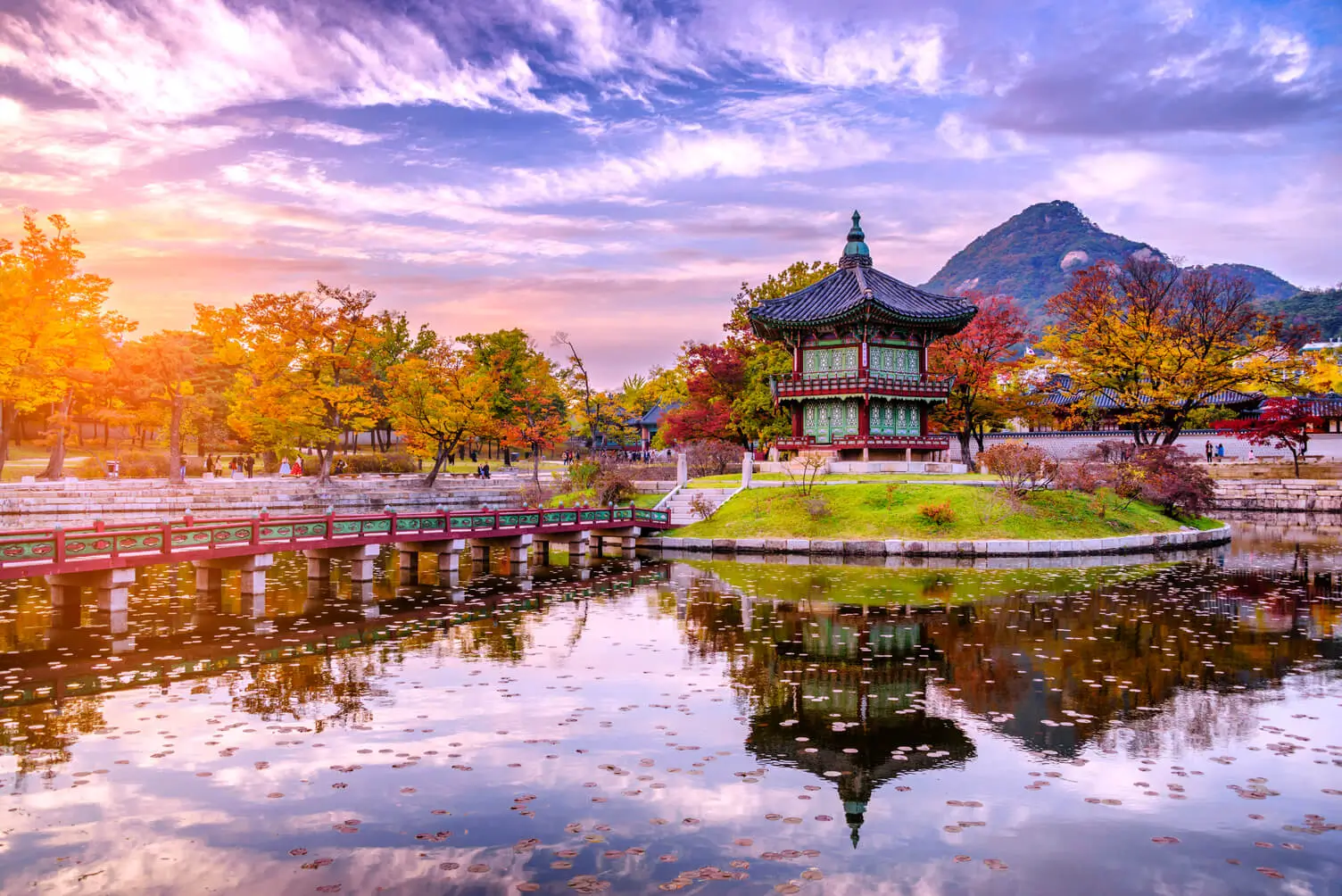
Check into your accommodation and head to Gyeongbokgung Palace. This is the largest of Seoul’s five Joseon-era royal palaces, built in 1395 and substantially restored over the past three decades. Entry is 3,000 KRW for adults. On Tuesdays, the palace is closed. For everything else, arrive before 10:00 AM when the crowd is thinnest.
Before you enter, stop at one of the hanbok (traditional Korean dress) rental shops clustered on the street outside the main gate. Rental runs between 15,000 and 25,000 KRW for a few hours and includes hair styling at most shops. Hanbok wearers are admitted to Gyeongbokgung for free, and the experience of walking the palace grounds in traditional dress draws genuine interest from other visitors. Japanese travellers often find the comparison with yukata and furisode interesting in detail.
Afternoon: Bukchon and Insadong
Walk 10 minutes north of the palace to Bukchon Hanok Village, a living residential neighbourhood of preserved Korean traditional houses (hanok) laid across steep hillside alleys. The view from the top of the upper alleyways, looking south over tiled rooftops toward N Seoul Tower, is one of the most distinctive city views in East Asia. Note that Bukchon is an active residential area, not a theme park. Posted signs throughout the neighbourhood in Korean, English, and Japanese ask visitors to keep noise levels low and to refrain from photographing private homes. Follow them.
From Bukchon, walk south to Insadong, Seoul’s most concentrated strip of traditional craft shops, independent galleries, and tea houses. Ssamziegil, a courtyard complex tucked off the main street, has a rotating selection of independent boutiques and a reliable coffee spot for a late-afternoon break. The main Insadong-gil street is pedestrianised on weekends.
Evening: Myeongdong for Street Food and BBQ
Take the metro to Myeongdong Station (Line 4) and spend the evening in Seoul’s most internationally facing neighbourhood. The central pedestrian food corridor comes alive after 6:00 PM with vendors selling hotteok (sweet stuffed pancakes), tteokbokki (spicy rice cakes), tornado potato spirals, and Korean-style corn dogs loaded with mozzarella. Eat your way through the stalls before sitting down for a full dinner at one of the samgyeopsal (grilled pork belly) restaurants on the side streets. A full Korean BBQ dinner for two, including banchan (side dishes) and a round of beer, runs 25,000 to 40,000 KRW.
Day 2: Seoul’s Authentic Side from Gwangjang to Hongdae
Morning: Gwangjang Market
Start early at Gwangjang Market (Jongno 5-ga Station, Line 1 or 5). Operating since 1905, this covered market is one of the oldest continuously running markets in South Korea and is as working-class and local as Seoul gets. The food section is the reason to visit: bindaetteok (mung bean pancakes pressed flat and fried on iron griddles), mayak gimbap (tiny sesame-soy rice rolls the name translates loosely as “drug kimbap” for their addictiveness), and yukhoe (seasoned beef tartare). Market stalls are occupied by women who have cooked the same dishes here for decades. Arrive between 9:00 and 10:30 AM for a calmer experience before the lunch crowd arrives.
Afternoon: Dongdaemun and N Seoul Tower
From Gwangjang, take a short walk to Dongdaemun Design Plaza (DDP), the free-to-enter cultural and design complex designed by the late Zaha Hadid and completed in 2014. The building’s exterior is worth spending 20 minutes around regardless of what is showing inside: 45,000 aluminium panels curve across a form that looks like it was designed by a different civilisation. Check the DDP website for current exhibitions before visiting, as programming changes frequently and some shows are genuinely worth the entrance fee.
In the late afternoon, make your way to Namsan to visit N Seoul Tower. You can hike the Namsan trail (approximately 30 to 40 minutes from Myeongdong) or take the Namsan Cable Car from the lower station. The tower observation deck costs 21,000 KRW for adults and gives a 360-degree view over the full Seoul basin. The surrounding Namsan Park offers one of the few forested walking routes available from central Seoul. The “love locks” tradition on the fence around the tower is photogenic in its collective absurdity.
Evening: Hongdae
Take Line 2 to Hongik University Station and spend the evening in Hongdae. This neighbourhood around Hongik University is where Seoul’s street performance culture, independent music scene, and youth nightlife converge. On weekend evenings, the pedestrian plaza outside the main gate hosts busking performances that range from polished K-pop cover dance groups to solo folk musicians. The surrounding blocks have a dense concentration of affordable restaurants. Try dakgalbi (spicy stir-fried chicken with vegetables and rice cakes) or chimaek (Korean fried chicken with beer) at one of the many specialist restaurants lining the side streets.
Day 3: KTX to Busan and the City That Lives by the Water
Morning: The Train South
Check out of your Seoul accommodation and make your way to Seoul Station. Board a KTX (Korea Train Express) service bound for Busan. Standard-class tickets cost approximately 59,800 KRW one-way, and the journey takes around 2 hours 30 minutes. If you prefer a faster option, the SRT (Super Rapid Train) departs from Suseo Station in southeastern Seoul and covers the same route in approximately 2 hours 15 minutes. Book through the Korail official website or the Let’s Korail app at least a day or two in advance; weekend services and holiday departures fill up fast.
The train passes through Daejeon, Dongdaegu, and the industrial south of the peninsula before arriving at Busan Station in the Jung-gu district. The arrival is low-key compared to Incheon but the city immediately announces itself through the smell and density of the port. Check into your accommodation (Jung-gu or Seomyeon are practical bases; Haeundae-gu if you want beach proximity) and have lunch near your hotel before heading out.
Afternoon: Gamcheon Culture Village and the Coastline
Take a taxi or city bus to Gamcheon Culture Village in the Saha-gu district. This hillside neighbourhood of tightly packed, pastel-coloured houses was originally built in the 1950s by refugees during the Korean War and has been incrementally transformed over the past 15 years into a living outdoor arts space. Murals fill the walls of staircase alleys. Small sculptures are installed at junctions and doorways. Cafes occupy the narrowest possible spaces between homes. Pick up a stamp map at the information kiosk near the entrance (the walk takes about 90 minutes at a comfortable pace) and use it to navigate between the major art installation stops. The village is free to enter; some individual installations charge a small fee of 500 to 2,000 KRW.
From Gamcheon, head west along the coast to Songdo Beach and its glass-bottomed Ocean Skywalk, a suspended walkway that extends out over the water from the Songdo coastal cliffs. Entry is free and the walk takes about 30 minutes end to end. The views south over the Yellow Sea on a clear afternoon are impressive.
Evening: Gwangalli Beach
Make your way to Gwangalli Beach for the evening. This is Busan’s second major beach and it has a more local character than the more tourist-heavy Haeundae. The strip of seafood restaurants and pojangmacha (tent bar-restaurants) along the shore road facing Gwangan Bridge is where Busan residents come to eat and drink on warm evenings. Order haemul pajeon (seafood scallion pancake) and a bottle of Busan-brewed Galmegi Brewing craft beer or standard soju. At night, Gwangan Bridge lights up in full across the water: a genuinely memorable image that most visitors keep as a phone wallpaper for years.
Check out our plans
-
South Korea 3 Days Unlimited Data
USD 10.00 -
South Korea 7 Days Unlimited Data
USD 23.00 -
South Korea 10 Days Unlimited Data
USD 30.00 -
South Korea 15 days 8GB
USD 15.00 -
South Korea 15 Days Unlimited Data
USD 43.00 -
South Korea 30 days 25GB
USD 27.00
Day 4: Jagalchi, Beomeosa Temple, and the Last Bowl Before the Flight
Morning: Jagalchi Fish Market
Start early at Jagalchi Fish Market, the largest seafood market in South Korea and one of the most vivid travel experiences the country offers. The market is busiest from 6:00 to 9:00 AM when the daily trade is at full volume on the ground floor. The setup is practical: buy live seafood from the vendors on the lower level and pay a small handling fee (typically 5,000 to 10,000 KRW per person) to have it prepared and served at the sit-down tables on the floors above. Busan specialities worth trying here include meongge (sea squirt, with a briny, mineral flavour that is unlike anything on a Japanese menu), gejang (raw crab marinated in soy sauce or gochujang), and sannakji (live octopus served immediately after preparation). These are fresh at a quality and price that no other market in the country matches.
After the market, walk five minutes to BIFF Square (Busan International Film Festival Square) in the Nampo-dong area. Handprints of Korean and international cinema figures are embedded in the pavement in the style of Hollywood’s Walk of Fame. It is a 15-minute stop, but worth a brief detour if Korean cinema interests you at all.
Afternoon: Beomeosa Temple and the Last Meal
If your departure flight allows for an early afternoon excursion, head north to Beomeosa Temple on the forested slopes of Geumjeongsan mountain in northern Busan. Founded in 678 CE during the Silla kingdom, Beomeosa is one of the five largest Buddhist temple complexes in South Korea and one of the few major temples in the country set within an urban mountain environment. From central Busan, take Metro Line 1 to Beomeosa Station, then a local bus or short taxi ride up the mountain road. The temple grounds are free to enter, and the 15-minute walk from the entrance gate to the main hall, along a pine-forested stone path, is exactly the kind of quiet that Busan’s harbour-front does not offer.
Return to central Busan (Seomyeon is a practical stopping point for lunch and the airport connection) for a final meal. Two dishes that are specific to Busan and should not be skipped:
- Milmyeon: Cold wheat noodles in a chilled meat broth, typically served with sliced cucumber, a boiled egg, and gochujang on the side. This is Busan’s answer to naengmyeon and was invented here after the Korean War using American wheat flour rations.
- Dwaeji gukbap: Pork and rice soup served in a clear bone broth with a bowl of kimchi, raw garlic, and salted shrimp on the side. A working-class breakfast and lunch staple in Busan that costs 10,000 to 13,000 KRW and is served in specialist shops that have been open since early morning.
From central Busan, the Busan-Gimhae Light Rail Transit (BGL) connects Sasang Station to Gimhae International Airport (PUS) in approximately 30 minutes. Direct flights back to Tokyo, Osaka, and Fukuoka depart throughout the afternoon and early evening. If you entered Korea through Busan via ferry, return sailings to Hakata Port follow a similar schedule to the inbound crossing.
Data Ready Before You Fly
Set up your South Korea eSIM from Voye Global in minutes.
What to Eat: A Food Cheat Sheet for Japanese Travellers
South Korean food rewards planning. These are the dishes worth building time around, with specific locations:
In Seoul
- Gwangjang Market: Bindaetteok (mung bean pancakes), mayak gimbap, yukhoe
- Myeongdong street corridor: Tteokbokki, hotteok, mozzarella corn dogs
- Any Korean BBQ restaurant: Samgyeopsal (pork belly), galbi (short ribs), and the full banchan spread
- Hongdae restaurants: Dakgalbi, bingsu (shaved ice with red bean), chimaek (chicken and beer)
In Busan
- Jagalchi Market: Meongge, gejang, sannakji, hoe (raw sliced fish)
- Seomyeon area restaurants: Milmyeon, dwaeji gukbap
- Gwangalli pojangmacha: Haemul pajeon, grilled shellfish, fried snacks
A note on spice for Japanese travellers: Korean food’s baseline heat level is noticeably higher than most Japanese cuisines. Restaurants in tourist zones are generally happy to adjust the spice on request. Gimbap, grilled meats, and most soups are accessible starting points if you are unsure. Convenience store food in South Korea (samgak gimbap, instant ramen at the in-store hot water station) is consistent and much better than its reputation suggests.
Getting Around Seoul and Busan Without Stress
Both Seoul and Busan run on their metro systems, and both systems use the T-money card interchangeably. Load money onto the card at any convenience store counter and you are set for both cities without needing a separate transit card.
Seoul’s metro runs 24 lines and covers the city comprehensively. Station signage includes Korean, English, and in tourist-heavy zones, Japanese. Train frequency during peak hours runs every 2 to 3 minutes. The last train on most lines departs between midnight and 1:00 AM.
In Busan, the metro is smaller (four main lines) but covers Jagalchi, Seomyeon, Haeundae, and the area around Busan Station without gaps. Taxis in both cities are metered and relatively affordable; a 15-minute cross-city ride typically costs 8,000 to 15,000 KRW. Kakao T, the South Korean ride-hailing app, works across both cities and accepts international credit cards registered at setup. It is the most reliable app-based option for solo travellers navigating areas without strong English signage.
For the Seoul to Busan leg, the KTX is the correct choice in almost every scenario. When airport transfer time is included, flying between the two cities saves no meaningful time and adds considerably more inconvenience.

Budgeting Your 4-Day Seoul to Busan Trip
Here is a realistic cost breakdown for one person at mid-range spending:
| Category | Estimated Cost (KRW) |
|---|---|
| Accommodation (3 nights Seoul, 1 night Busan) at mid-range hotel | 240,000 to 480,000 |
| KTX Seoul to Busan (standard class, one-way) | 59,800 |
| AREX airport rail, Incheon to Seoul Station | 9,500 |
| BGL light rail, Busan city to Gimhae Airport | 3,800 |
| Meals (4 days, mix of street food and sit-down restaurants) | 120,000 to 200,000 |
| Attraction entry fees (Gyeongbokgung, N Seoul Tower, etc.) | 30,000 to 60,000 |
| Metro and bus fares across both cities | 25,000 to 40,000 |
| Hanbok rental (optional but recommended) | 15,000 to 25,000 |
| Miscellaneous: coffee, convenience store, shopping | 50,000 to 100,000 |
| Total (excluding flights) | 553,100 to 978,100 KRW |
At mid-2026 exchange rates, this works out to approximately 56,000 to 100,000 JPY for four days, flights excluded. Budget travellers using guesthouses and eating primarily at street stalls and convenience stores can keep costs toward the lower boundary. Mid-range hotel stays, one or two Jagalchi Market seafood spreads, and N Seoul Tower admission push costs toward the upper range.
Stay Connected the Whole Way: eSIM for South Korea
On a four-day trip, connectivity matters more than on a longer journey. With limited time, you cannot afford to spend an hour figuring out a SIM card at Incheon Airport, troubleshoot roaming settings at the wrong moment, or navigate Gamcheon’s unmarked alleyways without a working map.
The practical solution for Japanese travellers is a South Korea eSIM purchased before departure. Instead of relying on Japanese carrier international roaming (which is typically expensive and throttled) or queuing at an airport SIM kiosk with a language barrier, you install the eSIM at home and activate it automatically the moment your device connects to the Korean network after landing.
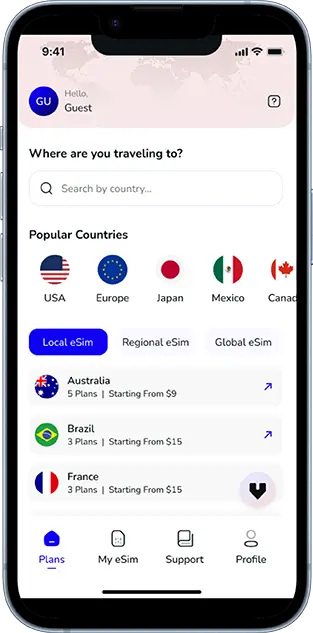
Voye Global offers South Korea eSIM plans designed for short-stay travellers, with 4G and 5G data coverage across Seoul, Busan, and the KTX corridor between them. Setup is a QR code scan. The eSIM sits alongside your Japanese SIM as a secondary line, meaning your Japanese number stays active for calls home while Voye Global handles your Korean data. Most iPhones released since 2018 and Android devices released since 2020 are eSIM-compatible; verify your specific model on the Voye Global website before purchasing.
For a four-day trip, a 7-day unlimited data plan from Voye Global gives comfortable coverage with a few days of buffer, without worrying about data limits on the day you are trying to find Beomeosa Temple from Busan Station.
Final Tips Before You Go
- Book KTX seats in advance: Weekend and holiday departures sell out reliably. Book as soon as your Seoul check-out date is confirmed.
- Use Kakao Maps in Korea: Inside South Korea, Kakao Maps gives more accurate public transit routing and walking directions than Google Maps. Download both.
- Public transport etiquette: Seoul and Busan metro culture matches Japan’s: phone calls on the train are uncommon and generally frowned upon. Priority seating is taken seriously.
- Tipping: South Korea does not have a tipping culture. Leaving cash on the table is not expected and may cause brief confusion in some smaller establishments.
- Gyeongbokgung is closed on Tuesdays: Plan Day 1 around a day that is not Tuesday or check the official schedule for maintenance closures.
- Convenience stores are genuinely useful: GS25, CU, and 7-Eleven in South Korea stock samgak gimbap, ramyeon available at a hot water station, ready-made meals, and solid coffee at prices that make them a practical breakfast and snack option every day of the trip.
- Respect Bukchon: The neighbourhood’s signs requesting quiet and photography restrictions on private homes are bilingual for a reason. They reflect genuine resident frustration with overtourism in a living neighbourhood. Follow them.
South Korea across four days is a trip that moves at a pace, but Seoul and Busan are cities that hold up under that pace without losing coherence. The itinerary above gives you enough of each city to know what it is actually like, rather than returning home with a list of famous landmarks and no sense of the place. Come prepared, get the eSIM sorted before you board, and go hungry.

Seamless Mobile Data Everywhere













 English
  日本語
日本語