




The Midge Problem: What It Actually Is and How to Handle It
Highland midges are most active in still, humid conditions – early morning and evening near lochs, bogs, and standing water. A breeze of any strength disperses them. Open coastal stretches along the NC500 are often midge-free because the wind keeps moving. Inland, sheltered areas near water are the problem zones.
The Repellents That Work
Smidge is the UK-developed repellent specifically formulated for Highland midges and is significantly more effective than generic DEET-based products for this specific species. Available at outdoor shops and pharmacies throughout Scotland. Apply to all exposed skin before going outdoors in the morning and before evening.
DEET-based repellents (30-50% concentration) also work. Avon Skin So Soft is an older recommendation from hillwalkers that has some effectiveness but is weaker than dedicated midge repellents.
Light-coloured clothing and long sleeves in the evening reduce landing surfaces. A midge hood – a fine mesh head covering – is the nuclear option for particularly bad evening conditions near lochs.

The NC500: What It Is and How to Drive It
The North Coast 500 (NC500) is a 516-mile (830km) scenic route starting and ending at Inverness Castle, looping anticlockwise around the northern Highlands of Scotland. Launched in 2015, it is frequently compared to Route 66 for its iconic road-trip status – and correctly. The route passes through some of the most dramatic and remote coastal and mountain landscapes in Europe.
Minimum recommended time: 7 days. Ten days is better. The route is marked on all navigation apps – simply set Inverness as your start and the NC500 route appears.
Key Stops: What to Prioritise
Isle of Skye – accessed via the Skye Bridge from Kyle of Lochalsh and requiring a full detour from the NC500 proper, but non-negotiable. The Fairy Pools near Glenbrittle (natural rock pools in a glacial valley, extraordinary in any weather), the Quiraing landslide plateau on the north of the island (best at sunrise or late evening for light and fewer crowds), and the Old Man of Storr rocky formation above Portree are the headline attractions.
Bealach na Bà – the mountain pass road to Applecross village is one of the most dramatic drives in Britain. The road climbs from sea level to 626 metres in 9km with hairpin bends, sheer drops, and views to Skye and the Outer Hebrides on clear days. The village of Applecross below has a seafood restaurant (the Applecross Inn) that is worth booking months in advance.
Kylesku Bridge – an elegant curved bridge over Loch a’ Chairn Bhain in the northwest Highlands, with seals frequently visible in the water below. The Kylesku Hotel restaurant is one of the best seafood spots on the route.
Smoo Cave near Durness – a sea cave accessible by foot, with a waterfall inside. Free to visit and genuinely dramatic in June when the cave stream is full.
Dunrobin Castle on the east coast – a Victorian fairytale castle above the sea with formal gardens and a falconry display. The contrast between the wild west coast and this ornate structure on the east is jarring and worth the stop.

Dunnet Head – the northernmost point of mainland Britain (often confused with John o’Groats, which is not). Puffins nest on the clifftops here from May through July. Walk the headland path in June and you will find them nesting within metres of the path.
June Specifics: Why This Month Works
Sunsets at 10:30pm. This is the reason June beats every other month for the NC500. You are driving a mountain pass at 9pm in full golden light. You are photographing the Quiraing at 10pm and the sky is still lit from the north. The light in Scotland in June is not replicable at any other time of year.
Puffins. Atlantic puffins are nesting in June on Dunnet Head, Handa Island (accessible by small ferry from Tarbet near Scourie), and other north coast cliff locations. The colonies are accessible from cliff paths.
Everything is open. Some NC500 accommodations, restaurants, and attractions operate seasonal schedules that do not fully open until late May. By June, everything is running. Book your accommodation 3-4 months ahead – popular NC500 properties fill for June by February or March.
Connectivity on the NC500: The Navigation Issue

This is not a point worth glossing over. Multiple NC500 guides explicitly note that mobile coverage drops significantly in remote Highland areas. Between Ullapool and Durness on the northwest coast, in the interior roads near Torridon, and on the approaches to Applecross, cellular data can be limited or absent. Download offline maps of the entire NC500 route before you leave Inverness. Google Maps, Maps.me, or the OS Maps app all support offline download for Scotland.
The NC500 route involves single-track roads throughout most of its length. Passing places are indicated by white diamonds on posts. The etiquette is simple: pull into a passing place to allow oncoming vehicles to pass; do not park in passing places; do not drive in convoy. Local residents have priority. Following these rules prevents the most common source of NC500 friction.
Driving the NC500 in June?
Get your Scotland eSIM before you fly – download offline maps, navigate single-track roads, stay connected where coverage exists.
Getting a UK eSIM: Why Voye Is the Smart Choice
UK mobile coverage on the NC500 follows the coastal and main town corridors well. Inverness, Ullapool, and the larger towns have solid 4G. Remote stretches between towns have variable coverage on all networks. A Voye eSIM for the UK activates when you land at Inverness or Edinburgh or Glasgow and gives you local data from the moment you start driving north.
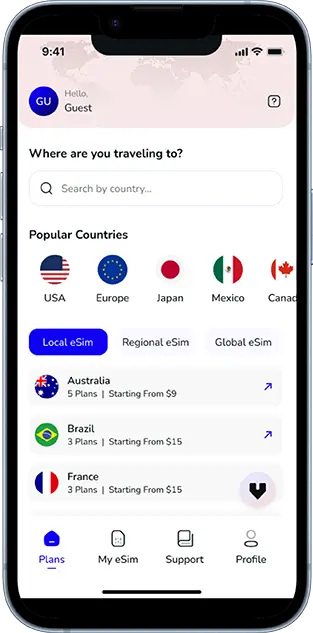
Set up through the Voye app before you travel. Activate on landing and download your offline maps while you still have strong signal in Inverness.
Key Benefits
- Instant digital delivery – activate before you fly, data starts the moment you land
- Unrestricted hotspot – share your NC500 connection with your travel companions from one plan
- Keep your home number active – calls, messages, and emergency contact continue normally
- 24/7 multilingual support throughout your road trip
- Website and app in 13 languages
Use Cases on the NC500
- Downloading offline Highland maps in Inverness before leaving coverage areas
- Navigating the Bealach na Bà mountain pass with turn-by-turn directions
- Booking the Applecross Inn and Kylesku Hotel from the road when plans become clear
- Finding petrol stations along the route – distances between them can be significant in the far northwest
- Checking weather forecasts in real time – Highland weather changes within minutes and planning around it is essential
- Booking Isle of Skye ferry crossings and Handa Island puffin boat tickets from the car

Practical Things That Catch NC500 Drivers Off Guard
Fuel distances. The gap between petrol stations in the far northwest can be over 60km. Never pass a petrol station without checking your fuel level. The station in Durness, Lochinver, and Kinlochbervie are the critical stops in the most remote section.

The roads are single track. This is not a dual carriageway holiday. Speed expectations drop significantly. A 50-mile section can take 2 hours. Build this into every day’s planning – the NC500 rewards slow travel.
Weather changes fast. The west-facing Highland coastline meets Atlantic weather systems directly. A clear morning can become a cloudy afternoon and clear again by evening. The Met Office Mountain Weather app has the best Highland forecasts. Flexibility in daily planning is more valuable than an optimized itinerary.
Book ahead. June is the busiest month on the NC500 that is not July or August. Popular accommodations – particularly the best campsites at Durness and Torridon, the Kylesku Hotel, and Skye properties – require 3-4 months advance booking for June dates.
Drive the NC500 with reliable data where it counts
Inverness to Ullapool to Durness to Skye – your UK eSIM covers the whole route.
Frequently Asked Questions
When is the best time to drive the NC500?
May, June, and September are the optimal months. June offers the longest daylight hours (sunsets at 10:30pm), all attractions and accommodations open, and puffins nesting on the north coast cliffs. The main drawback is that June is the peak midge season – bring Smidge repellent and understand when and where midges concentrate.
How bad are the midges on the NC500 in June?
Highland midges are most active in still air at dawn and dusk near standing water and sheltered areas. Coastal stretches with any breeze are usually fine. The key is preparation: Smidge repellent applied to all exposed skin, long sleeves in the evening, and avoiding the worst areas (low-lying lochs in the evening) without protection. With the right repellent, midges are a manageable inconvenience rather than a trip-ending problem.
How long does it take to drive the NC500?
The NC500 is 516 miles. Without stopping you could drive it in approximately 10-12 hours. But stopping is entirely the point. A minimum of 7 days is recommended, with 10 days allowing proper time at key locations. Most visitors do 7-10 days starting and ending in Inverness.
Will I have mobile data on the NC500?
Coverage varies significantly. Towns and the main coastal sections have reasonable 4G. Remote areas between Ullapool and Durness and in the interior roads can have little or no coverage. The critical preparation is downloading offline maps before leaving Inverness. A Voye eSIM ensures you have the best available local network coverage throughout.
The Bottom Line

The NC500 in June delivers what it promises – one of the great road trips of the world, in the light that makes every photograph look like it was planned. The Bealach na Bà at 9pm. Dunnet Head puffins at midday. The Quiraing with nobody else on the path at 10pm. Apply the Smidge. Book your beds. Download the offline maps. The rest of it takes care of itself.
Get your Voye eSIM before you fly. Land in Inverness with data running. Head northwest.
Get your Voye eSIM for the UK
Instant activation · Unrestricted hotspot · Use VOYE15 for 15% off your first order
Seamless Mobile Data Everywhere














 English