Ultimate Guide to the Running of the Bulls Festival in Spain
Voye Global Team
May 18, 2026
· 23 min read
Every July, the ancient streets of Pamplona come alive with one of the world's most thrilling traditions: the Running of the Bulls. This ultimate guide covers everything international travelers need to know, from the history of the San Fermín festival and the bull run route to safety tips, the best viewing spots, local food, and nearby destinations. Whether you're running or watching, plan your trip with confidence and stay connected throughout Spain with Voye Global eSIM.
There are festivals. And then there is the Running of the Bulls in Spain.
Few events on the planet carry the same raw, heart-pounding energy as this centuries-old tradition held every July in the small Spanish city of Pamplona. Thousands of white-clad participants sprint down ancient stone streets with six massive fighting bulls thundering just meters behind them. The air smells of adrenaline, red wine, and something deeply, unmistakably Spanish.
Whether you’re an adventure seeker crossing off a bucket list item, a cultural enthusiast drawn to one of Europe’s most iconic festivals, or simply a curious traveler wanting to witness something extraordinary, the San Fermín festival delivers an experience that no photograph or travel reel can fully capture.
Each year, more than a million visitors from across the globe descend on Pamplona for this nine-day celebration. They come not just for the bull run, but for the music, the food, the parades, the fireworks, and that indescribable sense of collective joy that takes over the entire city.
In this guide, we’ll walk you through everything you need to know to experience the Running of the Bulls festival like a seasoned traveler, from understanding its origins to navigating the streets of Pamplona, staying safe, eating well, and staying connected with Voye Global so you can share every thrilling moment in real time.
What Is the Running of the Bulls Festival?
A Tradition Rooted in History
The Running of the Bulls: known locally as El Encierro, is not simply a spectacle. It is a living, breathing piece of Spanish cultural heritage that dates back to the 14th century.
The practice began as a practical necessity. Cattle herders needed to move bulls from the outlying corrals to the bullring, where they would later be used in the afternoon bullfights. To speed things up, young men began running ahead of the bulls to provoke them into moving faster. Over time, this became a competitive sport, and eventually, a beloved tradition.
The festival is officially part of the San Fermín festival, a massive religious and cultural celebration honoring San Fermín, the patron saint of Navarra. While the religious roots run deep, complete with processions, masses, and solemn ceremonies, the festival today is equally famous for its roaring street parties, communal meals, and non-stop music.
Ernest Hemingway Changed Everything
The bull run in Spain might have remained a regional tradition had it not been for one influential American writer. Ernest Hemingway visited Pamplona in the 1920s and was so captivated by the experience that he immortalized it in his 1926 novel The Sun Also Rises. The book introduced the San Fermín festival to an international audience, and Pamplona has never looked back.
Today, Hemingway’s legacy is everywhere in Pamplona, from a bronze statue in his honor to bars that proudly hang his photographs. Many visitors even pay tribute by making a stop at his favorite haunts during their stay.
Where Does the Festival Take Place?
Pamplona (or Iruña in the Basque language) is the capital of the Navarra region in northern Spain. It’s a compact, walkable city with a well-preserved medieval old town, beautiful city walls, and a character that somehow manages to feel both deeply traditional and vibrantly alive.
For most of the year, Pamplona is a quiet, charming university city of around 200,000 people. But every July, it transforms almost overnight into one of the most energetic, densely-packed, and joyous places on Earth.
During the San Fermín festival, the streets barely sleep. Every plaza becomes a dance floor. Every balcony becomes a viewing platform. Every local becomes your host. The city opens its arms to the world, and the world shows up, in its millions.
If you’re planning a trip to Spain and haven’t considered Pamplona in July, you’re missing something special.
When Is the Festival Held?
The San Fermín festival runs annually from July 6 to July 14, with the grand opening ceremony, known as El Chupinazo, kicking off on the evening of July 6. At precisely noon, a rocket is fired from the balcony of Pamplona’s City Hall, and the crowd below erupts in celebration. Red scarves are tied around necks. Wine flows freely. The festival has officially begun.
The Running of the Bulls itself takes place every morning from July 7 to July 14: that’s eight consecutive days of bull runs.
What’s the Weather Like in July?
July in Pamplona is warm and pleasant, with temperatures typically ranging from 17°C to 30°C (63°F to 86°F). The days are long and sunny, which is perfect for outdoor festivities. However, if you’re planning to run or watch from the streets early in the morning, a light layer is advisable for the 8 AM start time.
Pro tip: Pack breathable, light clothing. The white-and-red outfit (white clothes, red neckerchief, and red waistband) is both the traditional dress code and a practical choice for the July heat.
What Happens During the Bull Run?
The Daily Schedule
The Encierro follows a precise and strictly managed daily schedule:
7:30 AM: The route is cleared and fenced off by authorities
7:45 AM: Participants gather in the designated starting zones
8:00 AM: The first rocket (cohete) is fired to signal the opening of the corrals
8:00 AM: A second rocket confirms all bulls have been released
~8:03–8:04 AM: The run typically ends as bulls enter the bullring
Afternoon: Bullfights are held at the Plaza de Toros (bullring)
The run itself lasts only about three to five minutes, but those minutes are unlike anything else you will ever experience.
The Route
The Pamplona bull run follows a cobblestone route of approximately 875 meters (just under half a mile) through the old city. The route winds through several distinct sections, each with its own character:
Calle Santo Domingo: The steepest part. Bulls tend to move fastest here as they charge uphill from the corrals.
Plaza del Ayuntamiento (Town Hall Square): Wider and more open. A brief respite before the route narrows again.
Calle Mercaderes: A sharp left turn here causes bottlenecks and is considered one of the most dangerous sections.
Calle Estafeta: The longest and most iconic stretch. This is what you see in most photographs.
Telefónica curve: Another sharp bend near the bullring entrance. Frequent falls happen here.
Plaza de Toros (Bullring): The finish line. Bulls enter, and the run concludes.
How Do You Participate?
Participation in the Encierro is free and open to anyone 18 years or older. You do not need to pre-register, you simply show up and join the crowd in the designated starting zones before 7:30 AM. However, you must be sober (intoxicated individuals are barred from running), and you should read the official rules carefully.
Runners are required to run in the same direction as the bulls, never toward them. Provoking or obstructing bulls is strictly prohibited.
Is the Running of the Bulls Dangerous?
Let’s be honest: yes, it is dangerous. But the risks are manageable with proper preparation and respect for the rules.
The Numbers
Since official records began in 1910, 16 people have died in the Encierro, an average of fewer than one death every seven years. Injuries, however, are far more common. Hundreds of people are treated each year for bruises, cuts, and trampling injuries. Gorings, being pierced by a bull’s horn, happen roughly once or twice per run on average but are rarely fatal.
For context: most injuries occur when runners fall and are trampled, not from direct bull contact.
Rules Participants Must Follow
The City of Pamplona enforces strict rules to minimize risk:
Participants must be 18 years of age or older
No running under the influence of alcohol or drugs
Participants must not carry cameras, bags, or smartphones during the run (for their own safety and others’)
No touching, provoking, or taunting the bulls
Participants who fall must stay on the ground and cover their head until the danger has passed
No re-entering the route once you have exited
Safety Precautions for First-Timers
If you’re considering running, here is what experienced Encierro veterans recommend:
Arrive early and study the route the day before: walk it, understand the curves and bottlenecks
Position yourself wisely: first-timers are advised to start closer to the bullring end on Estafeta street
Stay alert at all times: danger often comes from other runners falling, not just the bulls
Trust your instincts: if the crowd surges and you feel overwhelmed, step into a doorway or behind a barrier
Watch a run before participating: spend one morning as a spectator before you run
Best Places to Watch the Bull Run
Not everyone wants to run. And honestly, watching may give you the better view.
Private Balconies
The most coveted viewing spots are the private balconies of apartments and hotels along the route, particularly on Calle Estafeta. These must be booked months in advance and come at a premium, expect to pay anywhere from €80 to €300 per person for a balcony spot. Some tour operators include this in festival packages.
The Bullring
Seats inside the Plaza de Toros offer a dramatic view as the bulls enter the arena. General admission tickets are available (€5–€15), and the atmosphere inside is electric. This is also a great option for families or those who prefer a safer vantage point.
Street-Level Fences
The authorities install wooden fences along the route, with gaps for emergency exits. Arriving at least an hour early to secure a fence spot is essential, these fill quickly. The Calle Santo Domingo and Calle Estafeta sections tend to offer the most dramatic views at fence level.
Guided Viewing Experiences
Several reputable tour operators offer guided viewing packages that include a reserved spot along the route, a guide to explain what’s happening, and sometimes a post-run breakfast. For first-time visitors, this can be an excellent way to experience the Encierro without the confusion of navigating it alone.
Other Things to Experience During San Fermín
The Running of the Bulls is the headline act, but the San Fermín festival is a full nine-day immersive cultural experience. Here’s what else you shouldn’t miss:
Traditional Music and Dancing
Bands called txistularis (playing the traditional Basque flute) fill the streets every day. Traditional folk dances, jotas (Aragonese-style dancing), and spontaneous street music are everywhere. The energy is contagious, you don’t need to know the steps to join in.
The Giants and Big-Heads Parade (Gigantes y Cabezudos)
One of the most visually spectacular events of the festival is the daily parade of towering paper-mâché giants (gigantes) representing kings, queens, and historical figures, accompanied by cabezudos (big-head figures) that playfully chase children through the crowd. It’s whimsical, loud, and absolutely unmissable.
Fireworks Displays
Every evening at 11 PM, a spectacular fireworks competition (El Concurso de Fuegos Artificiales) lights up the sky above the old city walls. Different pyrotechnic companies from across Europe and beyond compete, making each night’s display unique. Find a good spot on the city walls for the best view.
Religious Processions
On July 7, the solemn procession of San Fermín takes the saint’s statue through the streets of the old town. Locals dress in traditional attire and follow in silence, a deeply moving contrast to the raucous energy of the rest of the festival.
The Pobre de Mí Ceremony
At midnight on July 14, the festival ends with the bittersweet Pobre de Mí (Poor Me) ceremony in the Town Hall Square. Thousands gather, candles in hand, singing the traditional farewell song. It is, by many accounts, the most emotionally affecting moment of the entire experience. There is not a dry eye in the crowd.
Travel Tips for International Visitors
Getting to Pamplona
Pamplona is well-connected to the rest of Spain:
By Air: The closest airport is Pamplona Airport (PNA), which handles limited domestic and some European flights. Alternatively, fly into Bilbao Airport (BIO) or Madrid-Barajas (MAD) and take the train or bus. The journey from Madrid by high-speed rail is approximately 3 hours.
By Train: RENFE operates rail connections from Madrid, Barcelona, and Zaragoza. Book well in advance during festival dates.
By Bus: Long-distance buses from major Spanish cities are affordable and reliable. ALSA is the main national operator.
By Car: Driving is possible, but parking in Pamplona during the festival is extremely limited. Consider parking at a park-and-ride on the outskirts and taking a shuttle.
Stay Connected Across Spain
Activate your Voye Global eSIM before you fly to Spain.
Here’s the honest truth: finding accommodation in Pamplona during the festival is genuinely difficult. Hotels book out a year in advance. If you haven’t booked yet and the festival is approaching, consider these alternatives:
Nearby towns: San Sebastián, Logroño, and Zaragoza are all within 1–2 hours and have much better availability
Camping: Official festival campsites operate just outside the city, surprisingly popular and well-organized
Airbnb and private rentals: Check these early; locals often rent out rooms specifically for festival week
Hostels: Budget-friendly, social, and often centrally located, book at least 6 months ahead
Budget Planning
Pamplona during San Fermín is not cheap. Here’s a rough daily budget guide:
Category
Budget Traveler
Mid-Range
Comfort
Accommodation
€20–40 (hostel/camping)
€80–150 (guesthouse)
€200+ (hotel)
Food & Drink
€20–30
€40–60
€80+
Activities
Free–€20
€30–60
€80+
Transport
€5–10
€10–20
€20+
Packing Tips
White clothing: this is essential; it’s the traditional dress code for the festival
Red neckerchief and red waistband (pañuelo and faja), available cheaply in Pamplona shops or online
Comfortable, closed-toe shoes: do not wear sandals or flip-flops, especially near the route
Small daypack or money belt: keep valuables secure in crowded areas
Light rain jacket: July is mostly sunny but brief afternoon showers are possible
Portable charger/power bank: your phone will drain fast
Local Etiquette
Respect the route fencing: do not climb or cross fences during the run
Do not be intoxicated in the early mornings: it’s both disrespectful and dangerous
Learn a few Spanish phrases: locals deeply appreciate the effort
Don’t waste food or drink: pouring sangria on strangers might seem fun but is not universally welcomed
Tip modestly: Spanish tipping culture is not as strong as in North America, but rounding up the bill is appreciated
Staying Connected in Spain: Your Festival Lifeline
You’ve just watched a dozen runners and six bulls thunder past you at full speed. Your heart is pounding. You pull out your phone to call your friend two streets over, and your connection drops.
During a festival this crowded, reliable mobile internet is not a luxury. It’s a necessity.
Why Connectivity Matters During San Fermín?
Think about it: with over a million visitors packed into a city of 200,000, the local mobile networks are under extraordinary strain. Finding your travel companions, navigating Pamplona’s winding streets without data, or missing the chance to share that incredible video because you have no signal, these are real problems that international travelers face every year.
Beyond the practical, consider the safety angle: being able to reach someone in an emergency, check medical information, or contact your accommodation when plans change unexpectedly requires a working data connection.
If you’re traveling from outside Spain (or even from outside the EU), your home carrier’s roaming rates can be brutal. We’re talking €5–€15 per day for basic data in some cases, with unreliable coverage and throttled speeds during high-traffic periods.
Purchasing a local SIM card is an option, but it requires finding a store, navigating a foreign-language purchasing process, physically swapping cards (and risking losing your original SIM), and hoping the coverage is good.
Why Voye Global eSIM Is the Smart Choice
This is where Voye Global eSIM for Spain changes the game entirely.
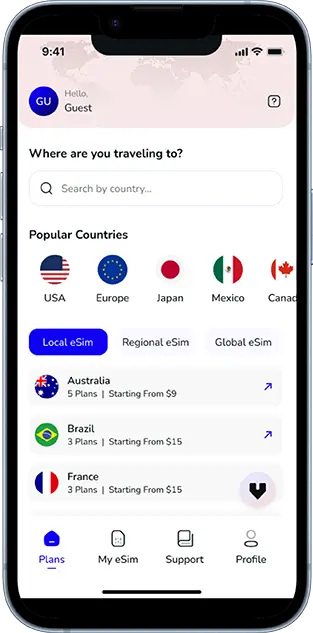
An eSIM (embedded SIM) is a digital SIM card that you activate directly on your smartphone, no physical card required, no store visit, no language barrier. You simply purchase your plan, receive an activation QR code, scan it, and you’re connected. Done.
Here’s what makes the Voye Global eSIM the ideal travel companion for the San Fermín festival and beyond:
Instant Activation: Activate your Spain eSIM before you even board your flight. Land in Spain and you’re already connected, no scrambling for a store, no airport queues.
Reliable High-Speed Data: Voye Global partners with robust local networks in Spain to deliver consistent 4G/LTE speeds even in high-traffic areas. That means you can navigate Pamplona’s streets, stream your festival moments, and video call home even when the city is packed to capacity.
Transparent, Affordable Plans: No surprise bills. No hidden roaming fees. Choose a data plan that fits your trip length, whether you’re in Pamplona for three days or exploring Spain for three weeks.
Dual SIM Convenience: Keep your home SIM active for calls and texts on your regular number while using your Voye Global eSIM for data. Most modern smartphones support this seamlessly.
Works Across All of Spain: The best eSIM for Spain travel isn’t just useful in Pamplona. Once the festival ends, take your connectivity with you, to Madrid, Barcelona, Seville, the Costa Brava, or wherever your Spanish adventure takes you next.
Easy Setup in Minutes: Voye Global activation process takes under five minutes. Full instructions are available in multiple languages, and customer support is accessible if you need help.
International travel connectivity: If you’re serious about making the most of your Spain trip, and staying reachable throughout, set up your Voye Global eSIM before you travel. Your future self, standing in a packed Pamplona street trying to find your group, will thank you.
Best Foods to Try in Pamplona
Navarra’s food culture is exceptional, and the festival is a wonderful excuse to eat your way through the region. Don’t even think about leaving without trying these:
Pintxos
The Basque-style equivalent of tapas, pintxos (peen-chos) are small bites of bread topped with everything from jamón and cheese to bacalao (salt cod) and peppers. Calle Estafeta and the old town bars serve some of the best in Spain. Order a glass of txakoli (a local sparkling white wine) alongside.
Chistorra
A thin, spiced sausage made from minced pork and flavored with paprika, chistorra is a Navarran staple. It’s often served fried and tucked into a bread roll, making it the perfect festival street food.
Pimientos del Piquillo
These small, sweet-smoky red peppers grown in nearby Lodosa are roasted and often stuffed with bacalao or meat. They’re a culinary symbol of the region and available in virtually every restaurant.
Pacharán
The unmissable local liqueur. Pacharán is a sweet, anise-flavored drink made from sloe berries, and it is absolutely everywhere during the festival. It’s typically served chilled over ice, refreshing, aromatic, and dangerously easy to drink.
Navarra Wine
The Denominación de Origen Navarra produces outstanding wines, particularly robust reds made from Garnacha and Tempranillo grapes. Ask any local bar for a recommendation, you won’t be disappointed.
Pochas con Codorniz
If you sit down for a proper meal, try pochas: fresh white beans cooked with quail (codorniz), chorizo, and vegetables. It’s rustic, deeply satisfying, and emblematic of the Navarran countryside.
Nearby Places to Explore After the Festival
The San Fermín festival may last nine days, but Spain deserves far more of your time. Here are the best destinations to visit after the bulls have quieted down:
San Sebastián (Donostia) (1.5 hours by bus)
Arguably Spain’s most beautiful city, San Sebastián sits on the Bay of Biscay with a stunning curved beach, a charming old town, and a culinary scene that has made it a global gastronomic destination. It has more Michelin stars per capita than almost anywhere on Earth.
Bilbao (1.5 hours by bus)
Home to the jaw-dropping Guggenheim Museum and a revitalized riverside old quarter, Bilbao is one of Spain’s great modern success stories. The food scene, especially the pintxos bars of the Casco Viejo, rivals San Sebastián.
La Rioja Wine Region, 1 hour by car
Just south of Pamplona lies the famous La Rioja wine region, where rolling vineyards produce some of Spain’s most celebrated reds. The town of Haro is the heart of the region and offers excellent bodegas (wineries) with tastings and tours.
Zaragoza (1.5 hours by train)
A largely underrated Spanish city, Zaragoza boasts the spectacular Basílica del Pilar on the banks of the Ebro River, a fascinating Moorish palace, and a lively bar scene. It makes for an excellent stopover on the way to or from Barcelona.
Madrid (3 hours by high-speed train)
No trip to Spain is complete without a visit to the capital. The Prado Museum, the Royal Palace, Retiro Park, the Rastro flea market, and the vibrant nightlife of Malasaña and Chueca are just a few reasons to spend a few days here.
Barcelona (3.5 hours by high-speed train)
Gaudí’s extraordinary architecture, the Gothic Quarter’s labyrinthine streets, La Boqueria market, and the Mediterranean beach all await in Spain’s most cosmopolitan city.
And throughout all of it, your Voye Global eSIM keeps you connected, from the hill towns of La Rioja to the boulevards of Barcelona, no matter where Spain takes you next.
Your Festival Starts Here
Skip roaming charges and activate your Spain eSIM instantly.
1. When exactly does the Running of the Bulls take place each year?
The bull run (Encierro) takes place every morning at 8:00 AM from July 7 to July 14, as part of the San Fermín festival (July 6–14). The festival opening ceremony is on the evening of July 6. The dates are fixed and do not change from year to year.
2. Do I need to register or buy a ticket to run in the bull run?
No. Participation in the Encierro is free and requires no registration. You simply need to be at least 18 years old, sober, and in the designated starting zones before the route closes at 7:30 AM. You should, however, be aware of and agree to abide by the official rules.
3. How dangerous is the Running of the Bulls?
The Encierro carries real risks. Since records began in 1910, 16 people have died. Injuries are more common, hundreds are treated each year, primarily for falls and trampling rather than gorings. The risk is significantly reduced by following the official rules, staying sober, knowing the route, and being physically fit. Many experienced runners have participated dozens of times without serious injury.
4. What should I wear to the San Fermín festival?
The traditional dress code is all white clothing (white shirt and white trousers or skirt) with a red neckerchief (pañuelo) tied around the neck and a red sash (faja) around the waist. This outfit is widely available in Pamplona shops leading up to the festival for very little cost. If you’re running, wear closed-toe, grip-soled shoes: no sandals or flip-flops.
5. How far in advance should I book accommodation?
Ideally, six to twelve months in advance. Pamplona’s hotels and guesthouses sell out extremely quickly for festival week. If you’ve missed the window, look at accommodation in nearby cities like San Sebastián, Logroño, or Bilbao, or consider official festival campsites just outside the city.
6. Can children attend the San Fermín festival?
Absolutely, many parts of the festival are family-friendly, including the giant and big-head parades (Gigantes y Cabezudos), fireworks, and street music. However, children under 18 are not permitted to participate in the bull run itself. The street parties can get very crowded and boisterous in the evenings, so families with young children may prefer the daytime events.
7. What is the best way to get mobile internet in Spain during the festival?
The most convenient and cost-effective option for international travelers is an eSIM for Spain. Voye Global eSIM allows you to activate a Spanish data plan before you travel, without needing to swap physical SIM cards. Given how congested networks can get during San Fermín, having a reliable, pre-activated data plan is strongly recommended. It works seamlessly across Spain, covering Pamplona and all other destinations you might visit.
8. Is the Running of the Bulls ethical? What about the bullfights?
This is a question many international visitors ask, and it’s worth addressing honestly. The Encierro and the associated bullfights remain deeply controversial from an animal welfare perspective. The bulls used in the morning run are the same bulls that fight, and are killed, in the afternoon corridas. The Spanish government classifies bullfighting as a protected form of cultural heritage, and it continues to draw passionate defenders and equally passionate critics. As a traveler, it’s worth doing your own research and forming your own view before attending. Some visitors choose to experience the festival atmosphere without attending the bullfights, which is entirely possible.
9. How can I watch the bull run if I don’t want to participate?
There are several excellent viewing options: private balconies along the route (book months ahead), fence-side positions (arrive very early), seats in the bullring (tickets available from ~€5), and guided viewing packages offered by reputable tour operators. The bullring seats in particular offer an exciting finish-line perspective as the bulls enter the arena.
10. What other festivals in Spain should I consider visiting?
Spain is blessed with extraordinary festivals year-round. Consider La Tomatina in Buñol (late August), Las Fallas in Valencia (March), the Semana Grande in San Sebastián (mid-August), Carnival in Cádiz (February), and the Seville Feria de Abril (April). Each is vastly different in character but equally spectacular.
Conclusion: Run Toward the Experience of a Lifetime
The Running of the Bulls in Spain is more than a festival. It is a reminder that life, at its most vivid, can be terrifying and exhilarating in equal measure. Whether you sprint alongside the bulls on the cobblestones of Estafeta, watch from a flower-draped balcony, or simply soak in the music and chaos of Pamplona’s streets, the San Fermín festival leaves a mark on you that no other travel experience quite matches.
It demands planning. It rewards boldness. And it offers, in nine remarkable days, a window into the soul of Spain, its passion, its history, its generosity, and its extraordinary capacity for collective joy.
So start planning now. Book that accommodation early. Pack your whites and your red scarf. Study the route. Sample the pintxos. Watch the fireworks from the city walls. And make sure, above all else, that you’re connected throughout every moment.
Stay Connected with Voye Global eSIM
Because the best travel stories are meant to be shared. Live video calls at 8 AM from Calle Estafeta. Real-time navigation through Pamplona’s winding streets. Sharing that breathless post-run photo with people back home.
None of that is possible without reliable mobile internet. That’s why smart international travelers choose Voye Global eSIM for Spain, instant activation, transparent pricing, high-speed data, and coverage that works across all of Spain, from Pamplona’s festival streets to Madrid’s grand boulevards.
Set up your Voye Global eSIM before you fly. Then run toward the experience of a lifetime. ¡Viva San Fermín!
Seamless Mobile Data Everywhere
Voye Global — Your Trusted eSIM Partner for Secure & Reliable Travel.
Looks like the device you are currently using doesn't support eSims. If you plan to use another device abroad, simply search for it here to make sure it's supported.
Supported Devices:
United States
+1
United Kingdom
+44
Germany
+49
Spain
+34
Italy
+39
France
+33
Israel
+972
Afghanistan
+93
Aland Islands
+358
Albania
+355
Algeria
+213
AmericanSamoa
+1684
Andorra
+376
Angola
+244
Anguilla
+1264
Antarctica
+672
Antigua and Barbuda
+1268
Argentina
+54
Armenia
+374
Aruba
+297
Australia
+61
Austria
+43
Azerbaijan
+994
Bahamas
+1242
Bahrain
+973
Bangladesh
+880
Barbados
+1246
Belarus
+375
Belgium
+32
Belize
+501
Benin
+229
Bermuda
+1441
Bhutan
+975
Bolivia, Plurinational State of
+591
Bosnia and Herzegovina
+387
Botswana
+267
Brazil
+55
British Indian Ocean Territory
+246
Brunei Darussalam
+673
Bulgaria
+359
Burkina Faso
+226
Burundi
+257
Cambodia
+855
Cameroon
+237
Canada
+1
Cape Verde
+238
Cayman Islands
+ 345
Central African Republic
+236
Chad
+235
Chile
+56
China
+86
Christmas Island
+61
Cocos (Keeling) Islands
+61
Colombia
+57
Comoros
+269
Congo
+242
Congo, The Democratic Republic of the Congo
+243
Cook Islands
+682
Costa Rica
+506
Cote d'Ivoire
+225
Croatia
+385
Cuba
+53
Cyprus
+357
Czech Republic
+420
Denmark
+45
Djibouti
+253
Dominica
+1767
Dominican Republic
+1849
Ecuador
+593
Egypt
+20
El Salvador
+503
Equatorial Guinea
+240
Eritrea
+291
Estonia
+372
Ethiopia
+251
Falkland Islands (Malvinas)
+500
Faroe Islands
+298
Fiji
+679
Finland
+358
French Guiana
+594
French Polynesia
+689
Gabon
+241
Gambia
+220
Georgia
+995
Ghana
+233
Gibraltar
+350
Greece
+30
Greenland
+299
Grenada
+1473
Guadeloupe
+590
Guam
+1671
Guatemala
+502
Guernsey
+44
Guinea
+224
Guinea-Bissau
+245
Guyana
+595
Haiti
+509
Holy See (Vatican City State)
+379
Honduras
+504
Hong Kong
+852
Hungary
+36
Iceland
+354
India
+91
Indonesia
+62
Iran, Islamic Republic of Persian Gulf
+98
Iraq
+964
Ireland
+353
Isle of Man
+44
Jamaica
+1876
Japan
+81
Jersey
+44
Jordan
+962
Kazakhstan
+77
Kenya
+254
Kiribati
+686
Korea, Democratic People's Republic of Korea
+850
Korea, Republic of South Korea
+82
Kuwait
+965
Kyrgyzstan
+996
Laos
+856
Latvia
+371
Lebanon
+961
Lesotho
+266
Liberia
+231
Libyan Arab Jamahiriya
+218
Liechtenstein
+423
Lithuania
+370
Luxembourg
+352
Macao
+853
Macedonia
+389
Madagascar
+261
Malawi
+265
Malaysia
+60
Maldives
+960
Mali
+223
Malta
+356
Marshall Islands
+692
Martinique
+596
Mauritania
+222
Mauritius
+230
Mayotte
+262
Mexico
+52
Micronesia, Federated States of Micronesia
+691
Moldova
+373
Monaco
+377
Mongolia
+976
Montenegro
+382
Montserrat
+1664
Morocco
+212
Mozambique
+258
Myanmar
+95
Namibia
+264
Nauru
+674
Nepal
+977
Netherlands
+31
Netherlands Antilles
+599
New Caledonia
+687
New Zealand
+64
Nicaragua
+505
Niger
+227
Nigeria
+234
Niue
+683
Norfolk Island
+672
Northern Mariana Islands
+1670
Norway
+47
Oman
+968
Pakistan
+92
Palau
+680
Panama
+507
Papua New Guinea
+675
Paraguay
+595
Peru
+51
Philippines
+63
Pitcairn
+872
Poland
+48
Portugal
+351
Puerto Rico
+1939
Qatar
+974
Romania
+40
Russia
+7
Rwanda
+250
Reunion
+262
Saint Barthelemy
+590
Saint Helena, Ascension and Tristan Da Cunha
+290
Saint Kitts and Nevis
+1869
Saint Lucia
+1758
Saint Martin
+590
Saint Pierre and Miquelon
+508
Saint Vincent and the Grenadines
+1784
Samoa
+685
San Marino
+378
Sao Tome and Principe
+239
Saudi Arabia
+966
Senegal
+221
Serbia
+381
Seychelles
+248
Sierra Leone
+232
Singapore
+65
Slovakia
+421
Slovenia
+386
Solomon Islands
+677
Somalia
+252
South Africa
+27
South Sudan
+211
South Georgia and the South Sandwich Islands
+500
Sri Lanka
+94
Sudan
+249
Suriname
+597
Svalbard and Jan Mayen
+47
Swaziland
+268
Sweden
+46
Switzerland
+41
Syrian Arab Republic
+963
Taiwan
+886
Tajikistan
+992
Tanzania, United Republic of Tanzania
+255
Thailand
+66
Timor-Leste
+670
Togo
+228
Tokelau
+690
Tonga
+676
Trinidad and Tobago
+1868
Tunisia
+216
Turkey
+90
Turkmenistan
+993
Turks and Caicos Islands
+1649
Tuvalu
+688
Uganda
+256
Ukraine
+380
United Arab Emirates
+971
Uruguay
+598
Uzbekistan
+998
Vanuatu
+678
Venezuela, Bolivarian Republic of Venezuela
+58
Vietnam
+84
Virgin Islands, British
+1284
Virgin Islands, U.S.
+1340
Wallis and Futuna
+681
Yemen
+967
Zambia
+260
Zimbabwe
+263
How do I get my eSim?
To get your eSIM, start by checking if your device supports eSIM technology. Then, contact your mobile carrier to request an eSIM activation. They will provide you with a QR code or activation details that you can scan or enter in your device settings. Once activated, you can enjoy the benefits of eSIM without needing a physical SIM card!



















 English