




You are standing at the stern of the Norwegian Prima as it pulls out of Barcelona’s Port Vell, the city lights shrinking behind you. You just had the best tapas of your life in El Born, snapped fifty photos you are dying to post, and promised your family a video call tonight. Then your phone signal drops to nothing, the Wi-Fi bar on the NCL app shows one faint dot, and your home carrier sends a cheerful notification that you are now roaming on a maritime network at rates that could genuinely ruin your trip budget.
That moment, somewhere in the Gulf of Lion between Spain and France, is where most NCL travelers first realize that connectivity on a cruise ship is a completely different problem than connectivity at home, and it needs a completely different solution.
This guide is specifically about how Norwegian Cruise Line’s network works, what it actually costs across a full voyage, what happens to your phone in each port from Nassau to Dubrovnik to Juneau, and how to build a connectivity setup that works across every nautical mile without overpaying.
What Is Actually Happening to Your Signal on an NCL Ship?
Before you can solve the problem, it helps to understand why it exists in the first place, and the reason is specific to the physics of where cruise ships sail.
Norwegian Cruise Line’s entire fleet, from the Norwegian Bliss sailing Alaska to the Norwegian Escape crossing the Atlantic, relies on satellite-based internet for onboard connectivity. There is no fiber cable running along the ocean floor that the ship plugs into. Every time you open Instagram, send a WhatsApp message, or try to load the NCL Daily schedule, that request travels from your phone to an antenna on the ship’s superstructure, then beams to a satellite orbiting somewhere between 22,000 miles and 1,000 miles above the Earth, bounces to a ground station, and then makes the same journey in reverse. That round trip adds significant latency to every single action, regardless of the plan you purchased.
Now multiply that delay by the number of passengers doing the same thing simultaneously. On a ship like the Norwegian Joy, which carries over 3,800 passengers, a shared satellite connection means that speeds at 11 AM on a sea day, when everyone is lounging by the pool and scrolling their phones, are genuinely slow. It is not a billing tier problem. It is a physics and bandwidth-sharing problem that no upgrade can fully eliminate.
The second signal issue is more dangerous because it is invisible: maritime roaming. When your ship is at sea and your phone is searching for any available signal, it may latch onto the ship’s onboard cellular network operated by maritime providers. Unlike the Wi-Fi package you intentionally purchased, this connection runs at rates that can reach several dollars per megabyte. Many travelers have ended a cruise to find hundreds of dollars in unexpected charges because their phone was quietly connecting in the background while they assumed they were safely on airplane mode or the ship’s Wi-Fi. The fix is simple, but it requires knowing the risk before you board.
Norwegian Cruise Line Internet Packages: Reading Between the Lines
NCL sells its onboard internet access through a tiered package system, and understanding exactly what each tier means in practice is different from what the marketing language suggests.
The Basic Plan: What It Actually Handles
The entry-level Norwegian Cruise internet package is designed for messaging and light browsing. In real-world cruise conditions, this means WhatsApp messages with photos will send, emails with standard attachments will go through, and basic web pages will load, slowly but eventually. What it does not handle reliably is anything requiring sustained bandwidth: video calls, Instagram Stories uploads, Spotify streaming, or loading data-heavy websites like Google Maps satellite view.
If your goal is simply staying reachable and checking in with home once or twice a day, the basic plan is workable. If you are traveling for work and need to be reliably functional online, it will frustrate you.
The Premium Plan: Honest Expectations
The premium Norwegian Cruise Wi-Fi plan represents the ship’s fastest available tier, but “premium” is relative to the satellite connection, not to the speeds you are used to at home or in a hotel. Video calls are possible, but expect occasional freezing when ship traffic is high. Uploading large files or batches of photos is feasible but slow compared to land. Streaming a Netflix episode works on some sailing days in well-covered ocean regions, and is choppy on others.
Where the premium plan genuinely delivers value is for travelers who need sustained daily connectivity: remote workers checking in on video calls during sea days, parents who want to FaceTime kids at home, or travelers managing complex logistics across multiple destinations. For these use cases, it is the right choice onboard.
When to Buy and What It Will Cost You
NCL’s internet packages are priced lower when purchased in advance through the online cruise planner before departure. Buying onboard at the customer service desk is consistently the most expensive option. Packages are typically priced per device per day, and NCL occasionally includes internet access in bundle promotions alongside dining and beverage packages. If you are in the early planning phase for your voyage, it is worth running the numbers on whether a bundle makes more financial sense than purchasing each component separately.
One thing worth knowing: the NCL app itself is free to use onboard without purchasing a Wi-Fi package. The app handles onboard messaging between guests, dining reservations, show bookings, daily activity schedules, and account charges. For coordinating with travel companions on the same ship, it replaces the need for texts entirely and costs nothing.
Check out our plans
-
Cruise 500MB 1 Day
USD 16.00 -
Cruise 1GB 7 Days
USD 29.00 -
Cruise 5GB 30 Days
USD 61.00 -
Cruise 3GB 30 Days
USD 49.00 -
Cruise 10GB 30 Days
USD 108.00
Port Problem Nobody Talks About Enough
Here is the connectivity reality that most pre-cruise planning guides miss entirely: a significant portion of your Norwegian Cruise Line itinerary is actually spent on land. On a standard 7-night Caribbean sailing, you might have 4 port days. On a 12-night Mediterranean itinerary, you could be stepping off the ship into 8 or 9 different cities. On an NCL Alaskan voyage, your ship spends full days docked in Juneau, Ketchikan, Skagway, and Victoria.
On every one of those port days, there is a live, fast, land-based cellular network available. The problem is not getting signal at that point. The problem is that the signal you get and what it costs you are determined entirely by what data plan you arrived in that port with.
The Multi-Country Math on a Single NCL Itinerary
Take a typical Norwegian Cruise Line Mediterranean sailing: Barcelona embarkation, then Marseille, Livorno for Florence and Pisa, Civitavecchia for Rome, Naples, and Santorini. That is six countries worth of networks (Spain, France, Italy, Greece) across 12 days. A traveler relying on their home carrier’s international roaming is dealing with per-day charges that typically add up to more than the cost of the cruise Wi-Fi package itself, and the coverage quality varies by country.
On an NCL Caribbean itinerary from Miami hitting Nassau, St. Thomas, and St. Maarten, you are crossing from Bahamian networks to US territory to Dutch and French territory within a single week. Each destination has different roaming agreements with different home carriers. What costs a flat daily rate in one port may bill per-megabyte in another.
This is the exact scenario where having a single plan that covers your entire itinerary without per-country switching or surprise fees changes the financial and practical experience of the trip.
What Each Port Environment Actually Means for Connectivity
In Nassau and the Caribbean ports that NCL visits regularly, 4G LTE coverage is solid throughout most tourist areas close to the docks. You will have fast data the moment you step off the gangway.
In Mediterranean ports like Dubrovnik, Kotor, and Santorini, coverage is strong in town centers but can drop in historic old city areas with dense stone construction. Santorini’s caldera-side villages like Oia and Fira have good signal despite the dramatic geography.
In Alaska, the story is different. Juneau has solid coverage in town and along the waterfront but drops quickly as you head toward the Mendenhall Glacier. Skagway is a small town with limited infrastructure. Ketchikan’s downtown is well-covered. The key point for Alaska sailings on ships like the Norwegian Bliss is that the sea days between ports involve some of the remotest waters on the planet, where even the ship’s satellite internet can be inconsistent. Port days are disproportionately important for connectivity on these itineraries.
Why a Single SIM Card Does Not Work for an NCL Voyage?
The instinct many travelers have is to buy a local SIM in the first port they visit and use it for the whole trip. On a trip to one country, that is a reasonable strategy. On an NCL cruise, it is a logistical problem.
Buying a SIM in Nassau means it likely does not have coverage in St. Thomas. Buying one in Barcelona means you are paying Spanish rates and possibly roaming when you dock in France the next day. And buying a local SIM means physically removing your existing SIM, storing it safely, and then reinstalling it at disembarkation, all while managing port schedules that sometimes give you only six hours ashore.
This is not a minor inconvenience. Many NCL port days involve tender boat transfers, strict re-boarding times, and packed shore excursion schedules. Spending twenty minutes at the port finding a carrier store, buying a SIM, and getting it activated is twenty minutes you are not spending on the actual destination.
A Different Approach: Running a Travel eSIM Alongside Your Ship’s Wi-Fi
The more practical setup that experienced NCL travelers have shifted toward uses the ship’s onboard internet package for at-sea connectivity combined with a travel eSIM that activates on local networks as each port is reached.
The reason this works so well for cruise travel specifically is the way a travel eSIM behaves. Rather than requiring you to change anything when your ship docks in a new country, it automatically connects to the strongest available local network in that destination. When the Norwegian Getaway pulls into St. Maarten’s Philipsburg harbor, your travel eSIM is already picking up the Dutch Caribbean network before you have finished breakfast. When you sail from Split to Kotor a week later on a Mediterranean sailing, the same eSIM transitions to Montenegrin network coverage without any action on your part.
This matters practically because NCL port days have a rhythm that does not accommodate friction. You often have a shore excursion booked for 8:30 AM that starts the moment you disembark. The last thing you want is to be troubleshooting a data connection when you should be finding your guide at the pier.
The second reason this combination works is that it keeps your ship’s Wi-Fi role honest. With a travel eSIM handling all port-day data, you do not need to buy the most expensive NCL internet package to cover use cases the ship’s Wi-Fi is bad at anyway, like uploading large photo batches or making clear video calls. You use the ship plan for what it handles reasonably well, which is light connectivity during sea days, and you save the heavy data tasks for port, where you have genuine speed to work with.
Voye Global’s eSIM and Why It Fits the NCL Cruise Model?
Voye Global offers travel eSIM plans specifically built around the kind of multi-destination, multi-country travel that Norwegian Cruise Line itineraries represent. Rather than selling you a country-by-country plan that requires manual switching as your ship moves between ports, Voye Global’s regional plans are designed to cover the geographic clusters that NCL itineraries typically span.
For a Mediterranean NCL sailing, a European regional plan from Voye Global means you are covered from Barcelona through French, Italian, and Greek ports without managing separate plans for each flag you sail under. For Caribbean itineraries, Voye Global’s Americas coverage handles the mix of island nations and US territories that NCL’s Caribbean routes pass through. For Alaska sailings, coverage extends through Canadian waters as NCL ships often pass through Victoria, British Columbia.
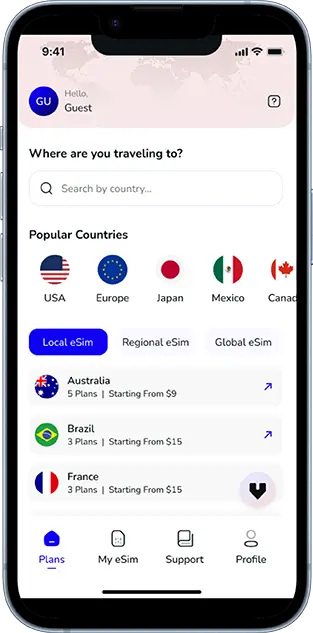
The activation process works cleanly for cruise travelers because you set it up at home before the trip, which takes only a few minutes using your phone’s settings menu. The plan sits ready on your device and activates when it reaches a covered network. There is nothing to do at the pier, no app to open, no carrier to call. It simply works when you step ashore.
For dual-SIM capable phones, which includes most current iPhone and Android models, you can run your home SIM and your Voye Global eSIM simultaneously. This means you remain reachable on your regular number for any calls that come in while your Voye Global plan handles all data traffic in port. If a family member calls during your Santorini shore excursion, it rings through normally.
Voye Global’s pricing is also structured for the way cruise travelers actually use data: in bursts during port days, not continuously across months. Short-duration plans with regional coverage match the natural rhythm of a two-week NCL voyage better than long-term subscriptions designed for expats or long-term travelers.
Internet For Every Cruise Stop
Access reliable data across multiple destinations with one eSIM.
Building Your Connectivity Setup Before You Board
The best time to sort out your NCL connectivity is before the gangway goes down, not after.
Two Weeks Before Sailing
Purchase your NCL internet package through the cruise planner at the pre-sailing rate rather than the onboard rate. Review your itinerary and identify exactly which countries you will be entering during port days, not just the island names but the actual national territories, because St. Maarten for example splits between Dutch and French jurisdiction and some carrier plans treat them differently.
Activate your Voye Global eSIM plan at home where you have a reliable Wi-Fi connection for the initial setup. Confirm it is installed correctly in your phone’s Settings under SIM or Mobile Data, and that it is set as your preferred data line. You do not need to enable it yet if it requires manual activation, just have it ready.
The Day You Board
Put your phone into airplane mode immediately after stepping onto the ship. This is the single most important connectivity action you can take on embarkation day. It prevents your phone from connecting to maritime cellular networks while you get settled. Then connect manually to the ship’s Wi-Fi network and log into your NCL internet package. From this point forward, your onboard connectivity comes through the ship’s Wi-Fi, not your home carrier.
Enable the NCL app if you have not already. It is free, it runs over the ship’s network without consuming your internet package on many NCL ships, and it is how you will coordinate dining reservations, show times, and logistics with anyone traveling with you.
Each Port Day
When you are walking off the ship in the morning, switch your phone out of airplane mode and allow your Voye Global eSIM to connect to the local network. Within a minute or two of stepping ashore, you will have local data speeds. Use this window for everything the ship’s Wi-Fi does not handle well: uploading your previous day’s photos, making video calls home, downloading offline maps for the afternoon’s exploration, and looking up local restaurant reviews for lunch.
Before the tender or gangway closes in the evening, do a final sync. Upload anything you want backed up, send any remaining messages, and then return to airplane mode or ship Wi-Fi as you re-board.
Itinerary-Specific Angle: Why Your Route Changes Everything
Not all NCL sailings have the same connectivity profile, and planning your package setup should reflect the specific itinerary you are on rather than a generic “cruise” assumption.
- Short Caribbean Sailings from Miami or New York: On a 5 or 7-night NCL sailing hitting two or three Caribbean ports, the ratio of sea days to port days is roughly even. The NCL basic internet plan is often sufficient for sea days when you are relaxed and not working, and a Voye Global Caribbean-region eSIM handles the port day data needs efficiently.
Long Mediterranean Voyages: On 10 to 14-night NCL sailings through Spain, France, Italy, Greece, and the Adriatic, you have a high number of port days and more complex multi-country coverage needs. This is where the Voye Global European regional plan delivers the most value, because the alternative is managing connectivity across four or more different countries’ networks. The premium NCL internet plan is worth considering for sea-day video calls on these longer voyages.
- Alaskan Itineraries on the Norwegian Bliss: Alaska sailings have longer sea stretches through remote waters, and the satellite internet experience can be more variable than on well-traveled Atlantic routes. Port days are proportionally more important for connectivity. The onshore coverage in Juneau and Ketchikan is good but limited geographically. Plan your important calls and uploads for early in the port day when you are near the pier rather than deep in the wilderness.
- Norwegian Fjord Sailings: If you are sailing to Bergen, Flam, or Geiranger on an NCL European itinerary, you will encounter some of the most beautiful and most remote waters in the world. Norwegian fjords have patchy cellular coverage even on land due to the steep terrain. The port towns themselves have good connectivity, but expecting consistent ship satellite internet in the deep fjords is optimistic. Download what you need in Bergen before you sail deeper.
Actual Cost Comparison Over a Full Voyage
Running the numbers honestly across a 10-night NCL Mediterranean voyage for one person tells a useful story.
An NCL premium internet package for 10 days, purchased in advance, represents a meaningful daily cost that adds up across the voyage length. If you are also relying on that plan for port-day data, you are paying ship-Wi-Fi prices for coverage the ship is delivering poorly because you are physically on land where local networks are available.
A Voye Global European regional eSIM for the same 10-night period, covering your port-day data across Spain, France, Italy, and Greece, typically costs significantly less than a single day of the NCL premium package, while delivering substantially better speeds on those port days because it is running on land-based networks rather than satellite.
The rational setup is to purchase the lower-tier NCL plan for genuine at-sea use, and let Voye Global’s eSIM carry the port-day load. You pay for satellite connectivity only when you actually need it, at sea, and you pay for land-based data only when you are on land and it is actually available. The two plans complement each other in a way that neither does well alone.
What to Do at Disembarkation?
The end of an NCL voyage involves airports, transfers, and sometimes overnight stays in the departure city. Your ship’s internet package expires when you disembark. If your Voye Global eSIM still has remaining data or validity, it remains active and handles your connectivity through the airport and any onward travel until you are back on home networks.
For travelers with layovers in European or Caribbean hub cities before their connecting flight home, having the eSIM still active means navigation, gate information, and communication are all working without needing to hunt for airport Wi-Fi. This is a detail that matters most when you are exhausted after two weeks at sea and just want to find your gate without friction.
Staying Connected on Your Terms
Norwegian Cruise Line offers genuinely enjoyable voyages across some of the world’s most remarkable destinations. The connectivity setup you sail with should not be an afterthought, because a bad one becomes a frustration that follows you from Barcelona to Rome to Santorini and back.
The practical approach is straightforward: understand what the ship’s Wi-Fi actually delivers and buy the tier that matches your sea-day needs, not your port-day ambitions. Then use a Voye Global travel eSIM to handle port connectivity the way it deserves to be handled, with local-network speeds and a single plan that moves with you as your itinerary changes flags.
Avoid Expensive Roaming Charges
Stay online affordably during every destination on your itinerary.
Seamless Mobile Data Everywhere














 English