




Montenegro sits on the Adriatic coast between Croatia and Albania, has a UNESCO World Heritage bay, a canyon deeper than the Grand Canyon, beaches that do not require January bookings, and prices that feel like 2015. UK travelers who discovered it a few summers ago have stopped telling people. This guide covers entry requirements, where to go, how to get there, and how to stay connected without paying expensive roaming charges.
Why Montenegro?
Croatia keeps selling out.
Every good villa on the Dalmatian Coast, every Airbnb inside Dubrovnik’s old city walls, every sought-after boat tour around Hvar often disappears months before summer arrives. Meanwhile, just south of Croatia’s border, Montenegro offers remarkably similar scenery with a fraction of the crowds.
The country combines dramatic Adriatic coastline, medieval walled towns, mountain landscapes, and clear-water beaches in a compact package that is easy to explore in a single trip. The Bay of Kotor rivals some of Europe’s most famous coastal destinations, while places like Durmitor National Park provide an entirely different side of the country that many visitors never see.

Montenegro is not an undiscovered destination. Cruise ships visit Kotor, luxury resorts line parts of the coast, and international tourism continues to grow each year. However, compared with neighboring Croatia, it remains significantly underbooked by UK travelers.
That gap between what Montenegro offers and how many people actually visit is exactly why now is such a good time to go.
This guide covers where to visit, when to travel, how to get there from the UK, entry requirements, practical travel advice, and how to stay connected throughout your trip.
Why Montenegro Is What Croatia Was 15 Years Ago?
The comparison with Croatia is unavoidable.
Both countries share the Adriatic coastline. Both have medieval towns built from limestone and surrounded by ancient walls. Both offer clear water, mountain backdrops, seafood restaurants, and historic architecture.
The difference is where they currently sit on the tourism curve.
Dubrovnik has become one of Europe’s most photographed destinations. During peak summer months, its streets can feel crowded from morning until evening. Hotel prices regularly reach premium Mediterranean levels, and advance booking is often essential.
Montenegro offers many of the same experiences at noticeably lower prices.
Accommodation in Kotor, Perast, and Budva often costs significantly less than equivalent options across the border. Restaurant bills remain reasonable, and visitors can still find quality places to stay without booking six months ahead.

Timing also matters.
July and August bring the warmest temperatures, busiest beaches, and highest prices. These months are ideal if your priority is swimming and long beach days, but they also attract the largest crowds.
June and September are arguably Montenegro’s sweet spot.
Temperatures remain warm enough for swimming, daylight hours are long, and tourist numbers are noticeably lower. Restaurants, boat operators, and attractions remain fully operational while accommodation prices become more attractive.
For travelers seeking a balance between weather, value, and atmosphere, June and September are difficult to beat.
The Bay of Kotor – Europe’s Most Spectacular Waterway
The Bay of Kotor is Montenegro’s defining attraction.
Although often described as Europe’s southernmost fjord, it is technically a submerged river canyon connected to the Adriatic Sea. Regardless of the geological classification, the result is spectacular.
Mountains rise dramatically from the water’s edge, surrounding a winding bay that stretches nearly 30 kilometers inland. The scenery constantly changes as the road follows the shoreline through villages, historic towns, and quiet waterfront communities.
Kotor Old Town
Kotor’s Old Town is the cultural heart of the bay.
Protected as a UNESCO World Heritage Site, the town sits beneath steep mountains and behind medieval walls that have guarded the settlement for centuries.
Inside the walls, visitors find narrow stone streets, churches, squares, restaurants, and hidden courtyards. The atmosphere feels authentically historic rather than purpose-built for tourism.
Highlights include:
- Cathedral of Saint Tryphon
- Maritime Museum of Montenegro
- Clock Tower
- Arms Square
- Medieval city walls
The most famous activity is the climb to St. John’s Fortress.

The route follows a series of stone steps up the mountainside above Kotor. The climb is demanding during summer heat, but the reward is one of the best views in Europe. Looking down across the old town and bay provides a perspective that explains why Kotor has become Montenegro’s most recognizable destination.
The best time to make the climb is before 9 a.m. or later in the afternoon when temperatures are cooler.
Perast
Twenty minutes north of Kotor lies Perast.
Unlike Kotor, Perast feels quiet and relaxed. The town stretches along the waterfront and consists primarily of elegant stone buildings, churches, and small hotels overlooking the bay.
Its main attraction is the pair of islands located just offshore.
The most famous is Our Lady of the Rocks, an artificial island built over centuries by local sailors. Small boats operate frequent crossings from Perast’s waterfront, making the island an easy half-day excursion.
The church and museum on the island provide insight into local maritime history while offering panoramic views back toward the coastline.
Morinj and the Western Shore
Many visitors never venture beyond Kotor and Perast.
That is a mistake.
The western side of the bay includes quieter villages such as Morinj, where waterfront restaurants, small beaches, and slower-paced travel become the focus.
For travelers looking to escape cruise ship crowds and experience a more relaxed side of the bay, this area delivers exactly that.
Stay Connected Across Montenegro
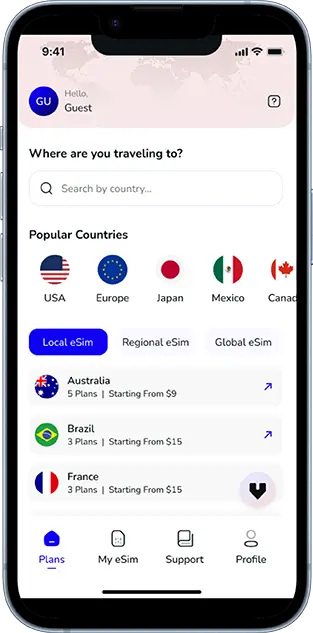
Montenegro sits outside EU roaming regulations. Stay connected from Kotor to Durmitor with a Voye eSIM.
Budva – The Beach Town That Knows What It Is
If Kotor represents Montenegro’s historic side, Budva represents its summer energy.
Budva is busy.
It is lively.
And unlike destinations that pretend not to be tourist resorts, Budva fully embraces its role as Montenegro’s primary beach destination.
The town’s historic center, Stari Grad, sits on a small peninsula protected by stone walls. Inside, visitors find restaurants, bars, boutique hotels, and narrow alleyways similar in style to other Adriatic old towns.
Outside the walls, the atmosphere changes completely.
Beach clubs, waterfront cafés, and nightlife venues dominate the coastline.
Mogren Beach
Among Budva’s beaches, Mogren stands out.
Located roughly ten minutes from the old town, it combines clear water, dramatic cliffs, and a convenient location. The walk itself is scenic, following a coastal path carved into the rocks.
Arriving early is recommended during peak summer months.
Sveti Stefan
South of Budva lies Montenegro’s most photographed landmark.
Sveti Stefan appears as a small island connected to the mainland by a narrow causeway. Once a fishing village and now associated with luxury tourism, it remains one of the country’s iconic views.
Even visitors not staying there can enjoy the public areas nearby and admire the scenery from designated viewpoints.
Who Should Stay in Budva?
Budva works best for:
- Couples
- Groups of friends
- Beach-focused travelers
- Nightlife enthusiasts
Travelers seeking quiet waterfront evenings, fewer crowds, and a slower pace may prefer Kotor, Perast, or smaller coastal towns instead.

Durmitor – The Montenegro Most Summer Travelers Miss
Many visitors never leave the coast.
That means they miss one of Montenegro’s greatest strengths.
Three hours inland from Kotor, the landscape changes dramatically. Beaches give way to mountains, forests, rivers, and alpine scenery.
Tara Canyon
The Tara River Canyon is among Europe’s most impressive natural attractions.
Stretching over 80 kilometers and reaching depths of more than 1,300 meters, it is often cited as the deepest canyon in Europe.
The viewpoints alone justify the journey.
Tara River Rafting
Adventure travelers often come specifically for rafting.
Half-day and full-day trips operate throughout the season, providing opportunities to experience the canyon from water level.
The river’s clear water and dramatic surroundings create one of the region’s standout outdoor experiences.
Black Lake
Near the mountain town of Žabljak sits Black Lake.
Surrounded by pine forest and mountain peaks, the lake is accessible via a short walk from town and serves as a gateway to the wider national park.
Swimming, hiking, cycling, and photography are all popular activities.
Durmitor National Park
UNESCO-listed Durmitor National Park contains some of the country’s best hiking routes.
Trails range from easy walks to challenging mountain ascents, making the park suitable for different fitness levels.
For travelers combining coast and mountains, spending two days in Durmitor creates a more complete picture of Montenegro than a beach-only itinerary ever could.
Getting There from the UK

Montenegro is easier to reach than many travelers expect.
Tivat Airport (TIV)
Tivat serves as the main gateway for visitors heading directly to the Bay of Kotor.
The airport sits approximately twenty minutes from Kotor and provides the fastest access to Montenegro’s most popular region.
Podgorica Airport (TGD)
Located in the capital city, Podgorica Airport offers a practical option for travelers planning to explore central and northern Montenegro.
It is particularly useful for trips focused on Durmitor National Park.
Dubrovnik + Drive Option
Many travelers choose an alternative route.
Flying into Dubrovnik in Croatia and driving south into Montenegro combines two destinations in a single trip.
The coastal drive between Dubrovnik and Kotor is widely considered one of the most scenic journeys in the Adriatic region.
Flight times from London are generally under three hours depending on departure airport and route.
Entry Requirements for UK Travelers 2026
UK passport holders can enter Montenegro without a visa for short tourist stays.
Key points include:
- Visa-free travel for up to 90 days
- Montenegro is not part of the EU
- Montenegro is not part of the Schengen Area
- ETIAS does not apply
- Passport must be valid for the duration of stay
Visitors staying in hotels typically have accommodation registration handled automatically by the property.
Montenegro uses the Euro as its official currency despite not being an EU member state.
Practical Montenegro for UK Travelers
Currency
The Euro is used nationwide.
Cards are widely accepted throughout tourist areas, hotels, restaurants, and major attractions. Carrying some cash remains useful for markets, smaller establishments, and rural locations.
Language
Montenegrin is the official language.
English is commonly spoken throughout coastal destinations and major tourist centers.
Driving
Montenegro drives on the right-hand side of the road.
This adjustment requires extra attention for UK visitors, particularly during the first day of driving.
Safety
Montenegro is considered a safe destination for tourists.
Standard travel precautions are sufficient in most situations.
Food and Drink
Popular local specialties include:
- Grilled seafood
- Black risotto
- Roasted lamb
- Fresh cheeses
- Vranac red wine
Best Time to Visit
June and September provide the best balance of weather and crowd levels.
July and August remain excellent for beach holidays but bring significantly higher temperatures and visitor numbers.
Voye eSIM – Staying Connected in Montenegro

Montenegro presents a connectivity challenge for UK travelers.
Because the country is outside the EU, standard European roaming arrangements often do not apply. Depending on your carrier and plan, roaming costs can accumulate quickly when using maps, social media, navigation, or streaming services.
A Voye eSIM offers a practical alternative.
Instead of relying on expensive roaming packages, travelers can activate data before departure and connect immediately after landing.
This is particularly useful for:
- Navigating the Bay of Kotor road network
- Booking boat trips from Perast
- Finding restaurants inside Kotor Old Town
- Checking weather conditions in Durmitor
- Confirming rafting reservations near Žabljak
- Sharing hotspots with travel companions
The setup process takes only a few minutes through QR code activation, allowing travelers to arrive connected and ready to explore.
One eSIM. Bay of Kotor to Tara Canyon.
Get connected before you fly with reliable data throughout Montenegro.
Practical Tips Before You Go
- Stay in Kotor or Perast for your first visit.
- Rent a car if you plan to visit Durmitor.
- Complete the city walls hike early in the morning.
- Allow time for scenic coastal drives.
- Confirm accommodation registration requirements.
- Bring a portable charger for long sightseeing days.
- Download offline maps before exploring mountain regions.
Frequently Asked Questions
Do UK travelers need a visa for Montenegro?
No. UK passport holders can visit Montenegro visa-free for up to 90 days.
Does Montenegro use the Euro?
Yes. Montenegro uses the Euro despite not being an EU member.
How do I get from the UK to Montenegro?
The easiest option is flying directly to Tivat Airport. Podgorica and Dubrovnik are popular alternatives.
Is Montenegro better than Croatia for a summer trip?
Montenegro generally offers better value and fewer crowds, while Croatia provides more developed tourism infrastructure and island-hopping opportunities.
Does my UK phone work in Montenegro?
Yes, but roaming charges may apply. A Montenegro eSIM is often the more cost-effective option.
Conclusion

Montenegro is not a secret destination.
It is a destination that remains undervalued relative to what it offers.
The Bay of Kotor delivers some of Europe’s finest coastal scenery. Budva provides beaches and nightlife. Durmitor introduces mountains, canyons, and outdoor adventure that many first-time visitors never expect.
Most importantly, Montenegro still offers a balance that has become increasingly rare across Europe: exceptional scenery, genuine variety, and prices that remain relatively reasonable.
That balance will not last forever.
For now, though, UK travelers can still land at Tivat, reach Kotor in under half an hour, explore medieval towns without overwhelming crowds, and discover a corner of the Adriatic that feels one step ahead of mass tourism.
Before you fly, make sure your Voye eSIM is ready to go. The moment you land, Montenegro starts rewarding travelers who arrived before everyone else.

Seamless Mobile Data Everywhere









 English