




The yamahoko procession on July 17 — 23, with enormous floats moving through central Kyoto, each representing a different neighborhood, each decorated with tapestries that include 16th-century Belgian and Flemish textiles that arrived via the Silk Road, is the single most visually extraordinary festival event in Japan. The heat will be serious. The crowds will be significant. Neither of these is a reason not to be there.
Understanding the Festival Calendar
Gion Matsuri is a month-long event, not a single day. The entire month of July involves different ceremonies, exhibitions, and street events. The most important dates for international visitors:
Float Assembly: July 10-16
The yamahoko floats are assembled by hand in the streets of Gion using traditional rope-binding techniques — no nails or bolts are used. This process takes place in the Gion district streets and is publicly viewable from July 10-16. The assembled floats are called yama (smaller portable shrines carried on shoulders) and hoko (the enormous wheeled towers, some 25 metres tall). Walking through the assembly streets in the evening, with the floats lit up and the neighborhoods buzzing with preparation energy, is one of the most underappreciated parts of the festival experience.
Yoiyama Evenings: July 14-16 and July 21-23
The three evenings before each procession are called Yoiyama (literally ‘eve of the mountain’). The streets of the Gion district close to traffic and become a pedestrian festival ground — stalls selling festival foods (corn on the cob, takoyaki, yakitori), yukata-clad locals, and the floats lit from within by traditional lanterns. The atmosphere on Yoiyama evenings — particularly July 15 and 16 — is the peak crowd experience of the festival but also the most atmospheric. Arrive by 6pm to navigate before the streets reach maximum density.
Saki Matsuri Procession: July 17
The first and larger of the two processions. Twenty-three yamahoko floats move through central Kyoto in order from approximately 9am, departing from the Shijo-Karasuma intersection and moving east. The procession covers approximately 3km and takes around 3 hours for the full complement to pass any given point. The Naginata Hoko float — the largest and most famous, a 25-metre tower decorated with a halbert blade — leads the procession and is the most photographed element.
Key viewing positions: the Shijo-Karasuma intersection for the start; the Oike-Karasuma area for cleaner viewing space and slightly fewer crowds; the stands along Oike-dori for seated viewing (paid, book months ahead through the Kyoto City Tourism Association).
Ato Matsuri Procession: July 24
The second procession, featuring ten floats that do not participate in the July 17 event. Less crowded than the Saki Matsuri but still significant. The Hanagasa Junko (flower umbrella parade) also takes place on July 24, a more intimate procession of participants in Heian-period court dress.
The Heat: The Real Practical Issue
Kyoto in July is genuinely hot. Average high temperatures sit at 34-36°C with humidity above 75%. This is not weather to take lightly during a street festival with dense crowds. The practical approach: plan outdoor activities for before 10am and after 5pm. The Yoiyama evenings are the right time to be outdoors — temperatures drop to 27-29°C after sunset and the atmosphere is extraordinary. The midday hours (11am-4pm) are best spent in air-conditioned temples, the Nishiki Market covered shopping street, or in a cafe.
Hydration is critical. Japanese convenience stores (7-Eleven, FamilyMart, Lawson) are on every street corner and sell cold drinks, ice cream, and electrolyte supplements. Buy and carry cold water at all times.
Kyoto Beyond Gion Matsuri

Fushimi Inari Taisha — the famous tunnel of thousands of vermilion torii gates on the southern edge of the city. The lower gates are crowded throughout the day; hike to the upper paths (30-40 minutes from the base) for significantly fewer people and better views. The mountain trails extend 4km to the summit and can be done as an early morning hike before the heat builds.
Nishiki Market — the covered market on Nishiki-koji Street, known as ‘Kyoto’s Kitchen.’ Fresh tofu, pickled vegetables, dashi dashimaki tamago (rolled egg omelet), and Kyoto specialty foods in a narrow covered alley running one block south of Shijo-dori. Best at lunch.
Kinkaku-ji (Golden Pavilion) — obligatory but requires arriving at 9am opening to avoid the worst queues. The pavilion reflects in the garden pond and the July greenery sets it better than autumn crowds suggest.
Arashiyama and the Bamboo Grove — the bamboo path takes 10 minutes to walk and is crowded at all hours in July. Go at 6:30am or not at all. The Tenryu-ji garden behind it and the Togetsukyo bridge at sunset are less photogenic but more peaceful.
Visiting Kyoto for Gion Matsuri?
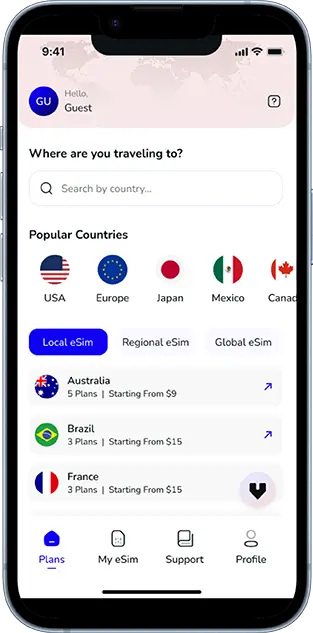
Get your Japan eSIM before you fly — navigate float viewing spots, book restaurants, stay connected from Narita.
Getting a Japan eSIM: Why Voye Is the Smart Choice
Kyoto has excellent 4G and 5G coverage throughout the city including in the Gion district and along the procession routes. July is peak tourist season — having local network data rather than international roaming at high demand sites is significantly better for data speeds. A Voye Japan eSIM activates when you land at Kansai International Airport (KIX) or Narita — no SIM counter required.
Japan Plans — Current Pricing
- 3 Days — $6 · 3GB/day high-speed, data resets at midnight
- 7 Days — $13 · 3GB/day high-speed, data resets at midnight
- 10 Days — $17 · 3GB/day high-speed, data resets at midnight
- 15 Days — $23 · 3GB/day high-speed, data resets at midnight
- 30 Days — $39 · 3GB/day high-speed, data resets at midnight

Key Benefits
- Instant digital delivery — activate before you fly, data starts the moment you land
- Unrestricted hotspot — share your Japan connection with travel companions from one plan
- Keep your home number active — calls, messages, and banking codes continue normally
- 24/7 multilingual support in 13 languages
- Website and app in 13 languages
Use Cases in Kyoto During Gion Matsuri
- Finding the float assembly streets in Gion using real-time Google Maps during July 10-16
- Checking the official procession route and start times on the Kyoto Tourism Association site
- Navigating from Kyoto Station to Gion and Karasuma-Shijo intersection on the city bus network
- Booking okonomiyaki and kaiseki restaurants via Tabelog from a crowded Yoiyama street
- Using Google Translate camera for festival food stall menus in Japanese
- Sharing the Naginata Hoko leading the July 17 procession in real time

Practical Things That Catch Visitors Off Guard
Ticket sales for reserved seating — paid grandstand seating along the procession routes sells out months in advance through the Kyoto City Tourism Association. Free public viewing is available along the full route but the best positions fill up from 7am onward on July 17.
IC cards for Kyoto transport — the Kyoto city bus and subway accept Suica and ICOCA contactless transit cards. Load your IC card at Kyoto Station before heading into the festival area. The bus is the main connection to most temple sites; the subway covers the central grid.
Yukata rental — many visitors rent yukata (summer kimono) for the Yoiyama evenings. Rental shops in Gion and around Kyoto Station offer this from approximately ¥3,000-5,000 with dressing assistance. Book ahead for July dates.
Shoes — the Yoiyama streets and procession viewing areas involve standing on pavement for extended periods in heat. Comfortable shoes rather than new ones.
Experience Gion Matsuri with reliable connectivity
Kyoto procession routes, temple navigation, restaurant booking — your Japan eSIM handles all of it.
Frequently Asked Questions
When is the Gion Matsuri procession in 2026?
Gion Matsuri has two main processions: the Saki Matsuri on July 17 (23 floats, departing from Shijo-Karasuma from approximately 9am) and the Ato Matsuri on July 24 (10 floats). The Yoiyama festival evenings on July 14-16 and 21-23 are the most atmospheric street festival periods.
Is Kyoto worth visiting in July despite the heat?
Yes, for Gion Matsuri specifically. July is the festival month and the yamahoko processions are among the most visually extraordinary events in Asia. The heat is real — 34-36°C with high humidity — but manageable with early morning and evening activity planning. The Yoiyama evenings are cooler and more atmospheric than the procession days.
How far is Kyoto from Tokyo?
Kyoto is approximately 2.5 hours from Tokyo by Shinkansen (bullet train) on the Tokaido Line. The journey from Shin-Osaka takes 15-30 minutes. A JR Pass covers this journey if you have one; otherwise, unreserved Hikari train seats are cheaper than Nozomi reserved seats.
What are Voye’s Japan eSIM plans?
Voye offers Japan plans from $6 for 3 days to $39 for 30 days. All plans include 3GB of high-speed data per day, resetting at midnight. Hotspot is unrestricted on all plans. Website and app available in 13 languages.
The Bottom Line

Gion Matsuri has survived wars, plagues, famines, and the complete political transformation of Japan. The floats that move through Kyoto on July 17 carry the weight of 1,157 years of unbroken tradition. Standing at the Oike-Karasuma intersection as the Naginata Hoko turns the corner — the sound of the gion bayashi music, the ropes straining, the crowd silent — is the kind of experience that does not require hyperbole.
Get your Voye Japan eSIM before you fly. Land at Kansai International. Navigate to Gion for the first Yoiyama evening.
Get your Voye eSIM for Japan
Plans from $6 · 3GB/day · Hotspot included · Use VOYE15 for 15% off your first order
Seamless Mobile Data Everywhere














 English