




Templestay is a cultural experience program designed to help visitors experience Korean Buddhist culture and aspects of monastic life. Programs can include meditation, Buddhist ceremonies, traditional meals, tea ceremonies, temple tours, and cultural activities. Overnight experience-oriented programs may include morning chanting, 108 prostrations, communal Buddhist meals, and meditation.
The important thing to understand is that a Temple Stay is not simply a museum tour or guided walk. Depending on the program you choose, you participate in activities that form part of the temple’s daily routine.
For travelers willing to wake early, eat mindfully, spend time in silence, and slow down, it can be one of the most immersive cultural experiences in South Korea.
What Is a Korean Temple Stay?
A Temple Stay lets visitors spend time at a Buddhist temple and experience Korean Buddhist traditions from inside the temple environment. Programs vary from short daytime experiences to overnight and multi-day stays.
The official Templestay program currently offers several formats, including one-day, experience-oriented, and rest-oriented stays. Experience-oriented programs are generally designed around experiencing aspects of Korean monastic life, while rest-oriented programs focus more heavily on meditation, nature, and quiet time.
For international travelers, the experience-oriented overnight option is usually the most interesting choice if you want to understand what temple life actually feels like.
Expect an early start, structured activities, simple meals, meditation, and periods when you are expected to put your phone and normal travel routine aside.
Some programs also offer English-language assistance. For example, Bulguksa lists an English-speaking contact for international participants, while some Seoul programs provide English interpretation or are specifically designed for foreign visitors.
What a Typical Korean Temple Stay Day Looks Like
The exact schedule changes from temple to temple, so treat the following as a realistic example rather than a fixed timetable.
3:00–4:00 AM: Wake Up
This is where Temple Stay becomes very different from an ordinary hotel stay.
Depending on the temple and program, you may be expected to wake around 3 or 4 AM for the morning ceremony. The early start is not designed for tourists. It reflects the traditional rhythm of Buddhist temple life.
At some temples, the day begins with the sound of a large temple bell before participants gather for the morning ceremony.
If you normally sleep until 8 or 9 AM while traveling, this is probably the part of the experience you should think about most carefully.
Early Morning: Buddhist Ceremony and Chanting
The morning ceremony, or Yebool, is an important part of the temple schedule. Participants may sit or stand with monks while Buddhist chanting takes place.
The official Templestay program describes Yebool as a ceremony of paying respect to the Buddha, Bodhisattvas, and Buddhist community.
You do not need to be Buddhist to participate in a Temple Stay. The experience is about learning through observation and participation while respecting the religious environment.
Morning: Meditation
After the ceremony, many experience-oriented programs include Seon meditation.
Seon is the Korean Buddhist tradition of meditation associated with mindfulness and concentration. Rather than treating meditation as a tourist attraction, the activity gives you an opportunity to sit quietly and experience a small part of the temple’s contemplative routine.
For some travelers, this will be relaxing. For others, sitting quietly for an extended period can be surprisingly difficult.
That is normal.
Stay Connected Across South Korea
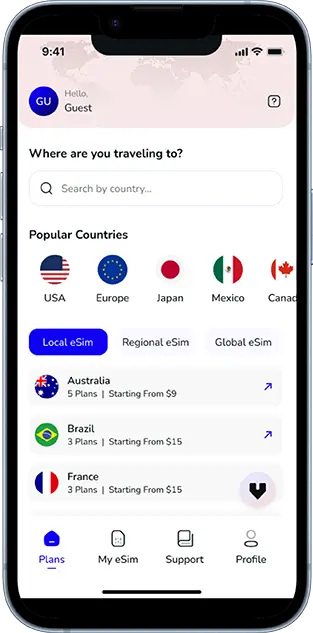
Exploring Seoul, Gyeongju, or remote mountain temples? Stay connected throughout your South Korea trip with a Voye Global eSIM.
Morning: Temple Meal
Temple meals are another important part of the experience.
Traditional Buddhist temple meals are generally simple and eaten according to communal protocols. At some programs, participants experience balwoogongyang, the traditional Buddhist monastic meal.
You may be expected to eat quietly and avoid unnecessary conversation while following instructions from the temple staff.
The point is not simply to try Korean food. It is to experience a different approach to eating, where attention and gratitude are part of the meal.
Late Morning: Cultural Activities or Rest
After the early morning schedule and breakfast, programs may include cultural activities such as making lotus lanterns, prayer beads, traditional crafts, or learning about Buddhist culture.
Some temples also provide free time.
What happens next depends heavily on the temple you choose. A mountain temple may emphasize nature and meditation, while an urban temple may offer easier access to cultural activities and sightseeing.
Afternoon: Temple Tour and Meditation
A temple tour can introduce you to the architecture, artwork, Buddhist halls, courtyards, and history of the complex.
This is where Temple Stay becomes more than an overnight accommodation. You are learning how the temple functions as a religious and cultural space.
Additional meditation sessions may follow, particularly at experience-oriented or meditation-focused programs.
Tea Ceremony: A Slower Conversation
Tea ceremonies are another common part of Temple Stay programs.
Some experiences involve drinking tea with a monk and having a conversation about Buddhist practice, life, or personal experiences. The setting is intentionally slower than ordinary sightseeing.
At Jogyesa, for example, its regular overnight program currently includes a conversation over tea with a monk when there are enough participants, with an alternative activity offered for smaller groups.
Evening: Dinner, Reflection, and Sleep
After another simple meal and evening activities, the day winds down much earlier than it would in Seoul’s entertainment districts.
You may have some personal time before sleeping.
Then comes the part that makes the next morning possible: going to bed early.
A Temple Stay works best when you accept that you are temporarily stepping away from your normal travel routine rather than trying to fit the temple schedule around it.
Do You Have to Complete Every Activity?
Not necessarily.
The official Temple Stay FAQ explains that participants who feel unwell or too tired can rest in their rooms and tell the staff if they do not want to participate in a particular activity.
That said, if your goal is to experience authentic temple life, it is worth participating as much as you comfortably can.
The physical elements are part of the experience.
What Are the 108 Prostrations?
The 108 prostrations are one of the activities that can make first-time visitors wonder what they have signed up for.
Participants repeatedly perform full bows as part of a Buddhist practice. The number 108 has significance in Buddhist tradition, and the exercise can be physically demanding.
Some Temple Stay programs combine the 108 prostrations with making 108 prayer beads. Current schedules at participating temples show that this activity can take well over an hour.
You do not need to be athletic, but comfortable clothing and a willingness to move slowly are helpful.
If you have physical limitations, ask the temple about modifications before participating.
Check out our plans
-
South Korea 10 Days Unlimited Data
USD 30.00 -
South Korea 15 Days Unlimited Data
USD 43.00 -
South Korea 20 Days Unlimited Data
USD 50.00 -
South Korea 3 Days Unlimited Data
USD 10.00
How to Book a Korean Temple Stay
The simplest way to find and book a Temple Stay is through the official Templestay website.
The English-language site lets international visitors browse temples, programs, dates, prices, and reservation information.
Step 1: Decide What Kind of Experience You Want
Start by choosing between:
- One-day Temple Stay: Usually a short introduction lasting a few hours.
- Experience-oriented Temple Stay: Usually an overnight program with activities such as ceremonies, meditation, 108 prostrations, and Buddhist meals.
- Rest-oriented Temple Stay: A quieter option focused on relaxation, meditation, and time away from a busy itinerary.
If this is your first Temple Stay and you want the full experience, a one-night, two-day program is usually the best starting point.
Step 2: Choose Your Temple
Do not choose solely based on photographs.
Consider how far the temple is from your travel route, how easy it is to reach, whether the program is available in English, and how physically demanding the schedule is.
Three particularly interesting choices are Jogyesa, Haeinsa, and Bulguksa.
Step 3: Check the Individual Program
Every temple can structure its program differently.
Check:
- Arrival and departure times
- Overnight accommodation
- Meal arrangements
- Language support
- Meditation sessions
- 108 prostrations
- Morning ceremony
- Cultural activities
- Transportation instructions
- What you need to bring
- Cancellation rules
Do not assume that every Temple Stay includes exactly the same activities.
Step 4: Reserve Online
Once you have found the program you want, complete the reservation through the official booking system.
Some programs require payment to confirm the reservation. Jogyesa, for example, states that reservations are not confirmed until payment has been completed.
Book ahead when possible, particularly if you have a specific date or temple in mind.
How Much Does a Korean Temple Stay Cost?
Prices vary considerably depending on the temple, accommodation, program, and special events.
A general budget of around KRW 50,000 to KRW 100,000 per person is a reasonable starting point for many overnight programs, but current listings can fall outside that range.
For example, Jogyesa currently lists its regular one-night, two-day program at KRW 80,000 per adult, while some special promotional programs have been offered at significantly lower prices.
Haeinsa’s current listings show different accommodation options ranging from KRW 100,000 to KRW 130,000 for adults on one listed program, demonstrating why it is better to check the exact program rather than rely on a fixed average.
Meals are generally part of the experience-oriented program, but always check the individual listing for what is included.
Explore Korea Without the Connectivity Stress
Heading beyond Seoul to Haeinsa, Bulguksa, or other mountain temples? Keep maps, translation tools, and travel information accessible with a South Korea eSIM from Voye Global.
The Best Korean Temples for a Temple Stay
1. Jogyesa Temple, Seoul: Best for First-Timers
If you are nervous about trying Temple Stay for the first time, Jogyesa is probably the easiest place to begin.
Jogyesa is located in central Seoul and is the representative temple of the Jogye Order, Korea’s largest Buddhist denomination. Its location puts you close to major attractions including Insadong and Gyeongbokgung Palace.
That makes it particularly convenient for travelers who do not want to spend several hours traveling into the countryside.
Jogyesa currently offers several programs for international visitors, including one-night, two-day experiences and shorter daytime programs.
Choose Jogyesa if: You want your first Temple Stay to be easy to reach and simple to combine with a Seoul itinerary.
2. Haeinsa Temple: Best for History and Heritage
Haeinsa gives you the chance to combine Temple Stay with one of South Korea’s most important cultural heritage sites.
The temple complex is home to the Tripitaka Koreana, approximately 80,000 woodblocks containing Buddhist scriptures that were carved between 1237 and 1248. The Haeinsa Temple Janggyeong Panjeon, which houses the collection, has been a UNESCO World Heritage property since 1995.
The setting on Mount Gaya also creates a very different atmosphere from an urban Seoul temple.
Haeinsa currently lists overnight Temple Stay programs, including a Tripitaka Koreana pilgrimage program.
Choose Haeinsa if: You want your Temple Stay to be part of a deeper historical and cultural journey.
3. Bulguksa Temple, Gyeongju: Best for a Full Cultural Trip
Bulguksa is an especially strong choice if you are visiting Gyeongju.
The temple is associated with the history and cultural heritage of the ancient Silla Kingdom, making a Temple Stay here an opportunity to combine Buddhist culture, Korean history, architecture, and Gyeongju’s wider heritage.
Bulguksa’s official Temple Stay information says its experience-oriented programs can include meditation and 108 prostrations. Because Bulguksa is a World Heritage Site, its Temple Stay accommodation is located a short drive from the main temple, while program activities take place at Bulguksa.
Choose Bulguksa if: You want to build an entire cultural trip around Gyeongju rather than simply add a Temple Stay to a Seoul itinerary.
What Should You Bring to a Korean Temple Stay?
You do not need specialist equipment, but a few practical items will make the experience easier.
Wear Modest Clothing
Temple-issue clothing or uniforms may be provided depending on the program, but arrive in neat, modest clothing.
Avoid revealing outfits, very short shorts, and clothing that would be inappropriate in a religious environment.
Jogyesa’s current instructions specifically ask participants to wear neat clothes when visiting the temple grounds.
Bring Comfortable Clothes for Sleeping
Temperatures can vary, particularly at mountain temples.
Bring comfortable sleepwear and an extra layer if you are traveling during cooler months.
Pack Minimal Luggage
You will not need your entire suitcase.
A small overnight bag is easier to manage than bringing large luggage into a temple environment.
Download Offline Maps
This is particularly important if you choose a rural mountain temple.
Some temples are far from major tourist areas, and signs or local transport information may be primarily in Korean.
Download the route before leaving your hotel while you still have reliable internet access.
Leave Alcohol Behind
Temple environments have rules and expectations that differ from hotels.
Do not bring alcohol to a Temple Stay. Treat the temple as a functioning religious environment rather than ordinary tourist accommodation.
Bring a Phone Charger and Power Bank
Your phone may be useful for travel directions, but you should expect to spend periods away from it.
A power bank can be useful if you are traveling to a remote temple and have a long journey before returning to reliable charging facilities.
Is a Korean Temple Stay Suitable for Everyone?
Temple Stay is accessible to most travelers who are comfortable adapting to a structured schedule, but it is not designed to feel like a conventional hotel.
You should be comfortable with:
- Waking very early
- Walking and standing
- Sitting for meditation
- Eating simple meals
- Following temple etiquette
- Sharing communal spaces
- Spending periods quietly
- Participating in unfamiliar cultural practices
The biggest adjustment is usually psychological rather than logistical.
You cannot really experience Temple Stay while trying to maintain your normal vacation routine.
If you arrive expecting a hotel with Buddhist decorations, you may be disappointed.
If you arrive expecting to temporarily live according to a different rhythm, the experience makes much more sense.
Temple Stay vs. Visiting a Korean Temple as a Tourist

A normal temple visit might take 30 minutes to several hours.
You photograph the architecture, walk through the grounds, read about the history, and continue to your next attraction.
Temple Stay is fundamentally different.
| Regular Temple Visit | Korean Temple Stay |
| Short visit | Overnight or multi-day experience |
| Primarily sightseeing | Participation |
| Flexible schedule | Structured schedule |
| Focus on architecture and history | Focus on culture, practice, and daily rhythm |
| Tourist itinerary | Temple timetable |
| Limited interaction | Activities and ceremonies |
This difference is exactly why Temple Stay is worth considering.
You are not just looking at Korean Buddhist culture from outside. You are temporarily stepping into its rhythm.
Tips for Your First Temple Stay
Choose one night first. You do not need to commit to several days for your first experience.
Read the schedule carefully. A program that includes 108 prostrations and a 4 AM wake-up is very different from a rest-oriented stay.
Check the location. A beautiful mountain temple can require considerably more travel than an urban temple.
Confirm language support. English assistance varies between temples and programs.
Do not overpack. Keep your belongings simple and practical.
Respect the schedule. The timetable exists for the temple community, not specifically for tourists.
Do not worry about being Buddhist. Temple Stay is a cultural experience, and international visitors are welcomed at participating temples.
Give yourself time to adjust. The first few hours may feel unfamiliar. That is part of the experience.
Staying Connected During a Temple Stay
A Temple Stay is an excellent opportunity to disconnect from constant notifications, but you may still need your phone for directions, translation, emergency communication, or coordinating transport.
This is particularly important when visiting rural temples.
Before leaving your hotel, download the temple address, route information, reservation details, and maps for offline use. If you need mobile data throughout your South Korea trip, a travel eSIM can also help you stay connected without relying on local Wi-Fi.
The goal is not to spend your Temple Stay staring at your phone. It is to have connectivity available when you actually need it.
Frequently Asked Questions
Yes. The official Templestay program includes temples and programs specifically catering to international visitors, including English-language options.
No. Temple Stay is designed as a cultural experience that introduces visitors to Korean Buddhism and temple life.
Yes. The official Templestay website provides English-language information and reservations for participating programs.
Programs range from a few hours for one-day experiences to overnight stays and longer residential retreats.
Not every program includes them. Check the individual temple’s schedule before booking.
It depends on the temple, but overnight experience-oriented programs can require a very early wake-up for the morning ceremony. Some current schedules begin around 4 AM.
Choose Jogyesa for convenience and a first Temple Stay in Seoul, Haeinsa for Buddhist heritage and the Tripitaka Koreana, or Bulguksa if you are building a wider cultural trip around Gyeongju.
Final Thoughts
A Korean Temple Stay asks you to travel differently.
You wake before sunrise. You follow a schedule instead of making your own. You eat without rushing. You bow 108 times. You sit quietly. You listen to chanting. You drink tea. You go to bed early and wake up while most of the city is still asleep.
That may sound demanding compared with a typical holiday, but it is also what makes the experience memorable.
For a first visit, Jogyesa is the easiest starting point, particularly if you are based in Seoul. If history and heritage are your priorities, Haeinsa adds the remarkable Tripitaka Koreana to the experience. And if you are exploring Korea’s ancient history, Bulguksa in Gyeongju can turn a Temple Stay into part of a much larger cultural journey.
Whichever temple you choose, arrive with realistic expectations. You are not checking into a themed hotel.
You are spending a short period inside the rhythm of a working Buddhist temple.
And that is precisely what makes a Korean Temple Stay such a distinctive way to experience South Korea.

Seamless Mobile Data Everywhere














 English