




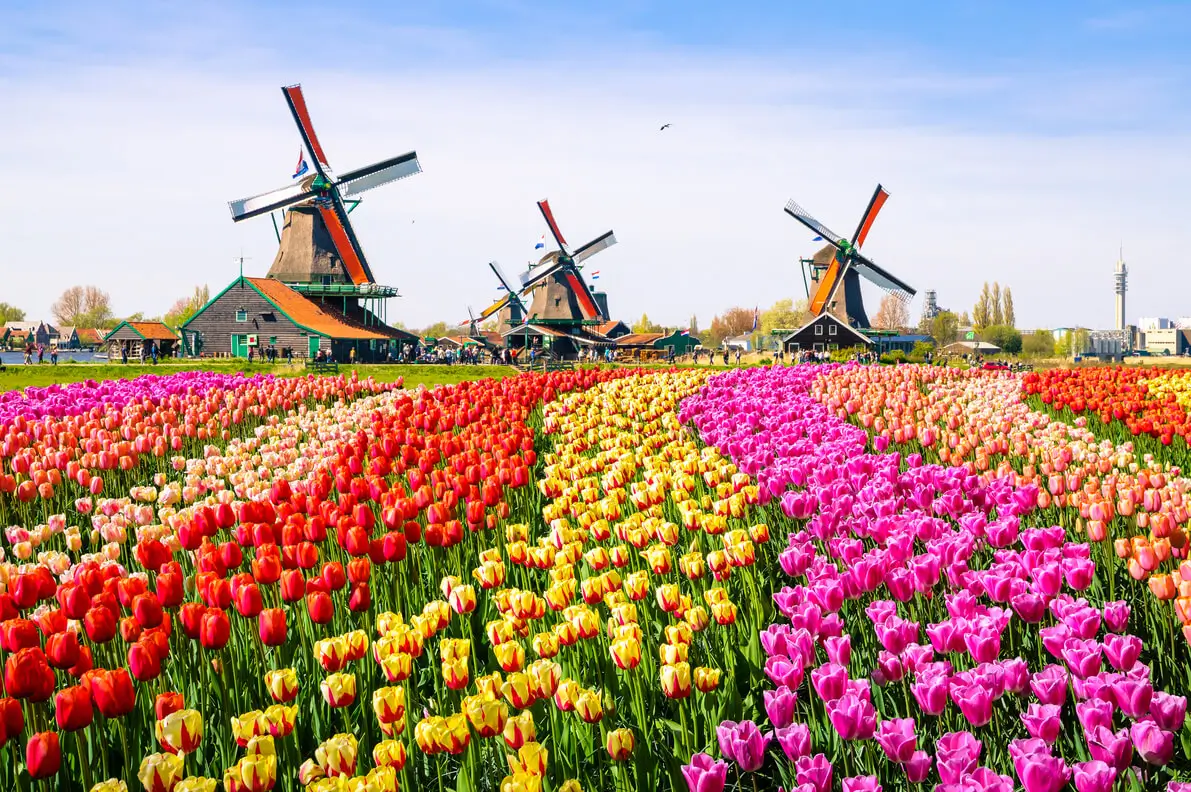
Every year, millions of travelers from across the globe are drawn to the Netherlands by its iconic windmills, 17th-century canal houses, world-renowned art museums, and the legendary tulip fields of Keukenhof. Yet one question consistently appears before the trip is even booked: Is the Netherlands an expensive country for tourists?
The honest answer is that the Netherlands sits firmly in the mid-to-high range for European travel costs. Cities like Amsterdam are widely considered among the pricier capitals in Western Europe. However, with the right knowledge, a clear budget strategy, and a few smart choices, a trip to Holland can be both deeply memorable and entirely manageable for travelers of every budget.
This guide covers every major expense category, from hotels and food to trains, museums, and hidden costs like mobile data, so you can plan with total confidence.
Netherlands Travel Budget Overview
Before diving into individual cost categories, here is a quick snapshot of what different types of travelers typically spend per day in the Netherlands. These estimates include accommodation, meals, local transportation, and sightseeing.
| Traveler Type | Daily Budget (EUR) | Style of Travel |
|---|---|---|
| Budget Backpacker | EUR 70 to EUR 100 | Hostels, street food, free attractions |
| Mid-Range Traveler | EUR 150 to EUR 250 | 3-star hotels, sit-down meals, museums |
| Luxury Traveler | EUR 300 and above | Boutique hotels, fine dining, tours |
Key Insight: Amsterdam is the most expensive city in the Netherlands. Switching your base to Utrecht, Haarlem, Delft, or Rotterdam can cut accommodation costs by 20 to 40 percent while still keeping Amsterdam easily reachable by train in under 30 minutes.
Accommodation Costs in the Netherlands
Where you sleep is the single biggest variable in your Netherlands travel budget. Prices range widely depending on the city, season, and type of property.
- Budget Accommodation: Hostel dormitory beds in Amsterdam typically cost between EUR 25 and EUR 55 per night. Private rooms in budget guesthouses or two-star hotels start from around EUR 85 to EUR 120. Outside Amsterdam, the same quality of budget accommodation can be found for EUR 60 to EUR 90.
- Mid-Range Hotels: A comfortable three-star hotel in Amsterdam will run between EUR 120 and EUR 220 per night during the regular season. Boutique hotels along the iconic canal belt, which are among the most sought-after stays in the city, typically fall in this range and book up months in advance during peak season.
- Luxury Properties: High-end hotels in Amsterdam and Rotterdam range from EUR 250 to EUR 600 or more per night, especially between April and September. The city is home to several exceptional luxury properties including converted canal mansions and design hotels with rooftop terraces.
- Alternative Options: Vacation rentals and serviced apartments are widely available across the Netherlands. Camping is a genuinely excellent and beloved Dutch tradition during summer months, with well-maintained campsites charging EUR 15 to EUR 35 per night. Many campsite operators provide excellent facilities, and some sites are located in breathtaking countryside settings.
Food and Drink Costs in the Netherlands
Dutch cuisine has evolved significantly over the past decade, blending traditional comfort food with international influences and a strong farm-to-table movement. Eating well in the Netherlands is entirely possible across all budgets.
- Budget Eating: Street food is the budget traveler’s best tool in the Netherlands. Kibbeling (battered fried fish), Dutch-style frites with rich sauces, herring from a local fish stall, and stroopwafels from market vendors typically cost EUR 3 to EUR 7. A filling meal at a simple Dutch eatery or brown cafe costs EUR 12 to EUR 18.
- Mid-Range Dining: A sit-down dinner at a mid-range Amsterdam restaurant costs approximately EUR 20 to EUR 40 per person, not including drinks. The city’s diverse restaurant scene covers everything from Indonesian rijsttafel and Surinamese cuisine to modern European and Nordic-inspired menus.
- Fine Dining: Netherlands punches well above its weight in the fine dining world. Amsterdam alone has a substantial number of Michelin-starred restaurants. A full tasting menu experience at a top-tier restaurant costs EUR 85 to EUR 180 per person, making it a worthwhile splurge for food lovers.
- Drinks and Grocery Costs: Coffee at a Dutch cafe costs EUR 2.50 to EUR 4. A draft beer at a local pub or bruine kroeg typically runs EUR 4 to EUR 7. Dutch supermarkets including Albert Heijn, Jumbo, and Lidl are excellent for self-catering. A week of groceries for two people costs approximately EUR 80 to EUR 120, making apartment stays with kitchen access a smart money-saving strategy.
Transportation Costs in the Netherlands
The Netherlands boasts one of the most efficient and well-integrated public transport systems in Europe. Getting around is straightforward, punctual, and relatively affordable compared to the country’s overall cost level.
| Transport Type | Route / Use | Approximate Cost |
|---|---|---|
| Intercity Train | Amsterdam to Rotterdam | EUR 15 to EUR 20 |
| Intercity Train | Amsterdam to The Hague | EUR 12 to EUR 16 |
| City Tram / Metro | Single ticket, Amsterdam | EUR 4 |
| GVB Day Pass | Amsterdam unlimited travel | EUR 9 |
| Bike Rental | Per day | EUR 10 to EUR 20 |
| Schiphol to City | Airport train to Amsterdam | EUR 5.50 |
| Taxi (Airport) | Schiphol to city center | EUR 40 to EUR 60 |
The OV-chipkaart is a reusable travel card accepted across trains, trams, metros, and buses throughout the Netherlands. Tourists can pick one up at any major station for a small deposit and load credit as needed. It is by far the most convenient and cost-effective way to use public transport during a multi-day visit.
Cycling deserves special mention. The Netherlands has more bicycles than people. Renting a bike for EUR 10 to EUR 20 per day is not just cost-effective but the most authentic, enjoyable way to explore Dutch cities and the surrounding countryside.
Skip Roaming Bills, Not the Adventure
Ditch expensive roaming with an eSIM for Netherlands today.
Netherlands Attraction and Sightseeing Costs
Netherlands is dense with exceptional cultural and historical attractions. Museum entrance fees in Amsterdam are not cheap, but the quality of the collections is outstanding. Strategic planning and city passes can significantly reduce what you spend.
Top Museum Costs in Amsterdam
- Rijksmuseum (home to Rembrandt and Vermeer): EUR 22.50 per adult
- Van Gogh Museum: EUR 22 per adult (online advance booking essential)
- Anne Frank House: EUR 16 per adult (sells out weeks in advance)
- Stedelijk Museum (modern and contemporary art): EUR 22.50 per adult
- NEMO Science Museum: EUR 17.50 per adult
- Royal Palace Amsterdam: EUR 15 per adult
The I Amsterdam City Card
The I Amsterdam City Card offers significant savings for tourists planning to visit multiple attractions. A 24-hour card costs EUR 65, a 48-hour card is EUR 85, and a 72-hour card is EUR 100. The card includes free entry to over 70 attractions and museums, unlimited use of GVB public transport, and a free canal cruise.
Beyond Amsterdam: Paid Attractions
- Keukenhof Gardens (April to May): EUR 20 per adult
- Kinderdijk Windmills (UNESCO site): EUR 14.50 per adult
- Efteling Theme Park: EUR 39 to EUR 50 per adult
- Madurodam (miniature city in The Hague): EUR 19 per adult
Free Attractions in the Netherlands
Not everything in the Netherlands comes with an entrance fee. Some of the most memorable experiences are completely free:
- Delft’s market square and historic old town: a perfect half-day for no cost
- Vondelpark, Amsterdam: a beloved urban green space, always free
- Amsterdam Canal Ring: walking and cycling the historic waterways costs nothing
- Bloemenmarkt floating flower market: free entry, purchases extra
- Jordaan neighbourhood exploration: one of Europe’s most charming districts
- Rotterdam’s port and Erasmusbrug bridge: spectacular architecture for free
- The Hague’s Binnenhof (parliament building exterior): free to view
Your Netherlands Trip Needs Seamless Data
Activate your Netherlands eSIM plan and enjoy worry-free connectivity.
Is Amsterdam More Expensive Than the Rest of the Netherlands?
Yes, and significantly so. Amsterdam operates at a premium in almost every category. Hotels, restaurants, and tourist services in the capital are typically 25 to 50 percent more expensive than in other Dutch cities of comparable quality.
Travelers who base themselves in cities like Rotterdam, Utrecht, Leiden, Haarlem, or Maastricht enjoy a noticeably more relaxed pace, lower costs, and a far more authentic Dutch experience. These cities are all connected to Amsterdam via direct trains, making day trips straightforward and inexpensive.
Rotterdam in particular has emerged as a world-class destination in its own right, celebrated globally for its bold modern architecture, dynamic food scene, and vibrant arts culture. Its hotels and restaurants are typically 25 to 40 percent cheaper than Amsterdam equivalents of similar quality.
When Is the Cheapest Time to Visit the Netherlands?
Season has a major impact on how much you spend in the Netherlands. Understanding the travel calendar is one of the most effective ways to reduce your total trip cost.Peak Season
- April to September: Highest prices. Tulips, warmth, festivals. Book months ahead.
- March and October: Prices drop 20 to 30%. Mild weather, thinner crowds.
- November to February: Cheapest rates. Cold weather. Christmas markets and canal magic.
Tip: If you want to see the tulip fields at Keukenhof, the only option is peak season (late March to mid-May). Plan your accommodation at least 3 to 4 months in advance and expect to pay a premium. Outside of this period, the savings can be substantial.
Shopping Costs and VAT Refunds
Shopping in the Netherlands offers a mix of unique local finds and international retail. Dutch open-air markets are the best places to shop for authentic keepsakes at fair prices. The Albert Cuyp Market in Amsterdam is one of the largest and most vibrant daily markets in the country, offering fresh produce, cheeses, flowers, vintage clothing, and souvenirs at accessible prices.
Popular Dutch souvenirs include Delft blue pottery, miniature windmills, Dutch Gouda and Edam cheeses, tulip bulbs, and wooden clogs. Prices range from EUR 5 for small trinkets to EUR 50 and beyond for quality handcrafted items.
VAT Refunds for Non-EU Visitors: Tourists from outside the European Union are eligible for a refund of approximately 21 percent VAT on purchases made in the Netherlands. Keep all receipts, complete the refund paperwork at the retailer, and process the claim at Amsterdam Schiphol Airport before departure.
Hidden Travel Costs in the Netherlands
Several costs catch tourists off guard and can quietly inflate a Netherlands travel budget:
- Tourist tax: Amsterdam charges a city tourist tax of around EUR 3 to EUR 5 per person per night, added on top of hotel bills. Many other Dutch cities have similar levies.
- Canal boat hire: Private boat rentals start from EUR 15 to EUR 25 per hour for smaller vessels. Electric boat rental is increasingly popular and eco-friendly.
- Luggage storage: Amsterdam Centraal and other major stations offer luggage storage for EUR 6 to EUR 10 per locker per day.
- Tipping: Tipping is not mandatory in the Netherlands but is appreciated. Rounding up the bill or leaving 5 to 10 percent at restaurants is customary.
- International roaming data: One of the most overlooked travel costs. International data roaming can add EUR 10 to EUR 50 or more to your mobile bill depending on your home carrier and usage. Activating an eSIM for Netherlands before or after arrival eliminates this cost entirely and keeps you connected at a flat, predictable rate.
Staying Connected in the Netherlands Without Overpaying
Staying connected is no longer optional when traveling. Whether you are navigating Amsterdam’s intricate canal system on Google Maps, booking a last-minute canal cruise, making a video call home, or posting your windmill selfies in real time, a reliable data connection is a fundamental part of the modern travel experience.
International roaming with your home SIM card can quietly add a significant and unpredictable cost to your Netherlands trip. A far smarter approach is to activate an eSIM for Netherlands through Voye Global. An eSIM requires no physical card, no SIM tray fumbling at the airport, and no uncertainty about coverage. Simply purchase a plan, scan a QR code, and you are live with fast, affordable data across the entire Netherlands and surrounding European countries.
Whether you are in Amsterdam, cycling through the tulip fields, or exploring the medieval streets of Delft, Voye Global’s eSIM for Netherlands keeps you connected at a flat rate that fits neatly into any travel budget.
Check out our plans
-
Netherlands 7 Days Unlimited Data
USD 23.00 -
Netherlands 10 Days Unlimited Data
USD 30.00 -
Netherlands 3 Days Unlimited Data
USD 10.00 -
Netherlands 20 Days Unlimited Data
USD 50.00 -
Netherlands 30 days 25GB
USD 29.00
Is the Netherlands Worth the Cost?
Absolutely, without question. The Netherlands delivers an exceptional quality of experience across every dimension of travel. The museums are among the finest in the world. The cities are safe, clean, and extraordinarily walkable. The food scene is vibrant and diverse. The transport system works flawlessly. And the country’s natural and architectural beauty is unlike anywhere else in Europe.
Compared to other premium European destinations such as Paris, Oslo, Zurich, or Copenhagen, the Netherlands offers a highly competitive value proposition. When you factor in the depth of cultural offering per euro spent, a well-planned trip to Holland can genuinely rival or surpass more expensive European cities in terms of overall satisfaction and return on investment.
The Netherlands rewards travelers who prepare. Those who book early, travel in shoulder season, explore beyond Amsterdam, eat at local markets, cycle rather than taxi, and manage mobile data smartly will find the country entirely accessible and deeply worth every euro.
Final Verdict
Is the Netherlands an expensive country for tourists? By global standards, yes. By Western European standards, it is competitive and well within reach. The Netherlands is not a budget destination in the style of Southeast Asia or Eastern Europe, but it is an extraordinarily rewarding one that delivers on every promise it makes.
Budget travelers can experience the Netherlands on EUR 70 to EUR 100 per day with smart choices. Mid-range travelers spending EUR 150 to EUR 250 per day will enjoy a rich, comfortable experience. And those willing to invest more will find that the Netherlands has some of the finest hotels, restaurants, and cultural experiences anywhere in the world.
Plan smart, travel curious, and the Netherlands will reward you far beyond your budget expectations.

Seamless Mobile Data Everywhere











 English