



How Safe Is Sri Lanka for Travelers Right Now?
Sri Lanka has become one of South Asia’s most popular destinations again, and violent crime against tourists remains rare. Most safety issues visitors actually run into are petty theft, overcharging, and road accidents rather than anything more serious.
A few practical realities to keep in mind:
- Tourist police units operate in Colombo, Kandy, Galle, and other major hubs, and they’re generally responsive to visitors.
- Roads are the biggest daily risk. Driving standards vary, tuk-tuks weave unpredictably, and rural roads often lack streetlights at night.
- Political demonstrations do happen occasionally, mostly concentrated around Colombo’s government buildings. Avoid large gatherings and check local news before heading into the city center.
- Natural hazards like monsoon flooding (roughly May to September in the southwest, October to January in the northeast) can disrupt travel plans, so build flexibility into your itinerary.
If you’re weighing Sri Lanka against other Asian destinations, it compares favorably. Our broader Sri Lankan travel guide covers the practical basics like transport, food, and where to stay if you want the fuller picture before you go.
Stay Reachable Anywhere in Sri Lanka
Get instant data coverage so help, maps, and rides are always one tap away.
What Are the Most Common Tourist Scams in Sri Lanka?
Scams in Sri Lanka are almost always about money, not safety, and nearly all of them are avoidable once you recognize the pattern.
Gem and jewelry scams
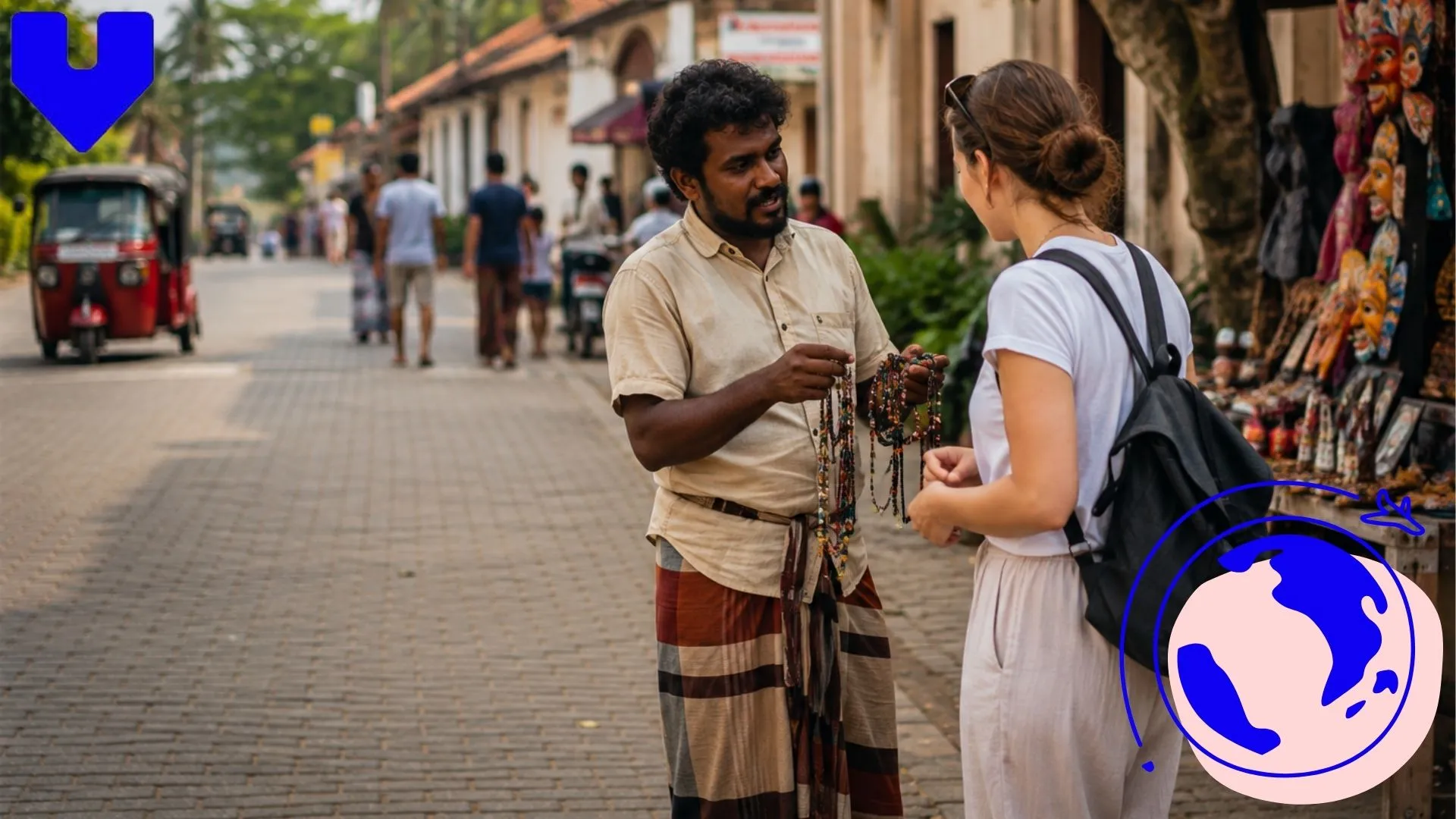
Friendly strangers who strike up conversation and mention a “gem exhibition” or a relative’s jewelry shop are running a well-known scam. The stones are often fake or wildly overpriced. Politely decline and walk away.
Tuk-tuk fare inflation
Meters are frequently “broken” for tourists. Agree on a fare before getting in, or use a ride app like PickMe, which locks in pricing upfront and avoids the haggling entirely.
Fake tour guides and “closed” attractions
Someone may tell you a temple or site is closed for a festival, then offer to take you somewhere else “better.” Verify with your hotel or a quick search before trusting a stranger’s claim.
Overpriced train tickets
At busy stations like Colombo Fort or Kandy, touts sometimes sell tickets at inflated prices near the entrance. Buy directly from the ticket counter or an official kiosk.
If you’re planning the classic Kandy to Ella scenic train route, our Kandy to Ella train guide has specifics on booking tickets the right way and what to expect on board.
Is Sri Lanka Safe for Solo Female Travelers?
Sri Lanka is a genuinely popular solo female travel destination, and thousands of women travel here independently every year without major incident. That said, a few local habits make the trip smoother.
- Dress modestly at temples and in rural towns; shoulders and knees covered is the general rule, and it also reduces unwanted attention.
- Staring and persistent questions from strangers are common but rarely threatening. A firm, polite “no thank you” usually ends the conversation.
- Stick to registered tuk-tuk drivers or app-based rides after dark, particularly outside Colombo and Galle.
- Women-only train carriages exist on some routes and are worth using during busy commuter hours.
- Choose accommodation with good recent reviews from solo women; hostels and guesthouses in tourist towns like Ella, Mirissa, and Kandy are generally well set up for independent travelers.
For a deeper look at solo logistics specific to the island, read our Sri Lanka solo travel guide, and for broader habits that apply anywhere, our tips for solo women travelers are worth bookmarking too.
Travel Solo With More Confidence
Keep GPS, rideshare apps, and emergency contacts working from the moment you land.
How Safe Are Wildlife Safaris and Beach Areas?
Sri Lanka’s wildlife is a major draw, from leopards in Yala to whales off Mirissa, and encounters are safe as long as you follow basic guidelines.
Safari parks (Yala, Udawalawe, Wilpattu)
- Always stay inside the vehicle unless your guide says otherwise; elephants and leopards are wild animals, not zoo attractions.
- Book with licensed operators only. Unlicensed jeeps sometimes drive too close to animals for a better photo, which is dangerous for both wildlife and passengers.
- Wild elephants also roam outside park boundaries in rural areas, especially around Sigiriya and the east. Local drivers know which roads to avoid at dusk.
Beach areas
- Strong rip currents affect several beaches, particularly around Mirissa, Hikkaduwa, and parts of the east coast. Swim where lifeguards are present and check flag warnings.
- Jellyfish season varies by coast and month, so ask locally before a swim if you’re prone to reactions.
- Surfing on the south coast is excellent but has its own etiquette and hazards worth knowing before you paddle out; our south coast surfing guide covers the practical details.
Check out our plans
-
Sri Lanka 3 Days Unlimited
USD 6.00 -
Sri Lanka 7 Days Unlimited
USD 13.00 -
Sri Lanka 7 Days 5GB
USD 15.00 -
Sri Lanka 10 Days Unlimited
USD 17.00 -
Sri Lanka 15 Days Unlimited
USD 23.00 -
Sri Lanka 15 Days 8GB
USD 29.00
What Health Precautions and Vaccines Do You Need?
No vaccines are mandatory for most travelers entering Sri Lanka, but a few are commonly recommended by travel health clinics. Requirements can change, so confirm with your doctor or a travel clinic close to your departure date.
Commonly advised for Sri Lanka:
- Hepatitis A and typhoid, given food and water exposure risk
- Routine vaccines kept up to date (MMR, tetanus, flu)
- Japanese encephalitis, sometimes recommended for longer rural stays
- Rabies vaccine, if you’ll be spending extended time in remote areas away from medical care
Other practical health notes:
- Stick to bottled or filtered water; ice in reputable restaurants and hotels is generally safe, but ask if unsure.
- Mosquito-borne illnesses like dengue occur, particularly in the rainy months, so pack repellent with DEET and use it consistently.
- Sun exposure near the equator is intense. Reapply sunscreen more often than you think you need to.
- Pharmacies in cities are well stocked, but carry a basic first aid kit and any prescription medication in original packaging.
Travel insurance that covers medical evacuation is genuinely worth having here, especially if your itinerary includes hiking, surfing, or safari activities.
What Are the Emergency Numbers and Embassy Contacts?
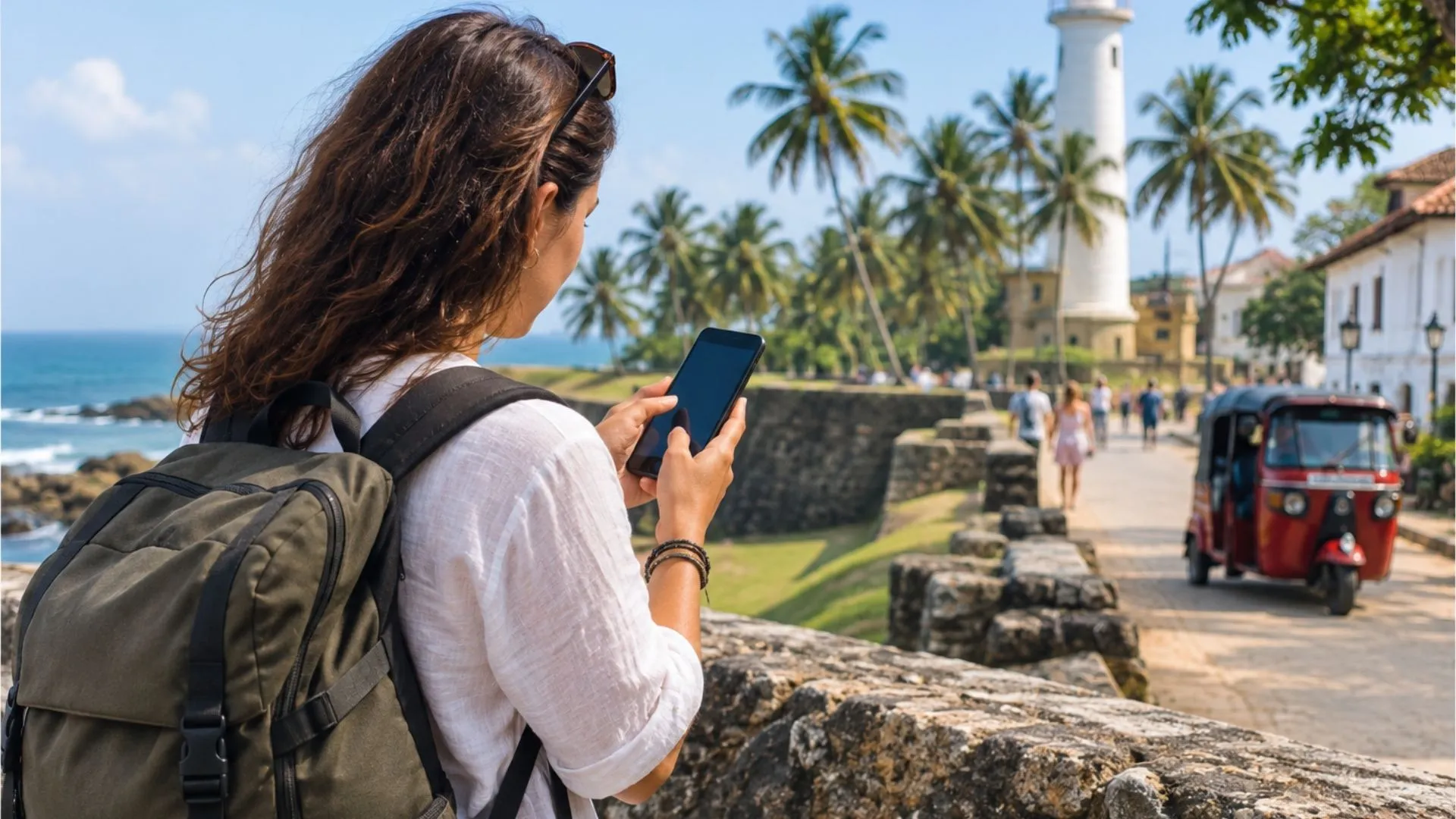
A traveler saving emergency numbers before exploring Sri Lanka
Save these before you land, not after something goes wrong.
- Police emergency: 119
- Tourist Police (Colombo): 1912
- Ambulance: 1990 (Suwa Seriya, a free national ambulance service)
- Fire and rescue: 110
Most embassies and consulates are based in Colombo. Register with your home country’s travel advisory program before departure if one is available, since it makes it far easier for your embassy to reach you in an emergency. Keep a photo and a physical copy of your passport separate from the original, and share your itinerary with someone at home.
For a broader checklist of what to do if something goes wrong overseas, our emergency travel abroad guide walks through the steps clearly.
Skip the Airport SIM Shop Line
Set up your Sri Lanka data plan before takeoff and land already connected
How Can You Stay Connected and Safe While Traveling?
Connectivity is one of the most underrated safety tools you have. A working data connection means you can call a verified taxi instead of flagging one down, pull up your embassy’s number instantly, share your live location with family, and check flood or weather alerts before a road trip into the hills.
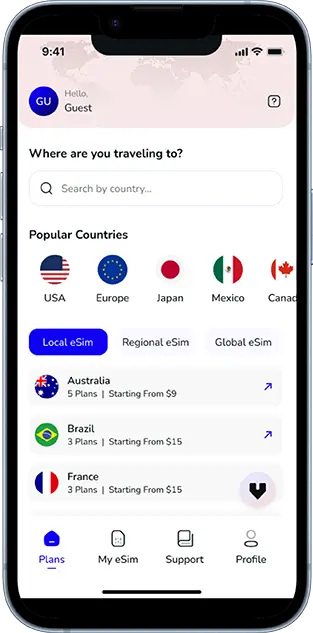
Relying on hotel WiFi alone leaves gaps the moment you’re in a tuk-tuk, on a safari, or hiking near Ella. An eSIM, a digital SIM card you install before you travel, solves this by giving you local data coverage from the moment you land, without hunting for a SIM shop or dealing with a locked airport kiosk. Voye Global’s Sri Lanka eSIM plans activate in minutes and keep you online across the island, whether you’re in Colombo’s traffic or watching leopards in Yala.
If your trip includes multiple stops, our 10-day Sri Lanka itinerary pairs well with planning your data needs around each region.
Final Thoughts
Sri Lanka is a warm, welcoming, and largely safe country to visit in 2026. Most of the risks you’ll actually face- scams, traffic, and sun exposure- are entirely manageable with a bit of preparation. Pack sensibly, book a reliable eSIM before you land, register with your embassy, and you’re set up for a trip that’s memorable for the right reasons.
Frequently Asked Questions
The safest approach combines preparation and awareness: research your destination, register with your embassy, buy travel insurance, and keep a working data connection like an eSIM so you can access maps, verified rides, and emergency numbers instantly wherever you are.
Stick to registered transport, avoid flashing valuables, keep copies of your documents separate from originals, and stay connected with a local eSIM so you can check news, weather, and directions in real time rather than relying on guesswork.
For most travelers, including those asking if Sri Lanka is safe, the biggest risks are petty scams, road accidents, and sun or heat exposure rather than violent crime. Staying alert in crowded areas and using licensed transport addresses most of these risks.
Yes, for the vast majority of destinations, including Sri Lanka, international travel in 2026 remains safe when you follow standard precautions like avoiding political gatherings, using reputable transport, and keeping travel insurance and emergency contacts on hand.
Check current entry requirements, get recommended vaccines, buy travel insurance, save embassy and emergency numbers, and set up an eSIM before departure so you land with working data instead of searching for WiFi or a local SIM card.
Most comprehensive travel insurance policies cover medical emergencies, evacuation, and trip disruptions, though coverage varies by provider. Always check that your policy includes activities you’re planning, like safaris or surfing, before you rely on it.
Countries with low violent crime rates and strong tourist infrastructure, including Sri Lanka, Japan, and much of Western Europe, consistently rank among the safest for travelers, though every destination carries some risk that’s best managed with basic precautions.
Yes, public WiFi networks in airports, cafes, and hotels are common targets for data interception. Using an eSIM for your own mobile data connection instead of shared public networks keeps your banking, messaging, and location data significantly more secure.

Seamless Mobile Data Everywhere












 English