




Nothing ruins the excitement of landing in a new country quite like an unexpected roaming bill or a dead phone with no way to check directions. Staying connected while traveling internationally used to mean choosing between eye watering roaming charges, hunting for a local SIM card shop, or relying on spotty airport WiFi. Today, travelers have far more control over how they use their phones abroad, but only if they know the right approach before they board the plane.
This guide breaks down exactly what to do, what to avoid, and how to keep your phone working smoothly no matter where your trip takes you. Whether you are backpacking through Southeast Asia, taking a business trip across Europe, or exploring a single destination for a couple of weeks, these tips will help you stay connected without draining your wallet.
Why International Phone Usage Trips Up So Many Travelers
Most connectivity problems abroad come down to three things: not planning ahead, misunderstanding how mobile networks work outside your home country, and assuming your regular plan will simply work the way it does at home. Carriers often charge steep per megabyte rates for international roaming, some countries restrict certain apps or require a VPN to access familiar services, and network coverage can vary wildly between major cities and rural areas.
The good news is that almost every one of these issues has a straightforward fix once you understand your options.
Know Your Connectivity Options Before You Travel
International Roaming
Roaming through your home carrier is the simplest option on paper. You keep your existing number and settings, and your phone connects automatically to a partner network abroad. The tradeoff is cost. Many carriers charge premium rates for data, calls, and texts outside your home country, and charges can add up fast if you are not careful with settings.
Local SIM Cards
Buying a physical SIM card at your destination is often cheaper than roaming and gives you a local number. The downside is the hassle: finding a store, navigating the purchase in a language you may not speak, and swapping SIM cards means you temporarily lose access to your home number for calls and texts, including any two factor authentication codes sent by SMS.
Travel eSIMs
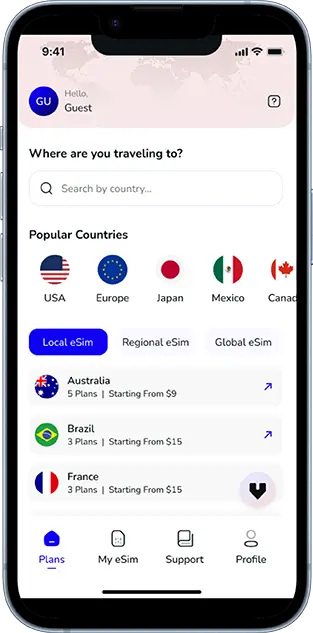
An eSIM lets you add a local or regional data plan to your phone digitally, without swapping any physical card. You can activate it before you even leave home, keep your original SIM active for calls and texts, and switch between destinations easily if your trip covers multiple countries. This is why eSIMs have become the preferred option for most modern travelers, and it is worth comparing Voye Global’s eSIM plans before you decide how to handle connectivity on your next trip.
Public WiFi and Offline Tools
WiFi at cafes, hotels, and airports can supplement your data plan, but it should never be your only connectivity strategy. Public networks are inconsistent, often slow, and carry real security risks, which we will cover in the don’ts section below.
The Dos of International Phone Usage
- Do check device compatibility before you fly. Confirm your phone supports eSIM technology and is carrier unlocked well before your departure date. Doing this at the airport almost always leads to unnecessary stress.
- Do activate your eSIM or set up your plan in advance. Most travel eSIMs can be installed and even activated before you leave home, so you land already connected instead of scrambling for WiFi to get set up.
- Do download offline maps and translation tools. Apps like Google Maps allow you to save offline regions, which is a lifesaver if you find yourself with weak signal in a rural area or between coverage zones.
- Do notify your bank of your travel dates. This has nothing to do with your phone directly, but a blocked card because of a fraud alert will send you scrambling for WiFi to sort it out, which defeats the purpose of planning ahead.
- Do use a VPN on any public network. A reliable VPN encrypts your traffic and protects sensitive information like banking logins and passwords whenever you connect to hotel, airport, or cafe WiFi.
- Do carry a portable charger. Navigation apps, translation tools, and constant connectivity drain batteries quickly, especially in unfamiliar cities where you are relying on your phone more than usual.
- Do check your data allowance and speed tiers. Many eSIM and roaming plans include a set amount of high speed data before throttling kicks in. Knowing your limits ahead of time helps you avoid unpleasant surprises mid trip.
- Do save key numbers and addresses offline. Keep a note with your hotel address, emergency contacts, and embassy information saved locally on your phone in case you lose signal entirely.
The Don’ts of International Phone Usage
- Don’t assume your home plan automatically covers you abroad. Some plans include limited international allowances, but many do not, and per day roaming fees can climb quickly without you noticing.
- Don’t leave data roaming switched on by default unless you have specifically chosen a plan that covers it. Toggle it off in your phone settings the moment you land if you are not sure, then turn it back on only once you have confirmed your plan details.
- Don’t rely on public WiFi for anything sensitive. Avoid logging into banking apps, entering passwords, or making payments over open hotel or airport networks unless you are using a VPN. These networks are common targets for data interception.
- Don’t wait until you land to sort out connectivity. Scrambling for a SIM card or fighting with app store downloads on unreliable airport WiFi is one of the most avoidable frustrations in travel.
- Don’t ignore local digital regulations. Some countries restrict access to certain apps, messaging platforms, or social media sites, and a handful require travelers to use a VPN to access services they rely on at home. Research this for your specific destination before you go.
- Don’t overload your phone with unnecessary physical SIM cards. If your device supports eSIM, there is rarely a reason to juggle multiple physical SIM cards on a multi country trip when a single digital plan can cover several destinations.
- Don’t forget to check compatibility for multi-country trips. A regional or global eSIM plan can save you from having to switch networks every time you cross a border.
Tips for Staying Connected Without Overspending
Cost is usually the deciding factor when travelers choose between roaming, local SIMs, and eSIMs. As a general rule, roaming through your home carrier is the most expensive option, local SIMs are often the cheapest but come with the most hassle, and eSIMs tend to strike the best balance between convenience and price, particularly for short to medium length trips.
If your itinerary covers more than one country, look for a regional eSIM plan rather than buying separate data packages for each destination. This is especially useful for trips across Europe, Southeast Asia, or multi city business travel, where switching networks constantly would otherwise mean managing several plans at once.
Keeping your home SIM active for calls and texts while running data through an eSIM is one of the simplest ways to stay reachable for important messages, including one time passcodes, without paying full roaming rates for data.
Skip the Roaming Guesswork
Get instant, affordable eSIM data for your next trip in 130+ destinations worldwide.
Country-Specific Considerations Worth Knowing
Connectivity rules are not uniform everywhere, so a little destination research goes a long way. Within the European Union, roam like home regulations mean EU residents typically pay no extra charges when using their phone across member states, though this may not apply to non EU travelers on the same networks. Certain countries, including China, restrict access to widely used apps and services, which makes a VPN a near essential tool for travelers who want to stay in touch with people back home. Remote regions in countries like Iceland, parts of India, or rural Australia can have limited network coverage outside major towns, so downloading offline maps and content in advance is particularly important there.
Before any trip, a quick search for your specific destination’s network coverage and digital regulations can save you from surprises once you land.
eSIM vs Local SIM vs Roaming: Quick Comparison
| Option | Setup Effort | Typical Cost | Keeps Home Number | Best For |
|---|---|---|---|---|
| Home Carrier Roaming | Low | High | Yes | Short trips, minimal data use |
| Local Physical SIM | Medium | Low to Medium | No | Long stays in one country |
| Travel eSIM | Low | Low to Medium | Yes | Most travelers, multi country trips |
Frequently Asked Questions
1. Can I use my phone abroad without paying roaming charges?
Yes. Switching off data roaming and using an eSIM or local SIM instead lets you avoid your home carrier’s roaming fees entirely.
2. What exactly is an eSIM and how does it work?
An eSIM is a digital SIM built into your phone that can be activated remotely with a QR code or app, letting you add a local or regional data plan without inserting a physical card.
3. Is it safe to use public WiFi while traveling?
Public WiFi can be used for casual browsing, but sensitive activity like banking or entering passwords should always go through a VPN or your own mobile data connection.
4. Can I keep my home phone number active while using a travel eSIM?
Yes. Most phones support dual SIM functionality, so your physical home SIM stays active for calls and texts while the eSIM handles data.
5. Do I need a VPN for every country I visit?
Not every country requires one, but a VPN is a smart default for protecting your data on public networks and for accessing certain services in countries with digital restrictions.
Final Thoughts
Staying connected internationally does not have to mean bill shock or hours spent hunting for a SIM card shop in an unfamiliar city. A little preparation, understanding your options, and choosing the right connectivity method for your specific trip makes all the difference. For most travelers today, a reliable eSIM offers the easiest path to staying online from the moment you land, without the cost of traditional roaming or the hassle of swapping physical SIM cards.

Seamless Mobile Data Everywhere














 English