




If you’re based in Morocco and dreaming of a beach that isn’t packed by 10 am, you don’t need a long-haul flight or a fat travel budget to find one. Some of the Mediterranean’s most beautiful, least crowded corners sit just a short ferry or budget flight away. Figuring out how to travel from Morocco on a budget mostly comes down to timing your ferry crossing, picking shoulder-season dates, and choosing towns tourists haven’t fully discovered yet. This guide skips the obvious European hotspots and covers real, reachable places: a quiet Andalusian coastline, a pastel French harbor, a Calabrian cliff town, a hidden Sicilian island, a wild stretch of Puglia, a far-flung Greek island, and one romantic option you don’t even need a visa for.
How to Travel from Morocco on a Budget: Getting There
The cheapest route out of Morocco is almost always the ferry. From Tangier Med or Tanger Ville, boats cross the Strait of Gibraltar to Algeciras or Tarifa in under an hour, with foot passenger tickets starting around 30 to 40 euros each way. It’s the fastest, most affordable way to reach mainland Spain, and from there, trains and budget flights fan out across Europe.
If you’re headed further afield, budget carriers like Ryanair and Vueling fly from Casablanca, Marrakech, and Rabat to Spain, France, and Italy, sometimes for 50 to 100 euros round trip if you book six to eight weeks ahead.
One thing to sort out before you pack: Moroccan passport holders need a Schengen visa for most of these destinations, so apply at least a month ahead and double-check current Schengen visa requirements for Moroccan travelers, since rules shift more often than people expect. Once your visa and ferry ticket are sorted, the rest of learning how to travel from Morocco on a budget is really just picking the right season and the right town.
Costa de la Luz, Spain: Your Closest Beach Escape

Best time to visit: late May to June, or September, when the wind eases and the crowds thin out.
This stretch of Andalusian coast sits right across the strait, and it still feels wonderfully undiscovered compared to the Costa del Sol. Wide, wild beaches, whitewashed hill towns, and fresh seafood make it an easy first stop for anyone testing out how to travel from Morocco on a budget.
Tarifa: Windsurfing Town with a Ferry Home
Tarifa is where your ferry lands, and it’s worth staying a night or two rather than rushing on. Guesthouses in the old town run 25 to 40 euros a night, and the beach just south of town rarely gets crowded outside August. For a broader look at the region, our Malaga travel guide covers nearby Andalusian towns worth folding into the same trip.
Vejer de la Frontera: A Day Trip Worth the Detour
About 45 minutes from Tarifa by bus, Vejer sits on a hilltop with narrow lanes, tapas bars, and views over the coast. It’s the kind of quiet town Andalusia is known for before the tour buses arrive. A day trip costs almost nothing beyond bus fare and lunch.
Get Your Europe eSIM Before Flying
Activate instantly and skip roaming charges the moment you land abroad.
Collioure, France: A Postcard Harbor Town for Less
Best time to visit: late spring or early autumn, when the light is soft and hotel rates drop.
Collioure sits near the Spanish border in the Pyrénées-Orientales, and it’s the kind of pastel harbor town Matisse once painted, minus the Riviera price tag. Pink and yellow houses line a small bay, a fortified church sits at the water’s edge, and the beaches are pebbly but calm. It’s a far cheaper, quieter alternative to Nice or Cannes, and our 7 day guide to Nice is worth reading if you want to compare the two before you book.
Where to stay: family-run chambres d’hôtes from 50 to 70 euros a night, often with breakfast included.
What to expect on arrival: anchovy tapas at harborside cafes, a short walk up to the Notre-Dame-des-Anges bell tower, and small coves for swimming just outside town. Before you land, it’s worth setting up connectivity through our France eSIM travel guide so you’re not searching for a SIM shop with a suitcase in tow.
Tropea, Italy: Calabria’s Budget-Friendly Cliff Town
Best time to visit: June or September, avoiding the peak August crush.
Tropea sits on a cliff over turquoise water in Calabria, the region that forms the toe of Italy’s boot. It gets a fraction of the visitors that Amalfi or Cinque Terre do, yet the views are just as dramatic. Steps lead straight down from the old town to the beach, and the sea here stays remarkably clear.
Where to stay: family-run B&Bs from 40 to 60 euros a night.
What to expect on arrival: the town’s famous red onions in every dish, boat trips out to the Aeolian island of Stromboli, and sunset views from the clifftop that rival anywhere pricier in Italy. Our Italy budget travel guide has more detail on stretching a euro further across the region.
Marettimo, Sicily: The Hidden Island Locals Don’t Advertise

Best time to visit: June, early July, or September.
Most travelers who reach Sicily stop at Palermo or Taormina and never hear of Marettimo. It’s the smallest and wildest of the Egadi Islands, reachable by a roughly one hour ferry from Trapani. There are no cars, no big resorts, just whitewashed houses, hiking trails, and sea caves with water so clear it looks tinted.
Where to stay: small family-run guesthouses from 35 to 55 euros a night.
What to expect on arrival: a boat tour of the island’s grottoes, fresh grilled fish at harborside trattorias, and hiking trails up to old Roman-era ruins with sweeping sea views.
Gargano, Puglia: Italy’s Quiet Coastal Secret
Best time to visit: May, June, or September.
While Puglia’s Salento coast gets most of the attention, the Gargano promontory in the north stays quieter and cheaper. White cliffs drop into the Adriatic, and the Foresta Umbra behind the coast offers shaded hiking trails on hot afternoons. It’s a good pick for travelers who want beach days and forest walks in the same trip.
Where to stay: agriturismo farm stays from 40 to 60 euros a night, often including a home-cooked breakfast.
What to expect on arrival: sea grotto boat trips from Vieste, whitewashed old town streets, and some of Italy’s best value seafood dinners. For more of the region’s highlights, see our guide to must-visit destinations in Italy.
Stay Connected Across Every Border
One eSIM covers Spain, France, Italy, and Greece without new SIM cards.
Kastellorizo, Greece: The Far-Flung Island Worth the Detour
Best time to visit: June or September, when the ferries and small flights run reliably and the heat is manageable.

Kastellorizo sits closer to the Turkish coast than to mainland Greece, and it barely registers on most travelers’ radar. Neoclassical houses in ochre and blue wrap around a small harbor, and the population is tiny enough that you’ll recognize the same faces by day two. The real draw is Farangas Cave, a blue grotto that locals will tell you rivals Capri’s, minus the crowds.
Where to stay: simple guesthouses from 40 to 60 euros a night.
What to expect on arrival: slow harbor dinners, a boat trip to the blue cave, and views across the water to the Turkish coastline. Our Greece travel guide is a good next stop if you’re combining this with other islands.
Don’t Overlook Essaouira: A Romantic Escape Without Leaving Morocco
Best time to visit: spring or autumn, when the Atlantic wind is gentler.
Sometimes the best answer to how to travel from Morocco on a budget is not to cross a border at all. Essaouira’s blue and white medina, Portuguese-built ramparts, and long windswept beach make it one of the most romantic weekend trips in the country, and you skip the ferry, the visa, and the flight entirely.
Where to stay: riads inside the medina walls from 25 to 45 euros a night, often with rooftop breakfast and sea views.
What to expect on arrival: sunset walks along the ramparts, fresh grilled sardines at the port, and camel or horse rides along the beach at low tide.
Plan Your Next Budget Getaway
Compare affordable Mediterranean escapes and stay online the entire trip.
What to Pack and How to Stay Connected on the Road
A few practical things make these trips smoother. Pack a universal adapter since Spain, France, Italy, and Greece all use the round two-pin plug, light layers for windy evenings in Tarifa and Collioure, and reef-safe sunscreen if you’re snorkeling around Marettimo or Kastellorizo’s clear water.

Before you fly, download offline maps for each town, since signal can drop in hillside villages like Vejer or on smaller islands. Our guide to using Google Maps without internet walks through exactly how to set this up before departure.
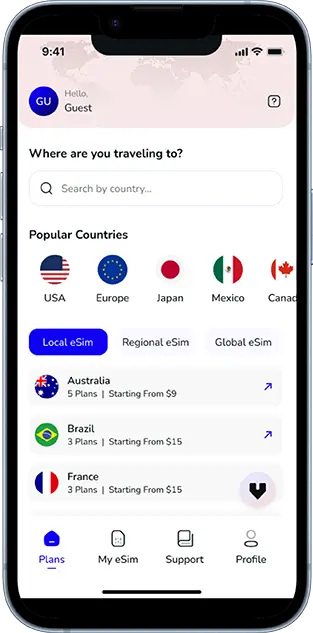
Data is the other piece worth sorting out early. Crossing from Spain into France into Italy or Greece usually means hunting for a new SIM card at every border, unless you activate a travel eSIM that covers multiple countries on one plan. A single Voye Global eSIM works across Spain, France, Italy, and Greece, so you can activate it before you leave Morocco and land already connected, no roaming charges and no SIM shop searches. It’s a small detail, but it’s one of the easiest parts of how to travel from Morocco on a budget to get right before you even board the ferry.
Final Thoughts: A Big Trip on a Small Budget
You don’t need a European tourist trail itinerary or a large travel fund to find something memorable this year. Costa de la Luz is the easiest and cheapest first hop, Collioure and Tropea offer more romance for a modest spend, Marettimo and Gargano reward travelers willing to go a little further off script, and Kastellorizo is the one to save for when you want a proper adventure. And if you’d rather skip the border altogether, Essaouira proves you can find a romantic, affordable escape without leaving Morocco at all. Whichever route you pick, sort your visa, book your ferry or flight early, and get your connectivity set up before you go, and the rest of the trip takes care of itself.
Frequently Asked Questions
How much money do I need to travel Morocco on a budget?
Budget travelers can get by on roughly 30 to 50 euros a day covering guesthouse stays, local meals, and public transport. Backpackers who share rooms and eat at local stalls often spend even less, especially outside Marrakech and Casablanca.
Is Morocco a cheap country to travel to?
Yes, Morocco is generally affordable compared to Western Europe, with cheap street food, low-cost transport, and budget riads widely available. Costs rise in tourist-heavy areas like Marrakech’s medina, so booking slightly outside the main squares helps stretch a budget further.
What is the cheapest way to travel around Morocco?
Trains and CTM or Supratours buses connect major cities affordably and reliably, often for under 15 euros between cities. Shared grand taxis are cheaper still for shorter regional hops, making them practical for reaching smaller towns.
How many days do you need to travel Morocco on a budget?

Seven to ten days is enough to cover a few key cities like Marrakech, Fes, and a coastal stop such as Essaouira without rushing. Longer trips of two to three weeks allow time for the Atlas Mountains or the Sahara without straining a tight budget.
Is $100 a day enough in Morocco?
Yes, $100 a day is comfortable for mid-range travel, covering a nice riad, restaurant meals, and some paid activities or tours. Travelers following the tips above for how to travel from Morocco on a budget can often manage on half that amount.
What is the average cost of a 7 day trip to Morocco?
A budget-conscious 7 day trip typically runs 350 to 600 euros per person, covering guesthouses, local transport, meals, and a few paid attractions. Costs climb with private tours, riad upgrades, or desert excursions added to the itinerary.
Can you backpack Morocco cheaply?
Yes, Morocco is a popular and manageable backpacking destination, with hostels from 8 to 15 euros a night and inexpensive street food throughout. Combining trains, buses, and shared taxis keeps transport costs low while still covering plenty of ground.
What is the best way to get around Morocco cheaply?
Trains between major cities are comfortable and affordable, while CTM buses reach towns the rail network doesn’t cover. For short distances or reaching stations, shared grand taxis remain the most budget-friendly local option.

Seamless Mobile Data Everywhere












 English