













Note that iPhone devices from Mainland China aren’t eSIM compatible. Also iPhone devices from Hong Kong and Macao aren’t compatible (except for iPhone 13 Mini, iPhone 12 Mini, iPhone SE 2020 and iPhone XS)
Greece is one of those destinations people think they already understand. Blue domes, sunsets, beaches, feta cheese, and white villages. Then they land in Athens and suddenly discover unexpected hotel fees, new entry authorization rules, cash only restaurants, and ferry tickets selling out.
A 2026 Greece trip is less about choosing Santorini or Mykonos and more about preparation. Entry rules in Europe are changing, environmental fees are increasing, and travelers who do not plan properly often overspend in the first three days.
Greece Is Not Just Islands
Many travelers only search for islands. Greece is much larger and more diverse than social media suggests.
You can structure your trip in three different ways:
City and History Focus
Best for culture lovers:
- Athens
- Delphi
- Thessaloniki
- Meteora monasteries
Island Relaxation Trip
Best for honeymoon or slow travel.
- Santorini
- Naxos
- Paros
- Crete

Mixed Itinerary
The most recommended plan:
Start in Athens, then visit 1 or 2 islands, then return to the mainland.
Travel Mistake: Trying to visit too many islands in a short trip. Ferries consume time and energy. Two islands are usually perfect for a 10 to 12 day vacation.
First Things First: Documents You Must Prepare
Before looking at hotels or flights, confirm entry eligibility.
Passport Validity
Your passport must:
- Be valid for at least 6 months beyond return date.
- Have two blank pages.
- Not be damaged.
Airlines can deny boarding even before immigration if this rule is not met.
Visa vs Travel Authorization
If your country requires a visa
You must apply for a Schengen short stay tourist visa.
Typical documents:
- Confirmed hotel bookings.
- Flight reservations.
- Travel insurance.
- Bank statements.
- Employment proof.
- Cover letter explaining travel plan.
Processing time: usually 15 to 45 days.
If your country is visa free
Starting 2026 you will likely need ETIAS authorization.
ETIAS is an online approval before travel. It is linked to your passport. Without it, airlines may refuse boarding.
You apply online and receive approval electronically. Always apply at least 2 to 3 weeks before departure.
Money Planning: What Greece Actually Costs
Travelers often budget for flights and hotels only. The real expenses happen daily.
Average Daily Budget
Budget traveler: 70 to 90 euros
Mid-range traveler: 120 to 180 euros
Luxury traveler: 250 euros and above
Typical spending:
- Lunch: 12 to 18 euros
- Dinner: 18 to 35 euros
- Coffee: 3 to 5 euros
- Ferry: 30 to 80 euros
- Attraction ticket: 10 to 25 euros
Athens is cheaper than famous islands. Santorini and Mykonos are the most expensive areas.
Stay Connected in Greece
Activate mobile data instantly when you land and start navigating confidently.
The Part Nobody Tells You: Greece Tax Policy Explained
This is the most important section of your trip planning. Greece applies multiple visitor taxes and many travelers only learn about them at hotel checkout.
1. Climate Resilience Tax (Accommodation Tax)
This is a mandatory environmental fee charged per room per night.
It is paid directly at the hotel, not online.
Approximate 2026 rates:
| Hotel Category | Tax Per Night |
|---|---|
| Budget hotels and hostels. | 1.50 to 3 euros. |
| 3 star hotels. | around 5 euros. |
| 4 star hotels. | around 7 to 10 euros. |
| 5 star hotels and luxury resorts. | 10 to 15 euros. |
Important details:
- Applies even if the hotel is prepaid.
- Charged per room, not per person.
- Usually paid at check in or checkout.
- Not included in booking website prices.
This surprises many travelers.
2. Short Term Rental Registration (Apartments and Airbnb)
Every legal vacation rental must be registered with the Greek tax authority.
What it means for you:
- The price normally includes tax.
- Some hosts collect a local fee in cash.
- Always confirm with the host before arrival.
If a host asks for unrecorded payments, avoid the property.
3. VAT in Greece
Greece has Value Added Tax on goods and services.
- Standard VAT: about 24 percent.
- Reduced VAT: about 13 percent on food and hotels.
This tax is already included in restaurant menus and store prices.
4. VAT Refund for Tourists
Non EU visitors can claim tax refunds on goods purchased in participating shops.
You must:
- Show passport when shopping.
- Request tax free form.
- Get customs stamp at airport.
- Submit refund at airport counter.
You cannot claim VAT refund on:
- Hotels.
- Restaurants.
- Transport.
- Tour services.
5. Cruise and Island Port Fees
Some islands charge port or sustainability fees for cruise passengers. Cruise companies usually add this automatically to your final bill.
Check out our plans
-

Greece 30 days 25GB
USD 25.00 -
Greece 30 Days Unlimited Data
USD 39.00 -
Greece 7 Days 6GB
USD 9.00 -
Greece 7 Days Unlimited Data
USD 13.00
Hidden Fees and Charges Tourists Mistake for Taxes in Greece
Many visitors budget for flights and hotels, but still overspend because they misunderstand local charges. Not every extra cost in Greece is a tax, yet travelers often assume it is. Knowing the difference prevents confusion at restaurants, beaches, and hotel checkouts.
Municipal Stayover Fee (Climate or Environmental Tax)
You may see different names for the same charge. Hotels might call it a climate tax, resilience fee, or environmental fee.
Important details:
- Mandatory across Greece.
- Charged per room per night.
- Paid directly at the hotel reception.
- Not included in most booking website prices.
- Applies to all guests including children.
- Hotels are legally required to collect it.
If the hotel asks you to pay this at check in or checkout, it is normal and not an extra charge created by the property.

Restaurants, Bread Charges, and Tipping
Restaurant pricing in Greece works differently from some countries.
What is included:
- VAT is already included in menu prices.
- There is no separate service tax.
What may appear on your bill:
- Bread basket charge.
- Bottled or filtered table water.
These small items usually cost 1 to 3 euros and are standard practice even if you did not request them.
Tipping etiquette:
- Not mandatory.
- Locals usually round up the bill.
- Around 5 percent is considered generous.
Beach Umbrella and Sunbed Fees
Many Greek beaches are public, but organized beach areas rent equipment.
Typical prices:
- Sunbed and umbrella set: 10 to 40 euros per day.
- Higher on popular islands.
- Sometimes free if you order food or drinks.
The sea access itself is free. You only pay for the equipment and service area.
Transportation Taxes Already Included
Travelers sometimes worry they must pay extra at ports or airports. In most cases you do not.
Included in ticket prices:
- Ferry tickets include port fees.
- Domestic flights include airport taxes.
- Metro and bus tickets include municipal transport charges.
You will not be asked to pay additional tax during boarding.
Duty Free and VAT Refund Rules
Non EU travelers can reclaim VAT on certain purchases, but only if the process is followed correctly.
Requirements:
- Ask the store for a tax free form.
- Show your passport during purchase.
- Get the form stamped by customs at the airport.
- Submit the form before leaving the EU.
You cannot claim VAT refunds on:
- Hotels.
- Restaurants.
- Transport services.
- Tours.
Keep receipts in your carry on luggage because customs officers must see the goods.
Car Rental Charges Visitors Misunderstand
Rental costs sometimes look like taxes but are actually contractual fees.
Common charges:
- Basic insurance included in rental price.
- Optional extra insurance upgrades.
- Fuel policy penalties if tank rules are ignored.
- Traffic fines sent to the driver after departure.
Speed cameras and parking violations are enforced, and the rental company will charge your card if fines are issued later.
Travel Advice: Travel in Greece depends heavily on your phone. You will use it for ferry schedules, navigation in old towns, restaurant bookings, and even boarding passes. Hotel WiFi is often slow on islands, and cafés may not always provide stable connections. Many visitors now set up an eSIM for Greece before departure so they have working internet immediately after landing and can reach their accommodation without confusion.
Getting Around Greece
Getting around Greece often requires checking ferry times, locating small ports, and navigating narrow streets where signs are limited. Reliable mobile data becomes essential once you leave major cities. Having internet access immediately after landing makes it much easier to reach your accommodation and manage transport plans without stress.

Public Transport
- Athens metro is reliable.
- Buses connect small towns.
- Ferries connect islands.
Book ferries early in summer season because they sell out quickly.
Driving
If you plan to rent a car:
- Non EU visitors need an International Driving Permit.
- Narrow roads are common in villages.
- Parking in old towns is limited.
Quiet Travel Tips You Will Thank Yourself For Later
- Book Acropolis tickets online. Summer lines can exceed two hours.
- Restaurants near major monuments are usually overpriced. Walk 2 streets away.
- Carry cash for small bakeries and local tavernas.
- Choose shoulder season May or October for best experience.
Check out our plans
-
Greece 10 Days Unlimited Data
USD 17.00 -
Greece 15 Days 10GB
USD 13.00 -
Greece 15 Days Unlimited Data
USD 23.00 -
Greece 20 Days Unlimited Data
USD 29.00 -
Greece 3 Days Unlimited Data
USD 6.00 -
Greece 30 Days 15GB
USD 16.00
The Booking Mistakes Travelers Repeat
- Booking islands without checking ferry schedules.
- Arriving at night to a small island with no transport.
- Not budgeting for hotel taxes.
- Carrying only cards.
- Packing heavy luggage for cobblestone streets.
Skip the Roaming Shock: Your Internet Plan Matters More Than Your Hotel
Most travelers carefully choose hotels but ignore mobile internet. Then they land in Greece and immediately face problems.
Common situations:
- Airport taxis require online booking.
- Ferry tickets are digital.
- Google Maps is essential in old towns.
- Restaurants often use QR menus.
- Banks send security OTP codes.
Without data, your trip becomes difficult within hours.
International roaming from home networks is usually extremely expensive. Many travelers return home to bills between 150 and 400 euros after a two week trip.
What is an eSIM & Why Travelers Use It?
An eSIM is a digital SIM card built into your phone. You do not insert a physical card. You simply scan a QR code and your mobile data starts working.
Benefits for travelers:
- No store visit in a foreign country.
- No passport registration at local kiosks.
- Activation before boarding your flight.
- You keep your home number active for calls and banking OTP.
- Instant internet after landing.
It is currently the most convenient internet solution for international travel.
Meet Voye Global: International eSIM Coverage in 160+ Countries
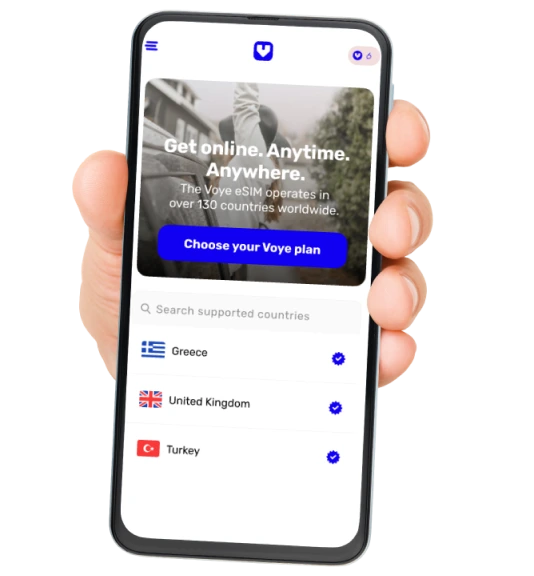
Voye Global is an international travel eSIM provider offering prepaid mobile data plans for travelers across more than 160+ countries worldwide, including Greece and beyond.
Instead of buying local SIM cards at airports or paying roaming fees, travelers can activate data before departure.
Once installed, your phone connects automatically to local Greek networks after landing.
Why Travelers Prefer Voye Global eSIM?
Travelers prefer Voye Global eSIM because it provides mobile data immediately after landing without searching for a local SIM card shop. It helps with navigation, bookings, and communication while keeping your primary number active for important messages and verification codes. The prepaid plans also avoid unexpected international roaming charges during the trip.
No Airport SIM Hunt
Airport SIM kiosks often have long queues and higher tourist prices. With an eSIM, your internet works immediately when the plane lands.
Keep Your Home SIM Active
Your main SIM stays in the phone. This means:
- You still receive bank OTP messages.
- WhatsApp number remains unchanged.
- You can receive important calls.
Ideal for Island Hopping
Greece trips often involve ferries between islands. Buying a local SIM on each island is impractical. An international eSIM continues working across Athens and the islands.
Better Than Roaming
Roaming charges depend on your carrier and are unpredictable. Travel eSIM plans are prepaid, so you know the cost in advance.
How to Set Up the eSIM Before Your Trip?
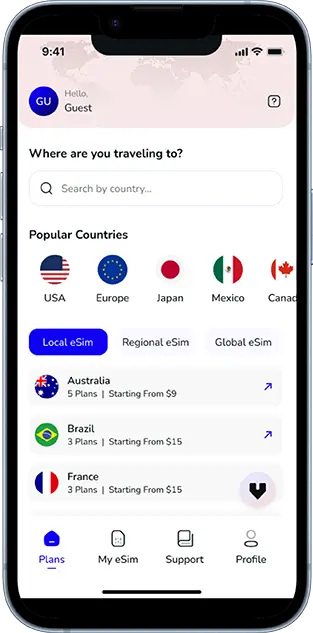
Setting up the eSIM is simple and takes only a few minutes. After purchasing a plan, you receive a QR code by email which you scan in your phone settings to install the data profile. Once you arrive in Greece, you just turn on mobile data and the connection activates automatically.
The setup takes only a few minutes:
- Purchase a Greece or Europe plan.
- Receive a QR code by email.
- Scan it in your phone settings.
- Turn on mobile data on arrival.
No shop visit, no paperwork, no passport registration.
Global Coverage, Local Rates
Experience hassle-free connectivity wherever you go.
When You Actually Need It During the Trip
You may not think about mobile data now, but you will rely on it constantly once in Greece.
You will use it for:
- Boarding passes and airport check in.
- Ferry schedules and port gates.
- Maps inside old towns.
- Restaurant reservations.
- Translation apps.
- Taxi apps and ride bookings.
- Emergency communication.
This is why experienced travelers arrange connectivity before flights, not after landing.
When You Should Start Planning
Start planning your Greece trip at least four to six months before travel, especially if you need a visa or are visiting during summer season. Early preparation gives you time to arrange documents, compare flights, and secure accommodation before prices rise. It also reduces the risk of last minute availability issues on popular islands.
Ideal preparation timeline:
4 to 6 months before travel:
Start visa and documentation
3 to 5 months before:
Book flights
2 to 4 months before:
Reserve hotels and ferries
2 to 3 weeks before:
Apply for ETIAS if applicable
1 week before:
Confirm taxes, payments, and insurance
A Smart Travel Move Most People Realize Too Late
First time visitors usually plan flights first and internet last. Experienced travelers do the opposite. Reliable mobile data removes the biggest source of travel stress in a foreign country.
Once transport, payments, and navigation depend on your phone, internet access becomes a basic travel necessity, not a luxury.

Frequently Asked Questions
1. Do I need a visa to visit Greece in 2026?
It depends on your nationality. Some travelers need a Schengen visa, while visa free visitors may need ETIAS travel authorization before departure.
2. What is the hotel tourist tax in Greece?
Hotels charge a climate or environmental tax per room per night, usually paid at the property during check-in or checkout.
3. Are restaurant prices in Greece taxed?
Yes. VAT is already included in menu prices, so you normally do not pay an additional service tax.
4. Is tipping required in Greece?
No, tipping is optional. Most visitors simply round up the bill or leave a small amount.
5. Can I pay everywhere with a card?
Cards work in cities and large hotels, but small towns, beach cafés, and local tavernas often prefer cash.
6. Do I need travel insurance for Greece?
Travel insurance is mandatory for visa applicants and strongly recommended for all visitors.
7. Is public transport easy to use?
Yes. Athens metro and buses are reliable, and ferries connect the islands, but tickets should be booked early in peak season.
8. Are beaches free in Greece?
Public beach access is free, but sunbeds and umbrellas usually require a rental fee.
9. How much money should I budget per day?
Most travelers spend around 120 to 180 euros per day, depending on island choice and travel style.
10. When is the best time to visit Greece?
May and October are ideal months with good weather, fewer crowds, and lower prices than peak summer.
Seamless Mobile Data Everywhere
Voye Global — Your Trusted eSIM Partner for Secure & Reliable Travel.



 English