



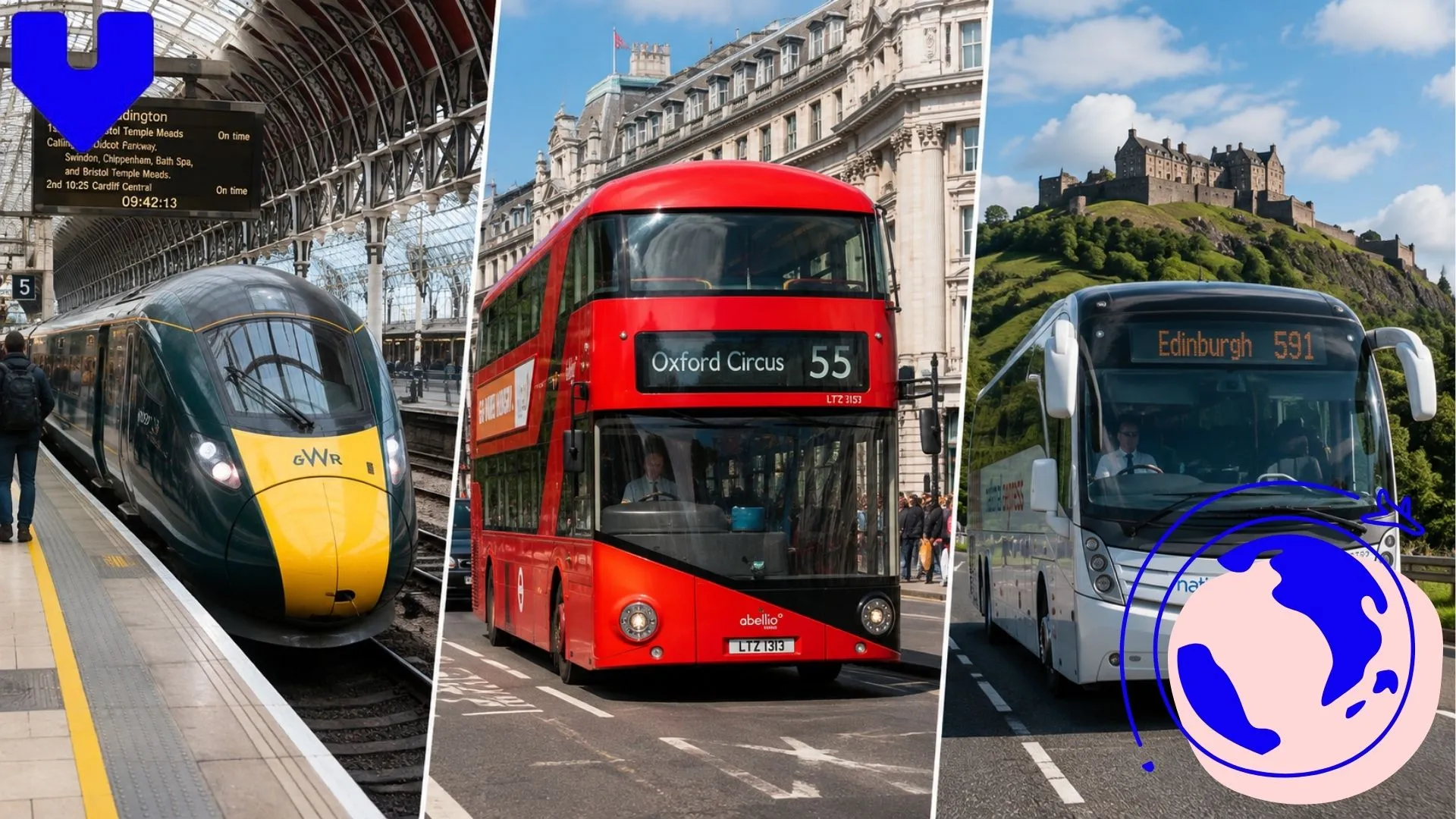
- Need a Car in the UK
- National Rail: Booking Tips and Cheap Advance Tickets
- Coaches: National Express and Megabus for Budget Travel
- City Transport: The Tube, Oyster Cards and Contactless
- Domestic Flights: When Are They Worth
- Renting a Car
- Ferries: Reaching Ireland and the Isle of Wight
- Choosing the Right UK Travel Pass for Your Itinerary
- Staying Connected While You Travel
- Frequently Asked Questions
Do You Need a Car in the UK?
For most trips built around London, Edinburgh, Manchester, Bath and other major cities, you do not need a car. Rail and coach networks connect all the big destinations quickly, and city centres are often easier to navigate on foot or by public transport than by driving through narrow streets with limited parking.
A car becomes genuinely useful once you leave the main tourist corridor. The Scottish Highlands, the Lake District, rural Wales and much of the Cotswolds have patchy bus schedules, sometimes just two or three services a day. If your trip includes small villages, coastal drives or hiking trailheads, renting a car for that portion of the trip makes sense even if you use trains everywhere else.
A common approach: take the train between major cities, then pick up a rental car for a few days in a specific region like the Highlands or the Lakes, and drop it off before heading back to the city for your flight home.
Stay online between train stops
Skip patchy WiFi on UK trains and coaches with data that just works
National Rail: Booking Tips and Cheap Advance Tickets?
UK trains are fast and reliable, but pricing is where most travelers get caught out. The same London to Edinburgh route can cost £30 or £150 depending entirely on when you book and which ticket type you choose.
Book in advance. Advance tickets are released around 12 weeks before travel and are tied to a specific train. They are almost always the cheapest option, sometimes a third of the price of an on-the-day ticket. If your dates are fixed, book as early as you can.
Avoid peak times when possible. Off-peak tickets, valid outside weekday morning and evening rush hours, are flexible and noticeably cheaper than peak fares on busy commuter routes.
Split ticketing works. Splitting a long journey into two or more shorter tickets on the same train can sometimes cost less than one through ticket, purely because of how fares are structured. It sounds odd, but it is completely legal and widely used by regular UK commuters.
Consider a Railcard. If you are under 30, a student, travelling with family, or over 60, a Railcard costs around £30 for a year and knocks a third off most fares. For a two-week trip involving several train journeys, it usually pays for itself.
London to Edinburgh by train takes roughly 4 to 4.5 hours on the fastest direct services from King’s Cross, making it a realistic day trip or a comfortable way to start a Scotland leg of your journey.
Coaches: National Express and Megabus for Budget Travel
Coaches are the cheapest way to move between UK cities, often a third of the price of a train ticket if you book early. The trade-off is time. A coach from London to Manchester takes around 4.5 to 5 hours, compared to roughly 2 hours by train.
National Express runs the largest network, connecting most towns and cities, including places trains don’t reach directly. Fares booked a few weeks ahead can start around £10 to £15 for longer routes.
Megabus is the budget option, with some fares as low as £1 to £5 if you book far enough in advance, though prices climb fast closer to departure. Seats are basic, and legroom is tight, so it suits shorter hops better than a five-hour cross-country trip.
Coaches make the most sense when you are travelling on a tight budget, have flexible time, or are covering a route where train prices spike unexpectedly. They’re also handy for reaching airports outside major hubs, since many services run direct to regional terminals.
City Transport: The Tube, Oyster Cards and Contactless Payment
London’s Underground, known locally as the Tube, is the backbone of getting around the capital, alongside buses, the Overground and the DLR. Outside London, cities like Manchester, Glasgow and Newcastle have their own trams and metro systems, generally simpler and smaller than London’s.
You have two easy ways to pay in London:
- Oyster card: a rechargeable travel card you buy for a £7 deposit, then top up with credit. Fares are automatically capped daily and weekly so you never pay more than a Travelcard would cost.
- Contactless bank card or phone: works the same way as an Oyster card, tapping in and out at gates, with the same daily fare caps applied automatically. If your card already works internationally, this is the simplest option since there’s nothing extra to buy or top up.
Either option beats buying single paper tickets, which cost noticeably more per journey. For a short visit, contactless is usually the easiest choice since most international debit and credit cards work directly at the gates.
Check out our plans
-
United Kingdom 15 Days 8GB
USD 13.00 -
United Kingdom 30 Days 15GB
USD 20.00 -
United Kingdom 30 Days 25GB
USD 32.00
Domestic Flights: When Are They Worth It?
For most UK routes, flying doesn’t save meaningful time once you factor in airport check-in, security and getting to and from city-centre terminals. London to Edinburgh by train takes around 4.5 hours; by air it’s roughly 1.5 hours in the sky, but closer to 3.5 to 4 hours door to door once you add airport time on both ends.
Flights are worth considering for a few specific routes: London to Belfast, London to the Scottish islands like Shetland or Orkney, or the Channel Islands, where rail and road simply don’t reach. Budget carriers occasionally run promotional fares under £30, which can beat the train on price alone if you book early and travel light to avoid baggage fees.
Navigate rural roads with confidence
Keep maps and directions live even on remote Highland and Lake District routes.
Renting a Car: Driving on the Left and Rural Road Tips
Renting a car opens up the parts of the UK that trains and coaches skip entirely, but it comes with a real adjustment period if you’re used to driving on the right.
A few practical tips before you set off:
- Roundabouts go clockwise, and you give way to traffic already on the roundabout coming from your right.
- Country lanes are narrow, often single track with passing places in rural Scotland and Wales. Pull into a passing place on your left if a car approaches from the opposite direction.
- Manual transmission is standard. Automatic cars are available but usually cost more to rent, so book one specifically if you’re not comfortable with a manual gearbox.
- Parking in cities is expensive and limited. Consider parking on the edge of a city centre and using public transport or walking once you arrive.
- Fuel is sold by the litre, and diesel and petrol pumps look similar, so double-check which your rental takes before filling up.
A rental car makes the most sense for a Highlands road trip, the Lake District, or the Cotswolds, where public transport thins out and the scenery genuinely rewards stopping wherever you like.
Ferries: Reaching Ireland and the Isle of Wight
Ferries fill in the gaps that trains and roads can’t cover. Routes from Holyhead in Wales and Cairnryan in Scotland connect to Dublin and Belfast in Ireland, typically taking around 2 to 3.5 hours depending on the crossing and operator.
For a shorter trip, ferries to the Isle of Wight run from Portsmouth, Southampton and Lymington, with crossings as short as 25 to 40 minutes. Car ferries let you bring a rental vehicle across, while passenger-only catamarans are faster and cheaper if you’re travelling without a car.
Booking ahead usually secures a better fare than turning up on the day, especially in summer when routes to Ireland and the Isle of Wight get busy with holiday traffic.
Land ready before you arrive
Set up your UK data plan before touchdown and skip the airport SIM queue
Choosing the Right UK Travel Pass for Your Itinerary
The right pass depends entirely on your route:
- BritRail Pass: aimed at visitors from outside the UK, offering unlimited rail travel over a set number of days. Worth it if you’re covering long distances across multiple regions in a short window.
- Oyster or contactless: best for anyone spending several days in London and taking day trips out and back.
- Railcard: worth buying if you qualify by age or status and you’re taking more than two or three train journeys during your trip.
- No pass at all: if your itinerary is just one or two long-distance train journeys, booking Advance tickets individually is often cheaper than any pass.
Map out your itinerary city by city before booking anything. A trip that’s mostly London with a day trip to Bath or Oxford needs a different strategy than a two-week loop through Scotland, the Lakes and Wales. For inspiration on pairing rail travel with scenic routes elsewhere, our guide to unforgettable train journeys around the world is worth a look, and if the UK is one stop on a longer trip, check which countries UK travelers can visit visa-free before you finalise your route.
Staying Connected While You Travel
Whatever mix of trains, coaches and rental cars you end up using, you’ll be relying on your phone constantly, checking live departure boards, booking last-minute tickets, navigating rural roads, or splitting a fare with a travel companion. Free WiFi on UK trains and coaches is often patchy, especially once you’re outside major cities, so having your own mobile data matters more than it might at home.
An eSIM lets you land with data already active, no swapping physical SIM cards at an airport kiosk, no hunting for a local shop in a train station. You can browse eSIM plans for the UK before you travel and activate coverage that works whether you’re checking a National Rail app in London or navigating a single track road in the Highlands. If your trip continues into Europe afterward, our guide to getting around France by train, metro and rental car style hacks can help you plan the next leg too.
Getting around the UK comes down to matching the right transport to the right leg of your trip. Trains for speed between cities, coaches when budget matters more than time, the Tube and contactless payment for city days, and a rental car when you want to reach the villages and coastlines that public transport skips. Plan each stretch on its own terms, and you’ll spend less time waiting around and more time actually seeing the country.
Frequently Asked Questions
For most trips, National Rail is the best way of getting around the UK between major cities, offering speed and frequent departures. Combine it with the Tube or local buses in cities and a rental car for rural regions like the Highlands or Lake District.
Yes, trains and coaches connect all major UK cities easily without a car. It only becomes difficult in rural areas such as the Scottish Highlands or Welsh countryside, where bus services can run just a few times a day.
Book Advance rail tickets as early as possible, use coach services like Megabus or National Express for longer routes, and buy a Railcard if you qualify. Split ticketing on trains can also cut fares significantly on longer journeys.
A BritRail Pass suits visitors covering multiple regions by train over a short trip, while an Oyster card or contactless payment works best for city travel in London. Choose based on your itinerary rather than buying a pass by default.
Yes, contactless bank cards and phones work directly on the Tube, buses, and most city transit systems across the UK. Fares are capped daily and weekly automatically, the same way an Oyster card works.
The fastest direct trains from London King’s Cross to Edinburgh take around 4 to 4.5 hours. It’s a comfortable option for a day trip or the start of a longer Scotland itinerary.
Booking in advance is strongly recommended, since Advance tickets released around 12 weeks before travel are usually the cheapest fare type. On-the-day tickets on popular routes can cost several times more.
Public transport is better for city-to-city travel and central London, while a rental car is better for rural regions like the Highlands or Cotswolds with limited bus service. Many travellers combine both across a single trip.

Seamless Mobile Data Everywhere













 English