



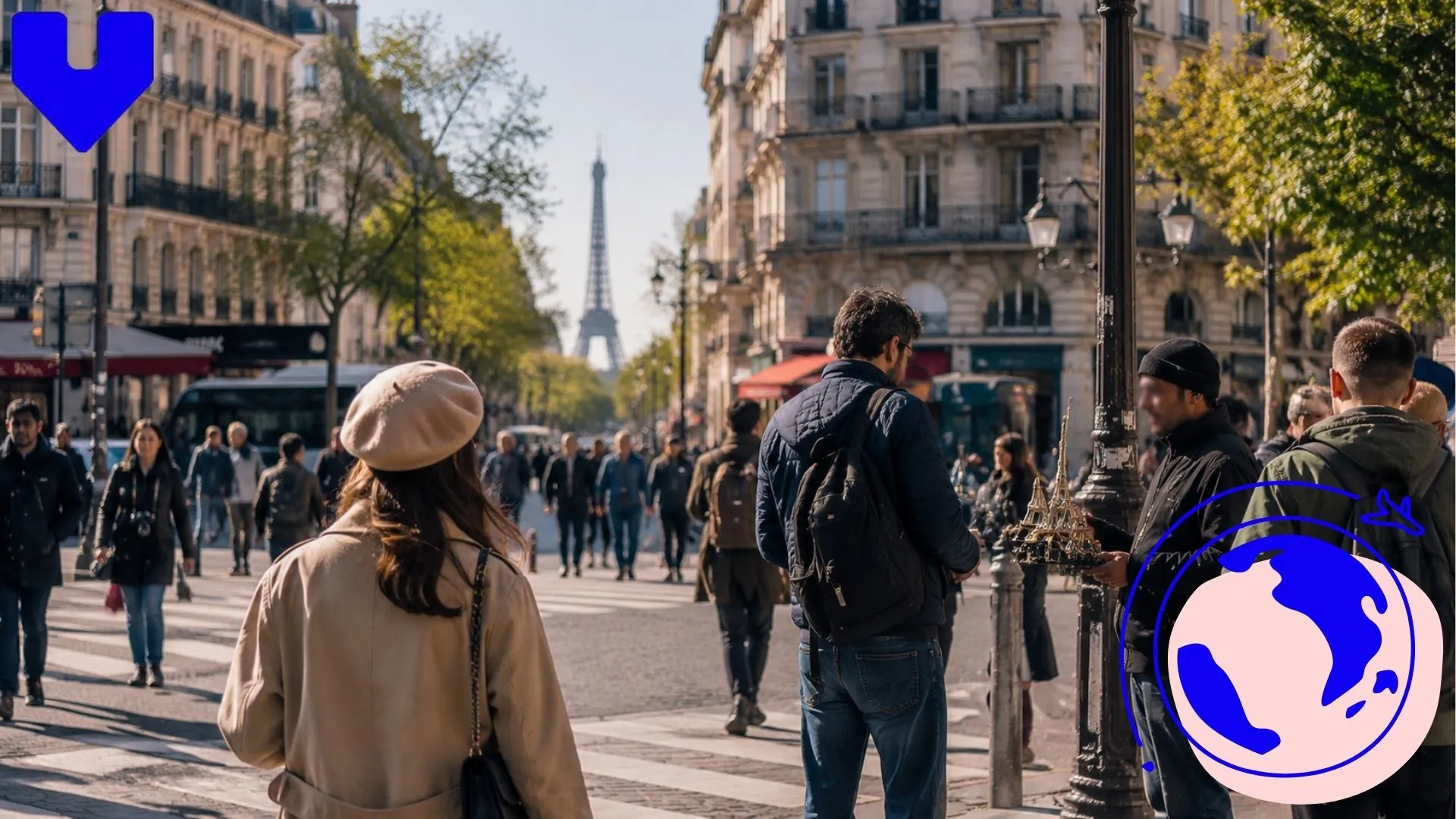
Is France Safe for Tourists? Setting Realistic Expectations
France is generally safe for tourists. Violent crime against visitors is rare, and most of what you’ll encounter is petty theft, opportunistic scams, and the occasional overcrowded platform rather than anything genuinely dangerous. The bigger risk in most cities is losing a phone or wallet to a distraction scam, not physical harm.
That said, travel safety in France isn’t uniform across the country. Paris, Marseille, and Nice see far more tourist-targeted theft than smaller towns in the Loire Valley or Brittany. Large crowds, whether at a train station, a Christmas market, or a major sporting event, are where you need to be most alert. Keep your guard up in dense tourist areas and relax it in quieter regional towns, where crime against visitors is genuinely uncommon.
One date worth noting if you’re traveling in November: the TCS New York City Marathon takes place on November 1, 2026, starting on Staten Island and finishing in Central Park. It’s unrelated to France directly, but if your itinerary includes a New York stopover before or after your French leg, expect road closures and packed subway cars that day, which is its own mini lesson in staying alert in crowds.
Stay Reachable the Moment You Land
Get connected instantly so you can call for help or check maps anywhere in France
What Are the Most Common Scams in Paris to Avoid?
Most Paris scams rely on distraction, guilt, or confusion rather than force. Knowing the pattern ahead of time makes them easy to sidestep.
The Friendship Bracelet and Petition Scam
Someone approaches near Sacré-Cœur or the Eiffel Tower with a string bracelet or a clipboard asking you to sign a petition. While your hands are occupied, an accomplice may go through your bag. Politely decline, keep walking, and don’t let anyone tie anything onto your wrist.
The Fake Metro Ticket Seller
At busy stations like Gare du Nord, people in plain clothes sometimes offer to “help” you use the ticket machine, then pocket your change or sell you an already-used ticket. Buy tickets directly from the machine or the RATP app and wave off unsolicited help.
The Gold Ring or Found Item Scam
A stranger picks up a “found” ring near you and insists it must be yours, then asks for money as a reward or to cover their trouble. It’s staged. Say no and move on.
The Restaurant Overcharge
Some tourist-area cafes near major landmarks quietly add extra items or a higher service charge to the bill. Check your receipt against what you ordered, especially at cafes with no posted prices outside.
Where Do Pickpockets Target Tourists Most?
Pickpocketing in France is almost entirely opportunistic, and it clusters in a handful of predictable spots.
- Metro Line 1, which runs through Châtelet, Louvre, and the Champs-Élysées, is consistently flagged as the most targeted line in Paris
- Gare du Nord and Gare de Lyon, especially around ticket machines and departure boards, where distracted travelers are easy marks
- The Louvre and Eiffel Tower queues, where dense, slow-moving lines make bags easy to unzip unnoticed
- **Montmartre’s steps near Sacré-Cœur **, particularly in the evening when crowds thin but street sellers remain
- Escalators at major stations, where someone can brush past and lift a phone from a back pocket in seconds
A few habits cut your risk sharply: wear your bag across your body with the opening facing you, keep your phone in a zipped front pocket rather than a back one, and avoid pulling out cash in the open on a crowded platform. If you’re heading to other cities on the same trip, our Greece for first-time visitors guide covers many of the same crowd-safety habits that apply across Europe.
Check out our plans
-
France 3 Days Unlimited Data
USD 6.00 -
France 7 Days Unlimited Data
USD 13.00 -
France 10 Days Unlimited Data
USD 17.00 -
France 15 Days Unlimited Data
USD 23.00
What Emergency Numbers Should You Save Before You Land?
Save these in your phone before you leave home, since data or signal isn’t guaranteed the moment you need them.
- 112 is the general European emergency number, valid anywhere in France for police, fire, or medical emergencies
- 17 connects directly to the police (police secours)
- 15 reaches SAMU, the medical emergency service
- 18 is for the fire brigade (sapeurs-pompiers), who also respond to many medical calls in France
- 114 is a text-only emergency number for people who are deaf, hard of hearing, or unable to speak safely on a call
If you’re robbed or scammed, report it at the nearest police station (commissariat) and ask for a copy of the police report, called a procès-verbal, which you’ll need for any travel insurance or bank claim. For lost passports, contact your embassy in Paris directly rather than waiting until you’re back home.
Before you go, it’s worth reading through general travel safety tips that apply well beyond France, covering everything from copying your documents to setting up emergency contacts your family can reach easily.
Keep Your Family Connected Together
Share your live location with loved ones instantly without hunting for airport WiFi.
Safety Tips for Solo Travelers and Families
Traveling Solo in France
Solo travel in France, including for women, is common and generally safe, particularly in well-lit, populated areas. Stick to busy streets after dark, share your live location with someone at home, and book accommodation with 24-hour reception if you’re arriving late at night. Trust your instincts if a taxi or rideshare feels off, and always confirm the driver and plate match the app before getting in. Our guide on essential tips for solo women travelers has practical advice that applies just as well in Lyon or Nice as it does elsewhere in Europe.
Traveling with Family
Keep kids close in crowded areas like train platforms and markets, and agree on a meeting point in advance in case anyone gets separated. Dress children in bright, easy-to-spot colors for busy days out, and keep a photo of your child on your phone taken that morning, useful if you ever need to describe what they’re wearing. Strollers and diaper bags are also common pickpocket targets since parents’ attention is split, so keep valuables in a bag you’re wearing rather than one hanging off the stroller.
If your France trip is part of a longer Europe itinerary, staying reachable matters just as much as staying alert. Voye Global eSIM lets you keep maps, translation apps, and ride-hailing working the moment you land, without hunting for airport WiFi or a local SIM counter, which matters most in the first confusing hour after arrival when scams and mistakes are most likely.
Do You Need Travel Insurance for a Trip to France?
France doesn’t legally require travel insurance for most visitors, but it’s still worth having. If you’re applying for a Schengen visa, proof of medical travel insurance covering at least 30,000 euros is mandatory, and even visa-exempt travelers benefit from coverage for theft, trip cancellation, and medical care, since public healthcare access for short-term visitors can involve high out-of-pocket costs.
When comparing policies, look for coverage that includes theft and baggage loss, since pickpocketing is the most likely incident you’ll actually file a claim for. Keep digital copies of your passport, insurance policy, and any receipts for expensive items in cloud storage you can access from your phone, which is far more useful than a paper copy if your bag goes missing. If pre-trip nerves are part of what’s holding you back, our travel anxiety tips piece covers practical ways to feel more prepared before you fly.
Skip the Airport SIM Counter Queue
Activate data before takeoff so you’re never distracted or vulnerable on arrival.
Getting Ready Before You Fly
A safe trip to France mostly comes down to ordinary precautions: knowing which scams to expect, keeping valuables zipped and out of sight in crowds, saving the right emergency numbers, and having insurance that actually covers theft. None of this requires being paranoid, just a bit more alert than you’d be at home.
For more on planning the logistics side of your trip, from choosing cheaper flight dates to pairing France with a side trip to Monaco.
Frequently Asked Questions
Yes, France is safe to visit in 2026. Violent crime against tourists is rare, and the main france travel safety concern is petty theft and scams in crowded tourist areas, not physical danger. Standard precautions are enough for most visitors.
Paris is safe for tourists overall, though it sees more pickpocketing and scams than smaller French towns due to its high visitor numbers. Stick to well-lit areas at night, watch your belongings on the Metro, and you’ll have a safe trip.
There’s no need to avoid specific regions of France as a tourist. Exercise extra caution in crowded transit hubs like Gare du Nord and certain Marseille neighborhoods at night, but France as a whole remains very safe to explore freely.
France typically carries a standard “exercise normal precautions” level advisory, similar to most Western European countries. Advisories can change, so check your home country’s official government travel site shortly before departure for the latest guidance.
Yes, solo female travel in France is common and generally safe, especially in cities like Paris, Lyon, and Nice. Basic precautions, staying in populated areas after dark and trusting your instincts with taxis, cover most of the France travel safety concerns solo women face.
Violent crime against tourists in Paris is low, but petty theft, especially pickpocketing on the Metro and near major landmarks, is common. Most visitors experience nothing worse than a close call with a distraction scam if they stay alert in crowds.
The US State Department generally rates France at Level 1, meaning travelers should exercise normal precautions, the lowest advisory tier. This reflects France’s overall safety for tourists, with petty crime being the primary risk rather than anything more serious.
Paris Metro and RER lines are generally safe at night, though ridership thins out and pickpocket risk on crowded platforms shifts to isolated-carriage risk late in the evening. Stick to well-populated carriages and stations, and consider a taxi after midnight.

Seamless Mobile Data Everywhere











 English