




Yellowstone is bigger than Rhode Island and Delaware combined, and most first-time visitors underestimate how much driving separates the park’s main attractions. Old Faithful, the Grand Canyon of the Yellowstone, and Lamar Valley can each feel like a full day trip on their own, even though they’re all technically inside the same park boundary. This guide walks through what to see, when to go, where to base yourself, and how to stay safe when cell coverage disappears across huge stretches of the park.
Understanding Yellowstone’s Size and Layout
Yellowstone covers nearly 3,500 square miles across Wyoming, Montana, and Idaho, connected by a figure-eight road system called the Grand Loop. Driving the full loop takes about 5 to 6 hours without stops, and traffic from wildlife jams, construction, and summer crowds regularly adds another hour or two.
Most first-timers plan their trip around four regions:
- Old Faithful and the Geyser Basins (west-central park), home to the highest concentration of geysers on Earth
- Grand Canyon of the Yellowstone (central-east), with waterfalls and canyon overlooks
- Lamar Valley (northeast), often called America’s Serengeti for its wildlife
- Grand Prismatic Spring and Midway Geyser Basin (west-central), the park’s most photographed hot spring
Because these regions sit 30 to 90 minutes apart by car, trying to cram all four into one day usually means rushing through each one. Grouping your days by region, rather than by attraction, makes for a much more relaxed first trip.
Old Faithful and the Geyser Basins
Old Faithful erupts roughly every 60 to 110 minutes, and the visitor center posts predicted eruption times so you’re not stuck waiting around all day. Plan to arrive 20 to 30 minutes before the predicted time to get a good spot along the boardwalk.
While you’re in the area, walk the Upper Geyser Basin boardwalk, which connects Old Faithful to several other active geysers, including Grand Geyser and Castle Geyser. This loop takes about 2 to 3 hours at a relaxed pace and is mostly flat, making it manageable for families and older travelers.
Grand Prismatic Spring and Midway Geyser Basin
Grand Prismatic Spring is the largest hot spring in the United States and is famous for its rainbow coloring, caused by heat-loving bacteria living in the mineral-rich water. The boardwalk at Midway Geyser Basin gets you close, but the full rainbow effect is easiest to see from above.
For the classic overhead photo, hike the Grand Prismatic Overlook Trail, a short but steep 1.2-mile round trip that gains about 105 feet in elevation. Arrive early morning or early evening, since midday steam often obscures the view and the parking lot fills up fast in summer.
Grand Canyon of the Yellowstone
This is a different canyon from the one in Arizona, carved by the Yellowstone River and colored in yellows, oranges, and pinks from mineral deposits in the rock. Artist Point, on the south rim, offers the classic view of the Lower Falls and is an easy walk from the parking area.
For a closer, more physical experience, Uncle Tom’s Trail on the south rim descends nearly 500 steps toward the base of the Lower Falls. It’s steep and can be crowded in summer, but the view from the bottom is worth the climb back up for most visitors.
Check out our plans
-
United States 7 days 6 GB
USD 12.00 -
United States 15 days 10GB
USD 17.00 -
United States 30days 15GB
USD 26.00 -
United States 30 days 25GB
USD 42.00
Lamar Valley Wildlife
Lamar Valley, in the park’s northeast corner, is one of the best places in North America to see wolves, bison, elk, pronghorn, and grizzly bears in open terrain. Early morning, just after sunrise, and early evening are the best times to spot animals, since wildlife tends to move less during the heat of midday.
Bring binoculars or a spotting scope if you have them. Many serious wildlife watchers park along the road at pullouts and scan the valley slopes, so keep an eye out for parked cars as a sign that something is nearby. Always stay at least 100 yards from wolves and bears, and 25 yards from bison and elk, both for your safety and the animals’.
When to Visit Yellowstone for the First Time

Summer, June through August, is the easiest season for first-timers because every road, trail, and facility is open. It’s also the busiest, with crowded parking lots at popular stops and traffic jams caused by wildlife sightings.
Late May and September offer a good middle ground: most roads and services are open, but crowds thin out considerably compared to peak summer. Winter access is limited mostly to snowmobiles and snowcoaches through the interior, though the North Entrance near Gardiner stays open to regular vehicles year-round.
Choosing a Gateway Town
Where you stay affects how much driving you’ll do each day, so it’s worth matching your gateway town to the regions you plan to visit most.
- West Yellowstone, Montana sits at the West Entrance and has the widest range of hotels, restaurants, and services. It’s the most convenient base for the geyser basins and Grand Prismatic Spring.
- Gardiner, Montana sits at the North Entrance, which stays open year-round, and offers the fastest access to Lamar Valley and the Grand Canyon of the Yellowstone.
- Cody, Wyoming near the East Entrance is quieter and farther from the main attractions, but works well if you’re also planning to explore Wyoming’s Bighorn Basin.
- Jackson, Wyoming near the South Entrance is the best choice if you’re combining Yellowstone with a visit to Grand Teton National Park. If Grand Teton is next on your itinerary, it’s worth reading up on the region before you go through the Voye Global travel blog, where more US destination guides are added regularly.
Staying Connected and Safe Inside the Park
Cell coverage inside Yellowstone is unreliable outside of a handful of developed areas like Old Faithful, Canyon Village, and Mammoth Hot Springs. Once you’re driving between regions or hiking a trail, you should expect no signal at all for long stretches.
A few practical steps make a big difference:
- Download offline maps for the park before you leave your hotel or gateway town, since you won’t be able to load them once you’re inside
- Save your lodging, gas stations, and key trailheads as offline pins so you can navigate without a live connection
- Carry a paper park map as a backup, available free at any entrance station
- Let someone know your planned route if you’re heading into remote areas like Lamar Valley or backcountry trails
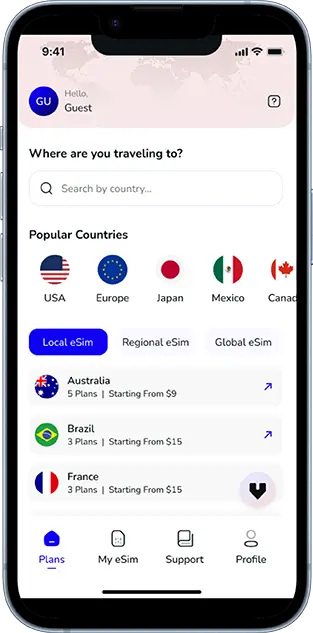
If you’re traveling to Yellowstone as part of a longer US road trip that includes international legs, or you’re coming from abroad and need reliable data as soon as you land, it’s worth setting up a US eSIM plan before you arrive so you have working data in gateway towns like West Yellowstone or Jackson, even if the park itself stays offline. Before you activate anything, it’s worth checking the supported devices page to confirm your phone is eSIM-compatible, and browsing the Voye Global travel blog for more US road trip and national park connectivity guides.
Frequently Asked Questions
Plan on at least three full days for a first trip to Yellowstone. That gives you time for the geyser basins, the Grand Canyon of the Yellowstone, and Lamar Valley without rushing between regions that sit 30 to 60 minutes apart by car.
Group your days by region rather than trying to see everything at once. Cover the geyser basins one day, the canyon and Lamar Valley another, and download offline maps before you arrive since cell coverage is unreliable across most of the park.
Three days is enough to see the major highlights, Old Faithful, the geyser basins, the canyon, and Lamar Valley, without feeling rushed. Longer stays let you add hikes, second visits to popular spots, or a trip to Grand Teton nearby.
Old Faithful and the Upper Geyser Basin, Grand Prismatic Spring from the overlook trail, Artist Point at the Grand Canyon of the Yellowstone, and an early morning drive through Lamar Valley for wildlife are the four stops most first-timers regret skipping.
Visit popular spots like Old Faithful and Grand Prismatic Spring before 9am or after 5pm, and drive Lamar Valley at sunrise before tour buses arrive. Visiting in May, September, or October also cuts down on summer crowds significantly.
The West Entrance near West Yellowstone, Montana is the busiest but most convenient, with the widest range of lodging and services. The North Entrance near Gardiner stays open year-round and offers the fastest access to Lamar Valley.
You can see a handful of highlights, such as Old Faithful and one geyser basin, in a single day, but a one-day visit means skipping the Grand Canyon of the Yellowstone or Lamar Valley entirely. Three days gives a fuller first trip to Yellowstone.
Summer, June through August, is the easiest season for first-timers since every road and facility is open, though it is also the most crowded. Late May or September offer a good balance of open access and thinner crowds.

Seamless Mobile Data Everywhere













 English