




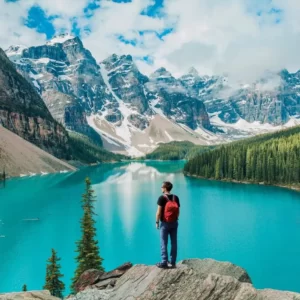
The mountains are at their absolute best. Glacier-fed lakes glow electric blue, hiking trails are fully open, wildlife is active, and daylight stretches late into the evening. But July is also the busiest month of the year, and the way you visit iconic places like Moraine Lake has changed dramatically.
This Canadian Rockies July travel guide explains what you need to know before you go—from shuttle systems and wildlife encounters to the most scenic road trip in Canada.
The Moraine Lake Reality
For many travelers, Moraine Lake is the image that defines the Canadian Rockies.
The reality today is different from the postcards.
Private vehicles are no longer permitted on Moraine Lake Road. If you want to visit, you must use the Parks Canada shuttle, a commercial operator, or arrive through specific guided experiences.
How the Shuttle System Works?
The primary shuttle departs from the Lake Louise Ski Area parking lot and transports visitors to both Lake Louise and Moraine Lake.
Because July demand is extremely high, shuttle reservations often disappear quickly. Planning ahead is essential.
What Happens If You Don’t Book?
Many visitors arrive assuming they can drive up or find same-day transportation. In peak July periods, this frequently leads to disappointment.
Without a reservation, your options become limited:
- Check for released or canceled tickets
- Use a commercial transportation provider
- Join a guided tour
- Adjust your itinerary entirely
The good news? Once you arrive, the experience is still spectacular. The famous Rockpile viewpoint remains one of the most breathtaking sunrise locations in North America.
Timing Matters
July sunrise arrives around 5:30am, which means photographers and hikers start moving well before dawn.
If you want peaceful photos, fewer crowds, and softer light, early morning remains your best strategy.
Quick Facts
- Moraine Lake accessible via shuttle from Lake Louise Ski Area
- Private vehicles are not permitted
- Park pass required
- July is the busiest month of the year
- Sunrise approximately 5:30 am
Planning a July Trip to the Canadian Rockies?
Get connected before you land with a Voye Canada eSIM and access maps, bookings, weather updates, and travel information from day one.
The Icefields Parkway
If there is one drive you should prioritize, it is the Icefields Parkway.
The 232-kilometer route connecting Banff and Jasper is consistently ranked among the world’s greatest scenic highways.
What makes it special is not the destination. It is the constant succession of mountain passes, glaciers, waterfalls, turquoise lakes, and wildlife sightings.
Peyto Lake
Peyto Lake delivers one of the most recognizable viewpoints in Canada.
The elevated platform overlooks a glacier-fed lake famous for its wolf-head shape and surreal blue color.
Arrive early in July if possible. Midday parking can become challenging.
Bow Lake

Many travelers stop briefly at Bow Lake and leave.
That is a mistake.
The shoreline offers stunning reflections, easy walks, and a quieter atmosphere compared with some of the region’s more famous lakes.
It is also an excellent place for a picnic or short break during the drive.
Athabasca Glacier
One of the few places in the world where most visitors can stand near a major glacier without undertaking a serious expedition.
Interpretive signs reveal how dramatically the glacier has retreated over the past century, creating a powerful reminder of environmental change.
Columbia Icefield
The Columbia Icefield is the largest icefield in the Canadian Rockies.
Visitors can explore through guided glacier experiences, learn about glaciology, or simply admire the vast scale of the landscape.
Drive Tips for July
- Start early to avoid parking issues
- Fuel up whenever possible
- Download offline maps
- Allow a full day for the route
- Expect frequent wildlife slowdowns
This is not a drive you rush.
Banff Town: Skip the Obvious
Banff is beautiful, but many visitors spend too much time on Banff Avenue and not enough time exploring what makes the area extraordinary.
Johnston Canyon
One of the most accessible hikes in the Rockies.
The suspended walkways carry you through a dramatic limestone canyon to waterfalls that remain impressive even during peak season.
Go early or late in the day for a quieter experience.
Lake Louise at Dawn
Yes, it requires an early wake-up.
Yes, it is worth it.
The difference between arriving at dawn and arriving at 10am is enormous. Calm water, softer light, fewer people, and a much stronger sense of place.
Vermilion Lakes at Sunset
While many travelers crowd popular viewpoints, Vermilion Lakes often remain surprisingly peaceful.
The evening reflections of Mount Rundle create some of the most memorable photography opportunities in Banff National Park.
A Better Banff Strategy
Instead of spending entire days shopping and wandering downtown:
- Hike in the morning
- Explore lakes during quieter hours
- Return to town for meals and evenings
- Use Banff as a base, not the main attraction
Don’t Risk Missing Your Shuttle Reservation
Stay connected with a Voye Canada eSIM and manage bookings wherever your Rockies adventure takes you.
Jasper: The Quieter End of the Rockies
If Banff feels like the headline act, Jasper feels like the insider recommendation.
The landscapes are just as dramatic, yet the atmosphere is noticeably calmer.
You often get more space, easier parking, and fewer crowds.
Maligne Lake

Maligne Lake stretches through a valley surrounded by towering peaks.
Whether you take a boat tour, paddle a canoe, or simply walk the shoreline, it consistently ranks among the highlights of a Rockies trip.
Athabasca Falls
Unlike many waterfalls that rely on height, Athabasca Falls impresses through raw force.
The volume of water crashing through the narrow canyon creates a surprisingly powerful spectacle.
Dark Sky Preserve
Jasper is home to one of the world’s largest accessible dark sky preserves.
On clear July nights, the stars can be extraordinary.
Even travelers who are not interested in astronomy often find themselves standing outside long after sunset.
Why Jasper Wins People Over
Jasper offers:
- Less congestion
- Easier access to attractions
- Incredible wildlife viewing
- Outstanding night skies
- A more relaxed pace
For many visitors, it becomes the unexpected favorite.
Wildlife in July
July is one of the best months for wildlife viewing.
It is also when understanding wildlife safety becomes critically important.
Grizzly Bears
Grizzlies are commonly seen feeding on roadside slopes and open meadows.
If you encounter a bear:
- Stay calm
- Never approach
- Keep a significant distance
- Do not feed wildlife
- Carry bear spray when hiking
- Travel in groups when possible
A good photograph is never worth risking an encounter.
Elk
Elk often appear surprisingly comfortable around towns and roads.
Do not mistake familiarity for safety.
Large bulls can become aggressive, and cows protecting calves can react unpredictably.
Maintain distance even when animals seem relaxed.
Wildlife Viewing Etiquette
The best wildlife encounters happen when humans behave responsibly.
Remember:
- Stay inside your vehicle when required
- Use zoom lenses instead of moving closer
- Follow park regulations
- Respect temporary closures
The goal is to observe wildlife without changing its behavior.
Stay Connected with Voye eSIM

The Canadian Rockies contain some of the most remote and beautiful landscapes in North America.
While major highways generally have service, connectivity is not guaranteed.
Coverage Expectations
In July, you’ll usually find reliable coverage from major Canadian networks such as Rogers and Bell along primary travel corridors.
However, dead zones remain common in:
- Remote sections of the Icefields Parkway
- Backcountry trails
- Mountain valleys
- Less-traveled viewpoints
Check out our plans
-
Canada 10 Days Unlimited Data
USD 30.00 -
Canada 15 Days Unlimited
USD 39.00 -
Canada 3 Days Unlimited
USD 17.00 -
Canada 7 Days Unlimited
USD 26.00
Why an eSIM Helps
A travel eSIM can make it easier to:
- Access navigation
- Check shuttle reservations
- Monitor weather conditions
- Use the Parks Canada app
- Report wildlife sightings
- Stay connected between destinations
Before heading into remote areas, download:
- Offline maps
- Hiking routes
- Reservation confirmations
- Emergency information
Connectivity should be considered a backup, not a guarantee.
Planning Essentials for July
Weather
July temperatures generally range from 15°C to 25°C.
Mountain weather changes quickly, so bring:
- Lightweight layers
- Rain protection
- Hiking shoes
- Sun protection
It is possible to experience warm sunshine, cool mornings, and afternoon storms in the same day.
Park Passes
All visitors require a valid Parks Canada pass.
Options include:
- Daily pass: approximately CAD $21.50 per day
- Annual Discovery Pass: approximately CAD $75
If you plan to spend several days exploring national parks, the annual option can provide better value.
Driving the Icefields Parkway?
The route passes through areas with limited connectivity and long stretches between services. Downloading maps is essential, but having mobile data when coverage returns can make navigation and trip planning much easier.
Frequently Asked Questions
How far in advance should I book the Moraine Lake shuttle?
As early as possible. July demand is extremely high, and popular dates often fill quickly.
When is the best time to visit the Canadian Rockies in July?
Early July offers slightly smaller crowds, while mid-to-late July typically delivers warmer temperatures and fully accessible hiking trails.
Do I need a visa for Canada?
This depends on your nationality. Check current Canadian immigration requirements before booking travel.
Is bear spray necessary?
For anyone planning to hike beyond crowded viewpoints, carrying bear spray is strongly recommended and considered standard practice in bear country.
Is mobile coverage reliable?
Coverage is generally available along major roads but becomes inconsistent in remote and backcountry areas.
Final Thoughts
July is the Canadian Rockies at full volume.
The lakes are impossibly blue. The hiking is exceptional. Wildlife appears around unexpected corners. The Icefields Parkway delivers views that seem almost unreal.
But the Rockies in July reward preparation.
Book your Moraine Lake shuttle early. Start your days before sunrise. Build flexibility into your itinerary. Download maps before leaving town.
Do those things, and you’ll discover why so many travelers return home convinced that the Canadian Rockies belong among the world’s greatest mountain destinations.
Ready for Your Canadian Rockies Adventure?
Don’t wait until you lose signal on the Icefields Parkway.
Get a Voye eSIM before your trip and stay connected for navigation, shuttle bookings, weather updates, and essential travel information throughout the Canadian Rockies.
Explore Voye Canada’s eSIM plans today and travel through Banff, Lake Louise, Moraine Lake, and Jasper with confidence.

Seamless Mobile Data Everywhere












 English