




If you are searching for things to do in Bali, three names probably keep coming up: Ubud, Nusa Penida, and Mount Batur. Together they form the island’s most popular day trip circuit, and most travelers try to squeeze all three into a single week based in Seminyak or Canggu. What competitor guides rarely mention is how patchy your signal gets between these spots, especially on the Nusa Penida boat crossing and near the Batur summit. This guide covers the routes, the costs, and exactly where you can expect to lose bars, so you can plan bookings, photos, and check-ins without surprises.
Things to Do in Bali: Planning Your Day Trip Circuit
Most visitors base themselves in Seminyak, Canggu, or Ubud itself, then branch out for single-day excursions rather than changing hotels every night. This keeps luggage simple and lets you book a driver for the day instead of a full relocation.
When people ask what are the best things to do in Bali, the honest answer depends on how many days you have. A week gives you enough time for Ubud’s temples and terraces, a full day on Nusa Penida, and a pre-dawn Batur hike, with a rest day built in between the tougher outings.
Connectivity shapes this planning more than most guides admit. You will need data for Gojek and Grab rides, Google Maps on winding mountain roads, and confirming boat tickets by WhatsApp. Voye Global eSIM activates before you land at Ngurah Rai Airport, so you land with data ready instead of hunting for an airport SIM counter at midnight.
Top Up Anytime, Anywhere You Roam
Add more data mid-trip if Batur photos and reels use it faster
Ubud: Rice Terraces, Temples, and Coworking Cafes
Ubud sits roughly 45 minutes to an hour from Seminyak by car, longer during afternoon traffic. It is easily the most connectivity-friendly stop on this list, since the town center is full of cafes, coworking spaces, and hotels with reliable WiFi.
A typical Ubud day includes:
- Tegalalang Rice Terrace, entry around 25,000 to 50,000 IDR depending on which viewing section you enter
- Sacred Monkey Forest Sanctuary, around 80,000 IDR for adults
- Tirta Empul water temple for the holy spring purification ritual, roughly 75,000 IDR including sarong rental
- Coworking spots like Hubud or Outpost if you need a few hours of focused work between stops
Mobile coverage is strong through Ubud’s main streets and most cafes, but it thins out once you drive into the rice terrace back roads or smaller village temples outside town. If you are relying on maps to find a specific warung for lunch, download the route while you still have a strong signal in town.
Nusa Penida: Coverage on the Island vs the Boat Crossing?
Nusa Penida requires a fast boat from Sanur Harbour, usually 30 to 45 minutes depending on conditions and operator. Tickets run roughly $10 to $16 round trip, and rougher seas in the wet season can extend crossing times.
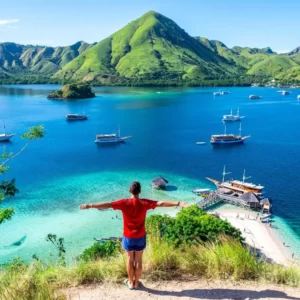
The island’s main attractions, Kelingking Beach, Angel’s Billabong, and Broken Beach, sit along the west and southwest coast roads. Coverage near Kelingking’s parking area and the main road is generally decent since local towers serve the steady stream of day-trip traffic. Head further toward Diamond Beach or the smaller back roads, and bars drop noticeably.
The boat crossing itself is the real gap. Signal can disappear entirely for stretches of the Badung Strait crossing, which matters if you were mid-conversation confirming a driver pickup on the other side. This is one reason a multi-network eSIM like Voye Global’s Indonesia plans helps, since it can pick up whichever local carrier has the strongest signal near the harbor rather than locking you to one network.
Book your return boat time before you leave Sanur, and screenshot the confirmation. Do not assume you can rebook by app once you are on the water.
Mount Batur Sunrise Trek: What Signal Can You Expect at Altitude?
Batur treks start absurdly early, with hotel pickup around 2am so you reach the trailhead by 3:30am for a roughly two hour climb to the 1,717 meter summit before sunrise. A licensed guide is required by local regulation, and group treks typically cost 350,000 to 500,000 IDR per person including a simple breakfast cooked over the volcano’s steam vents.
Kintamani, the base town, has reasonably solid 4G coverage since it is a regular tourist stop with hotels and restaurants. Signal weakens noticeably as you climb the trail itself, partly due to elevation and partly because towers were never built to serve a single-file line of hikers strung out up a volcano at 4am.
At the summit, expect intermittent signal at best, sometimes enough for a text, rarely enough for a video call. Practical steps before you start climbing:
- Download offline maps or your trekking app’s route in Kintamani before the pickup
- Send family or your accommodation a WhatsApp message with your guide’s name and expected return time while you still have a strong connection
- Do not count on live-streaming the sunrise, plan to upload photos once you are back at lower elevation
Check out our plans
-
Indonesia 3 Days Unlimited
USD 6.00 -

Indonesia 7 Days 3GB
USD 1,000.00 -
Indonesia 10 Days Unlimited Data
USD 17.00 -
Indonesia 15 Days Unlimited
USD 23.00 -
Indonesia 20 Days Unlimited
USD 29.00 -
Indonesia 30 days 15GB
USD 21.00

Planning Multiple Day Trips: How Much Data Will You Actually Use?
Stacking Ubud, Nusa Penida, and Batur into one trip adds up in data more than people expect, mostly from navigation apps running continuously and ride-hailing apps pinging your location.
| Activity | Typical data use per day |
|---|---|
| Google Maps navigation (full day) | 100 to 200 MB |
| Gojek or Grab ride-hailing | 20 to 50 MB |
| Photo and video uploads to cloud or social media | 200 MB to 1 GB |
| WhatsApp calls or video check-ins | 150 MB per 30 minutes |
| Boat ticket confirmations, browsing, general use | 100 to 300 MB |
Across a full week covering all three day trips plus normal browsing, most travelers land somewhere between 3 and 5 GB total. If you know you will be uploading a lot of drone footage or reels from Kelingking, budget higher.
Ready Before You Land in Bali
Activate data before Ngurah Rai Airport so maps and rides work instantly
The advantage of an eSIM over a single fixed-size tourist SIM is the ability to top up mid-trip if Nusa Penida’s cliffs generate more photos than planned. Voye Global’s flexible top-up plans let you add data from your phone without hunting down a phone shop in Kuta on your last free afternoon.
Booking Transport and Connectivity Before You Go
Nusa Penida boat slots and Batur trek pickups both sell out during peak season (June to September and around New Year), so book these before you land rather than on arrival. Most hotels or platforms like Klook can arrange a private driver for Ubud at 500,000 to 700,000 IDR for a full day, which is worth it for the winding roads and limited parking near the rice terraces.
Activate your eSIM before you leave home, or at latest while still on airport WiFi at Ngurah Rai, so you are not trying to scan a QR code with no data connection. If you are combining Bali with stops elsewhere in the region, it is worth reading our ultimate Bali travel guide for a broader itinerary, or our roundup of best destinations for eSIM users if Southeast Asia is on your route. Travelers extending their trip often add stops covered in our guides to things to do in Bangkok, things to do in Macau, or our Laos travel guide.
Bali’s day trip circuit rewards a bit of planning. Book your Ubud driver, your Nusa Penida boat, and your Batur trek in advance, keep your data topped up, and you will spend less time worrying about signal and more time actually looking at the view.
Frequently Asked Questions
Most travelers need at least 5 to 7 days to comfortably cover Ubud, Nusa Penida, and Mount Batur without rushing. This allows a rest day between the boat crossing and the early Batur trek, plus time for beaches or Seminyak.
The dry season from April to October is best, with June through August being peak and busiest. This period offers calmer boat crossings to Nusa Penida and clearer sunrise views from Mount Batur.
Bali is generally affordable compared to Western destinations, with budget guesthouses from around $13 a night and street food meals under $2. Costs rise with private drivers, villas, and guided treks, but a mid-range week stays reasonable.
Bali is best known for its rice terraces, Hindu temples, volcanic landscapes, and surf beaches, alongside a strong wellness and coworking culture centered in Ubud and Canggu. Things to do in Bali span both culture and outdoor adventure.
Three days is enough for one region, such as Ubud plus a nearby temple or waterfall, but it is tight for adding Nusa Penida or Mount Batur. Fitting all three day trips into 3 days usually means very early mornings.
Avoid renting a scooter without experience on Bali’s chaotic roads, and avoid visiting temples in swimwear or without a sarong. Skip drinking tap water, and be cautious of unofficial money changers offering rates that seem too good to be true.
Yes, Bali suits first-time visitors well thanks to established tourist infrastructure, widely spoken English in tourist areas, and guided tours for spots like Nusa Penida and Mount Batur. It is an easy island to navigate without prior Southeast Asia experience.
Seminyak and Canggu suit travelers wanting beach clubs and nightlife, while Ubud suits those prioritizing culture, rice terraces, and a quieter pace. Many travelers split their stay between a beach area and Ubud to cover both sides of the island.

Seamless Mobile Data Everywhere














 English