




Imagine cobblestone streets winding past Ottoman bazaars. Turquoise waters lapping at unspoiled beaches. Mountain villages where time seems to have stopped centuries ago. And a tab at dinner that makes you do a double-take – not because it’s expensive, but because it’s shockingly affordable.
Welcome to Albania: Europe’s best-kept secret for budget travelers.
While the rest of the continent has become increasingly expensive, Albania quietly sits at the crossroads of the Adriatic and the Balkans, offering world-class scenery, rich history, and warm hospitality at prices that feel almost impossible in today’s travel landscape. Whether you’re a backpacker stretching every euro or a curious traveler looking to go somewhere genuinely off the beaten path, Albania travel delivers an experience unlike anywhere else in Europe.
This comprehensive Albania travel guide covers everything you need to know – from the best places to visit, how to get around, what to eat, and how to stay connected with a Voye Global eSIM throughout your adventure.
Why Albania Should Be on Every Budget Traveler’s Radar?
Albania is not the Albania of old stereotypes. This small Balkan nation of fewer than three million people has undergone a remarkable transformation in the past two decades. Today it boasts a vibrant café culture, a growing food scene, restored heritage sites, and an emerging tourism infrastructure that remains refreshingly uncrowded.
Here’s why Albania budget travel makes so much sense right now:
- The cost of living is among the lowest in Europe. A hearty meal at a local restaurant can cost as little as €3–5. A mid-range hotel room runs €25–50 per night in most cities. Even a glass of local wine rarely exceeds €2.
- The scenery rivals far pricier destinations. The Albanian Riviera is compared to the Amalfi Coast and the Greek Islands – but without the tourist surcharge.
- It’s genuinely uncrowded. You can walk through ancient ruins, hike mountain trails, and sit on beautiful beaches without the shoulder-to-shoulder crowds that have overwhelmed much of Western Europe.
- The people are extraordinary. Albanians are known for besa – a traditional code of hospitality so deep-rooted that welcoming a stranger is considered sacred. Travelers consistently name the warmth of Albanians as the highlight of their trip.
When to Visit Albania?
Albania is a year-round destination, but timing matters depending on what you want from your Albania vacation.
- Spring (April–June) is arguably the best time to visit. Temperatures are mild (18–25°C), wildflowers blanket the mountains, and the beaches are uncrowded. This is ideal for hiking and sightseeing.
- Summer (July–August) sees the Albanian Riviera come alive with visitors – primarily Albanians and Kosovars from the diaspora. Beaches are busy, but prices remain far lower than comparable Mediterranean destinations. Expect hot weather (30°C+).
- Autumn (September–October) offers warm sea temperatures without summer heat, excellent hiking conditions, and a beautifully golden landscape. This is arguably the most underrated time to visit.
- Winter (November–March) is quieter and cooler. Some coastal businesses close, but Tirana stays lively, ski resorts open in the Accursed Mountains, and budget travelers can find accommodation at rock-bottom prices.
Best Places to Visit in Albania
1. Tirana – The Colorful Capital
No Albania itinerary is complete without spending time in Tirana. The capital is a city that wears its complex past – Ottoman, communist, post-communist – on its sleeve, and the result is a chaotic, vibrant, and genuinely fascinating urban experience.
Skanderbeg Square is the heart of the city, flanked by the National History Museum (€3 entry), the Et’hem Bey Mosque, and the Clock Tower. The Blloku neighborhood – once exclusively reserved for communist party elites – is now Tirana’s trendiest area, packed with cafés, restaurants, and boutiques.
Don’t miss the Bunk’Art museums: Bunk’Art 1 is an enormous Cold War-era bunker beneath the mountain outside the city; Bunk’Art 2 sits right in the city center. Together they offer a haunting and deeply educational look into Albania’s communist era. Entry to each is around €5.
The National Gallery of Arts and the Archaeological Museum are also well worth your time – both charge minimal entry fees.
Budget tip: Tirana’s café culture is extraordinary value. A strong espresso costs 60–100 lek (roughly €0.50–0.90). Sit in a café for hours without anyone rushing you – this is Albanian culture at its finest.
Stay connected in Albania
Get fast, affordable data the moment you land.
2. Berat – The City of a Thousand Windows
Berat is one of Albania’s two UNESCO World Heritage Sites (the other being Gjirokastër) and one of the most photogenic towns in the entire Balkans. Its hillside Ottoman houses, stacked so tightly that they seem to look down on one another with their rows of arched windows, have earned it the nickname “the City of a Thousand Windows.”
Wander through the Mangalem quarter along the riverbank, then climb up to the hilltop castle (Kalaja) – one of the best-preserved medieval fortresses in the region. Remarkably, people still live inside the castle walls. Peek into the Onufri National Museum inside the castle’s St. Mary’s Church for a collection of stunning Byzantine icons.
The town is compact enough to explore on foot in a day, but its atmosphere rewards longer stays. Budget accommodation runs from €15–30 per night, and a three-course dinner with wine might cost you €10–15.
3. The Albanian Riviera – Europe’s Most Affordable Coastline
The Albanian Riviera is the crown jewel of Albania’s beaches and one of the most stunning stretches of coastline in all of Europe. Running south from Vlorë to the Greek border, this 200-kilometer ribbon of turquoise bays, dramatic cliffs, and secluded coves is the reason savvy travelers have been quietly flocking here for years.
Key stops include:
- Dhërmia – A clifftop village overlooking a spectacular bay. The beach below (Drymades) is one of the finest in the country.
- Himara – A laid-back coastal town with a beautiful beach promenade and lively summer nightlife.
- Sazan Bay and Karaburun Peninsula – Accessible only by boat, this protected marine area features some of the most pristine snorkeling and diving in the Adriatic.
- Ksamil – A small town with four sandy islets just offshore, often called “Albania’s Maldives.” Crystal-clear water, affordable sunbeds (€5–8/day), and fresh seafood grilled right on the beach.
- Sarandë – The busiest resort town on the Riviera and the gateway to the Greek island of Corfu (a 45-minute ferry ride away). Lively, affordable, and well-connected.
Budget reality check: Sunbed and umbrella hire: €5–10 per day. A full seafood meal for two by the water: €15–25. A cold local beer on the beach: €1.50. The Albanian Riviera routinely undercuts Greek, Italian, and Croatian equivalents by 40–60%.
4. Gjirokastër – Albania’s Stone City
The second UNESCO-listed city in Albania, Gjirokastër sits in a mountain valley and is built almost entirely from grey limestone. Its Ottoman-era tower houses, or kulla, climb steeply up the hillside toward an enormous medieval castle.
The castle itself houses a fascinating arms museum and, unexpectedly, an American Air Force jet – shot down during the Cold War and now displayed as a symbol of Albanian defiance. The bazaar below is one of the best places in the country to find traditional crafts, carpets, and çezve (copper coffee pots).
Gjirokastër was also the birthplace of communist dictator Enver Hoxha, and his childhood home is open to visitors. It’s an interesting counterweight to the castle’s more heroic narrative.
From Gjirokastër, it’s a short drive to the Blue Eye (Syri i Kaltër) – a natural spring where water bubbles up from an impossibly deep underground source into a pool of brilliant, almost neon blue. It costs just €1 to enter, and it is genuinely one of the most beautiful natural phenomena in Europe.
5. The Accursed Mountains (Bjeshkët e Namuna)
For hikers and adventure travelers, the Albanian Alps – locally called the Accursed Mountains – are nothing short of extraordinary. Part of the larger Dinaric Alps, this remote and rugged landscape in northern Albania contains some of the most spectacular mountain scenery on the continent.
The village of Theth is the starting point for several legendary hikes, including the Theth-to-Valbonë route through the Valbonë Valley National Park – a hike widely considered among the best in Europe. The trail takes roughly 6–8 hours and passes through dramatic mountain passes, alpine meadows, and dense forests.
Accommodation in both Theth and Valbonë is primarily in family-run guesthouses (bujtina), which typically cost €15–25 per night including a homemade breakfast. Dinner is often a communal affair with other travelers and guests – a uniquely warm and memorable experience.
Getting to the Accursed Mountains requires some effort (the roads are rough and public transport limited), but this is precisely what keeps it uncrowded and authentic.
6. Shkodër – Gateway to the North
Shkodër is Albania’s fourth-largest city and the cultural capital of the north. It’s home to Rozafa Castle – spectacularly positioned at the confluence of three rivers – and a lively pedestrian promenade (Rruga Kole Idromeno) lined with cafés and restaurants.
The city is also an excellent base for exploring the Shkodër Lake (the largest lake in the Balkans) and cycling the flat plains of the surrounding countryside. Bicycle rentals are cheap and widely available.
Shkodër is typically visited as a day trip from Tirana or as a stop on the way to the Accursed Mountains, but it rewards an overnight stay.
Albania Travel Costs: Your Budget Breakdown
One of the most compelling reasons for budget travel in Europe to include Albania is just how far your money goes. Here’s a realistic daily budget breakdown:
Shoestring budget (backpacker): €25–35/day
- Hostel dorm bed: €8–12
- Street food and local burek: €4–6
- Public transport (furgon/bus): €2–4
- Entry fees: €3–5
- Drinks and snacks: €3–5
Mid-range budget: €60–90/day
- Private room in a guesthouse or budget hotel: €25–40
- Sit-down meals (3 meals): €15–25
- Taxis and local transport: €8–12
- Activities and entry fees: €5–10
- Coffee, drinks, incidentals: €5–10
Comfortable travel: €100–150/day
- Boutique hotel or quality guesthouse: €50–80
- Dining at nicer restaurants: €25–40
- Private tours or car hire: €20–30
- Activities: €10–15
By comparison, a mid-range budget in France, Italy, or Spain would yield roughly the same experience for €150–200/day. Albania travel costs are genuinely exceptional for the quality of experience offered.
Never lose signal abroad
Experience hassle-free connectivity wherever you go.
Getting Around Albania: Your Options
Furgons (Shared Minibuses)
The backbone of Albanian public transport, furgons are shared minibuses that run between major towns and cities. They’re cheap (€1–5 for most routes), surprisingly frequent, and a great way to meet locals. They typically depart when full rather than on a fixed schedule, so allow flexibility.
Buses
Intercity buses operate on set schedules between major destinations. They’re comfortable, affordable, and more predictable than furgons.
Renting a Car
An Albania road trip is one of the best ways to see the country, particularly the coast and the mountains. A small car can be rented for €25–40/day, including insurance. The roads have improved dramatically in recent years, though mountain roads remain adventurous. Having your own vehicle opens up beaches, viewpoints, and villages that public transport simply doesn’t reach.
Taxis and Rideshares
Taxis in Albania are inexpensive by European standards. The Bolt app works in Tirana and other larger towns and is more reliable than hailing a cab from the street.
Albanian Food: Eat Well, Spend Little
Albanian cuisine is a delight that most travelers don’t anticipate. Drawing on Ottoman, Mediterranean, and Balkan influences, the food is hearty, fresh, and flavored with herbs like oregano and sage.
Must-try dishes include:
- Tavë kosi – Albania’s national dish: a baked lamb and yogurt casserole, rich and comforting.
- Byrek – flaky phyllo pastry filled with spinach and cheese, or meat. A perfect breakfast for €1.
- Fergese – a Tirana specialty of peppers, tomatoes, and cottage cheese, often with liver.
- Grilled fish and seafood – on the coast, freshly caught fish is grilled simply and served with lemon. Extraordinary quality, extraordinary value.
- Trilece – a soaked sponge cake dessert (borrowed from Turkish cuisine) that’s ubiquitous in Albanian cafés.
- Raki – home-distilled grape or mulberry brandy. Albanians serve it as a welcome drink. It is not optional.
Local wine from the Berat region (look for Çobo Winery) is excellent and costs a fraction of European equivalents.
Albania Travel Tips: What You Need to Know Before You Go
- Currency: Albania uses the Albanian Lek (ALL), not the Euro. While some tourist businesses accept euros, you’ll get better rates paying in lek. ATMs are available in most towns.
- Language: Albanian (Shqip) is unique – not related to any other living European language. However, English is widely spoken among younger Albanians, particularly in tourist areas. Italian is also commonly understood in the south.
- Safety: Albania is one of the safest countries in Europe for travelers. Street crime targeting tourists is rare. The biggest hazards are road conditions and the occasional aggressive stray dog in rural areas.
- Visa: Citizens of the EU, USA, UK, Canada, Australia, and most other Western countries can enter Albania visa-free for up to 90 days. Check your specific country’s requirements before traveling.
- Tipping: Not expected, but appreciated. Rounding up the bill or leaving 10% at sit-down restaurants is considered generous.
- Best entry points: Tirana Nënë Tereza International Airport is the main hub, with budget airline connections to many European cities. You can also enter by ferry from Bari or Ancona in Italy (to Durrës or Vlorë) or overland from Greece, North Macedonia, Kosovo, or Montenegro.
Staying Connected: Why You Need a Voye Global eSIM for Albania?
Here’s something many travelers don’t plan for until they’re already on the ground: mobile data in Albania can be unpredictable if you’re relying on your home carrier’s roaming plan. Roaming charges from European or US carriers in Albania can be steep, and local SIM cards require in-person registration and a local address.
That’s where a Voye Global eSIM for Albania is a game-changer.
A Voye Global eSIM gives you:
- Instant connectivity from the moment you land – no queuing at a phone shop, no language barrier, no paperwork.
- Reliable 4G/LTE coverage across Albania, including Tirana, the Riviera, and most major towns.
- Flexible data plans tailored to your trip length – whether you’re spending a long weekend in Tirana or three weeks road-tripping the whole country.
- Seamless roaming if your itinerary extends beyond Albania into neighboring countries like Greece, Montenegro, or North Macedonia.
- Cost efficiency – far cheaper than typical international roaming charges, and no surprise bills when you get home.
Why does internet access matter so much in Albania? Because offline navigation in rural areas, mountain trails, and along the Riviera is genuinely difficult. You’ll want Google Maps working when your furgon drops you at a crossroads in the mountains. You’ll want to be able to pull up translation apps when communicating in remote villages. You’ll want to share those stunning beach shots in real time.
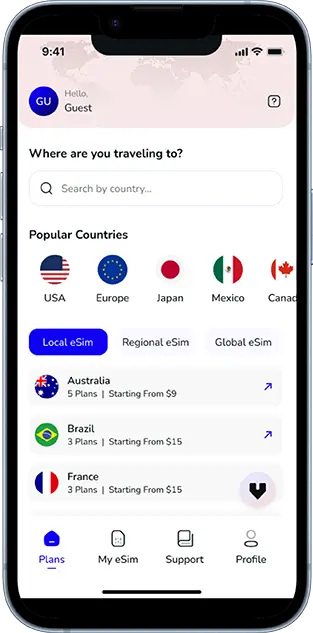
Setting up your Voye Global eSIM takes minutes via the app before you travel. It’s one of the smartest things you can do before your Albania adventure begins.
A Sample 7-Day Albania Itinerary for Budget Travelers
Here’s a suggested Albania itinerary for a week that covers the country’s highlights without breaking the bank.
Day 1 – Arrive in Tirana Arrive at Tirana airport. Grab a Bolt to your accommodation in Blloku. Afternoon walk around Skanderbeg Square, evening drinks in Blloku.
Day 2 – Tirana Deep Dive Morning at the National History Museum and Bunk’Art 2. Lunch at a traditional qebaptore (grilled meat restaurant). Afternoon at the New Bazaar. Evening rooftop cocktails with a view of the city.
Day 3 – Berat Day Trip or Overnight Catch an early furgon to Berat (2 hours, ~€3). Explore the old quarters, climb to the castle, visit Onufri Museum. Stay overnight for the evening atmosphere, or return to Tirana.
Day 4–5 – The Albanian Riviera Take a bus or furgon to Sarandë via Vlorë. Stop at Himara or Dhërmia if time allows. Spend a full day in Ksamil swimming in the most beautiful water in Europe. Day trip to Butrint National Park – ancient Greek, Roman, and Byzantine ruins in a UNESCO-listed setting (€8 entry).
Day 6 – Gjirokastër and the Blue Eye Bus from Sarandë to Gjirokastër (1.5 hours). Explore the castle and bazaar. Afternoon visit to the Blue Eye spring (€1 entry). Return to Gjirokastër or continue to Tirana.
Day 7 – Shkodër and Departure Morning bus to Tirana. Optional afternoon furgon to Shkodër to see Rozafa Castle before flying home.
Estimated total cost (mid-range budget): €350–450 for 7 days, including accommodation, food, transport, and activities – not including flights.
Final Thoughts: Don’t Wait Any Longer
Albania is changing. Tourism numbers are rising. New hotels are opening. The word is slowly getting out. The travelers who visit now will tell their grandchildren they were here before it became the next Croatia.
The Albanian Riviera, the mountain villages, the UNESCO cities, the extraordinary people – all of it available at prices that feel almost embarrassingly low compared to the rest of Europe. Albania budget travel is not a compromise. It is, genuinely, one of the best travel experiences available anywhere on the continent right now.

Seamless Mobile Data Everywhere









 English