




Finding the least expensive month to fly from the United States to Asia is no longer a matter of luck or “hidden hacks.” In 2026, airline pricing is dictated by sophisticated algorithms that react to real-time demand, fuel costs, and global events. If you want to save hundreds – or even thousands – of dollars on a transpacific trip, you need to understand the rhythm of these cycles.
While many travelers assume that “winter is not expensive” or “summer is expensive,” the reality is far more nuanced. Depending on whether you are heading to the neon streets of Tokyo or the tropical beaches of Bali, the “least expensive month” can shift dramatically. This guide breaks down the data-driven strategies for securing the lowest airfare to Asia in 2026.
The 2026 “Value” Calendar: Ranking the Months
When analyzing thousands of routes from major U.S. hubs (LAX, SFO, JFK, ORD) to Asian gateways (NRT, BKK, SIN, ICN), a clear pattern emerges for 2026.
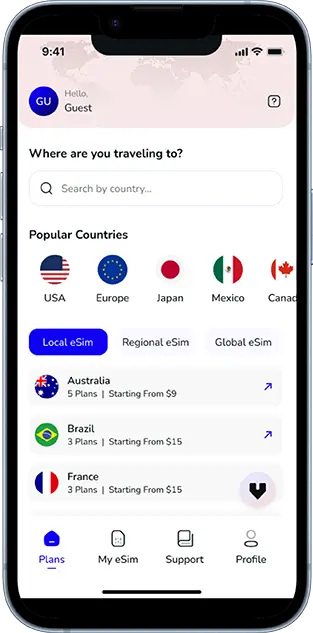
One eSIM, Many Countries
Easy internet access across top Asian destinations.
The Least Expensive: September and October
For 2026, September has overtaken January as the most reliably inexpensive month. As the U.S. school year begins and summer vacations end, international demand drops off a cliff.
- Why it works: Airlines are desperate to fill seats that were selling for $1,800 in July. You will often see those same seats drop to $650-$850.
- The Bonus: October offers some of the best weather in East Asia (Japan and South Korea), with mild temperatures and stunning autumn colors, all at “off-peak” prices.
The Reliable Runner-Up: Late January and February
While the first week of January remains expensive due to travelers returning from holiday vacations, the period from January 15 to February 10 is a goldmine for deals.
- The Caveat: You must watch the Lunar New Year. In 2026, the Lunar New Year falls on February 17. The ten days leading up to this date and the week following it will see a massive spike in prices as millions of people travel to be with family.
The Most Expensive: December and June
Avoid these months at all costs if you are on a budget.
- December: Prices often double or triple. A flight that costs $800 in September will easily hit $2,100 in late December.
- June: This is the peak of family travel. Even “budget” carriers like Zipair or AirAsia X see their base fares climb as the limited inventory of economy seats vanishes.
Understanding the “Tuesday-Wednesday” Rule
Data from 2026 shows that Tuesday and Wednesday remain the least expensive days to fly internationally.
- Mid-week Savings: Departing on a Wednesday instead of a Friday or Sunday can save you between 15% and 25% on your total ticket price.
- The Business Cycle: Business travelers typically fly on Mondays and Fridays. Leisure travelers tend to start trips on Fridays and end them on Sundays. By flying mid-week, you are occupying “dead space” on the aircraft that the airline is eager to sell at a discount.
The “Goldilocks” Booking Window
Booking too early is just as bad as booking too late. If you book 11 months in advance, you are paying the “base rate” before the airline has even begun to run sales. If you book 3 weeks out, you are paying the “desperation rate.”
For 2026, the ideal booking windows are:
- East Asia (Japan, China, Korea): 4 to 7 months before departure.
- Southeast Asia (Thailand, Vietnam, Singapore): 2 to 5 months before departure.
- Peak Seasons (Cherry Blossoms/Christmas): 8 to 10 months before departure.
Check out our plans
-

Asia 7 days 3GB
USD 9.00 -
Asia 10 Days Unlimited
USD 30.00 -
Asia 15 days 6GB
USD 15.00 -
Asia 20 Days Unlimited
USD 55.00 -
Asia 30 days 10GB
USD 23.00 -
Asia 30 Days Unlimited
USD 65.00
Regional Deep Dive: Where to Go When
Asia is a vast continent with wildly different climates. The “least expensive” flight might land you in the middle of a monsoon or a blizzard. Here is the 2026 breakdown:
East Asia: The Winter Value Play
Countries like Japan, South Korea, and Taiwan are most affordable in January and February.
- The Reality: It is cold. Expect temperatures between $25°F$ and $45°F$ ($-4°C$ to $7°C$).
- The Strategy: If you don’t mind wearing a heavy coat, you can see the Great Wall of China or the temples of Kyoto without the suffocating crowds of summer. This is also when luxury hotels offer their lowest rates of the year.
Southeast Asia: The “Shoulder” Advantage
For Thailand, Vietnam, and Cambodia, the least expensive months are May, June, and September.
- The Reality: These are the “low season” months because of the heat and the rain.
- The Strategy: Don’t fear the “Monsoon.” In most of Southeast Asia, the monsoon consists of a heavy, cooling rain for 60 minutes in the afternoon, followed by clear skies. Traveling in May allows you to catch the tail end of the dry season while benefiting from “rainy season” flight prices.
If you’re still deciding which destination best matches your budget and travel style, explore our guide to the Best Country to Visit in Asia before finalizing your itinerary.
Hidden Traps: The “Hidden” High Seasons
In 2026, there are several cultural events that can turn a “less expensive” month into an expensive nightmare if you don’t plan around them.
- Lunar New Year (February 17, 2026): As mentioned, this affects all of East and Southeast Asia.
- Golden Week (Japan, April 29 – May 5, 2026): This is a string of Japanese national holidays. Even if your international flight is less expensive, domestic trains and hotels in Japan will be fully booked and triple the price.
- Songkran (Thailand, April 13–15, 2026): The Thai New Year. It is a fantastic experience (a country-wide water fight), but flights into Bangkok during this week will be at a premium.
Pro-Level Flight Hacking for 2026

To get the absolute lowest price, you need to use the right tools and strategies.
Use the “Multi-City” and “Open-Jaw” Strategy
Instead of flying round-trip into Tokyo, consider flying into Tokyo and out of Osaka (or even Seoul). Often, these “open-jaw” tickets are the same price as a standard round-trip but save you the $150–$200 cost of a bullet train or domestic flight back to your original city.
Leverage Low-Cost Transpacific Carriers
2026 has seen an increase in “long-haul budget” options. Keep an eye on:
- Zipair: A low-cost subsidiary of JAL that flies from the U.S. West Coast to Tokyo.
- Air Premia: A “hybrid” carrier offering great deals from LAX and Newark to Seoul.
- Starlux: While more “boutique,” they often run aggressive sales to build market share in the U.S.
The eSIM “Connectivity” Hack
Finding a less expensive flight is only half the battle; avoiding roaming fees is the other. In 2026, savvy travelers no longer use their domestic carrier’s “International Day Pass,” which can cost $10/day. Instead, they use an Asia eSIM by Voye Global.
Cost Savings: For a 21-day trip, an eSIM might cost $25 total, whereas a domestic roaming plan would cost $210. That’s nearly $200 in savings – the equivalent of 20-30 amazing meals in Southeast Asia.
Travel Asia Without Roaming
Avoid roaming charges and access reliable internet across Asian destinations.
Useful Tools for Your 2026 Search
- Google Flights: Use the “Track Prices” feature. It will email you the moment a flight on your route drops below the historical average.
- Going: Excellent for “mistake fares” where an airline accidentally lists a $900 flight for $400.
- Skyscanner: Still the king for finding local budget airlines within Asia (like Scoot or Cebu Pacific) that don’t always show up on U.S. sites.
Summary Checklist: How to Find the Deal?
- Target Month: Aim for September/October (Best Weather/Price) or late January (Lowest Price).
- Departure Day: Choose Tuesday or Wednesday.
- Booking Time: Set alerts 6 months in advance.
- Avoid Spikes: Double-check your dates against the Lunar New Year and Golden Week.
- Digital Prep: Download an eSIM before you leave to save on data.
Final Verdict
For the 2026 traveler, September is the “Smart Money” month. If you’re looking to stretch your travel budget even further, check out our Affordable Asia Travel Destinations guide for more low-cost places to visit across the continent. It offers the rare combination of low airfare, dwindling crowds, and – crucially – weather that is actually enjoyable for exploring. While January is technically a few dollars less expensive, the biting cold in the North and the looming chaos of the Lunar New Year make it a riskier bet.
By being flexible with your departure day and avoiding the massive holiday spikes, you can turn a “dream” trip into an affordable reality.

Seamless Mobile Data Everywhere














 English