




First Things First: Understanding Seoul
Seoul is enormous. Ten million people in the city proper, 25 million in the metropolitan area. The city runs across both banks of the Han River and is divided into 25 districts (gu), each with its own character. The good news is that the Metro system covers virtually all of it efficiently and cheaply, and navigating it with a data connection and the KakaoMetro or Naver Maps app is genuinely straightforward.
The T-money card is the essential tool — a rechargeable transit card that works on the Metro, buses, and taxis across the city. Load it with won at any convenience store (CU, GS25, 7-Eleven — all everywhere) and tap in and out of every journey. Foreigners can also use a contactless credit card at most Metro gates.
The Palaces: Where to Start and What to Prioritise
Gyeongbokgung

The largest and most impressive of Seoul’s five royal palaces, built in 1395 and restored after Japanese colonial demolition. The Changing of the Guard ceremony at the main gate (Gwanghwamun) takes place at 10am and 2pm on most days and is worth timing your arrival around. The National Folk Museum and National Palace Museum of Korea are both within the palace grounds and are free.
Changdeokgung and the Secret Garden
A UNESCO World Heritage Site and the most architecturally harmonious of the palaces. The Huwon (Secret Garden) at the rear requires a separate guided tour ticket and entry is limited — book in advance. The June foliage in the garden is at its most lush and the pond pavilions look exactly as extraordinary as the photographs suggest.
Bukchon Hanok Village
The neighbourhood of traditional Korean hanok houses between Gyeongbokgung and Changdeokgung. Worth a morning’s walk but it is now heavily visited — go before 9am to experience it before the tour groups arrive. The residents still live there and have campaigned for quieter visitor behaviour.
Eating in Seoul: What to Prioritise

Seoul has one of the world’s great street food and restaurant cultures. In June, the city is in full outdoor dining mode — pojangmacha street food tents, rooftop restaurants, and the chicken-and-beer (chimaek) culture that comes into its own on warm summer evenings.
Gwangjang Market in Jongno is Seoul’s oldest and most atmospheric covered market, with stall holders who have been serving the same dishes for decades. Bindaetteok (mung bean pancakes), mayak gimbap (small rice rolls), and live octopus are the things to order. Go at lunch when it is busiest and most alive.
Myeongdong is the obvious tourist food street but it delivers — tteokbokki, hotteok, and tornado potatoes are street food staples worth trying here even if you eat elsewhere. The cosmetics shopping is genuinely world-class.
Hongdae is the university district and nightlife hub, best in the evening when the street performances begin and the outdoor bars fill up. The restaurants in the surrounding streets are good value and diverse.
The Han River in June
Seoulites use the Han River parks in a way that reveals a side of the city most tourists miss. In June evenings, families set up on the grass with food delivery (yes, delivered directly to the park — a Korean speciality), groups play sports, and the river cruise boats carry couples and tourists along the waterfront. Renting a bicycle along the riverside path and cycling between parks is one of the genuinely free pleasures of June in Seoul.
Heading to Seoul in June?
Get your Korea eSIM sorted before you fly — navigate the Metro, find restaurants, stay connected from the moment you land.
Getting a South Korea eSIM: Why Voye Is the Smart Choice
Seoul runs on connectivity. The city has some of the fastest mobile networks in the world and virtually everything — navigation, restaurant discovery, ticket booking, transport — works through apps. Trying to navigate Seoul without mobile data is like trying to drive without a map. A Voye eSIM for South Korea gives you that data from the moment you land at Incheon, which is a 50-minute Metro ride from central Seoul and a journey that absolutely requires navigation.
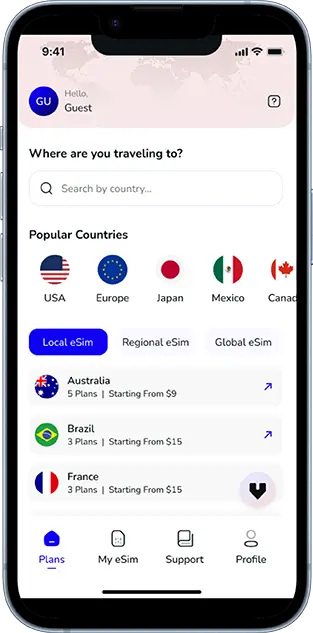
Set it up through the Voye app before you leave home. Scan the QR code and it activates on arrival. Your home number and primary SIM stay active alongside it.

Key Benefits
- Instant digital delivery — activate before you travel, data starts the moment you land at Incheon
- Unrestricted hotspot — share your Seoul data with travel companions from one plan
- Keep your home number active — calls, messages, and banking codes continue normally
- 24/7 multilingual support throughout your trip
- Website and app in 13 languages
Use Cases Specific to Seoul
- Navigating Incheon Airport’s AREX express train into Seoul City on arrival
- Using KakaoMetro or Naver Maps in real time across Seoul’s 9 Metro lines and 300+ stations
- Booking Korean BBQ restaurants via Naver Reservations (many popular spots require advance booking)
- Finding pojangmacha food stalls in real time using Korean food apps
- Ordering food delivery to the Han River parks — a Seoul rite of passage
- Navigating between palace sites, markets, and neighbourhoods without relying on roaming
- Sharing K-culture moments in real time from Hongdae, Myeongdong, and Gangnam

Practical Things That Catch First-Time Visitors Off Guard
Kakao and Naver dominate — Google Maps works in Seoul but Korean navigation apps (Naver Maps, KakaoMap) are significantly more accurate for public transport directions and local business hours. Worth downloading before you arrive.

Tipping is not expected — South Korea does not have a tipping culture. Do not tip at restaurants, cafes, or taxis. It can create confusion.
Korean BBQ logistics — grilling meat at the table is the standard format. The ventilation hoods drop automatically, the sides are refillable and free, and ordering is usually done through a table tablet. If the menu is only in Korean, your translation app will handle it.
Currency — South Korea uses the Korean Won (KRW). Cards are widely accepted, including internationally. ATMs in convenience stores work with foreign cards 24 hours.
Explore Seoul with reliable data
Incheon to Hongdae to the Han River — your Korea eSIM handles all of it
Frequently Asked Questions
Is June a good time to visit Seoul?
Yes. June sits between the cold spring and the humid monsoon season of July. Temperatures are warm and manageable (24-27°C), outdoor life in Seoul is at its most active, and the city’s rooftop bars and Han River parks are in full swing. It is one of the more comfortable months to explore a city that involves significant walking.
Do I need a visa to visit South Korea in 2026?
Citizens of most Western countries including the EU, UK, USA, Canada, and Australia can enter South Korea visa-free for stays of up to 90 days. The K-ETA (Korea Electronic Travel Authorisation) was previously required but was suspended in 2023 for most nationalities. Check the current status for your specific passport before travel as this policy continues to be reviewed.
How do I get from Incheon Airport to central Seoul?
The AREX express train connects Incheon Airport directly to Seoul Station in approximately 43 minutes. A slower all-stop service takes about 66 minutes. Both accept the T-money card. Taxis are also available but significantly more expensive. Having mobile data for the journey allows you to navigate from Seoul Station to your accommodation on arrival.
Is South Korea safe for solo travelers?
South Korea consistently ranks among the safest countries in the world for tourists. Solo travel in Seoul is very straightforward. The city is well-lit, public transport runs late into the night, and the level of English signage in major tourist areas is generally sufficient. Having a local data connection adds an additional layer of confidence for navigation.
The Bottom Line

Seoul rewards the traveler who arrives ready to move quickly. The palaces are extraordinary, the food is one of the genuinely great urban dining experiences in the world, and the city’s combination of ancient history and hyper-modern culture creates a contrast that does not exist anywhere else quite like this. June gives you all of it without the July humidity.
Get your Voye eSIM sorted before you fly. Land at Incheon with data already running, navigate the AREX into the city, and start immediately.
Get your Voye eSIM for South Korea
Instant activation · Unrestricted hotspot · Use VOYE15 for 15% off your first order
Seamless Mobile Data Everywhere










 English