Origins of the Sacred Journey: The History and Legacy of Hajj
Voye Global Team
June 4, 2025
· 6 min read
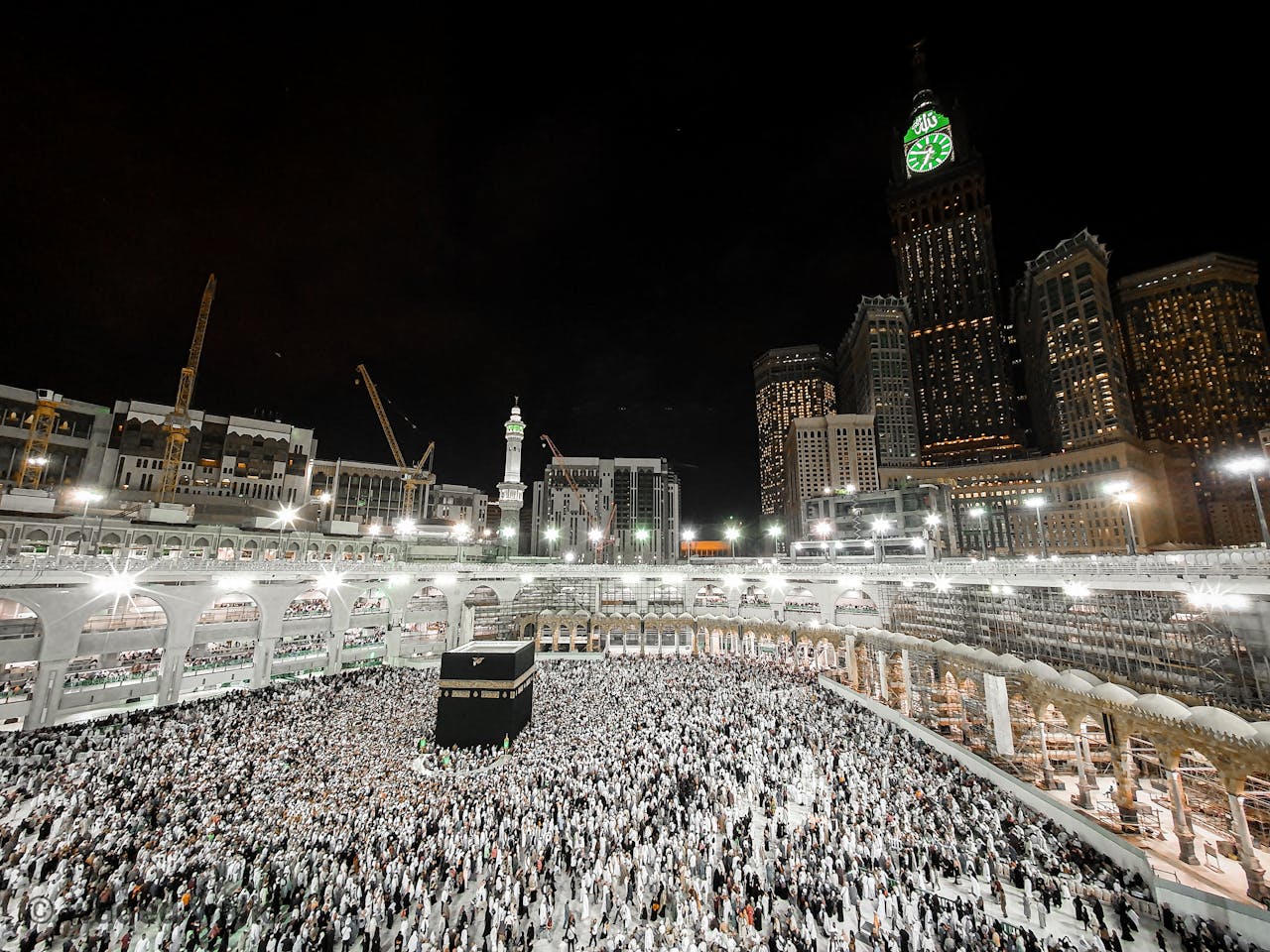
Hajj, the sacred pilgrimage to Makkah, is one of Islam’s most profound acts of worship, connecting believers to a history of devotion that began with Prophet Abraham, Hajar, and Prophet Ismail. This blog traces the origins of Hajj from its divine beginnings to its completion by Prophet Muhammad (peace be upon him), exploring the meaning behind each ritual and its place in faith today. Readers will learn about the spiritual significance of Sa’i, Tawaf, Arafat, and Qurbani, and how each act symbolizes faith, sacrifice, and unity. The post also reflects on the Prophet’s Farewell Pilgrimage, the Quranic commands that define Hajj, and how modern pilgrims continue this timeless journey. For today’s travelers, it highlights how Voye Global’s Saudi Arabia eSIM helps pilgrims stay safely connected, navigate easily, and communicate during their sacred mission, honoring a divine legacy with modern ease and mindfulness.
Every year, millions of Muslims journey to Makkah to perform Hajj, the fifth pillar of Islam. But Hajj is not a modern tradition—it is a sacred practice rooted in ancient revelations, prophetic devotion, and a deeply spiritual history spanning thousands of years. To truly understand Hajj is to explore the lives of Prophet Abraham (Ibrahim), Hajar (Hagar), Prophet Ismail, and the final messenger, Prophet Muhammad (peace be upon them all).
This blog traces the origins of the sacred journey, shedding light on the stories, meanings, and rituals that make Hajj the spiritual summit of Islam.
Walk in Their Footsteps, Stay Connected Today
Honor the legacy of Prophet Abraham and the Prophet Muhammad ﷺ with a modern travel solution. Voye eSIM keeps you connected every step of Hajj.
The Foundation: Prophet Abraham, Hajar, and Ismail
Long before the birth of Prophet Muhammad ﷺ, the spiritual foundations of Hajj were laid by Prophet Abraham (Ibrahim) and his family. The Qur’an recounts the powerful narrative of Ibrahim being commanded by Allah to bring his wife Hajar and son Ismail to a barren valley—the site of today’s Makkah.
“Our Lord! I have settled some of my descendants in an uncultivated valley near Your Sacred House…” — Qur’an 14:37
The Sa’i and the Zamzam Miracle
When Hajar was left in the valley with baby Ismail, she ran seven times between the hills of Safa and Marwah searching for water. Her relentless faith and struggle are commemorated in the Hajj ritual of Sa’i.
In response to her prayers, Allah caused the spring of Zamzam to gush from beneath Ismail’s feet—an eternal miracle and lifeline in the desert.
“And We called to him, ‘O Abraham, you have fulfilled the vision.’ Indeed, We thus reward the doers of good.” — Qur’an 37:105
Building the Kaaba: A Father-Son Mission
Later, Ibrahim and Ismail were instructed by Allah to construct the Kaaba, the Sacred House:
“And [mention] when Abraham and Ishmael were raising the foundations of the House…” — Qur’an 2:127
This act of obedience laid the physical and spiritual cornerstone of Islamic monotheism. The Tawaf—circumambulating the Kaaba—is a ritual that honors this foundational act of worship.
From Abraham to Muhammad ﷺ: The Evolution of Hajj
While the pilgrimage tradition existed in Abrahamic form, over the centuries, the pre-Islamic Arabs (Jahiliyyah) altered its purpose—adding idol worship, tribal rituals, and innovations that contradicted monotheism.
The Kaaba was surrounded by idols, and pilgrimage had become commercialized. It was not until Prophet Muhammad ﷺ restored it to its original purpose that Hajj was returned to its divine legacy.
The Prophet’s Farewell Pilgrimage (Hajjat al-Wada’)
In 632 AD, during the tenth year after the Hijrah (migration to Madinah), the Prophet Muhammad ﷺ performed his only and final Hajj, known as the Farewell Pilgrimage. It was during this monumental event that the Islamic rituals of Hajj were fully established, echoing the footsteps of Ibrahim but refined with prophetic guidance.
Key Milestones During the Farewell Pilgrimage:
Ihram Declaration at Dhul-Hulayfah The Prophet entered a state of ihram, symbolizing purity and equality before God.
Tawaf and Sa’i at Masjid al-Haram He circled the Kaaba and performed Sa’i, reenacting Hajar’s search for water.
Sermon at Arafat (Khutbah al-Wada’) Here, he delivered his famous farewell sermon, emphasizing justice, unity, and the rights of all believers.
Wuquf at Arafat Standing in Arafat is the spiritual climax of Hajj. The Prophet reminded the ummah that “Hajj is Arafat.”
Stoning at Jamarat Following the example of Ibrahim, the Prophet performed the symbolic stoning of the devil, known as Ramy al-Jamarat, teaching resilience against temptation.
Animal Sacrifice (Qurbani) This act commemorates Ibrahim’s willingness to sacrifice Ismail and Allah’s mercy in replacing him with a ram.
Tawaf al-Ifadah and Farewell Tawaf The Prophet concluded with a final circumambulation of the Kaaba.
From the Sacred Past to a Safer Present
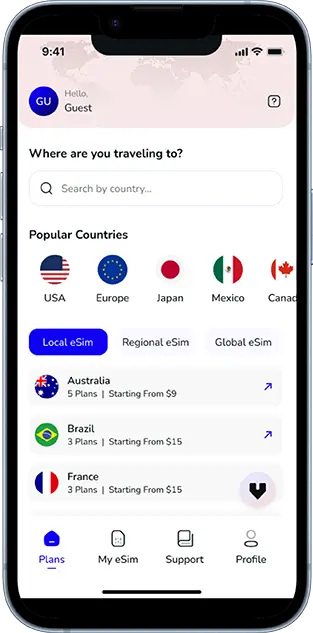
Voye Global’s Saudi Arabia eSIM gives pilgrims secure, high-speed internet for navigation, updates, and group safety.
Arafat: Renewal of faith and universal brotherhood
Stoning: Rejection of evil and inner struggle
Qurbani: Submission and sacrifice
Hajj becomes not just a ritual journey but a reenactment of prophetic history, a walk in the footsteps of Abraham, Hajar, Ismail, and Muhammad ﷺ.
Preserving the Sacred Legacy Today
Modern conveniences—air travel, organized packages, and digital access—have made Hajj logistically easier. But the essence remains untouched. Today’s pilgrim follows the same path laid by divinely guided forebearers, linking past, present, and future in a timeless spiritual covenant.
Stay Connected with Purpose
While Hajj is about spiritual detachment, connectivity remains crucial for safety, coordination, and guidance. With Voye Global’s eSIM for Saudi Arabia, pilgrims can:
Navigate the pilgrimage with real-time maps
Contact group members instantly
Access apps for du’as, translations, and schedule reminders
Stay safe in case of emergencies
Tradition Meets Technology with Voye Global
Stay rooted in spiritual history while embracing modern ease. Stay connected during Hajj with reliable, no-roaming mobile data from Voye eSIM.
1. Who started the tradition of Hajj? Hajj was established by Prophet Abraham (Ibrahim) and reformed by Prophet Muhammad ﷺ to restore its monotheistic purpose.
2. What is the significance of Sa’i during Hajj? Sa’i honors the story of Hajar, who ran between Safa and Marwah searching for water for her son Ismail. It teaches perseverance and faith.
3. Why is the Kaaba important in Hajj? The Kaaba was built by Ibrahim and Ismail as a house of worship to Allah. It is the focal point of Islamic unity and the direction (qiblah) of prayer.
4. What did the Prophet Muhammad ﷺ do during his Farewell Pilgrimage? He established the Islamic form of Hajj, delivered the Farewell Sermon, and performed all major rites in their correct sequence.
5. What is the symbolism of stoning the Jamarat? It commemorates Ibrahim’s rejection of Satan’s temptations while fulfilling Allah’s command. Pilgrims symbolically reenact this act of resistance.
6. Is Zamzam water still available today? Yes. The spring of Zamzam still flows near the Kaaba, and pilgrims can drink from it and bring it home as a blessed souvenir.
Seamless Mobile Data Everywhere
Voye Global — Your Trusted eSIM Partner for Secure & Reliable Travel.
Text congratulating you about your device support! And telling you that you can still check the list of supported devices if you want to see for your friends / family.
Oh No, Your Device Does Not Support eSIM
Looks like the device you are currently using doesn't support eSims. If you plan to use another device abroad, simply search for it here to make sure it's supported.
Supported Devices:
United States
+1
United Kingdom
+44
Germany
+49
Spain
+34
Italy
+39
France
+33
Israel
+972
Afghanistan
+93
Aland Islands
+358
Albania
+355
Algeria
+213
AmericanSamoa
+1684
Andorra
+376
Angola
+244
Anguilla
+1264
Antarctica
+672
Antigua and Barbuda
+1268
Argentina
+54
Armenia
+374
Aruba
+297
Australia
+61
Austria
+43
Azerbaijan
+994
Bahamas
+1242
Bahrain
+973
Bangladesh
+880
Barbados
+1246
Belarus
+375
Belgium
+32
Belize
+501
Benin
+229
Bermuda
+1441
Bhutan
+975
Bolivia, Plurinational State of
+591
Bosnia and Herzegovina
+387
Botswana
+267
Brazil
+55
British Indian Ocean Territory
+246
Brunei Darussalam
+673
Bulgaria
+359
Burkina Faso
+226
Burundi
+257
Cambodia
+855
Cameroon
+237
Canada
+1
Cape Verde
+238
Cayman Islands
+ 345
Central African Republic
+236
Chad
+235
Chile
+56
China
+86
Christmas Island
+61
Cocos (Keeling) Islands
+61
Colombia
+57
Comoros
+269
Congo
+242
Congo, The Democratic Republic of the Congo
+243
Cook Islands
+682
Costa Rica
+506
Cote d'Ivoire
+225
Croatia
+385
Cuba
+53
Cyprus
+357
Czech Republic
+420
Denmark
+45
Djibouti
+253
Dominica
+1767
Dominican Republic
+1849
Ecuador
+593
Egypt
+20
El Salvador
+503
Equatorial Guinea
+240
Eritrea
+291
Estonia
+372
Ethiopia
+251
Falkland Islands (Malvinas)
+500
Faroe Islands
+298
Fiji
+679
Finland
+358
French Guiana
+594
French Polynesia
+689
Gabon
+241
Gambia
+220
Georgia
+995
Ghana
+233
Gibraltar
+350
Greece
+30
Greenland
+299
Grenada
+1473
Guadeloupe
+590
Guam
+1671
Guatemala
+502
Guernsey
+44
Guinea
+224
Guinea-Bissau
+245
Guyana
+595
Haiti
+509
Holy See (Vatican City State)
+379
Honduras
+504
Hong Kong
+852
Hungary
+36
Iceland
+354
India
+91
Indonesia
+62
Iran, Islamic Republic of Persian Gulf
+98
Iraq
+964
Ireland
+353
Isle of Man
+44
Jamaica
+1876
Japan
+81
Jersey
+44
Jordan
+962
Kazakhstan
+77
Kenya
+254
Kiribati
+686
Korea, Democratic People's Republic of Korea
+850
Korea, Republic of South Korea
+82
Kuwait
+965
Kyrgyzstan
+996
Laos
+856
Latvia
+371
Lebanon
+961
Lesotho
+266
Liberia
+231
Libyan Arab Jamahiriya
+218
Liechtenstein
+423
Lithuania
+370
Luxembourg
+352
Macao
+853
Macedonia
+389
Madagascar
+261
Malawi
+265
Malaysia
+60
Maldives
+960
Mali
+223
Malta
+356
Marshall Islands
+692
Martinique
+596
Mauritania
+222
Mauritius
+230
Mayotte
+262
Mexico
+52
Micronesia, Federated States of Micronesia
+691
Moldova
+373
Monaco
+377
Mongolia
+976
Montenegro
+382
Montserrat
+1664
Morocco
+212
Mozambique
+258
Myanmar
+95
Namibia
+264
Nauru
+674
Nepal
+977
Netherlands
+31
Netherlands Antilles
+599
New Caledonia
+687
New Zealand
+64
Nicaragua
+505
Niger
+227
Nigeria
+234
Niue
+683
Norfolk Island
+672
Northern Mariana Islands
+1670
Norway
+47
Oman
+968
Pakistan
+92
Palau
+680
Panama
+507
Papua New Guinea
+675
Paraguay
+595
Peru
+51
Philippines
+63
Pitcairn
+872
Poland
+48
Portugal
+351
Puerto Rico
+1939
Qatar
+974
Romania
+40
Russia
+7
Rwanda
+250
Reunion
+262
Saint Barthelemy
+590
Saint Helena, Ascension and Tristan Da Cunha
+290
Saint Kitts and Nevis
+1869
Saint Lucia
+1758
Saint Martin
+590
Saint Pierre and Miquelon
+508
Saint Vincent and the Grenadines
+1784
Samoa
+685
San Marino
+378
Sao Tome and Principe
+239
Saudi Arabia
+966
Senegal
+221
Serbia
+381
Seychelles
+248
Sierra Leone
+232
Singapore
+65
Slovakia
+421
Slovenia
+386
Solomon Islands
+677
Somalia
+252
South Africa
+27
South Sudan
+211
South Georgia and the South Sandwich Islands
+500
Sri Lanka
+94
Sudan
+249
Suriname
+597
Svalbard and Jan Mayen
+47
Swaziland
+268
Sweden
+46
Switzerland
+41
Syrian Arab Republic
+963
Taiwan
+886
Tajikistan
+992
Tanzania, United Republic of Tanzania
+255
Thailand
+66
Timor-Leste
+670
Togo
+228
Tokelau
+690
Tonga
+676
Trinidad and Tobago
+1868
Tunisia
+216
Turkey
+90
Turkmenistan
+993
Turks and Caicos Islands
+1649
Tuvalu
+688
Uganda
+256
Ukraine
+380
United Arab Emirates
+971
Uruguay
+598
Uzbekistan
+998
Vanuatu
+678
Venezuela, Bolivarian Republic of Venezuela
+58
Vietnam
+84
Virgin Islands, British
+1284
Virgin Islands, U.S.
+1340
Wallis and Futuna
+681
Yemen
+967
Zambia
+260
Zimbabwe
+263
How do I get my eSim?
To get your eSIM, start by checking if your device supports eSIM technology. Then, contact your mobile carrier to request an eSIM activation. They will provide you with a QR code or activation details that you can scan or enter in your device settings. Once activated, you can enjoy the benefits of eSIM without needing a physical SIM card!


















 English