














Note that iPhone devices from Mainland China aren’t eSIM compatible. Also iPhone devices from Hong Kong and Macao aren’t compatible (except for iPhone 13 Mini, iPhone 12 Mini, iPhone SE 2020 and iPhone XS)
Japan is entering 2026 as one of the most exciting travel destinations in the world. The country is preparing for a year filled with international sports tournaments, cultural festivals, technology exhibitions, and seasonal celebrations that will attract visitors from every continent. Cities such as Tokyo, Osaka, Kyoto and Sapporo are expected to experience very high tourist numbers throughout the year.
For travelers, this creates a rare opportunity. In one trip you can attend a global sporting event, walk through centuries old temples, experience anime and pop culture districts, and watch traditional parades that have existed for hundreds of years. However, the popularity of Japan also means planning carefully is essential. Hotels, transport seats and attraction tickets may sell out months in advance.
This guide explains the major events happening across Japan in 2026 and how visitors can prepare for a smooth travel experience.
Major Japan Events 2026 with Locations and Expected Dates
Sapporo Snow Festival
Location: Sapporo, Hokkaido
Expected Dates: Early February 2026 (usually first week of February)
One of Japan’s most famous winter events where giant snow and ice sculptures fill city parks and streets. Evening light shows and food stalls operate daily, and hotels in Sapporo often sell out months in advance.
Tokyo Marathon and International Sports Events
Location: Tokyo
Expected Dates: Late February to March 2026
The Tokyo Marathon attracts international runners and spectators from around the world. The route passes major city districts and creates heavy road closures, so public transport planning is important for travelers staying in the city.
Cherry Blossom Season
Location: Tokyo, Kyoto, Osaka
Expected Dates: Late March to early April 2026
Parks, temples and riversides become gathering areas for blossom viewing. Popular spots fill quickly each day, especially during weekends. Morning visits are recommended for photography and lighter crowds.
Gion Matsuri Festival
Location: Kyoto
Expected Dates: Entire month of July 2026, main parades mid July
One of Japan’s largest traditional festivals. Massive decorated floats move through central Kyoto streets and visitors can experience food stalls, performances and cultural ceremonies.
Summer Fireworks Festivals
Location: Tokyo and major cities
Expected Dates: July to August 2026
Large fireworks displays happen along rivers and waterfronts. These events attract thousands of visitors, so arriving early to secure a viewing area is important.
Technology and Cultural Exhibitions
Location: Osaka
Expected Dates: Throughout the year, especially May to October 2026
International exhibitions, robotics demonstrations and cultural showcases take place inside major convention centers. Many exhibitions require online pre booking and digital entry tickets.
Autumn Foliage Viewing Season
Location: Kyoto, Tokyo, Nara
Expected Dates: Mid November to early December 2026
Temple gardens and mountain parks turn red and orange. It is one of the best sightseeing seasons due to comfortable weather and clear skies.
Winter Illuminations and New Year Celebrations
Location: Tokyo, Osaka, Yokohama
Expected Dates: December 2026 to early January 2027
City districts decorate streets with lights and shopping areas stay open late. Temples prepare for midnight New Year visits and trains become extremely busy on December 31
Check out our plans
-
Japan 15 days 8GB
USD 13.00 -
Japan 15 Days Unlimited Data
USD 23.00 -
Japan 20 Days Unlimited
USD 29.00 -
Japan 10 Days Unlimited Data
USD 17.00 -
Japan 3 Days Unlimited Data
USD 6.00 -
Japan 30 days 15GB
USD 21.00
International Sports Events in Tokyo
Tokyo will be the center of global sporting action in 2026. The city already has advanced stadiums, multilingual assistance and efficient public transport which makes it suitable for international competitions.
You can expect athletics championships, marathon races, university international tournaments and indoor arena competitions scheduled across different months of the year. Sporting venues are usually located near major stations which makes them easy to reach but extremely crowded after events.
Traveler tips
- Stay near a JR Yamanote Line station for easier movement.
- Evening trains become packed after matches.
- Download stadium tickets before arrival at the venue.
- Screenshots of QR tickets help when networks slow in crowds.
Because most entry passes are digital, visitors frequently need internet access at stadium gates to verify tickets.

Technology Exhibitions and Business Conventions in Osaka
Osaka continues to grow as Japan’s innovation hub. Following recent global attention on the city, 2026 will feature international expos, robotics demonstrations, gaming conventions and AI technology showcases.
These exhibitions attract entrepreneurs, students and professionals from across Asia, Europe and North America. Many events require online registration and scheduled entry times.
Traveler tips
- Register for exhibitions weeks in advance.
- Carry passport identification for business entry events.
- Keep digital schedules saved on your phone.
- Navigation apps help inside large convention complexes.
Convention centers are large and WiFi networks often become overloaded. Visitors typically rely on mobile data to check hall numbers, presentation timings and translation tools.
Stadium Ready Connectivity
Access digital tickets, seat details and venue directions without delays.
Traditional Cultural Festivals in Kyoto
Kyoto offers the historical side of Japan. While Tokyo shows modern life, Kyoto presents traditions preserved for centuries. Cultural travelers often consider Kyoto the highlight of their trip.
Major 2026 cultural experiences include summer street parades, temple ceremonies, seasonal illuminations and traditional clothing processions. During festival days many streets close to vehicles and become pedestrian areas.
Traveler tips
- Book ryokan stays at least three months early.
- Expect large photography crowds.
- Use digital maps because road routes change during festivals.
- Restaurants near temples fill quickly in the evening.
Navigation apps and translation tools become particularly helpful here since many small shops operate only in Japanese.
Travel Tip for Visitors – When traveling between Japanese cities, you will often move through large train stations, underground metro networks and crowded event areas. Many platforms have multiple exits and signs may be confusing for first time visitors. Keeping constant access to maps, train schedules and translation tools makes daily travel much easier and helps you avoid missing trains or taking the wrong line.
Many travelers therefore prepare mobile connectivity before arriving and choose an eSIM for Japan so they can navigate immediately after landing and manage bookings, tickets and directions throughout their trip.
Winter Celebrations in Sapporo and Hokkaido
Early 2026 travelers can experience Japan’s famous winter season in Hokkaido. The Sapporo Snow Festival draws artists and tourists from around the world. Massive ice sculptures, light projections and food stalls fill entire parks.
Temperatures are extremely cold but the experience is unique.
Traveler tips
- Wear thermal layers and waterproof shoes.
- Check train schedules regularly due to snowfall.
- Weather updates are important every morning.
- Daylight hours are shorter in winter.
Many visitors monitor real time weather and transport alerts using their phones to avoid delays.
Seasonal Highlights Across Japan
Japan offers different travel experiences throughout the year, and each season changes the atmosphere of the country completely. From cherry blossoms in spring to colorful autumn leaves and winter snow festivals, timing your visit can shape your entire trip. Understanding seasonal highlights helps travelers choose the best month based on weather, crowds and activities.
Spring Cherry Blossom Season
Late March to early April is Japan’s most famous travel period. Parks, riversides and castle grounds fill with cherry blossoms and locals gather for hanami picnics under the trees. Expect large crowds in Tokyo and Kyoto and book viewing spots or guided tours in advance.
Summer Fireworks and Festivals
From June through August, Japan shifts into festival mode. Streets host food stalls, traditional dances and large fireworks displays along rivers and coastal cities. Weather is hot and humid, so light clothing and evening sightseeing plans are recommended for comfort.
Autumn Foliage Season
October and November bring cooler temperatures and red maple leaves across temples, gardens and mountain areas. Many travelers consider this the most comfortable season for sightseeing because walking distances are long in Japanese cities and the weather stays pleasant throughout the day.
Winter Snow Tourism
January and February are ideal for winter lovers. Northern Japan, especially Hokkaido, transforms into a snow landscape with illuminated festivals, ski resorts and hot spring experiences. Shorter daylight hours mean planning your daily itinerary earlier in the morning is helpful.
Navigate Expo Halls Easily
Check schedules, booth maps, and translation apps during exhibitions smoothly.
Essential Travel Planning Advice
Planning ahead is very important when visiting Japan in 2026 because large events will increase tourist numbers across major cities. Booking accommodation early, reserving train seats and preparing digital travel tools can save time and prevent last minute problems. A well prepared itinerary allows travelers to focus more on experiences instead of logistics during their trip.
Book Accommodation Early
Japan will experience very high visitor numbers in 2026, especially in Tokyo, Osaka and Kyoto during major events and festival seasons. Hotels near train stations and popular attractions are usually the first to sell out, sometimes several months before travel dates.
Try to reserve your stay at least four to six months in advance. Choosing accommodation close to major railway lines such as the JR Yamanote Line in Tokyo or central stations in Osaka and Kyoto will save daily travel time. Early booking also gives better prices and more room choices compared to last minute reservations.
Train Reservations
Japan’s railway system is one of the most efficient in the world, but it becomes extremely busy during festivals, holidays and major events. Long distance routes between Tokyo, Kyoto and Osaka are served by the Shinkansen bullet trains, and popular departure times often sell out days in advance.
Reserve seats as early as possible, especially if you are traveling with luggage or in a group. A reserved seat guarantees space and avoids standing for long journeys. Keep your digital or printed ticket ready at station gates and arrive at the platform a little early since trains depart exactly on time.
Cash Preparation
Japan is modern but still partly cash based, especially in smaller restaurants, street food stalls, temples and local markets. Many family run shops and festival vendors may not accept international credit cards, so carrying Japanese yen is important for daily expenses.
Withdraw cash from ATMs at convenience stores such as 7 Eleven or Lawson since they usually accept foreign cards. Keep smaller denominations for vending machines, transport top ups and entrance fees. Having some cash ready helps avoid payment issues while moving between different cities and rural areas.
Digital Preparation
Many parts of travel in Japan rely on digital access throughout the day. Visitors frequently use maps for navigation, check live train schedules, open hotel confirmations and show QR tickets at attractions and event venues.
Before your trip, install essential apps such as navigation maps, translation tools and transport timetable apps. Keeping reliable mobile data available helps you find correct station exits, track platform changes and avoid missing the last train at night. Being digitally prepared makes daily travel smoother and saves a lot of time during busy event periods.
Check out our plans
-
Japan 30 days 25GB
USD 25.00 -
Japan 7 days 5 GB
USD 9.00 -
Japan 30 Days Unlimited Data
USD 39.00 -
Japan 7 Days Unlimited Data
USD 13.00
Connectivity and Daily Travel Convenience
After arriving in Japan, visitors often need to:
- Access hotel booking confirmations.
- Show digital attraction tickets.
- Use translation apps in restaurants.
- Check last train departures.
- Follow navigation inside metro stations.
Airport WiFi is temporary and public networks are not always stable in crowded areas. Having personal mobile connectivity throughout the trip helps avoid missed trains and booking issues.

Stay Connected Without the Airport Hassle
Traveling in Japan becomes much easier when your phone works the moment you land. Many travelers realize quickly that navigation, train platforms, digital tickets and restaurant searches all depend on internet access. Public WiFi is available in some places but it is not always reliable inside stations, underground metros or crowded festival areas. This is where an eSIM becomes extremely useful.
An eSIM lets you connect to mobile data without inserting a physical SIM card. You install it before your flight, land in Japan, and your phone connects automatically. You can open maps, check hotel directions and confirm bookings immediately at the airport.
Meet Voye Global
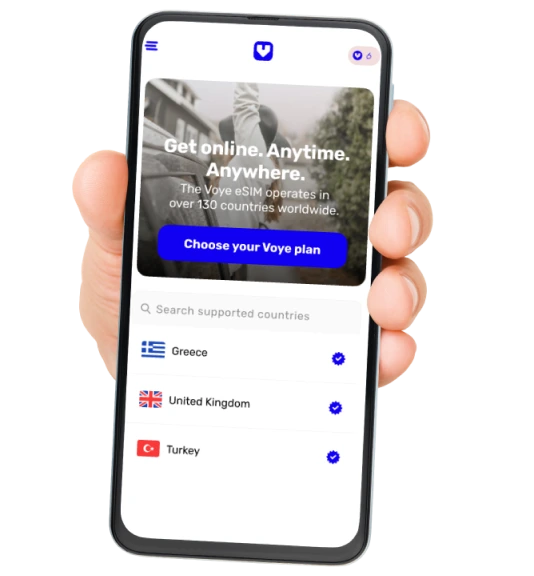
At Voye Global, we provide international mobile data connectivity for travelers visiting foreign countries. Instead of searching for a physical SIM card at the airport, you can activate your plan before departure and connect as soon as you land.
Our service runs on eSIM technology. There is no need to visit stores, deal with language barriers or stand in airport queues. You simply scan a QR code, install the eSIM and your device is ready.
We provide services in 160+ countries worldwide, which makes it useful not only for Japan but also for multi destination trips.
Why Travelers Prefer an eSIM in Japan?
Japan travel relies heavily on digital systems. During a normal day you may need to:
- Check Shinkansen train timings.
- Find the correct metro exit inside Tokyo stations.
- Translate restaurant menus.
- Show QR attraction tickets.
- Navigate temple areas in Kyoto.
- Monitor weather alerts in Sapporo.
With an eSIM, you can access everything instantly. You keep your personal number active while using mobile data abroad. There is no need to carry pocket WiFi or swap SIM cards.
Why Choose Voye Global for Japan Travel?
- Activation before boarding your flight.
- No SIM card replacement needed.
- Immediate access to maps and transport routes at arrival airports.
- Easy use of translation and booking apps.
- Reliable connection for digital tickets and reservations.
Japan travel depends heavily on navigation, QR confirmations and train schedules. Having mobile connectivity from the first train ride makes travel far more convenient, especially during crowded 2026 event periods.

So… Is 2026 Your Japan Year?
Japan in 2026 is not just another vacation destination. It is a year where multiple experiences happen at the same time. You can watch an international sports crowd in Tokyo, walk through centuries old temples in Kyoto, attend futuristic exhibitions in Osaka, and stand inside a glowing snow city in Sapporo all within one trip.
The key difference in 2026 is scale. More travelers are expected than usual, which means planning early matters more than ever. Booking accommodation, reserving train seats, and preparing your daily travel tools will decide how relaxed your journey feels.
Visitors who arrive prepared enjoy Japan very differently. They spend less time solving travel problems and more time exploring food streets, night markets, cultural districts and scenic locations.
If Japan has been on your bucket list, 2026 is the year where tradition, technology and global culture all meet in one place. Plan smart, arrive ready and you will experience one of the most memorable trips you can take.

Seamless Mobile Data Everywhere
Voye Global — Your Trusted eSIM Partner for Secure & Reliable Travel.



 English
  日本語
日本語 


