




The Era of eSIM-Only Phones Has Begun
For decades, slipping a fingernail into a tiny tray and swapping a SIM card was part of owning a phone. That ritual is ending. Apple, Google, and other tech giants are rolling out eSIM-only devices, with no slot, no tray, and no little plastic card.
Why is this such a big deal? Because it doesn’t just change how phones are built—it changes how we travel, how we troubleshoot, and how we think about connectivity.
- Phone design becomes sleeker, more water-resistant, and more compact without needing a slot.
- Repairs simplify—no broken trays, bent pins, or dust creeping inside.
- Travel behavior shifts—nomads and business travelers must rethink “backup SIMs.”
- Carriers adjust—pushing global infrastructure to catch up with demand.
This isn’t just about a missing slot. It’s about how you, the user, interact with your phone in everyday life.
Why Are SIM Trays Disappearing?
1. Design and Hardware Freedom
By removing the SIM tray, manufacturers free up precious internal space. That space can go to larger batteries, stronger speakers, or advanced cooling systems. It also means fewer moving parts, which leads to fewer points of failure.
Phones can now:
- Have tighter waterproof seals.
- Be slimmer and lighter without compromising strength.
- Simplify internal layouts, reducing repair complexity.
2. Push for Digital Identity
Just as boarding passes, wallets, and even car keys are moving to digital, so too is your mobile identity. An eSIM isn’t a card you own—it’s a software profile. That aligns perfectly with Apple and Google’s vision of a fully digital lifestyle.
3. Economics and Control
This shift also changes the economics of telecom. Carriers get more control over provisioning, activation, and switching. Meanwhile, manufacturers sell a vision of seamless setup: buy a phone, scan a code, and you’re live.
It’s smoother—yes. But it also places more reliance on the invisible infrastructure behind your screen.
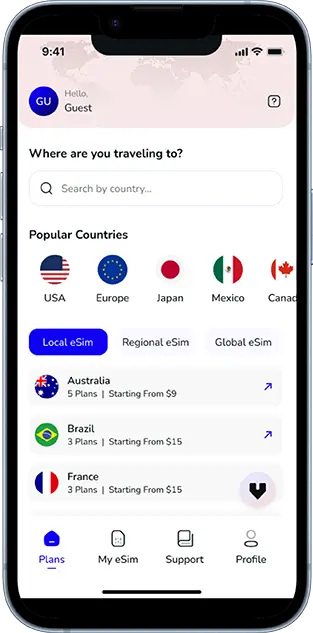
Your Journey, Our eSIM
Stay online abroad with instant activation.
The Big Win: Convenience for Travelers
Imagine landing in Tokyo or Dubrovnik. No searching for SIM shops. No juggling micro vs. nano sizes. Instead, you scan a QR code, and within minutes, your phone works.
That’s the magic of eSIMs.
- Instant Activation: Buy a data plan online and connect before your plane lands.
- Multiple Profiles: Store several eSIMs on one device (e.g., personal, work, travel).
- No More Tiny Plastic: One less thing to lose, damage, or swap mid-trip.
For digital nomads and frequent flyers, this is a dream—connectivity becomes part of your pre-trip checklist, not a stressful airport errand.
The Hidden Challenges for Travelers
But it’s not all smooth sailing.
- Carrier Gaps – While Europe, North America, and parts of Asia have excellent eSIM coverage, some regions (Africa, South Asia, rural Balkans) still lag. Travelers may find local eSIMs unavailable.
- No Backup Option – In the past, if your SIM died, you popped in another. Now, if your eSIM profile fails, you’re stuck until the carrier resets it.
- Emergencies – Losing connection during emergencies feels riskier without a physical backup card.
- Regional Pricing – Some carriers may charge more for eSIM-only plans, knowing you’re locked into digital convenience.
So yes, it’s easier—but it requires more prep.
How It Changes Consumer Behavior?
From Swapping Cards to Swapping Profiles
The ritual of swapping a SIM at the airport shop is being replaced by:
- Downloading apps.
- Scanning QR codes.
- Managing digital profiles in phone settings.
This requires digital literacy. Some users may find it intimidating, especially older demographics.
Travel Planning Shifts
Instead of hunting local kiosks, nomads are now:
- Comparing global eSIM providers.
- Researching carrier compatibility before booking flights.
- Downloading data packages weeks before departure.
It moves the pain point from arrival to pre-trip.
Consumer Pitfalls You Need to Know
- Compatibility Confusion
Not all devices or carriers are equal. Some allow multiple active eSIMs, others don’t. Some lock your eSIM to their network. - Migration Hassles
Moving from one phone to another isn’t always seamless. Profiles don’t “just move”—sometimes you need to delete and reinstall, which can take hours. - Resale Complications
Selling your phone now means carefully wiping eSIM profiles, otherwise your number (and identity) stays on the device. - Regional Support Gaps
Traveling to Bosnia? Great food, gorgeous scenery, but not every local carrier supports eSIM yet. Without global coverage, you’re at risk of losing connectivity.
eSIM Trends
- Apple Goes All-In: The iPhone 17 (2025) launches trayless globally in more countries, not just the U.S.
- Google Follows Suit: Pixel 10 models match Apple with dual eSIM slots and no trays.
- Samsung’s Hybrid Strategy: Offering both eSIM-only and hybrid models in regions where support lags.
- Enterprise Adoption: Corporates now roll out eSIM fleets for employees, cutting roaming bills by up to 60%.
- IoT Explosion: Cars, wearables, and laptops adopt eSIMs, syncing under one digital identity.
We’re entering a world where connectivity is software-first.
Repair & Resale: The Quiet Ripple Effects
- Repair Shops Shift
SIM slot repairs vanish, but activation troubleshooting increases. Shops now need to handle eSIM migration issues rather than hardware fixes. - Second-Hand Market
Wiping a phone for resale is trickier with eSIMs—users must fully delete all profiles before selling, or risk security leaks. - Insurance & Theft
eSIMs add another layer of traceability, making stolen phones harder to resell internationally. A small but important benefit.
Preparing Yourself for an eSIM-Only Future
Here’s your survival checklist:
- Check eSIM Support in your home carrier and frequent travel destinations.
- Learn Migration Steps before upgrading to a new phone.
- Use Global Providers as a backup safety net.
- Install Offline Maps before flights—you can’t buy data mid-air.
- Store Multiple Profiles (e.g., one for business, one for leisure).
Think of this like learning to use online banking years ago—unfamiliar at first, but soon second nature.
What It Means for Digital Nomads?
For remote workers:
- Pro: No hunting kiosks, instant global data.
- Con: Regions without eSIM become connectivity black holes.
For solo travelers:
- Pro: Multiple profiles = flexibility and security.
- Con: Losing data mid-trip requires faster problem-solving.
For businesses:
- Pro: Manage employee connectivity remotely, reduce costs.
- Con: Training employees on migration and troubleshooting becomes critical.

What to Expect in the Next 5 Years
- Plastic SIMs will disappear from premium phones by 2027.
- Carriers in Africa and South Asia will rush to catch up by 2028, driven by tourism and corporate demand.
- Travelers will rely heavily on multi-network eSIM providers rather than buying local plans.
- Security and identity will become bigger topics—your phone number becomes less physical, more cloud-based.
In short, the phone in your pocket becomes more like a passport than ever.
FAQs
1. Why are manufacturers removing SIM trays?
For design simplicity, waterproofing, and to push a digital-first future.
2. Will all phones be eSIM-only by 2030?
Most likely, yes—though budget models in emerging markets may keep trays longer.
3. Can I still have two numbers?
Yes. Many phones now store multiple eSIM profiles and let you switch instantly.
4. What if I travel somewhere without eSIM support?
Use a global provider with roaming agreements. Always check before departure.
5. Is eSIM safer than a plastic SIM?
Generally yes—it can’t be stolen physically, though your data still needs protection.
6. How do I transfer my eSIM to a new phone?
Through your carrier’s app or QR code, but it’s not always instant. Do this before selling your old phone.
7. Does this mean physical SIMs are dead?
They’re fading. Within 5–10 years, physical SIMs will likely be niche or legacy.
Global Coverage, Local Rates
Experience hassle-free connectivity wherever you go.
Final Thoughts
The SIM tray era is ending, and while it may feel odd at first, it opens the door to a simpler, more flexible future. For travelers, it means freedom from kiosks and paperclips. For manufacturers, it means sleeker designs. For carriers, it means more control.
The key is preparation. Learn how eSIMs work before you’re forced into them. Try a travel eSIM, practice profile migration, and get used to a digital-first mobile identity.
Because the little piece of plastic that defined mobile life for 30 years is finally bowing out.
Seamless Mobile Data Everywhere














 English
  日本語
日本語