














Note that iPhone devices from Mainland China aren’t eSIM compatible. Also iPhone devices from Hong Kong and Macao aren’t compatible (except for iPhone 13 Mini, iPhone 12 Mini, iPhone SE 2020 and iPhone XS)
If you are a US citizen with Austria on your travel bucket list, you are probably wondering whether you need to sort out a visa before booking your flights. The good news is that for most travelers planning a short trip, the process is far simpler than you might expect. Austria, a stunning country nestled in the heart of Europe with its alpine scenery, imperial history, and world-class cities like Vienna and Salzburg, welcomes American tourists without the hassle of a traditional visa application.
That said, travel regulations are never entirely static. The rules that apply today may look a little different by the time you are ready to pack your bags, especially with a significant change on the horizon for 2026. Whether you are planning a weekend escape to Vienna, a ski trip through the Austrian Alps, or a longer European adventure that includes Austria as one of your stops, this guide covers everything you need to know before you go.
The Short Answer: No Visa Required for Short Stays
US citizens do not need a visa to enter Austria for short-term tourist or business visits. This falls under the Schengen Area agreement, which Austria is a part of. Under this arrangement, American passport holders can travel freely across 27 European countries, including Austria, without obtaining a visa in advance.
The current rule allows US citizens to stay in the Schengen Area for up to 90 days within any 180-day period. This means you can spend up to three months exploring Austria and its neighboring countries without needing any special authorization beyond your valid US passport. Whether you are sightseeing in Vienna, hiking through the Tyrol region, or attending a business conference in Graz, this visa-free access covers you.
Stay Connected in Austria
Get instant data access across Austria without roaming hassles.
What You Do Need: Passport Requirements
While no visa is required, your passport still needs to meet certain standards. Austria, like all Schengen countries, requires that your passport be valid for at least three months beyond your planned date of departure from the Schengen Area. So if you plan to leave Austria on June 30, your passport must be valid through at least September 30.
Beyond validity, make sure your passport is in good condition. Torn, damaged, or heavily worn passports can sometimes cause issues at border control, and the last thing you want is to be held up at the airport before your European adventure begins. If your passport is close to expiring or looks worn, renewing it well before your trip is always the smarter move.
The 90-Day Rule: Understanding the Schengen Limit
This is the part that trips up a lot of first-time European travelers. The 90-day limit is not 90 days per country. It is 90 days total across the entire Schengen Area within a rolling 180-day window. So if you spend 30 days in Germany, 20 days in France, and then head to Austria, you have only 40 days left of your permitted stay across all of those countries combined.
Tracking this properly matters. Overstaying your allowed period can result in fines, being flagged in immigration systems, and potentially being denied entry on future trips to Europe. If you are planning an extended European journey that includes Austria, map out your days carefully before you travel.
A Big Change Coming: ETIAS Authorization Starting 2026
Here is the part every American traveler needs to pay attention to. While visa-free access remains the rule for now, that does not mean entry into Austria will remain completely documentation-free forever. Starting in late 2026, US citizens will be required to obtain an ETIAS authorization before traveling to Austria or any other Schengen country.
ETIAS stands for European Travel Information and Authorization System. Think of it as Europe’s version of the US ESTA (Electronic System for Travel Authorization) that non-Americans need before visiting the United States. ETIAS will not be a visa. It will be a pre-travel online authorization that you apply for before your trip, linked electronically to your passport.
Check out our plans
-

Austria 7 Days 5GB
USD 9.00 -
Austria 7 Days Unlimited
USD 13.00 -
Austria 15 Days 8GB
USD 13.00 -
Austria 15 Days Unlimited
USD 23.00 -
Austria 30 Days 15GB
USD 16.00 -
Austria 30 Days Unlimited
USD 39.00
The application is expected to be straightforward, completed online, and valid for multiple trips over three years. There will be a small fee associated with it. The system is designed to improve security and manage travel flows across Schengen borders more effectively. For most legitimate travelers, ETIAS should not be a barrier, but failing to obtain it before your trip could mean being denied boarding by your airline or turned away at the border.
The ETIAS requirement is confirmed to be implemented by the end of 2026 based on information from official European sources. That gives travelers planning trips in 2025 or early 2026 a comfortable window, but anyone planning to visit Austria in late 2026 or beyond should check the latest guidance from the US Department of State before finalizing travel plans.
Long-Term Stays and Work: Different Rules Apply
Everything discussed so far applies to short-term tourism and business visits. If you are planning to stay in Austria longer than 90 days, whether for work, study, or any other reason, the visa-free route does not cover you. You would need to apply for the appropriate visa or residence permit through the Austrian consulate before departing the US.
Working in Austria without the proper authorization, even as a remote worker employed by a US company, can be legally complicated. Austria has specific rules around employment, freelancing, and digital nomad stays. If your trip crosses into anything beyond pure tourism or short business visits, consulting an immigration attorney or the Austrian Embassy in Washington, D.C., is the right step.
Tips for a Smooth Entry into Austria
Arriving prepared makes all the difference at border control. Even though US citizens do not need a visa for short visits, Austrian border officers may ask questions about your plans. Having a few things organized in advance will help the process go smoothly.
- Carry proof of onward travel, such as a return flight booking, to show you intend to leave within the 90-day window.
- Have accommodation details available, whether it is a hotel reservation, an Airbnb confirmation, or a letter from a host you are staying with.
- Carry some documentation of financial means, such as a bank statement or credit card, to show you can support yourself during your stay.
None of these documents is formally required for every traveler, but border officers have the discretion to ask, and being prepared shows you are a straightforward visitor with legitimate plans.
Staying Connected in Austria

One practical consideration that many travelers overlook until they land is connectivity. Austria has excellent mobile coverage throughout the country, but international roaming charges from US carriers can add up quickly, especially on longer trips.
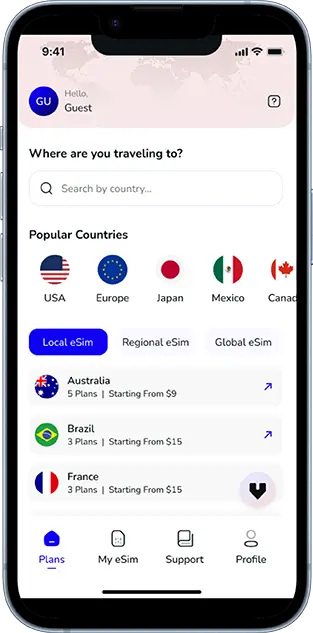
A smart and increasingly popular option is to use an eSIM before you travel. With a Voye Global eSIM for Austria, you can activate a local data plan on your phone before you even board your flight, skipping the need to hunt down a SIM card at the airport or deal with roaming bills when you get home. It is a simple, affordable way to stay connected to maps, translation tools, transport apps, and everything else that makes modern travel so much more manageable.
What About Travel Insurance?
Austria does not formally require travel insurance for US tourists the way some countries do, but traveling without it is a risk not worth taking. Medical care in Austria is excellent, and the country has a high standard of healthcare, but costs for visitors without local insurance can be substantial. A good travel insurance policy covers medical emergencies, trip cancellations, lost baggage, and other unexpected situations that can derail even the best-planned trips.
Conclusion
Traveling to Austria as a US citizen is genuinely accessible. No visa is required for stays under 90 days; your valid passport is your primary travel document, and the country itself is incredibly welcoming to American visitors. The alpine landscapes, the grand architecture of Vienna, the musical history, the food, the culture, all of it is within easy reach for any American traveler who plans thoughtfully.
What you do need to keep in mind is the upcoming ETIAS authorization requirement expected to roll out by the end of 2026. It is not a complicated process, but it is one more step to add to your pre-travel checklist if you are planning a trip from late 2026 onward. Staying informed through the US Department of State is always the best way to make sure you have the latest and most accurate guidance before you book anything.
Austria rewards the traveler who arrives prepared. Know your entry requirements, respect the 90-day Schengen rule, travel with your documents in order, stay connected with the right tools, and you are set for one of the finest European experiences imaginable. Safe travels.

Seamless Mobile Data Everywhere
Voye Global — Your Trusted eSIM Partner for Secure & Reliable Travel.




 English