














Note that iPhone devices from Mainland China aren’t eSIM compatible. Also iPhone devices from Hong Kong and Macao aren’t compatible (except for iPhone 13 Mini, iPhone 12 Mini, iPhone SE 2020 and iPhone XS)
Every decade, aviation experiences a moment where technology, infrastructure, and passenger expectations realign. For the current era, that moment is being shaped in real time and nowhere is it more visible than at World Aviation Festival 2026.
The 2026 edition takes place from 13 to 15 October 2026 in Lisbon, Portugal.
Widely regarded as one of the most influential gatherings in the aviation industry, the event brings together decision makers from airlines, airports, regulators, and travel technology companies to discuss what flying will look like over the next decade. The conversation is no longer limited to aircraft, routes, or pricing. It is about data, digital experiences, operational intelligence, and above all, connectivity.
Modern aviation innovation increasingly depends on uninterrupted digital communication across borders. Aircraft operations rely on data exchange, airports depend on connected infrastructure, and passengers expect their digital lives to continue seamlessly at 35,000 feet and in every destination they land. In this evolving ecosystem, connectivity is not an accessory to travel. It is part of the travel experience itself.
What Is World Aviation Festival 2026?
World Aviation Festival 2026 stands among the world’s largest aviation technology and strategy conferences. The event functions as both an exhibition and a collaborative forum where industry leaders shape the future of global aviation.
A Global Gathering of Aviation Stakeholders
The scale of the event reflects the complexity of the modern aviation landscape. Attendees include:
- Airline executives and operations leaders
- Airport authorities and infrastructure planners
- Aviation regulators and policy makers
- Travel technology companies and startups
- AI, cybersecurity, and data analytics providers
- Digital commerce and passenger experience platforms
Rather than focusing on aircraft manufacturing, the festival concentrates on the systems that surround flying. These systems increasingly determine operational efficiency and customer satisfaction.
Stay Connected in Portugal
Instant mobile data for seamless travel across Lisbon
Key Focus Areas
The conference agenda highlights the transformation already underway in aviation:
Digital transformation
Airlines are evolving into technology companies, leveraging mobile apps, biometric identity, and real time analytics.
Passenger experience
From booking to baggage claim, the journey is being redesigned to be predictive, personalized, and frictionless.
Artificial intelligence and automation
AI supports demand forecasting, route optimization, maintenance prediction, and customer service automation.
Smart airports
Airports are shifting into intelligent ecosystems powered by sensors, IoT networks, and automation.
Sustainability
Operational efficiency and environmental responsibility are becoming equally important metrics of success.
At the core of all these themes lies a common requirement: dependable international travel connectivity.
Key Trends Shaping Aviation in 2026
The conversations at World Aviation Festival 2026 reflect a clear reality. Aviation is no longer just transportation. It is a digitally orchestrated global network.
1. The Digital Passenger Journey
Passengers now expect an uninterrupted digital path across their entire journey:
- Mobile booking and check in
- Digital boarding passes
- Biometric identity verification
- Real time flight updates
- Instant rebooking during disruptions
The modern traveler interacts with airlines through apps more often than airport counters. Connectivity enables this transformation.
2. Smart Airports and Connected Infrastructure
Smart airports rely on interconnected systems that coordinate operations in real time:
- Predictive security queue management
- Automated baggage tracking
- Smart gate allocation
- Sensor based passenger flow optimization
Without stable data networks, smart airports cannot function effectively. Connectivity is the infrastructure behind the infrastructure.
3. Data Driven Decision Making
Airlines now use operational data to make minute by minute decisions:
- Weather response planning
- Dynamic pricing
- Predictive maintenance alerts
- Operational performance monitoring
The value of aviation data depends on its immediacy. Delayed information is often unusable information.
4. Sustainability and Operational Efficiency
Efficiency directly impacts emissions. Connected systems help:
- Optimize flight paths
- Reduce taxi times
- Coordinate ground operations
- Minimize idle aircraft energy consumption
Better connectivity leads to smarter decisions and smarter decisions lead to lower environmental impact.
5. Reliable Connectivity Across Borders
Global operations require global networks. Aircraft, businesses, and passengers constantly move across countries and regulatory environments. The industry increasingly recognizes that connectivity must travel with them.
Why Connectivity Is Becoming Critical in Modern Aviation?
Connectivity now supports three different layers of aviation operations.
Airline Operations
Airlines depend on continuous communication for:
- Fleet management
- Maintenance reporting
- Dispatch operations
- Network coordination
Even short communication delays can disrupt schedules across entire networks.
Airport Operations
Airports rely on connected systems to coordinate multiple stakeholders simultaneously. Ground handling teams, immigration authorities, airline staff, and retail operators all share digital infrastructure.
Passenger Expectations
Passengers now expect:
- Messaging and video calls during layovers
- Instant travel updates
- Mobile boarding and transfers
- Work continuity while traveling
For frequent flyers and digital nomads, losing connectivity is no longer a minor inconvenience. It interrupts productivity.
The Problem with Traditional Roaming
Traditional roaming services were never designed for global mobility at scale. Travelers often face:
- High roaming charges
- Unpredictable billing
- Limited data availability
- Difficulty switching between countries
Local SIM cards offer a partial solution but create logistical friction. Travelers must purchase new cards in each destination and change numbers repeatedly. For aviation professionals attending multi country events like World Aviation Festival 2026, this becomes inefficient.
How eSIM Technology Supports the Future of Air Travel?
The growing demand for seamless international travel connectivity has accelerated the adoption of eSIM for travelers.
What Is eSIM?
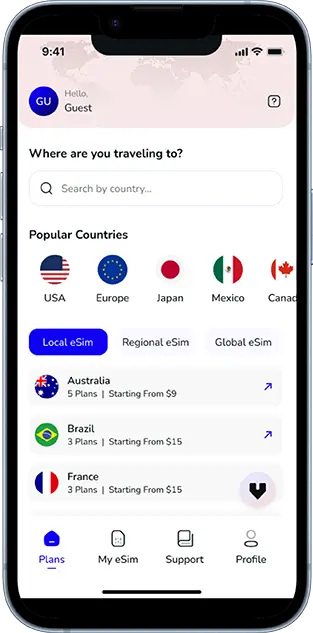
An eSIM is a digital SIM embedded inside a device. Instead of inserting a physical card, users download a mobile data plan directly to their phone, tablet, or laptop.
In simple terms, it allows a traveler to activate mobile data in another country instantly, without visiting a store or changing hardware.
Benefits for Travelers and Business Professionals
Business travelers
Executives can stay connected to corporate systems immediately after landing.
Frequent flyers and digital nomads
Continuous access to maps, bookings, ride services, and communication platforms becomes possible worldwide.
Event attendees
Participants at international conferences can coordinate meetings, navigate cities, and collaborate remotely.
Practical Use Cases
- Multi country travel itineraries
- International exhibitions and aviation conferences
- Remote coordination with global teams
- Accessing cloud documents and communication tools abroad
- Real time navigation, bookings, and ride services
The relevance of eSIM technology is growing alongside the aviation sector’s reliance on real time communication.
Connect on Arrival
Activate mobile data instantly when your flight lands
Voye Global’s Perspective on Connected Aviation
As aviation continues its digital transformation, connectivity providers are becoming strategic partners to the industry.
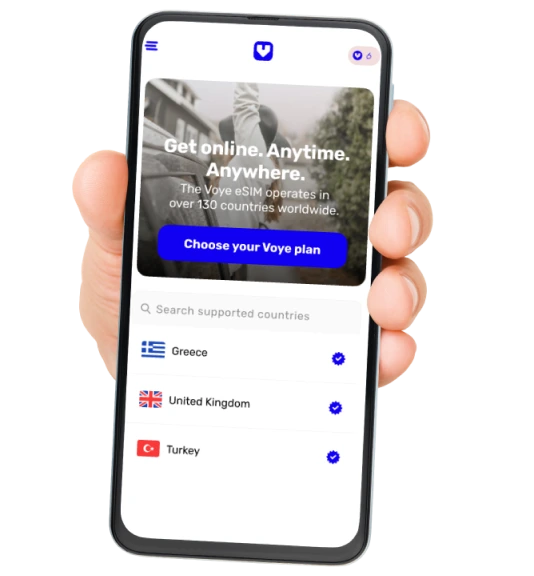
Voye Global approaches this shift not merely as a telecom service but as an enabler of operational continuity and traveler experience. With coverage across 130+ countries, global connectivity solutions can follow professionals wherever aviation takes them.
For attendees traveling to World Aviation Festival 2026, seamless access to mobile data means:
- Coordinating meetings across time zones
- Accessing platforms and cloud tools while traveling
- Navigating unfamiliar cities
- Maintaining productivity during international travel
Global eSIM solutions support a smoother journey for both industry professionals and everyday travelers. Rather than thinking about how to connect in each country, travelers can focus on why they are traveling.
Why Events Like World Aviation Festival Matter for the Travel Ecosystem?
Large industry gatherings play a unique role in shaping the future of aviation innovation.
Cross Industry Collaboration
The aviation sector no longer evolves in isolation. Airlines depend on:
- Cloud computing providers
- Cybersecurity firms
- Data analytics platforms
- Connectivity companies
Events like World Aviation Festival 2026 create a collaborative environment where these sectors align.
Accelerating Innovation Adoption
Ideas discussed at industry events quickly translate into real world implementation:
- Biometric boarding trials
- AI powered customer support
- Connected baggage tracking
- Predictive operational analytics
Many of the passenger conveniences now considered standard were once conference demonstrations.
The Role of Connectivity in Future Travel
Every emerging aviation technology depends on communication networks. Without stable data transfer:
- AI cannot analyze operational data
- Mobile apps cannot guide passengers
- Smart airports cannot optimize flows
Connectivity is the invisible layer supporting the visible innovations.
Conclusion
World Aviation Festival 2026 represents more than a conference. It is a preview of aviation’s next operating model. The industry is shifting from transport infrastructure to a fully digital ecosystem.
The future of air travel is:
- Personalized
- Predictive
- Data driven
- Globally connected
As aviation innovation continues, connectivity becomes as essential as runways and aircraft. Airlines need it to operate efficiently. Airports need it to function intelligently. Travelers need it to move confidently across borders.
Global connectivity solutions such as modern eSIM platforms align closely with this future. By removing barriers to communication, they support the seamless experiences aviation is working to create.
The direction is clear. Air travel is becoming borderless, digital, and always connected. Events like World Aviation Festival 2026 simply make that future visible today.

Seamless Mobile Data Everywhere
Voye Global — Your Trusted eSIM Partner for Secure & Reliable Travel.



 English