














Note that iPhone devices from Mainland China aren’t eSIM compatible. Also iPhone devices from Hong Kong and Macao aren’t compatible (except for iPhone 13 Mini, iPhone 12 Mini, iPhone SE 2020 and iPhone XS)
In February 2026, Italy will host the Winter Olympics across multiple locations in the north of the country. The games, officially titled Milano Cortina 2026, will bring together athletes from around the world to compete in ice and snow sports over seventeen days. Competitions will take place in major cities as well as Alpine mountain regions, marking one of the most geographically spread Winter Olympics to date.
With Milan serving as the main urban center and Cortina d’Ampezzo anchoring the mountain competitions, the 2026 Winter Olympics in Italy will combine indoor arenas, historic ski venues, and established winter sports locations into a single international sporting stage.
What Exactly Is Happening in Italy in 2026?
Italy will host the Winter Olympics under the official name Milano Cortina 2026. It marks the country’s return to hosting the Winter Games for the first time since Cortina d’Ampezzo hosted them in 1956.
Instead of building an entirely new Olympic city, Italy is using a multi-location approach. Existing venues in cities and mountain regions will host different sports, allowing the games to blend modern infrastructure with traditional winter landscapes.
When Do the Winter Olympics Take Place in Italy?
The Winter Olympics in Italy will take place in February 2026, following the standard Olympic winter schedule.
| Phase | Date |
|---|---|
| Opening Ceremony | February 6, 2026 |
| Competition Period | February 6 to February 22, 2026 |
| Closing Ceremony | February 22, 2026 |
Competition at the 2026 Winter Olympics will run from February 6 to 22, 2026. Held every four years, the Winter Games traditionally alternate with the Summer Olympics on a two-year cycle. The Paralympic Winter Games will take place from March 6-15.
Here are the key dates to mark on your calendar:
- February 4: Competition begins with curling.
- February 6: Opening Ceremony.
- February 7: First gold medal events.
- February 8: Women’s Alpine skiing downhill gold medal.
- February 13: Men’s figure skating gold medal.
- February 18: Women’s Alpine skiing slalom gold medal.
- February 19: Women’s figure skating gold medal; women’s ice hockey gold medal game; first Olympic gold medals in ski mountaineering.
- February 22: Men’s ice hockey gold medal game; Closing Ceremony.
Competitions will run daily throughout this period. Several sports will overlap in timing, especially during the middle of the games when the schedule is at its busiest.
Moving Between Olympic Cities
Connectivity helps while traveling across Milan, Cortina, and mountain venues.
Which Cities in Italy Are Hosting the Games?
The Winter Olympics will be shared across multiple Italian cities and regions, each selected for its facilities and geographic advantages.
Milan
Milan will serve as the primary urban center of the Olympics. It will host the Opening Ceremony and most indoor ice sports, including figure skating, ice hockey, and speed skating. Milan is also the main international entry point for visitors due to its major airports and extensive rail connections.
Cortina d’Ampezzo
Cortina d’Ampezzo is one of Italy’s most well-known mountain resorts and has a long history in winter sports. It previously hosted the Winter Olympics in 1956 and will once again take on a central role in 2026. Cortina will host alpine skiing and other outdoor competitions that depend on mountain terrain.
Other Host Locations
Additional events will take place in Livigno, Val di Fiemme, and Anterselva. These areas will host sports such as snowboarding, cross-country skiing, and biathlon, expanding the games across northern Italy’s Alpine region.

Where Will the Olympic Sports Be Held?
The table below outlines where major sports will take place during the games.
| Sport | Location |
|---|---|
| Figure Skating | Milan |
| Ice Hockey | Milan |
| Speed Skating | Milan |
| Alpine Skiing | Cortina d’Ampezzo |
| Snowboarding | Livigno |
| Cross-Country Skiing | Val di Fiemme |
| Biathlon | Anterselva |
Because sports are spread across different locations, many spectators will attend competitions in more than one city or region during their stay.
Global Coverage, Local Rates
Live updates maps and alerts stay accessible throughout competition days.
How Long Do Competition Days Last?
Most competition days begin in the morning, particularly for outdoor sports that rely on daylight and weather conditions. Indoor events often continue into the evening to align with international broadcast schedules.
This creates full-day schedules for fans, with multiple sessions and venues to track each day.
Important: Voye Global offers eSIM plans that support short-term, long-term, and unlimited data use, addressing different travel durations and data requirements. Travelers looking to get the best eSIM for Italy from Voye Global benefit from options suited to varying usage levels while moving between cities and venues across the country.
How Do Travelers Move Between Olympic Locations?
Italy’s transportation network will play a major role during the Winter Olympics.
- High-speed trains connect Milan with many northern cities.
- Regional trains and buses serve mountain destinations.
- Some venues require additional shuttle or car travel.
Approximate travel times from Milan include:
- Milan to Cortina d’Ampezzo: 4 to 5 hours.
- Milan to Livigno: 3 to 4 hours.
- Milan to Val di Fiemme: about 3 hours.
Planning routes in advance is important, especially on days with multiple competitions in different locations.
Check out our plans
-

Italy 10 Days Unlimited Data
USD 17.00 -
Italy 15 Days Unlimited Data
USD 23.00 -
Italy 20 Days Unlimited Data
USD 29.00 -
Italy 3 Days Unlimited Data
USD 6.00 -
Italy 30 days 15GB
USD 16.00 -
Italy 30 days 25GB
USD 25.00 -
Italy 30 Days Unlimited Data
USD 39.00 -
Italy 7 days 5 GB
USD 9.00 -
Italy 7 Days Unlimited Data
USD 13.00 -
Italy 15 days 8GB
USD 13.00
How to reach the venues?
During the Games, enhanced public transportation services will be in place for spectators. These include:
- Extended operating hours and increased frequency across trains, subways, and local transport networks, particularly in Milan.
- In mountain regions, dedicated shuttle services will link train stations and park-and-ride areas directly to competition venues.
- Designated parking zones where spectators leave their vehicles; parking at the venues themselves will not be permitted.
- Selected railway stations are designated as access points to venues.
- From both Park and Ride and Train and Ride hubs, dedicated shuttles will run in sync with competition schedules.
- Getting between the two host locations is easy with Frecciarossa high-speed trains, private transfers, or even helicopter shuttles if you’re going for a full VIP moment.
Arriving by air: Most international travellers will enter Italy through Milan Malpensa Airport (MXP), the country’s primary international hub. Milan Linate (LIN) serves short-haul European routes, while Venice Marco Polo Airport (VCE) is the closest major airport to Cortina. Additional options include Verona and Treviso, both served by low-cost carriers, while Innsbruck Airport provides access for those travelling to Predazzo.
By train or car: High-speed services link Milan, Verona, and Venice within a few hours. To reach Cortina, travellers can take the train to Calalzo di Cadore, then continue by bus or private transfer through the Dolomites.
International rail options are also viable. The TGV inOui direct service connects Paris to Milan in around 8 hours, while it is possible to travel from London to Italy in under 12 hours via Eurostar and Paris. Overnight European Sleeper services from Brussels provide connections to Innsbruck, Bolzano, Verona, and Venice.
Full Days Need Data
Designed for streaming navigation, messaging, and event updates.
What Makes the 2026 Winter Olympics in Italy Different?
Several factors distinguish the Italian Winter Olympics from previous editions:
- A multi-city hosting model.
- Use of existing venues to limit new construction.
- A mix of urban arenas and historic Alpine resorts.
- Italy’s return to the Winter Olympics after several decades.
This approach allows Italy to showcase both modern city life and traditional mountain culture.

How Will Visitors Manage Information During the Games?
With competitions happening across multiple cities, visitors will rely heavily on digital schedules, maps, transport updates, and official announcements. Access to real-time information becomes especially important when events overlap or weather affects outdoor competitions.
This is where many international travelers begin planning mobile access before arriving in Italy, rather than depending on public Wi-Fi or international roaming.
Staying Connected Across Cities in Italy
Travelers attending the Winter Olympics often move between cities and mountain regions within a short time frame. Consistent mobile access helps with navigation, ticket scanning, schedule tracking, and communication.
Many visitors now choose an eSIM for Italy as a practical way to stay connected without visiting physical stores or changing SIM cards.
Who Keeps Travelers Connected While Italy Is in Motion?
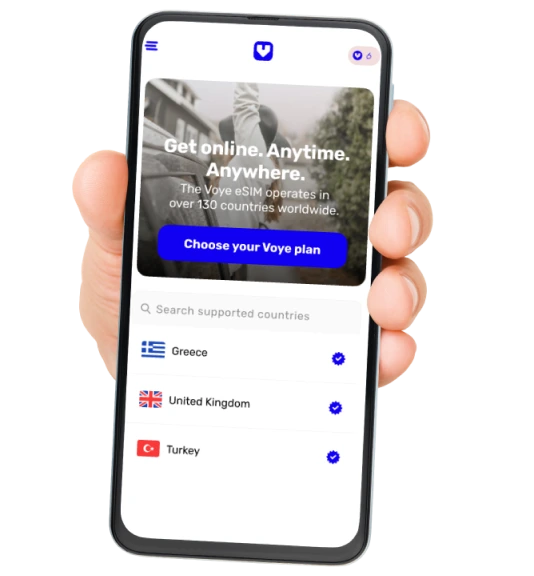
Voye Global supports travelers who move between cities and venues during large international gatherings. Prepaid Italy eSIM plans are structured to accommodate different travel durations and data usage levels, including short-term, long-term, and unlimited data options.
Built for modern travel needs, Voye Global provides digital connectivity that remains active throughout a trip as schedules and locations change during the Winter Olympics. Voye Global provides connectivity services in 170+ destinations worldwide.
Why Travelers Choose Voye Global?
- Coverage that works across Italian cities and Alpine regions.
- No physical SIM card required.
- Activation completed before arrival.
- Prepaid options with clear usage terms.
How does it support a Multi-City Olympic Trip?
During a large international gathering like the Winter Olympics, schedules, venues, and transport plans can change quickly. Digital connectivity solutions such as Voye Global support smoother travel by keeping visitors connected throughout their journey in Italy.
Keeping Up With Events
Stay informed across multiple locations during the Winter Olympics.
When the Flame Goes Out, Italy Stays in Motion
The 2026 Winter Olympics place Italy at the center of global attention, bringing together competition, culture, and geography across cities and mountain venues. With events unfolding in multiple locations, the games highlight how modern Winter Olympics extend beyond a single host city and into regions that reflect a country’s identity.
From Milan’s indoor arenas to the Alpine landscapes of Cortina d’Ampezzo and beyond, the structure of the games shapes how athletes, organizers, and visitors experience each day. Staying informed, moving between venues, and following schedules becomes part of the overall Olympic rhythm.
As the final medals are awarded and the closing ceremony concludes, Italy’s role in hosting the Winter Olympics leaves a lasting mark through its venues, cities, and shared moments on the world stage.

Seamless Mobile Data Everywhere
Voye Global — Your Trusted eSIM Partner for Secure & Reliable Travel.



 English