














Note that iPhone devices from Mainland China aren’t eSIM compatible. Also iPhone devices from Hong Kong and Macao aren’t compatible (except for iPhone 13 Mini, iPhone 12 Mini, iPhone SE 2020 and iPhone XS)
Traveling internationally is one of life’s greatest joys, but nothing ruins the moment faster than realizing your charger doesn’t fit the wall outlet. With over a dozen plug types used worldwide, understanding international sockets can feel overwhelming.
This complete guide breaks down plug types, voltages, country compatibility, and adapter tips in a way that’s easy to follow. Whether you’re backpacking across Europe, heading to Asia, or working remotely abroad, you’ll know exactly what you need.
Why Plug Types Matter When You Travel?
Electricity standards vary globally. There are currently more than 15 different plug types, labeled A through O, used worldwide.
On top of that, countries use different voltages and frequencies, which can affect whether your device works safely.
Key facts:
- Most countries use 220 to 240 volts, while North America uses 100 to 127 volts
- Plug types A and C are among the most common globally
- Some countries use multiple plug types simultaneously
Understanding this helps you avoid:
- Damaged devices
- Dead phones at critical moments
- Last-minute airport purchases of overpriced adapters
Understanding the Most Common Plug Types
Type A and B (North America and Japan)
Used in: United States, Canada, Mexico, Japan
- Type A: Two flat parallel pins
- Type B: Same as A but with a grounding pin
- Voltage: 100 to 127 volts
These plugs are common across North America and parts of Asia.
Travel tip: European devices may need both an adapter and a voltage converter.
Type C, E and F (Europe’s Standard)
Used in: Most of Europe including Germany, France, Spain, Italy
- Type C: Two round pins
- Type E and F: Grounded versions
- Voltage: 220 to 240 volts
Type C is widely used and compatible with many European sockets.
Travel tip: If you’re traveling within Europe, one adapter usually works across multiple countries.
Type G (United Kingdom and Beyond)
Used in: United Kingdom, Ireland, Singapore, Hong Kong, UAE
- Three rectangular pins
- Built-in fuse for safety
- Voltage: 220 to 240 volts
This is one of the safest plug types due to its fused design.
Type I (Australia, New Zealand, China)
Used in: Australia, New Zealand, China, Argentina
- Two angled flat pins
- Optional grounding pin
- Voltage: 220 to 240 volts
China may also use Type A and C in some places.
Type D and M (India and South Africa)
Used in: India, Nepal, South Africa
- Three round pins in triangular formation
- Type M is larger and used for higher power
These plugs are less compatible with others, making adapters essential.
Other Important Plug Types
- Type J: Switzerland
- Type K: Denmark
- Type L: Italy
- Type N: Brazil
Each has subtle differences, so always check before traveling.
Country-by-Country Plug Type Guide
Here is a simplified breakdown by region:
Europe
- Germany, France, Spain, Netherlands: Type C, E, F
- United Kingdom and Ireland: Type G
- Switzerland: Type J
- Italy: Type C, L
North America
- USA, Canada, Mexico: Type A, B
South America
- Brazil: Type C, N
- Argentina: Type I
- Chile: Type C, L
Asia
- Japan: Type A
- China: Type A, C, I
- India: Type D
- Thailand: Type C, O
- UAE: Type G
Africa
- South Africa: Type M
- Morocco: Type C, E
- Kenya: Type G
Oceania
- Australia and New Zealand: Type I
Important: Many countries use multiple plug types, especially in hotels and airports.
Global Coverage, Local Rates
Experience hassle-free connectivity wherever you go.
Voltage Differences: Do You Need a Converter?
Adapters change plug shape, not voltage.
You need a voltage converter if:
- Your device is single-voltage
- You are traveling to a country with a different voltage system
You do not need one if:
- Your device supports 100 to 240 volts
Most modern electronics like phone chargers and laptops already support dual voltage.
Travel Adapter Types Explained
1. Single-Country Adapters
Best for:
- Short trips
- One destination
2. Universal Adapters
Best for:
- Multi-country travel
- Digital nomads
3. USB and Fast-Charging Adapters
Best for:
- Phones
- Tablets
- Laptops
Pro tip: Choose adapters with USB-C ports and surge protection.
Common Travel Mistakes to Avoid
- Assuming all of Europe uses the same plug
- Forgetting voltage differences
- Buying low-quality adapters
- Not checking hotel socket compatibility
- Packing only one adapter
Staying Connected Abroad: Beyond Power
Adapters solve your charging problem, but connectivity is just as important.
Instead of relying on expensive roaming or hunting for local SIM cards, many travelers now use eSIM technology.
Why Use an eSIM While Traveling?
- Instant activation
- No physical SIM swapping
- Flexible data plans
Voye Global eSIM
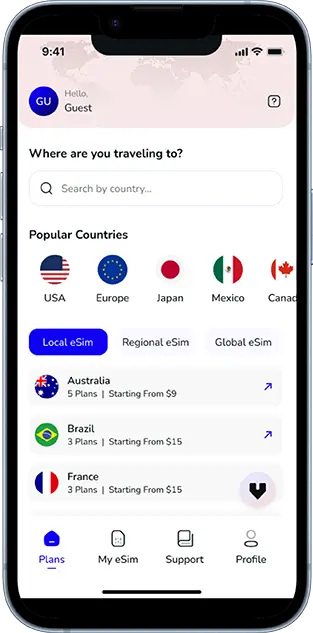
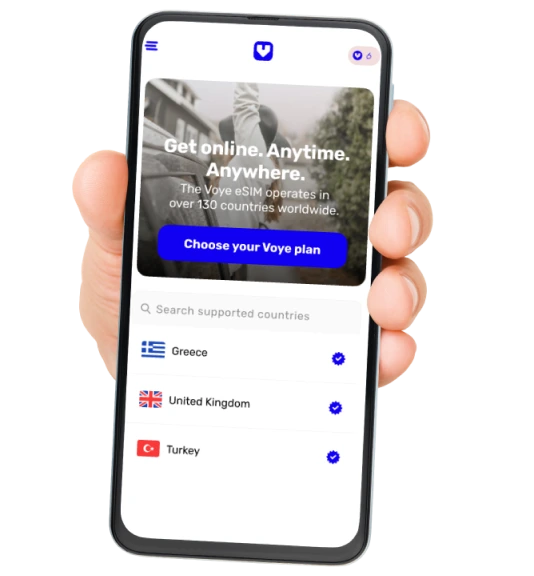
Voye Global is a telecommunications company offering travelers reliable and affordable data connectivity in over 160 countries. Using eSIM technology, it removes the need for physical SIM cards or expensive roaming charges. Previously limited to businesses, these services are now available directly to everyday travelers.
Benefits:
- Coverage in over 160 countries
- Quick setup before or during travel
- Cost-effective global plans
- Reliable connectivity across regions
Pairing a universal adapter with a Voye Global eSIM ensures you stay powered and connected wherever you go.
Your Journey, Our eSIM
Stay online abroad with instant activation.
How to Choose the Right Travel Adapter?
When selecting an adapter, consider:
1. Destination
Always check plug type and voltage before departure.
2. Devices
Think about what you are bringing:
- Laptop
- Phone
- Camera
- Hair tools
3. Power Needs
High-power devices may require converters.
4. Portability
Compact and lightweight adapters are easier to travel with.
Pro Packing Checklist for Travelers
- Universal travel adapter
- Voltage converter, if needed
- Charging cables
- Power bank
- eSIM such as Voye Global
- Backup adapter
FAQs About International Plug Types
Do I need an adapter for every country?
Not always. Some plug types are compatible across regions, especially in Europe.
Can I use my phone charger anywhere?
Yes, if it supports dual voltage.
Are universal adapters safe?
Yes, if you choose certified and high-quality options.
What is the most common plug type?
Type C is among the most widely used globally.
Final Thoughts: Travel Smarter, Not Harder
Understanding international plug types does not have to be complicated. With the right preparation, you can avoid unnecessary stress and stay powered throughout your journey.
Key takeaways:
- Know your destination’s plug type
- Check voltage compatibility
- Invest in a universal adapter
- Stay connected with an eSIM like Voye Global
Travel should be about experiences, not worrying about whether your phone will charge. With the right tools, you will be ready for any destination.

Seamless Mobile Data Everywhere
Voye Global — Your Trusted eSIM Partner for Secure & Reliable Travel.



 English