











Note that iPhone devices from Mainland China aren’t eSIM compatible. Also iPhone devices from Hong Kong and Macao aren’t compatible (except for iPhone 13 Mini, iPhone 12 Mini, iPhone SE 2020 and iPhone XS)
The FIFA World Cup 2026 is set to redefine global football on an unprecedented scale. Spanning three countries, featuring more teams than ever before, and running for over a month, this tournament marks a historic milestone in World Cup history. From packed stadiums to international fan zones, the 2026 edition is designed to be bigger, longer, and more immersive for fans around the world.
Taking place from June 11 to July 19, 2026, the tournament will be jointly hosted by Canada, Mexico, and the United States, making it the first World Cup to be staged across three nations.
What makes FIFA World Cup 2026 different?
FIFA World Cup 2026 is different because it is the first tournament hosted by three countries and the first to feature an expanded 48-team format. These changes result in more matches, broader global representation, and a larger scale event than any previous World Cup.
Expanded tournament format
The 2026 World Cup introduces major structural changes.
- 48 national teams instead of 32
- 104 matches across the tournament.
- Group stage expanded to accommodate more nations.
This format allows greater global representation, giving more countries a chance to compete on football’s biggest stage.
Three host countries
Hosting duties are shared between three nations, offering fans a unique cross-border tournament experience. Each country contributes iconic stadiums, diverse cultures, and distinct matchday atmospheres, creating a World Cup that feels truly global.
When is FIFA World Cup 2026
- Opening match: June 11, 2026
- Final match: July 19, 2026
The extended schedule allows for rest days, travel between host cities, and a smoother experience for teams and fans attending multiple matches.

Where FIFA World Cup 2026 will be held
Host countries
- Canada – Canada hosts key FIFA World Cup 2026 matches in modern stadiums set within vibrant, multicultural cities. Fans can expect efficient transport, welcoming crowds, and a strong football atmosphere shaped by global audiences and local energy. With an eSIM for Canada, connectivity stays simple throughout the World Cup journey.
- Mexico – Mexico brings deep football tradition and unmatched stadium energy to the World Cup stage. Iconic venues, passionate supporters, and rich cultural surroundings make matchdays intense and unforgettable across host cities. An eSIM for Mexico supports smooth connectivity from airports to fan zones.
- United States – The United States delivers scale and spectacle with world-class stadiums and large host cities spread across regions. From coast to coast, matches are paired with major fan zones, entertainment districts, and seamless event infrastructure. An eSIM for the United States ensures reliable data access across multiple host cities.
Each country hosts matches primarily within its own borders, with travel routes planned around regional clusters to reduce long-distance movement.
Your Journey, Our eSIM
Stay online abroad with instant activation.
Major host cities and stadiums
While final match allocations vary, host cities include major football and sports hubs such as:
- Toronto and Vancouver in Canada.
- Mexico City, Guadalajara, and Monterrey in Mexico.
- New York, Los Angeles, Dallas, Miami, Atlanta, and Seattle in the United States.
Stadiums selected for 2026 are among the largest and most technologically advanced in the world, designed to handle massive crowds and global broadcasts.
Check out our plans
-

Canada 10 Days Unlimited Data
USD 29.00 -
Canada 20 Days Unlimited
USD 49.00 -
Canada 30 days 10GB
USD 35.00 -
Canada 15 Days Unlimited
USD 39.00
FIFA World Cup 2026 stadiums and host venues
FIFA World Cup 2026 will be played across some of the largest and most advanced stadiums in the world. These venues are designed to handle massive crowds, global broadcasts, and large-scale fan experiences.
Stadiums in Canada
Canada hosts matches in modern, high-capacity venues located in major cities.
- BMO Field
Located in Toronto, this stadium will be expanded for the World Cup and offers a scenic lakeside setting. - BC Place
A covered stadium in downtown Vancouver known for its retractable roof and strong public transport access.
Stadiums in Mexico
Mexico brings historic football venues and passionate matchday atmospheres.
- Estadio Azteca
One of the most iconic stadiums in football history, becoming the first to host World Cup matches in three different tournaments. - Estadio BBVA
A modern stadium set against a mountain backdrop, known for its design and fan energy. - Estadio Akron
A technologically advanced venue with a strong football culture.
Check out our plans
-

Mexico 10 Days Unlimited
USD 29.00 -
Mexico 15 Days Unlimited
USD 39.00 -
Mexico 20 Days Unlimited
USD 49.00 -

Mexico 30 days 15GB
USD 35.00
Stadiums in the United States
The United States hosts the majority of matches across large-scale stadiums.
- MetLife Stadium
Expected to host key knockout matches, including the final. - SoFi Stadium
One of the most modern stadiums in the world with cutting-edge fan technology. - AT&T Stadium
Known for its massive seating capacity and central role in major sporting events. - Hard Rock Stadium
A multi-purpose venue combining football with strong international fan appeal.
Check out our plans
-

United States 15 days 8GB
USD 15.00 -
United States 7 days 5 GB
USD 9.00 -
United States 30days 15GB
USD 20.00 -
United States 30 days 25GB
USD 28.00
Who will play in FIFA World Cup 2026?
FIFA World Cup 2026 will feature a record number of national teams from across the globe. With an expanded format and automatic qualification for host nations, the tournament brings greater diversity and wider international representation than any previous edition.
Participating teams
- 48 national teams qualify through continental tournaments.
- Automatic qualification for host nations Canada, Mexico, and the United States.
- Increased slots for Africa, Asia, and CONCACAF.
This expanded lineup ensures a wider mix of football styles, emerging teams, and fan bases.

How tickets for FIFA World Cup 2026 work?
Tickets for FIFA World Cup 2026 are sold in multiple phases through official FIFA platforms. Fans must register in advance to participate in ticket draws or first-come sales, as demand is expected to be extremely high across all matches.
Different ticket options will be available, including single match tickets, team specific tickets, venue series tickets, and hospitality packages. Most tickets will be issued digitally, allowing entry through mobile devices. Match availability, seating categories, and pricing vary by stage of the tournament, with knockout rounds and the final attracting the highest demand.
Ticket categories
- Individual match tickets.
- Team specific tickets.
- Venue series tickets.
- Hospitality packages.
Tickets are released in phases through official FIFA channels. Demand is expected to be extremely high, especially for knockout matches and the final.
Ticket buying timeline
- Registration opens well before the tournament.
- Lottery and first-come phases apply.
- Digital tickets will be standard for entry.
Fans attending matches across countries often rely on mobile access for ticket storage, venue entry, and last-minute updates.
How to travel during FIFA World Cup 2026?
Travel during FIFA World Cup 2026 will involve moving across multiple cities and, for many fans, across international borders. With matches spread throughout Canada, Mexico, and the United States, planning transport between host cities is an important part of the experience. Flights will be the fastest option for long distances, while trains, buses, and domestic flights will connect regional clusters within each country.
Host cities will expand public transport services on matchdays, offering dedicated routes to stadiums and fan zones. Many fans will rely on real-time navigation, digital tickets, and schedule updates while traveling, making connectivity a key part of smooth matchday movement. Early planning helps reduce delays and ensures enough time to move between venues, airports, and accommodations.
Moving between countries
Many fans plan multi-country itineraries to experience matches in different regions. Flights, trains, and cross-border routes will be heavily used, particularly between the USA and Mexico.
Staying connected across borders becomes essential when navigating airports, transport apps, and matchday schedules. Many international travelers rely on digital connectivity options like eSIM instead of switching physical SIM cards repeatedly.
Getting around host cities
- Public transport extensions during matchdays.
- Dedicated fan shuttle routes.
- Ride-share and metro systems near stadiums.
Navigation, real-time updates, and digital passes play a major role in moving smoothly between venues.
Global Coverage, Local Rates
Experience hassle-free connectivity wherever you go.
Matchday experience and fan zones
Host cities will feature official fan zones with:
- Live match screenings.
- Food and cultural events.
- Merchandise and sponsor activations.
These zones attract thousands of fans daily and often require mobile tickets or QR access, making reliable data access important throughout the day.
Popular players to watch at FIFA World Cup 2026
FIFA World Cup 2026 is expected to showcase some of the most influential players in modern football, alongside rising talents representing a wide range of national teams. The expanded tournament format increases the chances of seeing both established stars and emerging players on the world stage.
Players such as Lionel Messi, Kylian Mbappé, and Kevin De Bruyne remain central figures in international football, while younger talents like Jude Bellingham and Vinícius Júnior continue to shape the next generation of global competitions.
World Cup tournaments often become defining moments in player careers, with individual performances leaving lasting impressions long after the final match.
This is not a complete list of players, and final squads will depend on qualification results, form, and official team selections.

Staying connected during the tournament
With matches spread across three countries and dozens of cities, connectivity becomes part of the travel experience. Fans frequently check schedules, access digital tickets, navigate stadiums, and coordinate meetups.
Using an eSIM allows fans to stay connected throughout American host cities without worrying about roaming interruptions. Those attending matches south of the border often choose an eSIM for smooth connectivity during travel days. In Canada, digital connectivity remains equally important for navigating large host cities and venues.
Midway through the tournament, many travelers prefer switching to a single eSIM solution that works across regions rather than juggling multiple physical SIMs.
Voye Global keeping your World Cup journey connected
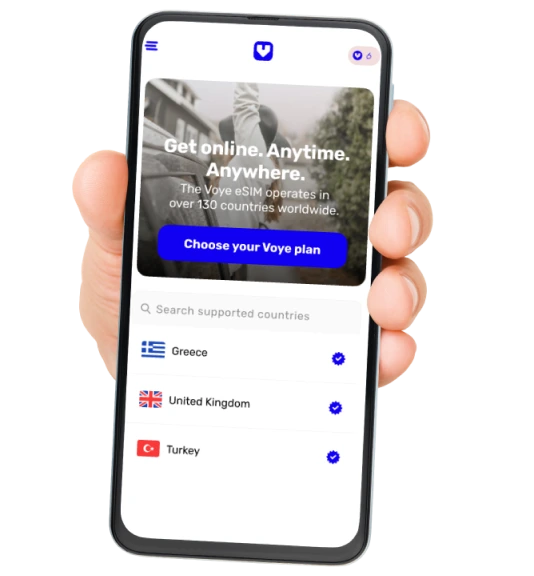
World Cup travel moves fast, sometimes across borders in a single week. At Voye Global, we provide eSIM services built for large-scale events like FIFA World Cup 2026. We provide digital connectivity that activates instantly and works across multiple destinations, helping fans stay online from kickoff to final whistle.
We provide simple eSIM setup without physical SIM swaps, making it easier to manage travel, tickets, navigation, and real-time updates throughout the tournament. Whether attending group matches or following your team across cities, seamless connectivity supports every part of the experience.
Why choose Voye Global for FIFA World Cup 2026?
- We provide coverage designed for international travel.
- We provide fast activation before or upon arrival.
- We provide flexibility for multi-country itineraries.
- We provide reliable data access during crowded matchdays.
When schedules change, venues shift, or travel plans evolve, dependable connectivity ensures nothing gets missed.
Final thoughts before kickoff
FIFA World Cup 2026 is more than a football tournament. It is a month-long global celebration spanning three nations, dozens of cities, and millions of fans. With expanded teams, iconic venues, and nonstop action from June 11 to July 19, preparation plays a key role in fully enjoying the experience.
From tickets and travel to staying connected across borders, planning ahead helps fans focus on what truly matters the football, the atmosphere, and the moments that define World Cup history.

Seamless Mobile Data Everywhere
Voye Global — Your Trusted eSIM Partner for Secure & Reliable Travel.



 English