














Note that iPhone devices from Mainland China aren’t eSIM compatible. Also iPhone devices from Hong Kong and Macao aren’t compatible (except for iPhone 13 Mini, iPhone 12 Mini, iPhone SE 2020 and iPhone XS)
Traveling to Europe is a dream for millions of people every year. From Parisian cafés and Tuscan sunsets to Greek islands and the fjords of Norway, the continent offers more bucket-list destinations than one lifetime can hold. Yet despite the magic, Europe travel challenges can turn a dream vacation into a stressful or confusing experience if you are not prepared.
Whether you are crossing the Atlantic for the first time or you are a seasoned traveler returning for another adventure, you will face a mix of hurdles such as navigating entry requirements, dealing with expensive international roaming, understanding cultural differences, and figuring out the transportation networks that link Europe’s cities and countries.
This guide breaks down the biggest challenges of traveling to Europe and provides actionable solutions so you can avoid common European travel mistakes and enjoy a smoother journey. We examine each issue from both the perspectives of first-time travelers and frequent travelers, and include practical tips, examples, and tools such as eSIM technology, digital wallets, and translation apps.
Entry Requirements: Visas, ETIAS, and Passport Rules
Why It Is a Challenge
Europe is not one single country. It is a collection of individual nations with their own regulations. Most travelers visit the Schengen Area, a group of 29 European countries that share unified entry rules. Even with this standardization, requirements can still be confusing.
First-Time Traveler Challenges
First-timers often assume Europe has one universal entry rule. Differences exist between Schengen and non-Schengen countries, and many travelers are surprised by the passport validity requirement. Several European countries require that your passport be valid for at least six months beyond your planned return date.
Another point of confusion is the ETIAS authorization. This is not a visa but a pre-travel screening similar to the ESTA program used in the United States.
Frequent Traveler Challenges
Frequent visitors usually understand the basics, but they may struggle with keeping track of Schengen visa-free limits, mixing Schengen and non-Schengen itineraries, or managing last-minute passport renewals. Those who slow-travel across Europe often miscalculate the 90 days within 180 days rule.
Tips and Solutions
1. Use a passport validity checklist
Confirm the passport expiry date, ensure you have blank pages available, and check whether your nationality requires a visa.
2. Use Schengen stay calculators
These tools allow you to input travel dates to ensure you do not accidentally overstay.
3. Keep digital copies of your documents
Store the passport photo page and confirmations for flights, hotels, or ETIAS approval in a secure cloud backup.
4. Understand ETIAS before it becomes fully active
It will require an online application, a small fee, and will remain valid for multiple trips over three years.
Check out our plans
-

Europe 10 Days Unlimited
USD 19.00 -
Europe 15 Days Unlimited
USD 25.00 -
Europe 20 Days Unlimited
USD 32.00 -
Europe 3 Days Unlimited
USD 9.00 -
Europe 30 Days Unlimited
USD 43.00 -

Europe 60 days 15GB
USD 35.00 -
Europe 7 days 5GB
USD 9.00 -
Europe 7 Days Unlimited
USD 15.00 -

Europe 60 days 20GB
USD 29.00
Expensive Internet Roaming and Connectivity Problems
Why It Is a Challenge
Europe has excellent digital infrastructure, but international roaming from your home carrier can be extremely expensive. Many travelers still rely on hotel Wi-Fi or look for cafés with access, which limits flexibility and can create problems when you need navigation or translation tools on the go.
First-Time Traveler Challenges
Many first-time visitors simply enable roaming without checking the price, which may result in bills of hundreds or thousands of dollars. Others believe they can rely on Wi-Fi alone, which is often unrealistic once you leave major tourist zones.
Frequent Traveler Challenges
Repeat visitors struggle with managing connectivity across multiple countries. A single train ride may involve crossing several borders, each with its own mobile carriers. Buying physical SIM cards repeatedly becomes frustrating.
Tips and Solutions
1. Use eSIMs for seamless European connectivity
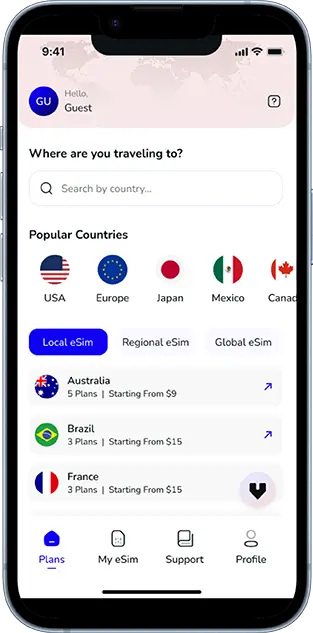
An eSIM lets you purchase and activate a data plan online without visiting a store. Europe-wide eSIMs work across many countries, making travel far easier.
2. Download offline maps
Google Maps and Maps.me both allow offline downloads, which are extremely helpful in rural areas or historic old towns.
3. Be cautious with public Wi-Fi
Avoid logging into banking apps, email accounts, or any other sensitive platforms while using airport or café networks.
4. Carry a portable hotspot
This is helpful for remote workers or families who need multiple devices connected at once.
Language Barriers Across the Continent
Why It Is a Challenge
Europe has 24 official languages and countless regional dialects. English is widely spoken in major cities but much less common in rural areas, among older residents, or in countries with fewer international tourists.
First-Time Traveler Challenges
New visitors may struggle to read signs, order food, ask for help, or understand public transportation announcements. Many travelers assume English will be spoken everywhere and are surprised when it is not.
Frequent Traveler Challenges
Experienced visitors still encounter pronunciation difficulties, misunderstandings in taxis or restaurants, and challenges in countries that use different alphabets. Even with some basic vocabulary, Europe’s linguistic diversity means you will constantly encounter new languages.
Tips and Solutions
1. Use translation apps effectively
Tools like Google Translate, DeepL, and iTranslate offer text, voice, and live conversation translation. Always download offline language packs.
2. Learn simple phrases
Basic words such as hello, thank you, excuse me, do you speak English, and how much does it cost help build rapport.
3. Use image translation
Camera-based translation is extremely helpful in restaurants, train stations, and museums.
4. Save emergency phrases offline
Keep important phrases saved in your phone’s notes app for quick access.
Europe eSIM: Instant Setup, No Surprises
Activate in minutes and enjoy smooth travel across multiple European countries.
Navigating European Transportation Systems
Why It Is a Challenge
Europe is famous for its transportation network, but it can be overwhelming. There are multiple train operators, overlapping metro lines, strict ticket validation rules, complicated fare zones, and frequent transitions between cities and countries.
First-Time Traveler Challenges
Common issues include confusion about train reservations, boarding the wrong train, forgetting to validate regional tickets, or misunderstanding fare zones in cities like Paris, Berlin, or London.
Frequent Traveler Challenges
Frequent travelers may still struggle with late trains, rail strikes, night train bookings, or switching between transportation apps as they move between countries.
Tips and Solutions
1. Use comprehensive transportation apps
Google Maps, Apple Maps, Trainline, Omio, Rome2Rio, and Citymapper help simplify transit planning.
2. Understand ticket validation rules
Countries such as Italy and Germany often require time-stamping a ticket before boarding. Failing to do so may result in fines.
3. Book long-distance trains early
Prices for high-speed routes rise significantly as the travel date approaches.
4. Travel lighter
Mobility improves drastically when you are not hauling heavy suitcases through narrow streets or on crowded trains.
Cultural Differences and Local Etiquette
Why It Is a Challenge
Europe is culturally diverse. What is polite in Spain may feel abrupt in Germany. What is normal in Italy may seem unusual in the Netherlands. These differences affect how people communicate, dine, greet others, and interact in public spaces.
First-Time Traveler Challenges
Travelers may talk loudly in public, fail to greet shop workers, misunderstand tipping expectations, or become confused by restaurant schedules. Many mistakenly assume Europe operates as a single cultural unit.
Frequent Traveler Challenges
Even experienced visitors can make etiquette mistakes when changing countries quickly. Meal times, dress codes, and expectations for personal space vary widely.
Tips and Solutions
1. Learn the basics of each country’s etiquette
For example, greet with Bonjour in France before asking a question, avoid ordering cappuccino late in the day in Italy, and respect personal space in Northern Europe.
2. Understand tipping customs
Tipping is modest and often optional. In many places, rounding up the bill is normal.
3. Know restaurant norms
You usually must request the bill. Water often costs money. Meals are meant to be leisurely, and service is not rushed.
4. Dress properly for religious sites
Carry a light scarf or shawl to meet modesty requirements.
Currency, Payments, and Digital Wallet Challenges
Why It Is a Challenge
Not all European countries use the euro. The United Kingdom, Switzerland, Denmark, Sweden, Norway, and Poland each have their own currencies. This can be confusing when combined with ATM fees and foreign transaction charges.
First-Time Traveler Challenges
First-time visitors may exchange money at airports, withdraw small amounts repeatedly, or pay foreign transaction fees on every purchase. Some travelers assume all EU countries use the euro.
Frequent Traveler Challenges
Repeat visitors may encounter cash-only establishments, countries where cash is discouraged, or challenges juggling several currencies across a multi-country trip.
Tips and Solutions
1. Use a credit card with no foreign transaction fees
Visa and Mastercard are the most widely accepted networks.
2. Use ATMs wisely
Withdraw larger amounts less frequently and always choose to be charged in the local currency rather than your home currency.
3. Use digital wallets
Apple Pay, Google Wallet, and similar tools are accepted widely across Europe and reduce the need for physical cards.
4. Track multiple currencies
Use apps like XE Currency or Revolut to monitor exchange rates and manage different currencies easily.
Stay Connected Across Europe
Travel without roaming fees. Get a fast, reliable eSIM Europe data plan today.
Safety, Scams, and Pickpocketing
Why It Is a Challenge
Europe is generally very safe, but pickpocketing and street scams are common in crowded tourist hubs.
First-Time Traveler Challenges
New visitors may carry valuables in easy-to-access bags, leave phones on tables, or fail to notice distraction-based scams.
Frequent Traveler Challenges
Frequent travelers sometimes let their guard down due to familiarity, which increases vulnerability in busy areas such as Paris, Barcelona, Rome, or Prague.
Tips and Solutions
1. Use anti-theft bags or money belts
Look for bags with hidden zippers or slash-resistant straps.
2. Do not leave belongings unattended
Items placed on café tables are easy targets.
3. Learn about common scams
Fake petitions, taxi overcharging, friendship bracelet scams, and grab-and-run thefts are the most common.
4. Stay alert on public transit
Pay attention when boarding or getting off crowded vehicles.
Planning Fatigue and Overpacked Itineraries
Why It Is a Challenge
Europe is dense, which tempts travelers to overplan. Many first-time visitors attempt to visit too many cities or countries in too little time.
First-Time Traveler Challenges
Travelers sometimes plan intense itineraries such as ten countries in two weeks or multiple long-distance train trips in consecutive days.
Frequent Traveler Challenges
Even experienced travelers may fit too much into a limited timeframe or revisit only familiar places instead of exploring new ones.
Tips and Solutions
1. Slow your itinerary
Spend at least three nights per major city and five to seven nights in larger regions.
2. Focus on experiences instead of checklists
Enjoy local cafés, markets, and walking tours rather than trying to see every monument.
3. Use organization tools
Apps like Notion, Wanderlog, and Google My Maps help avoid overly packed schedules.
Conclusion: Europe Travel Challenges Can Be Managed With Awareness and Preparation
Europe offers breathtaking destinations and unforgettable cultural experiences. Although challenges exist, such as entry requirements, language differences, transportation navigation, connectivity issues, and varying cultural norms, each can be managed with planning and modern tools. eSIMs make staying connected simple, translation apps eliminate language stress, digital wallets reduce payment confusion, and itinerary tools help maintain balance.
With the right preparation, you can avoid common European travel mistakes and enjoy a smooth and memorable trip, whether you are visiting for the first time or returning for another adventure.

Seamless Mobile Data Everywhere
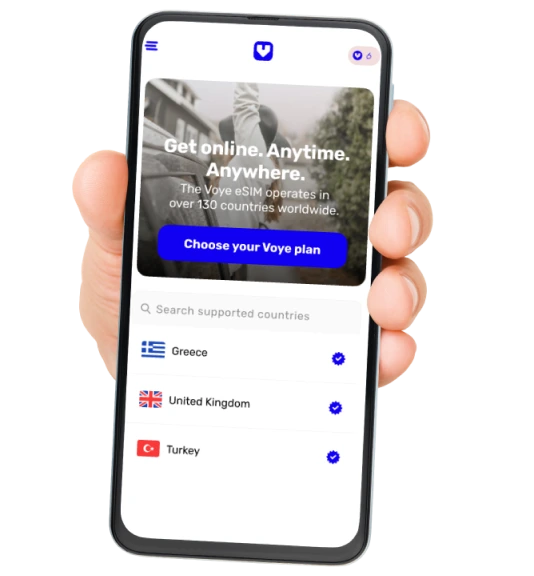
Voye Global — Your Trusted eSIM Partner for Secure & Reliable Travel.



 English