














Note that iPhone devices from Mainland China aren’t eSIM compatible. Also iPhone devices from Hong Kong and Macao aren’t compatible (except for iPhone 13 Mini, iPhone 12 Mini, iPhone SE 2020 and iPhone XS)
With more than two billion users worldwide, WhatsApp has become the default way people stay in touch. From family chats and business coordination to study groups and travel updates, it is deeply embedded in daily communication across continents.
For international travelers, digital nomads, students, and remote workers, WhatsApp often feels as essential as a passport. Many travelers naturally assume that if they have internet access, WhatsApp will work seamlessly anywhere in the world.
That assumption, however, does not always hold true.
Several countries impose restrictions or outright bans on WhatsApp, especially on its voice and video calling features. These restrictions can be confusing, particularly for travelers who rely on WhatsApp for work meetings, navigation updates, or staying connected with loved ones.
This guide explains where WhatsApp is banned or restricted, why these limitations exist, and which legal alternatives travelers can use. It also outlines how reliable mobile data access can help travelers stay connected while respecting local laws.
Countries Where WhatsApp Is Banned or Restricted
WhatsApp availability varies widely by country. In some places, the app is fully blocked. In others, messaging works but voice and video calls do not. There are also countries where access is generally allowed but may be monitored or temporarily restricted during sensitive periods.
Below is a clear country-by-country breakdown to help travelers plan ahead.
China
- Status: Fully banned
- What does not work: Messaging, voice calls, video calls
In China, WhatsApp is completely inaccessible. Messages cannot be sent or received, and voice or video calls do not function. Travelers should assume WhatsApp will not work at all during their stay.
United Arab Emirates
- Status: Partially restricted
- What does not work: Voice calls and video calls
In the UAE, WhatsApp text messaging works normally, but voice and video calling features are blocked under local VoIP regulations.
Qatar
- Status: Partially restricted
- What does not work: Voice calls and video calls
In Qatar, travelers can send and receive WhatsApp messages, but calling features are restricted on most networks.
Saudi Arabia
- Status: Partially restricted
- What does not work: Voice calls and video calls
WhatsApp messaging usually works in Saudi Arabia. Voice and video calls may be blocked or unreliable depending on the network.
Iran
- Status: Heavily restricted
- What does not work: Messaging and calls may be blocked intermittently
Access to WhatsApp in Iran can change with little notice. Temporary nationwide blocks are possible, affecting both messaging and calls.
Syria
- Status: Mostly blocked
- What does not work: Messaging and calls
WhatsApp access in Syria is highly unreliable and often unavailable due to broader internet restrictions.
North Korea
- Status: Fully banned
- What does not work: All features
North Korea does not allow public access to WhatsApp or most international messaging platforms.
Turkey
- Status: Intermittent restrictions
- What does not work: Messaging and calls during specific periods
WhatsApp generally works in Turkey, but access may be temporarily restricted during political events, protests, or security-related incidents.
Why Some Countries Restrict WhatsApp
WhatsApp restrictions are usually tied to telecommunications policies and national digital regulations rather than traveler-specific rules.
Telecom and VoIP Regulations
Many countries regulate voice services tightly. Traditional telecom providers often require licenses for calling services. Since WhatsApp offers free voice and video calls over the internet, some governments restrict these features to protect regulated telecom systems.
National Data Control and Security Laws
Some governments require user data to be stored locally or made accessible to authorities under national law. WhatsApp’s end-to-end encryption can conflict with these requirements, leading to partial or full restrictions.
Protection of Local Messaging Platforms
In certain regions, governments encourage the use of domestic messaging platforms. Limiting foreign apps helps local services grow while keeping communication within national systems.
Restrictions vary by country and can change quickly, which is why travelers should always check local regulations before departure.
Smart Data for Global Travel
Use approved messaging apps with stable mobile internet
Best WhatsApp Alternatives by Country
When WhatsApp does not work, travelers still have legal and commonly used alternatives depending on the region.
Popular WhatsApp Alternatives
- BOTIM
- ToTok
- Telegram
- Signal
- IMO
- Skype
- Zoom
- LINE
- KakaoTalk
- Viber
Comparison Table
| App Name | Works In | Features | Best For |
|---|---|---|---|
| China | Messaging, calls, payments | Daily communication in China | |
| BOTIM | UAE | Voice and video calls | Legal calling in the UAE |
| ToTok | UAE | Messaging and calls | Expat communication |
| Telegram | Many countries | Messaging, channels, file sharing | Group communication |
| Signal | Most regions | Encrypted messaging | Privacy-focused users |
| IMO | Middle East, Asia | Voice and video calls | Low-bandwidth connections |
| Skype | Global | Calls and conferencing | Business travelers |
| Zoom | Global | Video meetings | Remote work and classes |
| LINE | Japan, Thailand | Messaging, stickers | East Asia travel |
| KakaoTalk | South Korea | Messaging and calls | Local communication |
| Viber | Europe, Asia | Calls and messaging | International calling |
What Travelers Should Do Before Visiting These Countries
Proper preparation helps avoid communication disruptions.
Download Apps Before Arrival
Some app stores restrict downloads once inside certain countries. Installing alternative messaging apps in advance ensures immediate access.
Check Local VoIP Laws
Understanding which communication features are legally allowed helps travelers avoid unintentional violations.
Avoid Relying Only on Hotel Wi-Fi
Hotel Wi-Fi can be:
- Unreliable during peak hours
- Limited in coverage
- Restricted for VoIP apps
Ensure Continuous Mobile Data Access
Mobile data is often more consistent than public Wi-Fi and allows travelers to stay connected while moving between cities or countries.
Stay Connected Abroad
Reliable mobile data for messaging apps across borders
Staying Connected Without WhatsApp While Traveling
When WhatsApp is unavailable, staying connected still matters for navigation, work, and personal communication.
Using mobile data instead of public Wi-Fi allows travelers to:
- Access messaging apps more reliably
- Reduce security risks
- Stay connected on the move
Understanding eSIM Technology
An eSIM is a digital SIM built into compatible devices. It allows travelers to activate a mobile data plan without inserting a physical SIM card.
Key benefits include:
- Instant activation
- No physical SIM swapping
- Easy country-to-country transitions
- Continuous data access across borders
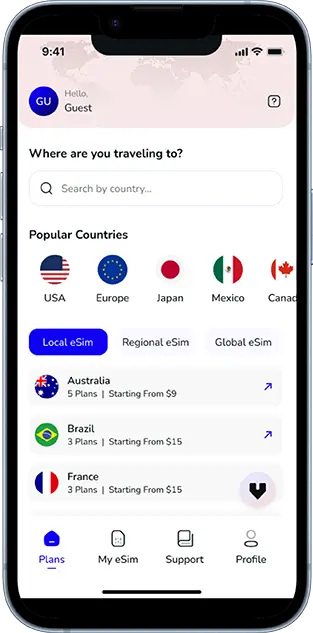
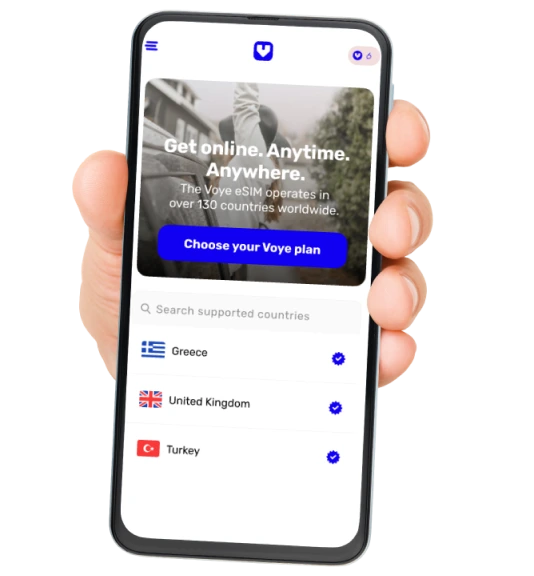
Global eSIM providers like Voye Global offer data plans that work in over 160 countries. For travelers visiting regions where WhatsApp is restricted, reliable mobile data helps ensure approved messaging apps continue to function smoothly without depending on public Wi-Fi.
FAQs
Is WhatsApp banned in China?
Yes. WhatsApp is fully blocked in China, including messaging, voice calls, and video calls.
Does WhatsApp work in the UAE for tourists?
WhatsApp messaging works, but voice and video calls are restricted.
Which countries restrict WhatsApp calls?
Countries such as the UAE, Qatar, and Saudi Arabia restrict WhatsApp voice and video calls.
What messaging apps work internationally?
Apps like Telegram, Signal, Skype, Zoom, LINE, and Viber work across many regions worldwide.
Can eSIM data help messaging apps work abroad?
Yes. eSIM data provides consistent mobile internet access, allowing approved messaging apps to function without relying on public Wi-Fi.
Conclusion
WhatsApp may be the world’s most popular messaging app, but it does not work everywhere. Country-specific restrictions, especially on voice and video calls, can disrupt communication for unprepared travelers.
By understanding where WhatsApp is banned or restricted, downloading alternative apps in advance, and ensuring reliable mobile data access, travelers can stay connected legally and confidently.
For frequent travelers, digital nomads, and remote workers, planning communication tools ahead of time and using reliable global connectivity solutions like eSIMs can make international travel smoother and more predictable.

Seamless Mobile Data Everywhere
Voye Global — Your Trusted eSIM Partner for Secure & Reliable Travel.



 English