














Note that iPhone devices from Mainland China aren’t eSIM compatible. Also iPhone devices from Hong Kong and Macao aren’t compatible (except for iPhone 13 Mini, iPhone 12 Mini, iPhone SE 2020 and iPhone XS)
Why Traditional Vacations Don’t Restore You Anymore?
Your brain runs on dopamine — the motivation chemical.
Every notification, refresh, swipe, and scroll gives a small dopamine spike.
Now imagine what happens when:
- you wake up and check your phone
- navigate with maps
- photograph experiences
- message friends
- research restaurants
- scroll at night in a hotel bed
Your brain never exits consumption mode.
Psychologists call this continuous partial attention — you are never fully where you are.
Nature, slow environments, and silence do something very different. They activate serotonin and parasympathetic recovery — the systems responsible for calm focus, emotional regulation, and memory formation.
This is why some trips feel unforgettable…
and others blur together like a long Instagram reel.
A digital detox trip isn’t about removing technology entirely.
It’s about restoring intentional use.
And paradoxically, the trips that succeed are not the ones with zero connection — but the ones with controlled connection.
That’s where travelers are adopting minimal connectivity tools such as Voye Global: keeping navigation, safety access, and transport logistics available without re-opening the endless scroll loop that hotel Wi-Fi and roaming plans create.
You stay capable — without staying distracted.
Disconnect From Noise, Not From Reality
Voye Global eSIM keeps the essentials — maps, safety, and logistics — while helping you avoid the habits that follow hotel Wi-Fi and roaming plans.
What Actually Makes a Place a Good Digital Detox Destination?
Not every remote place helps you unplug.
Some remote destinations actually increase anxiety.
The most successful detox locations share five characteristics:
1. Predictable daily rhythm (sunrise/sunset living)
2. Walkable surroundings
3. Low commercial stimulation
4. Natural sensory environments (water, wind, forests)
5. Limited but reliable connectivity
The last one is critical.
Complete disconnection sounds romantic — until you miss a ferry, get lost on a trail, or need weather updates. When travelers feel unsafe, they cling harder to their phones.
Real digital detox works when:
You don’t need your phone — but you can use it if necessary.
The Best Remote Digital Detox Destinations This Year
The Italian Alps – South Tyrol (Dolomites)
The Dolomites might be Europe’s most perfect “soft detox.”
You are not isolated — but stimulation disappears naturally.
Days are structured around:
- breakfast at sunrise
- long hikes between mountain huts (rifugi)
- afternoon rest
- early dinners
- sleep by 22:00
Phones lose purpose here.
There are no crowds demanding documentation and no nightlife demanding attention.
Within two days, many travelers report something unusual:
they stop checking their pockets.
What replaces screen time is physical engagement, climbing, walking, breathing cold air, and hearing only wind across rock faces.
Stay Present in the Mountains — Not Searching for Wi-Fi
Use Voye Global eSIM for maps, hut reservations, and safety access while keeping your trip free from hotel-lobby internet and roaming stress.
Yakushima Island, Japan
Yakushima feels less like a destination and more like entering another mental state.

Ancient cedar forests, constant mist, and flowing water create an environment where your brain shifts attention outward instead of inward.
Hikes take entire days.
You stop measuring time.
You start measuring light.
The forest provides a rare psychological effect called soft fascination — gentle sensory input that calms mental rumination. It’s one of the strongest natural treatments for cognitive fatigue.
Here, travelers still keep minimal connectivity for transport schedules and safety alerts. Using a lightweight data connection like Voye allows access to essentials without the behavioral trap of searching for public Wi-Fi, which often pulls people right back into social media loops.
Navigate the Forest Without Returning to the Feed
Voye gives you just enough connection for transport schedules and trail navigation — without pulling you back into constant notifications.
The Azores — Flores & Corvo Islands (Portugal)
These islands are one of Europe’s last true slow-travel environments.
There are:
- no mega resorts
- no nightlife districts
- no urgency
Ocean rhythms regulate your sleep.
Fog rolls in.
You wait for weather instead of controlling it.
After about four days, something measurable happens:
people naturally sleep longer and wake without alarms.
You still need maps, ferries, and emergency access — but constant connectivity disrupts the reset. Travelers increasingly rely on a minimal connection setup (like Voye Global) so the phone becomes a tool again, not a habit.
Island Slow Living, Zero Connectivity Anxiety
Keep ferry times, directions, and emergency access in your pocket while your mind stays fully offline with Voye Global eSIM.
Patagonia — Chile’s Aysén Region
Patagonia is not a vacation.
It is a neurological reset.
The scale of the landscape overwhelms internal mental chatter.
There are no quick activities, no efficient itineraries, and no instant gratification.
Daily life becomes simple:
walk, cook, read, sleep.
Internet is often absent — but safety still matters. Travelers need weather reports, navigation, and transport coordination. This is precisely the scenario where controlled connectivity solutions like Voye become valuable: reassurance without re-entering constant communication cycles.
Remote Doesn’t Have to Mean Uncertain
Voye provides reliable data for weather checks and navigation so you can embrace Patagonia’s isolation with confidence, not worry.
How to Prepare for a Real Digital Detox Trip?
Before leaving, preparation matters more than the destination.
One week before departure
- Disable non-human notifications
- Inform colleagues of response delays
- Set an autoresponder
- Download offline maps
- Write important contacts on paper
One day before
- Remove social apps (not log out, remove)
- Turn phone grayscale (reduces dopamine triggers)
- Pack a notebook
- Carry one reliable minimal data connection
Instead of hotel Wi-Fi hunting, use the connection intentionally.
The Psychological Timeline of Unplugging

Your brain doesn’t relax instantly.
Day 1–2: Restlessness and phantom checking
Day 3: Anxiety spike (your brain expects stimulation)
Day 4: Mental quiet begins
Day 5+: Attention stabilizes and mood improves
Most people quit detox at Day 2 — right before the benefits begin.
They don’t fail because they love their phone.
They fail because they fear losing control.
Keeping essential connectivity removes that fear — which is why travelers who maintain a simple, functional connection are more likely to actually stay offline behaviorally.
Signs Your Digital Detox Actually Worked
You’ll notice unexpected changes:
- silence feels comfortable
- meals last longer
- you remember conversations
- you stop documenting everything
- your sleep deepens
- boredom disappears
The biggest indicator:
You stop reaching for your phone during pauses.
That moment — waiting without stimulation — is the brain recovering its attention span.
The Real Purpose of Digital Detox Travel
Digital detox travel isn’t anti-technology.
It’s correcting its role.
Technology should support movement, safety, and curiosity — not replace experience.
The best trips this year won’t be the most luxurious or photogenic.
They will be the ones where:
you used your phone for directions…
and forgot about it the rest of the day.
And that’s the unexpected lesson travelers are discovering:
You don’t need to disconnect from the world to feel free.
You only need to disconnect from constant reachability.
That’s why a well-planned unplugged journey — supported by intentional connectivity tools like Voye — becomes sustainable instead of performative.
You return home with photos.
But more importantly:
You return with your attention back.

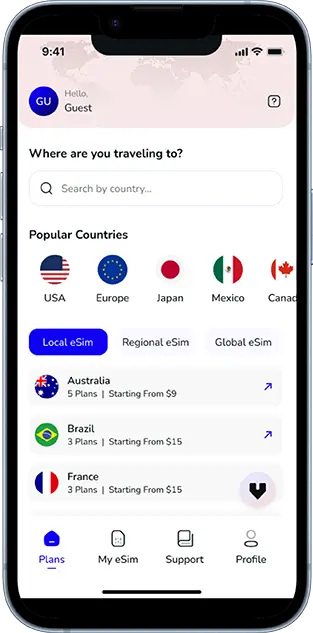
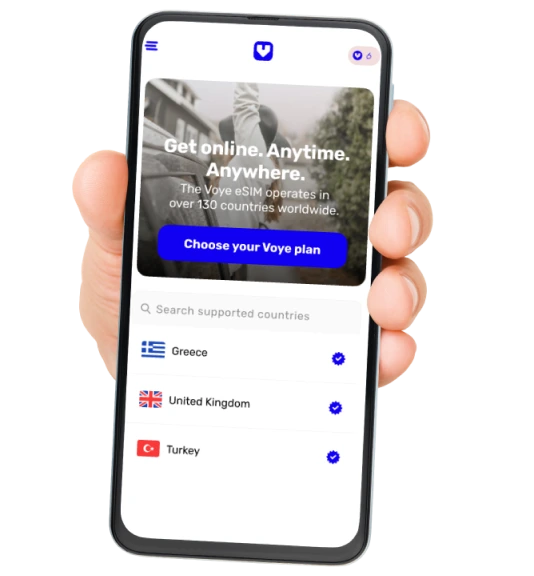
Seamless Mobile Data Everywhere
Voye Global — Your Trusted eSIM Partner for Secure & Reliable Travel.



 English